
What is Organic Wine ?

Organic wines are produced by using only organically grown grapes. There are strict rules that govern the winemaking process, such as hand-harvesting, the types of yeasts to be used during fermentation, abstaining from all chemical substances such as herbicides, fungicides and pesticides in the vineyard, and most importantly, not introducing additional sulfates into the winemaking process.

When selecting Organic wine, here is how you interpret the labels:

“100% Organic” means that the wines are produced with grapes that are certified 100 % organically grown and do not have any sulfur dioxide added.

“Organic” means that the wines are produced with a minimum of 95 % organic grapes – may have low level of sulfur dioxide added.

“Made with Organic grapes” refers to wines that have a minimum of 70 % organic grapes – may have sulfur dioxide added.

Liz Palmer
Wine and Travel Writer
Liz.Palmer@rogers.com
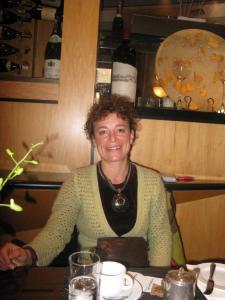
My interview with Ms Morgane Fleury (of the Biodynamic Champagne House Fleury Père Et Fils)

I caught up with Ms Morgane Fleury (of the Champagne House Fleury Père Et Fils) in Toronto, Ontario on November 13, 2009 to discuss their Biodynamic Champagne House.

Biodynamism is becoming more acceptable in the wine community. The underlying principles are extremely unusual with its quasi-mystical approach, blended with esoteric philosophy of life forces and planetary influences.

Background:
Fleury Père Et Fils vineyards are located on steep calcareous clay slopes, both sides of the Seine Valley, in the region of Côtes de Bar. Of the 15 hectares 90% are Pinot Noir and the remaining 10% are Chardonnay. All 15 hectares are cultivated using biodynamics. Fleury Père Et Fils have been biodynamic since 1989, and have for many years had a reputation for innovation. Champagne Fleury’s conversion to biodynamics was at the hands of Morgane Fleury’s and Jean-Sébastien’s father, Jean-Pierre. His interest in sustainable wine growing began in the 1970s when he used manual tilling (not herbicides) and composting (not chemical fertilizers). He began trials with biodynamics, applying only to 3 Ha, in 1989, and then in 1992 used it on the remainder of his vineyard holdings.

Jean-Pierre Fleury was the first grower in Champagne to convert to biodynamic farming.

Liz Palmer:
How much of the underlying biodynamic agriculture does Fleury Père Et Fils adhere to?

Morgane Fleury:
All of them – we all work together and also work with two other local growers. For instance, we’ve started working with horses over 20 years ago and have been working with essential oils to fight mildew.

Liz Palmer:
Since adopting biodynamic principles, have the quality of your Champagnes improved?

Morgane Fleury:
We are very pleased – The key is soil health. We are working to keep it constantly healthy. The structure of the soil gives back the essence of the terroir.

Liz Palmer:
Do you think that the more esoteric aspects of biodynamism are absolutely necessary, i.e., the ashing and timing interventions on the basis of the alignment of planets)?
Morgane Fleury:
We now find that our Champagne has more fruitiness and more terrior in the nose and pallet.

Liz Palmer:
Some of the principles of biodynamism appear odd. How do you respond to critics who suggest this?

Morgane Fleury:
We ask them to think differently, to read and to do some research. One of the most controversial preparations …my brother Jean-Sébastien uses is (preparation #501) 2X per year for energy.

Field Preparation 501
• Crushed powdered quartz prepared by stuffing it into a horn of a cow and buried into the ground in spring and taken out in the fall (mixture of 1 tablespoon of quartz powder to 250 liters of water). The mixture is sprayed under very low pressure over the crop during the wet season, in an attempt to prevent fungal diseases. It should be sprayed on an overcast day or early in the morning to prevent burning of the leaves.

Liz Palmer:
What is your favorite Champagne?

Morgane Fleury:
’95 Fleury “Cuveé Robert Fleury” Brut Champagne – its pure pinot with more minerality and less dosage. It was the first vintage we made that was biodynamic.

Liz Palmer:
What was your Champagne moment for 2009 ?

Morgane Fleury:
I have two champagne moments:
1. After the harvest – we celebrated! Our harvest was from Sept 6th to 26th – the weather was perfect, with no rain), and
2. The opening of my Champagne and Wine store “Ma Cave Fleury” in Paris.

Liz Palmer:
What are the favorite foods that you pair with Champagne?

Morgane Fleury:
My favorite: Raspberry cake with Rosé Champagne, also

Vanilla cream pastries

Tatare

Cheeses

White meats

Liz Palmer:
Do you have any champagne recipes that you can share with me for my book?

Morgane Fleury:
I will send you some when I get back to Paris – some of our family recipes.

Liz Palmer:
I am in the process of working with some scientists on health benefits of Champagne – do you have anything to add?

Morgane Fleury:
I believe champagne cures depression for the elderly.

http://www.champagne-fleury.com
http://www.champagne-fleury.fr/Html/English-version.htm

Liz Palmer
Wine and Travel Writer
Liz.Palmer@rogers.com
416-371-9409

boutiquechampagnehouses.com
http://lizpalmer.wordpress.com
http://twitter.com/champagnehouses

Champagne and 2010

In choosing Champagne for 2010 celebrations the amount of dosage added after the second fermentation as well as aging dictates the sweetness level of Champagne. The label sets out the level of sweetness as follows:
• Brut Natural or Brut Zéro (less than 3 grams of sugar per liter)
• Extra Brut (less than 6 grams of sugar per liter)
• Brut (less than 15 grams of sugar per liter) [most popular]
• Extra Sec or Extra Dry (12 to 20 grams of sugar per liter)
• Sec (17 to 35 grams of sugar per liter)
• Demi-sec (33 to 50 grams of sugar per liter)
• Doux (more than 50 grams of sugar per liter)

Champagne Etiquette
Champagne should be served in a flute-shaped glass. The stem allows you to hold the glass without affecting the temperature of the Champagne. The bowl is designed to retain carbonation, by reducing the surface area at the opening of the bowl. Champagne is to be served between 43 to 48°F (7°C). In this range the smell and taste of the wine can be fully appreciated.

Top Champagnes:
Veuve Clicquot Brut Champagne
Monet & Chandon Imperial Champagne
Pol Roger Brut Champagne
Mumm Cordon Rouge Brut Champagne

MY WISHES FOR YOU FOR 2010

Is for you to have
12 Months of Happiness;
52 Weeks of Fun;
365 Days of Success;
8760 Hours of Good Health;
52600 Minutes of Good Luck, and
3153600 Seconds of Joy.

Liz Palmer

Bubble Love

CHAMPAGNE has launched thousands of ships, toasted billions of weddings, special occasions, and special moments between two people – Champagne is the wine of celebration. No other wine is associated with joy and festivity. Its meaning is truly universal.
TAKE TIME IN 2010 to share with people you care about in the celebrations of your life with this historically powerful glass of “bubbly love” we call Champagne!
Champagne is a sparking wine produced by inducing the in-bottle secondary fermentation of the wine to effect carbonation; this is the most important stage of the process. Méthode Champenoise is the traditional method by which Champagne is produced. After primary fermentation and bottling, a second alcoholic fermentation occurs in the bottle. This second fermentation is induced by adding several grams of yeast and several grams of rock sugar. For years where the harvest is exceptional, a millesimé is declared which means it matures for at least 3 years. During this time the Champagne bottle is sealed with a crown cap similar to that used on beer bottles.

The Region
Champagne is produced exclusively within the Champagne region of France, from which it takes its name. This region has the chalky soil and the overabundance of sun needed to grow the three varieties of grapes, which are: Chardonnay which provides the freshness and elegance; Pinot Meunier brings fruitiness and aromas; and Pinot Noir gives the body and structure. There are five main regions within Champagne where these varieties are grown, and where the houses source these varieties that will influence the quality and style of the final product. The most northerly region Montagne de Reims Pinot Noir is mainly planted. Wines produced here are firm and austere. The Côte des Blancs is the mostly east-facing region and is south of Epernay. Chardonnay is mostly planted here, and produces a wine much less harsh than the Montagne de Reims. The Vallée de la Marne region runs west-east, and is planted with all three grape varieties. Further south is the Côte des Sézanne which is primarily Chardonnay country, and finally the Aube, the southernmost of all five regions where Pinot Noir is mostly planted.
The Champagne Cycle

From winter until August, the gardeners are actively pruning, disbudding, paling-up and trimming. At spring time, gardeners fear late frosts. The grapes are gathered by hand to preserve them. Vintage takes place between June and September, depending on the climate, the Champagne and the vintage.

History and Celebration

Champagne first gained world recognition with the anointment of French kings. Royalty from throughout Europe spread the message of the unique sparkling wine from Champagne and its association with luxury and power. The leading manufacturers devoted considerable energy to creating a history and identity for their wine, associating it and themselves with nobility and royalty. Through advertising and packaging they sought to associate Champagne with high-luxury, festivities and rites of passage. Their efforts coincided with an emerging middle class that was looking for ways to spend its money on symbols of upward mobility. Nowadays, Champagne remains the celebration drink. For special ceremonies, a sabre can be used to open the bottle. Champagne is also associated to sport events such as Tour de France, Formula One, even Sailing, wherein the Champagne bottle is broken to inaugurate or at the end of a race.

Four Varieties

They each have their own unique character and each pair with different foods.

Les Champagnes de corps, intense and powerful with some of spices and red fruits. It goes with foie gras, osso- buco or fowl.

Les Champagnes d’esprit, delicate and light, has vegetable and citrus fruits notes. It goes with fish, shellfish, cheese, ice cream and sorbet. It is usually served as an aperitif.

Les Champagnes d’âme, mature and rich contain hints of delicate spices. It goes well with lamb, pies, desserts and also at tea time !

Les Champagnes de coeur, contains scents of cinnamon honey and brioche. They are often rosé or half neat.

Health Benefits

Research from the University of Cagliari has shown that moderate consumptions of Champagne will help the brain cope with the trauma of stroke, Alzheimer’s, and Parkinson’s disease. The research further noted that the high amount of the antioxidant polyphenols in sparkling wine can help prevent deterioration of brain cells due to oxidative stress. Good news, isn’t it? Warning: Be careful, Champagne should be consumed in a reasonable manner.

Champagne Etiquette
Champagne must be served in a Champagne flute. It is always served cold with drinking temperatures of 7 to 9 °C (43 to 48 °F). Often the bottle is chilled in a bucket of ice before opening for about 20 minutes.

Ontario Prices

LCBO Champagne prices range from $50.00 to $3,995.00 (1995 Clos D’Ambonnay Champagne from Krug 750 mL).

Why don’t you write us with your 2009 Champagne experiences in how you “indulged in bubbly love”? (published in a future issue).

Champagne Cocktails
Champagne Mimosa
1oz Orange Juice
3oz Champagne
In a tall flute glass, first pour the orange juice, then the Champagne. The Champagne is thicker and will mix down into the OJ. The key is not to stir – you don’t want to lose the bubbles.

Champagne Bellinis
6oz Champagne
1 peach, pureed
Puree one fresh peach, and put into a tall flute glass. Note: you can use 3 shots of peach nectar add in Champagne. The key is not to stir – you don’t want to lose the bubbles.

Liz Palmer, wine writer and soon to be author of:
Unique Boutique Champagne Houses
liz@boutiquechampagnehouses.com
www.boutiquechampagnehouses.com

clip_image002