The First Annual La Champenoise (the Celebration of Champagne) Takes place this Weekend in Reims, France

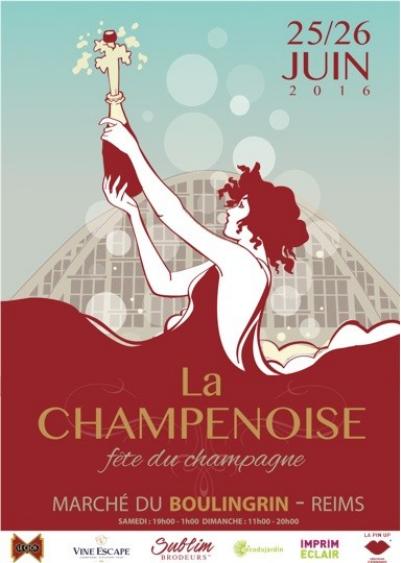
Unknown-1The first annual La Champenoise (the Celebration of Champagne) takes place this weekend, June 25 and 26 in beautiful, historical Reims, France.

There will be over 70 champagne houses and growers, along with 10 local gastronomy providers, who will be introducing their wines and products to locals, tourists, and wine professionals.

La Champenoise takes place in mythical Halles du Marché du Boulingrin. It’s also known for its architectural and historical presence, and has recently been restored.

Founders, Matthias Collard , Franck Moussié and Benjamin Carteret combined their experience in event organizing, tourism and Champagne and decided a few years ago that Reims needed a festival similar to the wine festivals held in Burgundy and Bordeaux.

“All the major French wine regions have their celebration, sometimes even at an international level… Champagne is the most festive and friendly wine there is, and we wish to celebrate it with this event that unites all the players involved in its production, whether it is trading houses, cooperatives or independent winemakers,” explains Franck one of the founding entrepreneurs of the project.

La Champenoise

Les Halles du Boulingrin

50 rue de Mars

51100 Reims

http://fetechampenoise.com


Entrance for Saturday June 25, 7pm-1am: €15

Entrance for Sunday June 26, 11am-8pm: €15

2 day pass: €25

My Interview with: Olga Bussinello, Director, Consorzio Valpolicella – Italy [Women in Wine Business]

March 8th is International Women’s Day and is a day to celebrate women’s achievements, past and present. March is also women’s history month, a time to note women in history, but also women making history.

Here is my interview with one such woman, Ms Olga Bussinello, the Managing Director of the Consortium of Valpolicella wine region.

The Consortium of Valpolicella was founded in 1924 and includes the growers, producers and bottlers and regulates every aspect of cultivation and winemaking, up to promotion. This great red wine from Verona has shown a positive trend at the guidance of Ms. Bussinello. At year end 2015 it reached a turnover of 310 million euros (a 6% increase over the previous year); and where six out of ten bottles are exported.

Q   How has your life experience made you the leader you are today?

A   I have had very diverse yet complementary life and work experiences. After graduating in law I worked in both public bodies and in private companies, changing workplaces and cities up until six years ago when I began my adventure as Director of the Consorzio per la Tutela dei Vini Valpolicella. The flexibility and courage to understand when my career path had to change direction are what have made me grow.

Q   How has your previous employment experience aided your position at Consorzio Valpolicella?

A   Mainly the period I spent working in the world of agricultural associations in Rome where I got to comprehend the complexity of the relations among the various players in a production chain. Even if there are common goals, drawing together the farming world and the industrial sector is extremely difficult.

Q   What have the highlights and challenges been during your tenure at Consorzio Valpolicella?

A   While the wines have become famous by now, instead, Valpolicella—as in the production area—is not very well known as a rural landscape. Having people get to know its genuine beauty and the history of its places is a very important challenge. Naturally, even for that which concerns the wines you have to work to keep the demand and the appeal of Amarone and the other products of the Valpolicella high.

Q   How do you maintain a work/life balance?

A   You have to reserve the same amount of attention and sensibility to work and family to establish your daily priorities. Work, just like family, is a creature and in a certain sense we have to take care of it. I do owe a lot to my husband who has always supported me and taken my place with my daughters so that I could be relaxed as I dealt with more difficult engagements.

Q   What do you think are the biggest issues for women in the wine industry?

A   The same as in the other industries: the difficulty of covering roles that historically belong to men, the stress of having to demonstrate that you’re always perfect, the inability to form a team with other women. This is the generation which, first and foremost, has to fight stereotypes and ancestral insecurities to prepare the way for the generations to come.

Q   Which other female leaders do you admire and why?

A   Many, citing just a few would be doing a disservice to the others. I like women who focus in well on their role and therefore manage to work in a team. The individualism that has to do with being used to facing many things alone can become a limitation in one’s personal and career growth path.

Q   What do you want Consorzio Valpolicella to accomplish over the next year?

A   I would like to fine-tune a format of wine and territory presentation that I am already working on, which brings out the differences between the terroirs and company styles.

Q   What do you love most about your position as Director for Consorzio Valpolicella?

A   The relationship with the member companies, going to the vineyards and the wineries, understanding the history of each and building new projects with them.

Q   What is your advice for other women entrepreneurs?

A   Don’t ever lose your enthusiasm for your work and think of each difficulty as a challenge that will help you grow

——

The 13th Edition of Anteprima Amarone – Verona

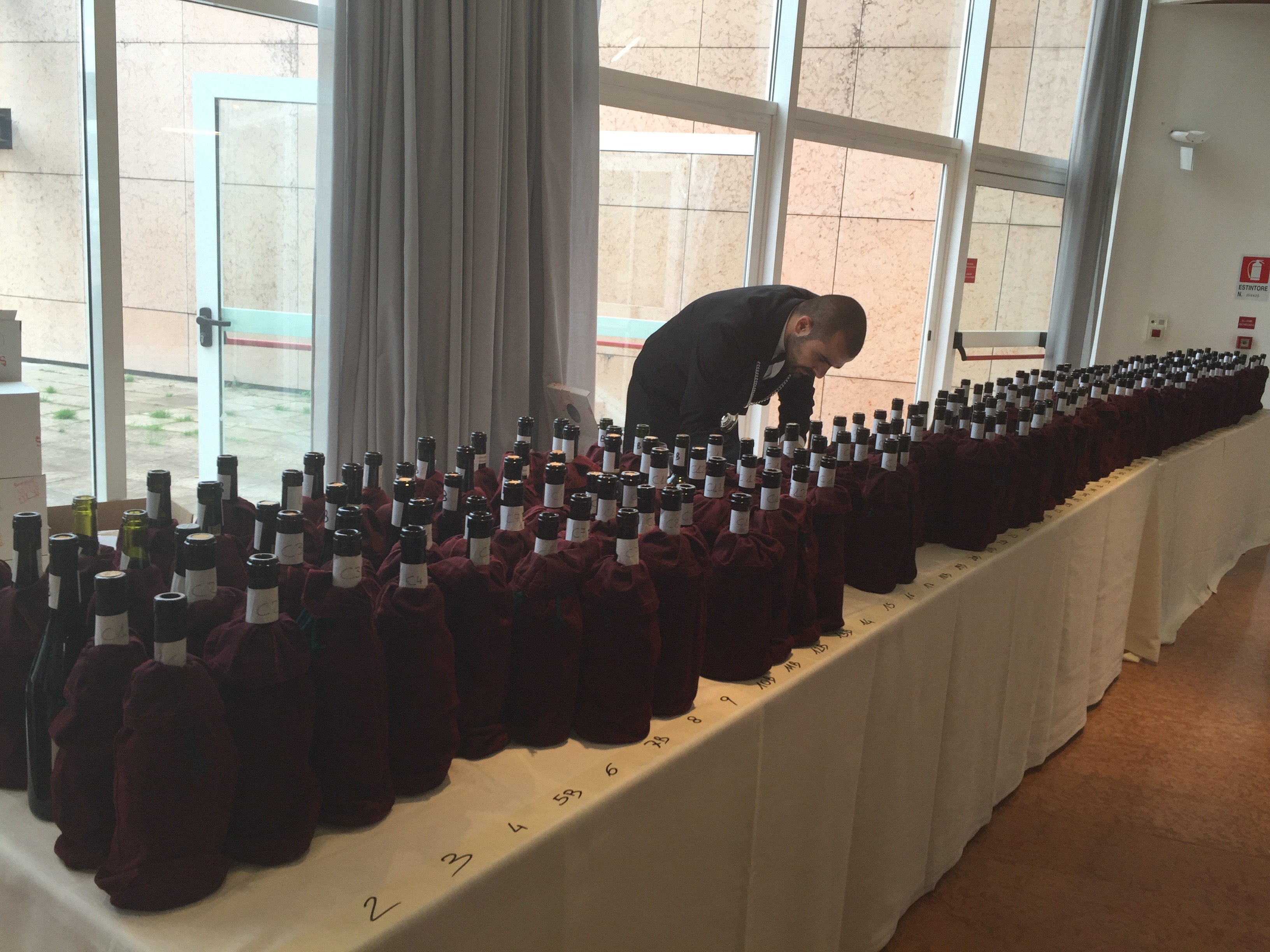
IMG_5933 The 13th Edition of Anteprima Amarone was held in Verona on January 30 and 31st when 74 producers revealed their wines from the 2012 harvest to international press, industry insiders and general public.


This preview was promoted by the Consortium of Valpolicella and was held at the beautiful historical Palazzo della Gran Guardia, Verona.

In addition to tasting, the program included a conference on opening day, moderated by journalist Andrea Scanzi who, together with Christian Marchesini, President of the Consorzio Valpolicella, discussed the Consortium. There was also a technical presentation of the vintage curated by Dr. Diego Tommasi of Cra di Conegliano, along with the performance of the denomination on foreign markets was presented by Denis Pantini of Nomisma Observatory.

Christian Marchesini confirms “the role of the brand Ambassador of the territory in the world of the Great Red Veronese, but mainly is the driving force for the local economy and its tourist exploitation.” He goes onto say: “Unique – Amarone is a wine-icon, a seductive wine”, “fruit of the earth, where 97% of the vines were indigenous. The discovery in recent years of the Oseleta variety and the return to Guyot, is raising more the gap between modernity and tradition, between different styles and corporate philosophies”

Denis Pantini also points out that “According to 35% of the producers, the denomination of origin is the main factor of Amarone success abroad, even before the reputation of the corporate brand (I think 21%) and Italian origin (15% ), In fact, nearly 1 out of 2 producers believe this.”

He goes on to say –

“The leading export markets for Amarone include: USA, China, Russia and Canada. These countries, together with the Northern Europe export 60% of Amarone della Valpolicella.”

“Going into detail of the placement and the Amarone market share abroad, Germany (18%), Switzerland (14%) and Canada (13%) constitute the main countries of destination, followed by the United States (10%), Scandinavia (mostly with Denmark and Sweden) and the United Kingdom.”

In light of the importance that these markets hold, a study on the Canadian consumer was conducted. From this survey by the Wine Monitor Nomisma on 1,200 purchasing managers of households, showed a rate of penetration of Italian red wines of 44%, with a 25% share of red Valpolicella with Amarone 19%.

This study has also shown the the demographics of the Amarone Canadian consumer has a household income of more than $75,000 CDN/YR, has a high level of education and has traveled to Italy. An element that confirms the strategic importance of the enhancement of the Valpolicella area.

“It’s been a difficult year for 2012” said Tomasi

He goes on to say: “It’s the first vintage that marked the real climate change, followed by 2013, 2014, 2015 with an unpredictable climate change and a seasonal change characterized by water stress, so these conditions there will always bring more to the September stage – he concluded – to create the true quality. The Amarone 2012 vintage, with softer wines, fruity, gave great results especially for the last stage of maturation.”

In 2015 Amarone has reached 310 million Euros (a 6% increase over the previous year), calculating that a bottle in six was ​​exported to foreign markets, and will pay a close attention to the Canada market.

IMG_5933
Amarone 2012 Preview
74 wineries represented, with 78 labels, 32 of which were bottled and 46 from the barrel

Some that stood out:

Accordini Stefano Acinatico Amarone Classico 2012 (B) – very promising

Albino Armani Cuslanus Amarone Classico 2012 (C) – beautiful transparency, acidity and elegance – lots of potential

Bertani Amarone Valpantena 2012 (B) – elegance, some high acidity

Cantina Negrar Domini Veneti Amarone Classico 2012 (B) – elegant, classic

Massimago Amarone 2012 (B) – elegant, long finish

Novaya Amarone Classico 2012 (C) – a classic

Peter Zanoni Zovo Amarone 2012 (B) – very dry, great balance with fruit, acidity and taste

Rubinelli Vajol Amarone Classico 2012 (C) – balanced

Zymè Amarone Classico 2012 (C) – some sweetness, yet elegant


B = bottle, C = barrel sample

http://anteprimaamarone.it.

liz-palmer.com

Anteprima Amarone 2012

The preview of Amarone 2012 commences this Saturday January 30 through to Sunday January 31 2016 and is being in Verona, Italy at the historical Gran Guardia Palace in Piazza Brà. This two-day event is open to international press and winelovers.
.
For any further information visit: http://anteprimaamarone.it/

Here is the list of all the participating wineries:

Albino Armani 1607
Cantine Aldegheri
Blessed court ancient
Winery Bennati
Cantine Bertani
Boscaini Carlo Azienda Agricola
Cantine-Bolla
Cantina Buglioni
Ca’botta Vini
Ca’ dei Frati
Azienda Agricola Cà La Bionda
Ca’ Rugate
Cantina Di Soave
Cantina Valpantena
Cantina Valpolicella Negrar
Cesari Winery
Azienda Vitivinicola Corte Archi
Corte Figaretto
Court lonardi
Corte Rugolin
Corte San Benedetto
Corte Sant’alda
Dal Bosco Giulietta Azienda Agricola Le Guaite
Damoli Vini-Amarone Winery in Valpolicella
Degani
Amarone & Ripasso Falezze_DE
Azienda Vinicola Farina
Fasoli Gino
Fidora Wines
Vini Flatio di Flavio Fraccaroli
Vini Gamba
Clementi-Vini Della Valpolicella
Cantina Giovanni Ederle
Latium Morini
La Collina dei Ciliegi
La Dama Vini Valpolicella
La Giuva La Giuva Fanpage
Le Bignele-Soc. Agr. Aldrighetti Luigi, Angelo e Nicola
Le Marognole Vini
Azienda Agricola Marco Mosconi
Massimago
Monte Del Frà
Montecariano
Monte Zovo
Cantine Giacomo Montresor Spa
Novaia
Pasqua Vigneti e Cantine
Recchia Vini
Vigneti Di Ettore
Cantine Riondo
Roccolo Grassi
Azienda Agricola RUBINELLI VAJOL
San Cassiano Azienda Agricola
Santa Sofia.: I Classici Vini Veronesi dal 1811 :.
Casa Vinicola Sartori
Saints
Scriani Vinicola
According to Marco
Tenuta Chiccheri
Tenute Falezza
Tenute Salvaterra
Tenuta Santa Maria Valverde
Tezza Viticoltori in Valpantena
Casa Vitivinicola Tinazzi-Italians Inside
Valentina Cubi
Villa Crine
Villa Canestrari, Museo del Vino
Viviani
Vini Zanoni
Zonin 1821
Zýmē

360° Champagne Experience

capture_campagne_unesco-1

The Comité Champagne has launched a global communications campaign which focuses on a 360° film. This immersive film offers the viewer a virtual reality tour of the Champagne hillsides, houses and cellars.

It was announced on July 4th 2015 that the Champagne region was granted world heritage status by UNESCO:

“hillsides, houses, and cellars” of the Champagne wine region in northeastern France deserve recognition. “The property encompasses sites where the method of producing sparkling wines was developed on the principle of secondary fermentation in the bottle since the early 17th century to its early industrialization in the 19th century.”

Enjoy this 360° or virtual reality experience by visiting www.360.champagne.fr.

Three ways to experience this 360° unique experience is by smartphone, tablet or PC, or 3D using Google Cardboard goggles or virtual reality headset.

Liz Palmer
www.liz-palmer.com