
European Wine is dominating Canada

New statistics released last month by Canada’s national statistics agency confirm that wine is increasingly gaining popularity. Canadian consumers’ attention seems to be drawn to foreign products. Statistics show that 70% of the total wine consumed in Canada between 2017 and 2018 was imported.

Canada is a market that the European Union cannot underestimate. While beer seems to retain its position as Canadians’ favorite alcoholic beverage (39, 68% of the value of total alcoholic beverages sales), Canada’s national statistics agency has data to confirm that wine is not far from gaining first place (32,43%). This is a tendency arisen within the last 10 years: wine sales in Canada have been consistently increasing year on year (averaging 4,2% a year; 4,6% compared with the previously investigated fiscal year, 2016/17). At a global level, analysis by Organisation Internationale de la Vigne et du Vin (OIV) on the state of the viticulture in the world market has found that in 2018 Canada was the 13th country in terms of wine consumption, but the 6th for volume of imported wine (joint with the Netherlands). As mentioned above, Canada’s significant wine import rate is confirmed by Canada’s own data, which reports that 70% of the wine consumed in Canada between 2017 and 2018 was of foreign origin.

The Economic and Trade Agreement (CETA) between Canada and the European Union played a fundamental role in imported wine’s conquer of the Canadian market. The treaty was provisionally applied on September 21th, 2018, and eliminated 98% of the exporting tariffs between the signing countries. The CETA also signified the official acknowledgment of European denominations of origin, a remarkable achievement for high-quality European products. For the first time, the treaty banned the sale in Canada of imitations of 140 European delicacies, making European designations of origin an unequivocal guarantee of products origin and craft.

However, protecting these products from imitations is not enough. In order to make the most of this opportunity, the European quality system needs to be demystified and communicated to the ordinary customer. According to NGO participant Kurtis Kolt, wine consultant and sommelier, wine experts are aware of the superior craft of EU products marked with quality labels, but the difference is still unclear to the general public: It should not be taken for granted that everyone knows what PDO and PGI mean.

This is precisely why the European Union has created educational programs such as Native Grape Odyssey. Comments from participants confirm that the full potential of European wines in the Canadian market is still to be expressed: “Wine consumption, sales, intrigue and interest are on the rise in Canada currently and it is a great time for the premium wine market. Wine is currently on trend in Canada and it is a great time to focus on more niche or lesser known wines varietals and regions.“ commented Jeffery Osborne, Sales Manager at Grape Brands Ltd. and sommelier.

The situation seems promising for European exports in Canadian market, but these products need to be properly introduced and explained to the consumer. This is a role that only people of authority within the market can undertake. The above-mentioned 25 wine experts have thus found in NGO a way to deepen their knowledge about the subject, so that they can effectively express it to the Canadian market. Joanne DiGeso, wine educator, stated that NGO has perfectly identified what is needed to take European wine sales in Canada to the next level: «I think that NGO is doing great work at educating influencers, sommeliers and educators on the broader range of Italian wines. This, in turn, should ‘trickle down’ to consumers.» Sommelier Jeffery Osborne commented further by praising NGO’s educational activities content: «NGO-organised seminars are fantastic deep dives into perspectives on the grapes and wines which we are typically not exposed to by CMS or WSET. »

The success of this first edition encouraged NGO’s organizers to expand the program: large scale events have already been planned for the months to come, and this time NGO will literally bring European excellence to the world, organizing educational activities directly in the target countries.

About: Native Grape Odyssey is a project financed by the European Union and managed by Unione Italiana Vini and Zante Agricultural Cooperatives Union for the promotion of PDO and PGI European wines abroad, in particular in three countries: Japan, Canada and Russia. In order to achieve this, the Native Grape Odyssey educational program will organize wine seminars, workshops and b2b meetings both in these countries and in Verona, Italy, inviting wine experts and influencers from these countries. These events, realized in the span of three years (2019-21) aim at creating awareness about European native wines abroad, in particular, Italian and Greek wines, which share a long tradition and a high standard of quality.

Source:
Native Grape Odyssey (NGO), an EU-financed educational project for the promotion of European native grapes
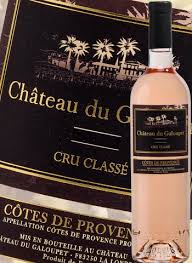
Moet Hennessy acquires Provence rose winery Château du Galoupet

Moët Hennessy, the wine & spirits arm of LVMH announced last week that they have agreed to purchase Chateau du Galoupet, a winery that specializes in Provence rosé. This will be the group’s first producer of rose wine.

Chateau du Galoupet is a 17th-century estate in the Provence region on the Mediterranean coast. The purchase includes 68 hectares of vines and the selling point for the estate is the
micro-climate, which “refreshes the vines with temperate and salty winds” which ensures consistent yields, the French luxury group said.

“In response to growing demand in France and around the world, Château du Galoupet offers a renowned rosé wine, combining ancestral methods and technical precision, adhering to the strict requirements of the fine wines of Provence,” Moët Hennessy said in a statement.

LVMH’s wine and spirits portfolio includes Champagnes like Dom Perignon and Ruinart, as well as Hennessy Cognac. Other acquisitions have included top-shelf makers of Bordeaux and Burgundy like the Clos des Lambrays estate whose grand cru bottles can retail north of $260. Now rising demand for rose — which has lately become emblematic of South-of-France savoir vivre and a staple for daytime summer parties — has seen the French luxury conglomerate buy an estate whose bottles still retail for less than $15.

Exports of Provencal rose have risen 14-fold over the past 10 years, trade association CIVP said. Exports rose 8% in value last year, roughly three times the increase for French wines overall.

Liz Palmer elected to the board of Federation Internationale des Journalistes et Ecrivains du Vin et des Spiritueux (FIJEV)

I’m soooo excited! I’ve just been elected to the board of Fédération Internationale des Journalistes et Ecrivains du Vin et des Spiritueux (FIJEV) at a meeting held today at Vinexpo – Bordeaux!

About FIJEV
The International Federation of Wine and Spirit Journalist and Writers/Fédération Internationale des Journalistes et Écrivains des Vins et Spiritueux (FIJEV) is a French non-profit association created in 1987 and is based in Paris. Its goal is to promote contacts between wine journalists and writers all over the world and to defend their profession. Beyond providing an international press card, aims at helping its members to establish contacts to editors, newspapers, and magazines in other countries; assure the recognition of its members by the producers, publishers, public relations’ organisations and all members of the trade; create contacts between organisations of the wine and spirit business organising press presentation (events, tours) and its journalist members; defend its journalist members and the freedom of the press; respect of a common code of ethics.

Who
FIJEV has more than 400 members in 60 countries.

Liz Palmer

New Zeland Wine Exports on Track to Exceed Forecasts

HAPPY SAUVIGNON BLANC DAY!

A recent report released by Dutch bank Rabobank reveals modest growth for New Zealand wine exports, with analysts predicting that the industry is on track to exceed the 2019 forecasts.

Hayden Higgins, senior analyst of horticulture and wine, said: “In early 2019, wine import growth continued the slowdown witnessed in 2018 for both the US and China, while Brexit has been thrown a lifeline, for now”.

New Zealand’s export value and volume is in line to exceed MPI 2019 forecasts. Rabobank expects overall value growth to be around NZ$60 million, representing a 4% year-on-year change.

Higgins said: “Wine export revenue to the US contracted slightly in the 12 months to February 2019 by around 1%, but the US remains our lead market by value.

“Total US wine imports, on a case equivalent basis, contracted by 4% in the 12 months to December 2018, but New Zealand achieved overall growth at the expense of other exporters such as Chile, Australia, Spain and South Africa.

“Total US import volumes contracted again in the first two months of 2019, but at a slower rate than 2018.”

Rabobank expects continuous modest US value and volume import growth for New Zealand Wine across 2019. Although downside risks do exist in 2020, with the potential for a modest US recession looming, New Zealand continues to experience strong wine export growth to China, off a small base.

In regards to Brexit, Rabobank expects importers to run down current inventory levels, and then start rebuilding stocks in the third quarter, prior to the new Brexit date.

The release of the report coincides with International Sauvignon Blanc Day today. New Zealand Winegrowers has launched a promotional campaign, beginning in New Zealand before rolling out to a series of events globally.

Chris Yorke, global marketing director of New Zealand Winegrowers, said: “New Zealand produces less than 1% of the world’s wine production, but Sauvignon Blanc shows huge popularity all over the globe, with the zesty variety making up 86% of all wine exported from New Zealand.

“International Sauvignon Blanc Day gives us an opportunity to enjoy and celebrate the diverse styles of this sought-after variety.”

Sauvignon Blanc was commercially produced on New Zealand shores for the first time in 1979, and is now New Zealand’s most widely planted variety. New Zealand wine exports are currently valued at $1.75 billion, while 98% of New Zealand’s vineyard producing area is Sustainable Winegrowing NZ certified.


Sources:  Dutch bank Rabobank

Inter Rhône has launched a new campaign across key markets for Côtes du Rhône Wines

Following a soft launch during Wine Paris, the new campaign for Côtes du Rhône Wines is being rolling out across key markets including the  UK, US, Germany, Belgium and France.

The Campaign will engage consumers between 30 and 45 and will include the tagline ‘Distinctive wines since 125 BC‘ which celebrates the region’s long history and its impact on the character, profile and quality of Côtes du Rhône wines.

The new, eye-catching campaign focuses on the intrinsic features of the appellation which have enabled the Rhône to become one of France’s leading AOC. The campaign highlights its history, the expertise of its winemakers and wine merchants, cultural heritage and provenance with a contemporary feel and a touch of wit.

Etienne Maffre, co-president of the appellation, said: “As we become increasingly globalized – notably through the internet and social media – we felt it was a good time to focus our message on our roots. The ‘Made in France’ concept continues to be a highly successful trend, synonymous of quality and authenticity. Tapping into our provenance will resonate internationally and support our premiumisation strategy”.

“Our new campaign showcases the key qualities that have made our wines so popular,” says Philippe Pellaton, joint president of the appellation.” We’re celebrating our terroir, experience, rich diversity and extraordinary heritage – elements that are truly unique to us. We’re convinced this visual approach will resonate with both the trade and curious wine lovers, in the UK and globally.”

Côtes du Rhône has always been a trail blazer when it comes to advertising, from its iconic and multi-award-winning Think Red campaign, to the data-driven ‘Everyday Sophistication’ London underground campaign of 2017.

Alongside the new ads, Côtes du Rhône is introducing a new logo which is reflective of the region’s geographical and historical roots. In a design that is both modern and heraldic, the logo links three icons of the Rhône: The Bridge of Avignon (Pont Saint-Bénézet), the river and the vine – strongly cementing Avignon as the capital and historic birthplace of the appellation.

About Côtes du Rhône Wines

The majority wines come from the southern region. 80% of Côtes du Rhône and Côtes du Rhône Villages wines are red, along with producing whites and rosés. The reds are primarily made from a blend of fruity Grenache, spicy Mourvèdre and full-bodied Syrah. Côtes du Rhône and Côtes du Rhône Villages are easy-drinking, food-friendly wines that are excellent served with a slight chill.