Global tourism surges ahead: record arrivals in the first nine months of 2025

International tourist arrivals grew 5% in January through to September 2025 compared to the same period in 2024 and 3% above the pre-pandemic year 2019.

According to the latest edition of the World Tourism Barometer, over 1.1 billion tourists travelled internationally between January and September this year, about 50 million more than in the same period of 2024.

Results reflect sustained travel demand throughout the year despite high inflation in tourism services and mixed traveller confidence due to geopolitical and trade tensions. The third quarter saw a 4% increase over 2024 with a strong Northern Hemisphere summer season.

UN Tourism Secretary-General Zurab Pololikashvili states: “International tourism has continued to experience sustained growth so far in 2025 in terms of international arrivals and most importantly in receipts, despite high inflation in tourism services and geopolitical tensions. Africa and Europe in particular stand out for their results.”

International tourism has continued to experience sustained growth so far in 2025 in terms of international arrivals and, most importantly, in receipts, despite high inflation in tourism services and geopolitical tensions

Africa continues to see the strongest performance among regions

The latest World Tourism Barometer analyzes international tourism over the first nine months of 2025 by region and sub-region. Key takeaways include:

Africa saw a 10% increase in arrivals through September, according to limited available data. Both North Africa (+11%) and Sub-Saharan Africa (+10%) recorded double-digit growth in arrivals.

Europe, the world’s largest destination region, saw 625 million international tourists between January and September 2025, a 4% increase from the same months in 2024. All European subregions enjoyed solid results during the third quarter, reflecting a strong summer season. Western Europe (+5%) and Southern Mediterranean Europe (+3%) saw robust performance, while Northern Europe (-1%) recorded more modest results. Central and Eastern Europe continued to rebound strongly (+8%), though arrivals remained 11% below 2019 levels.

The Americas recorded 2% growth this period, with a 3% increase in Q1 and Q2 but a slight drop in Q3 (-1%). Results among subregions were mixed. South America (+9%) enjoyed the best performance, despite a flat third quarter. North America (-1%) saw weaker results, partly due to small declines in the United States and Canada. Arrivals in Central America increased 3% through September, while the Caribbean (+1%) recorded comparatively more modest growth.

Arrivals in the Middle East grew 2% in January-September compared to the same period in 2024. This represents 33% more arrivals than in 2019, the strongest regional results relative to the pre-pandemic year.

Arrivals in Asia and the Pacific grew 8% in the first nine months of 2025, reaching 90% of pre-pandemic numbers (-10% compared to January-September 2019) as the region continues to recover. North-East Asia stood out with a 17% increase in arrivals relative to 2024 but remained 12% below 2019 levels.

Some of the highest growth rates in arrivals in January-September 2025 were recorded in Brazil (+45% versus 2024), Vietnam and Egypt (both +21%), as well as Ethiopia and Japan (both +18%). South Africa reported 17% growth, Sri Lanka and Mongolia both 16%, and Morocco 14%. All of these destinations have already surpassed 2019 levels.

According to IATA, international air traffic (RPKs) grew 7% in January-September 2025 versus the same months of 2024. International air capacity (ASKs) increased 6% in these nine months. Global occupancy in accommodation establishments reached 68% in September 2025, matching the rate of September 2024 (based on STR data).

Strong visitor spending across most destinations

Monthly data on international tourism receipts show strong visitor spending in several destinations through September 2025. Japan (+21%), Nicaragua (+19%), Egypt (+18%), Mongolia and Morocco (both +15%), Latvia (+13%), Brazil (+12%) and France (+9%) were among the best performers in terms of growth in receipts in the first nine months of 2025.

Strong demand can also be seen in outbound spending from some large markets such as the United States (+7% through August), France (+5%), Germany and Italy (both +4%), as well as Spain (+15% through August) and the Republic of Korea (+7%).

Results on track to reach projected growth for 2025, despite challenges

According to UN Tourism’s projection in January this year, international tourist arrivals are expected to grow 3% to 5% in 2025. While results through September are in line with UN Tourism’s forecast, factors such as high travel prices and a challenging geopolitical environment remain important downside risks.

The latest data confirms what destinations, airlines, and hospitality leaders have been sensing all year: global travel is not just recovering, it’s accelerating with remarkable strength. Rising arrivals across every region, combined with solid visitor spending and improving air capacity, show that tourism’s momentum is both broad and resilient. Despite inflationary pressures and geopolitical uncertainties, travellers continue to explore, connect, and invest in experiences at scale. As the industry heads into the final stretch of 2025, the outlook remains strongly positive. Tourism is proving once again that it is one of the world’s most adaptable sectors, shaping cultures, supporting economies, and moving confidently into a new era of growth.

SOURCE:  UN TOURISM

VIK, Chile, Named the World’s Best Vineyard 2025

The list of The World’s 50 Best Vineyards 2025 has been revealed at an awards ceremony in Margaret River, Western Australia, yesterday, with Vik (No.1), Millahue, Chile, named as The World’s Best Vineyard 2025. The list features vineyards from 15 destinations across six continents, with 11 new entries.

Vik succeeds the 2024 winner, Bodegas de los Herederos del Marqués de Riscal in Rioja, Spain, now part of the Hall of Fame. Vik is a pioneering winery and luxury hotel spanning a 4,450-hectare nature reserve, with 327 hectares of vineyards planted across 12 distinct microclimates. The winery combines sustainable viticulture with striking architecture.

Schloss Johannisberg (No.2), Rheingau, Germany, is named the Best Vineyard in Europe, renowned as the world’s first Riesling winery, with over 1,200 years of winemaking heritage. Bodegas Ysios in Rioja, Spain, is ranked at No.3.

Klein Constantia Wine Estate (No.6), Western Cape, South Africa, is named the Best Vineyard in Africa and recipient of the Highest Climber Award, sponsored by Jack’s Creek, climbing 35 places since 2024.

Aperture Cellars (No.14) in Sonoma, USA, earns the Highest New Entry Award.

Highest Climber Award, sponsored by Jack’s Creek, goes to Klein Constantia Wine Estate (No.6), Western Cape, South Africa, also awarded The Best Vineyard in Africa.

The Best Vineyard in North America goes to Jordan Vineyard & Winery, Alexander Valley, USA (No.13), renowned for immersive experiences among rolling hills, olive groves and sustainable vineyards. 98Wines, Yamanashi, Japan, wins The Best Vineyard in Asia (No.20), offering a multisensory vineyard experience with views of Mt. Fuji.

The Best Vineyard in Australasia is awarded to Cloudy Bay Vineyards, Marlborough, New Zealand (No.26), a new entry in the list, while Aperture Cellars, Sonoma, USA, earns the Highest New Entry Award (No.14).

For the full list, see here: https://www.theworlds50best.com/stories/News/the-worlds-50-best-vineyards-2025-the-list.html

Global Wine Tourism Report 2025: A Comprehensive Analysis of Emerging Trends, Economic Impact, and Sustainability in the Global Wine Tourism Sector

The recently published Global Wine Tourism Report 2025 marks a significant milestone for the international wine and tourism industries. Conducted by Hochschule Geisenheim University in collaboration with UN Tourism, the International Organisation of Vine and Wine (OIV), the Great Wine Capitals Global Network (GWC), and WineTourism.com, this comprehensive study draws on data from 1,310 wineries across 47 countries, providing the most extensive global analysis of wine tourism to date.

According to Professor Gergely Szolnoki, who led the research, the report offers a global perspective on current market conditions, consumer behaviour, and strategic innovation, helping the sector better understand the evolving expectations of wine tourists worldwide.

Over the past decade, wine tourism has become an increasingly dynamic force in the global economy. When effectively managed, it not only drives rural and regional development but also safeguards cultural heritage, environmental sustainability, and community well-being. Despite its rapid growth, the industry has long lacked robust international data, an information gap this report aims to fill through a systematic, evidence-based annual survey.

Key Findings reveal several structural and behavioural trends shaping the future of wine tourism:

Economic Contribution: Wine tourism continues to serve as a critical economic driver, generating significant revenue and employment in local and rural economies.

Profitability: Two out of three wineries report profitability from tourism, accounting for nearly 25% of total revenue.

Sustainability: Environmental and social sustainability are increasingly central to winery strategies, with two-thirds rating them as “important” or “very important.”

Regional Disparities: Europe reports rising visitor numbers, while several overseas regions experience declines, illustrating uneven recovery patterns.

Engagement: One in four wineries which have not yet engaged in wine tourism has already decided to enter the field, and half are considering doing so in the near future.

Demographics: The 45–65 age group remains dominant; however, millennials and younger travellers (25–44) represent a rapidly expanding segment, drawn to experiences combining education, gastronomy, and sustainability.

Challenges: Economic pressures, falling wine consumption, regulations, labour shortages, and digitalization demand adaptive responses.

Core Activities: Tastings, cellar visits, and vineyard tours continue to form the backbone, offering authentic experiences and personal connections.

Trends: Growing demand for authentic, local, culinary, eco-friendly, and nature-based offers, reinforced by strong digital engagement.

Strategies: Innovation is driven by storytelling, social media, food pairings, local partnerships, education, and cultural events.

Innovation & Investment: Wine tourism is widely regarded as essential for competitiveness, although actual investment levels vary.

Outlook: Half of wineries plan further investment, most anticipate growth, and nearly two-thirds see wine tourism as a resilience tool.

The Global Wine Tourism Report 2025 establishes a unique international benchmark, reaffirming wine tourism’s role as a vital catalyst for economic growth, cultural exchange, and sustainable development within the global wine landscape.

The Full report and executive summary are available at:
👉 www.hsgeisenheim.de/gwtreport

European Wine Tourism Index 2025: Ranking Europe’s Leading Wine Destinations

Wine tourism represents one of the fastest-growing segments of global cultural and experiential travel. According to a recent survey by TUI Musement, more than 91% of respondents expressed interest in wine-related travel, with the highest engagement among travellers aged 18 to 44. Responding to this demand, and coinciding with Europe’s harvest season, TUI Musement has introduced the inaugural “European Wine Tourism Index 2025,” the first data-driven ranking of Europe’s most attractive destinations for wine tourism.

Unlike perception-based surveys, the Index employs quantitative data and official registries to assess both viticultural heritage and tourism potential. By combining traditional measures of production with indicators of cultural recognition and international prestige, the Index provides a comparative framework for understanding the evolving dynamics of Europe’s wine tourism map.

Methodology

The Index evaluates European Union member states (with a minimum vineyard area of 500 hectares) across five weighted categories:

Vineyard surface area (20%)

Vineyard land dedicated to PDO and PGI wines (30%)

Number of registered PDO/PGI wines (20%)

Total wine production volume (10%)

International awards received (20%)

Data sources include Eurostat, the International Organisation of Vine and Wine (OIV), official EU registries, and the Decanter World Wine Awards 2025. Scores were calculated using a weighted average, providing an objective reflection of both wine heritage and global recognition.

The Results – Europe’s Top 10 Wine-Producing Countries

  1. France (Score: 85.2/100)

France secures first place with unparalleled prestige, the highest number of international awards, and a vast network of PDO regions.

Key regions: Bordeaux, Burgundy, Champagne

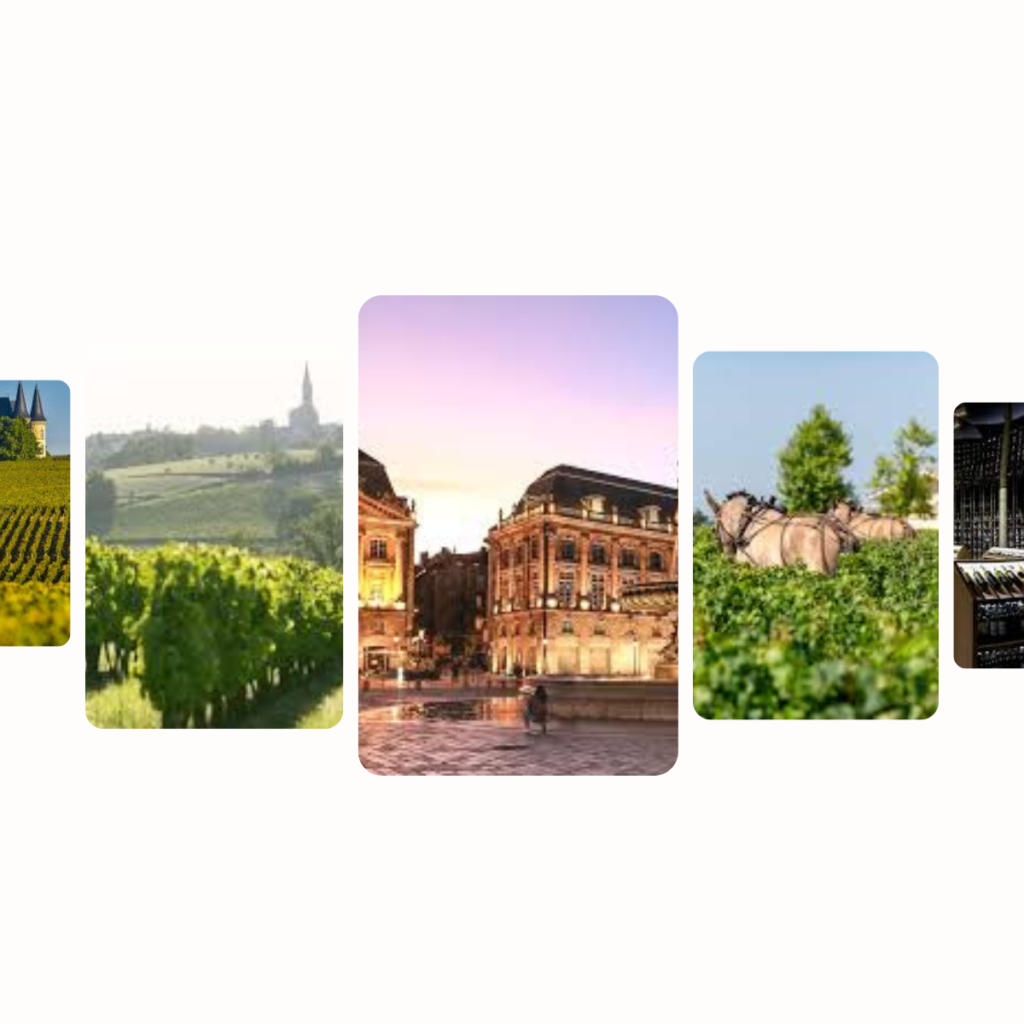
Highlights: Bordeaux’s château tours, Burgundy’s 1,000+ climats (vineyard plots) inscribed by UNESCO, Champagne’s historic underground cellars.

Experiences: Private vintage tastings, vineyard drives through Bordeaux in classic cars, cellar tours beneath Épernay’s Avenue de Champagne.

  1. Italy

Italy ranks second as Europe’s largest wine producer and the continent’s leader in PDO/PGI registrations.

Key regions: Tuscany, Piedmont, Veneto

Highlights: Tuscany’s Chianti and Brunello di Montalcino; Piedmont’s UNESCO-listed Langhe-Roero vineyards; Veneto’s iconic Prosecco hills.

Experiences: Chianti tasting with artisanal oils and balsamic vinegar, Prosecco tours in Veneto, vineyard walks in Monferrato.

  1. Spain

Spain, home to the largest vineyard area in Europe (909,367 hectares), ranks third, with 97% dedicated to PDO/PGI wines.

Key regions: La Rioja, Ribera del Duero, Rías Baixas, Jerez

Highlights: Ribera del Duero’s bold reds, volcanic viticulture in Lanzarote’s La Geria, and cava production in Penedès.

Experiences: La Rioja winery tours, sherry tasting in Jerez, vineyard hikes across volcanic landscapes.

  1. Portugal

Portugal earns fourth place through its internationally awarded wines and unique terroirs.

Key regions: Douro Valley, Alentejo, Vinho Verde

Highlights: UNESCO-listed Douro terraces, Alentejo’s bold red wines, crisp whites of Vinho Verde.

Experiences: River cruises with quinta tastings, traditional Algarve wine trails, and immersive tours of fortified Port cellars.

  1. Greece

Greece combines millennia-old heritage with an extraordinary diversity of indigenous grape varieties.

Key regions: Macedonia, Peloponnese, Santorini

Highlights: Assyrtiko from Santorini’s volcanic soils, Agiorgitiko from Nemea, and Xinómavro from northern Macedonia.

Experiences: Sunset tastings in Santorini, Peloponnesian winery tours, Crete’s wine-and-food pairings.

  1. Germany

Germany places sixth, globally celebrated for its Rieslings and scenic river-valley vineyards.

Key regions: Mosel, Rheingau, Pfalz

Highlights: Steep Mosel slopes, Rheingau’s historic Spätlese birthplace, Palatinate’s iconic Bad Dürkheim wine barrel.

Experiences: Vineyard cycling tours, river cruises with Riesling tastings, heritage wine festivals.

  1. Romania

Romania ranks seventh, drawing on deep winemaking traditions dating to antiquity.

Key regions: Transylvania, Muntenia (Dealu Mare), Dobrogea

Highlights: Fetească varietals of Transylvania, powerful reds from Dealu Mare (“Romania’s Tuscany”), and sweet wines from Dobrogea.

Experiences: Castle-linked vineyard visits, Black Sea coastal tastings, immersive food-and-wine tours from Bucharest.

  1. Hungary

Hungary, in eighth place, is synonymous with sweet wines of global renown and increasingly recognized reds.

Key regions: Tokaj, Eger, Villány

Highlights: Tokaji Aszú (UNESCO World Heritage), Eger’s “Bull’s Blood” (Bikavér), Villány’s full-bodied reds.

Experiences: Cellar visits in Tokaj, historic vineyard tours, and urban wine tastings in Budapest.

  1. Austria

Austria’s 46,000 hectares of PDO vineyards demonstrate exceptional quality control.

Key regions: Wachau Valley, Burgenland, Vienna

Highlights: Wachau’s UNESCO terraced landscapes, Grüner Veltliner and Riesling, and Vienna as Europe’s only capital city with significant vineyards.

Experiences: Danube wine cruises, half-day vineyard tours from Vienna, Burgenland’s botrytized dessert wines.

  1. Bulgaria

Bulgaria completes the top 10 with a wine history dating to ancient Thrace.

Key regions: Thracian Valley, Struma Valley, Danube Plain

Highlights: Mavrud-based reds, Mediterranean-influenced wines of Struma, and fresh Danubian whites.

Experiences: Vineyard tours of Nessebar, tastings in the Thracian Valley, and Black Sea wine routes.

The inaugural European Wine Tourism Index 2025 reaffirms Europe’s enduring role as the global centre of wine tourism. While traditional powers such as France, Italy, and Spain remain dominant, the emergence of destinations like Romania, Hungary, Austria, and Bulgaria signals an expanding and diversifying wine tourism map.

This Index provides both travellers and industry stakeholders with an authoritative framework for understanding Europe’s viticultural landscape, linking heritage with tourism potential, and mapping future opportunities for sustainable growth.

Wine Tourism Review: Dimora Cottanera on the slopes of Etna

This is a retreat where Sicilian authenticity meets understated luxury – vineyard views, an infinity pool that spills into the landscape, and gardens perfumed with exotic flowers, lavender and citrus.

Lunch by the pool was all about simplicity and elegance: seasonal dishes paired with Cottanera’s Etna Bianco.

As the sun set, the Winter Restaurant revealed its magic. We savoured the essence of Sicilian cuisine – simple, elegant flavours paired with Cottanera wines, against a stunning backdrop of mountains with their vineyards glowing in the evening light and soft mountain breezes.

This one-night stay felt like entering a different rhythm of life – where time lingers, and every detail invited me to savour the moment… final article to follow on ……www.liz-palmer.com

For further details on Dimora Cottanera https://dimoracottanera.com/