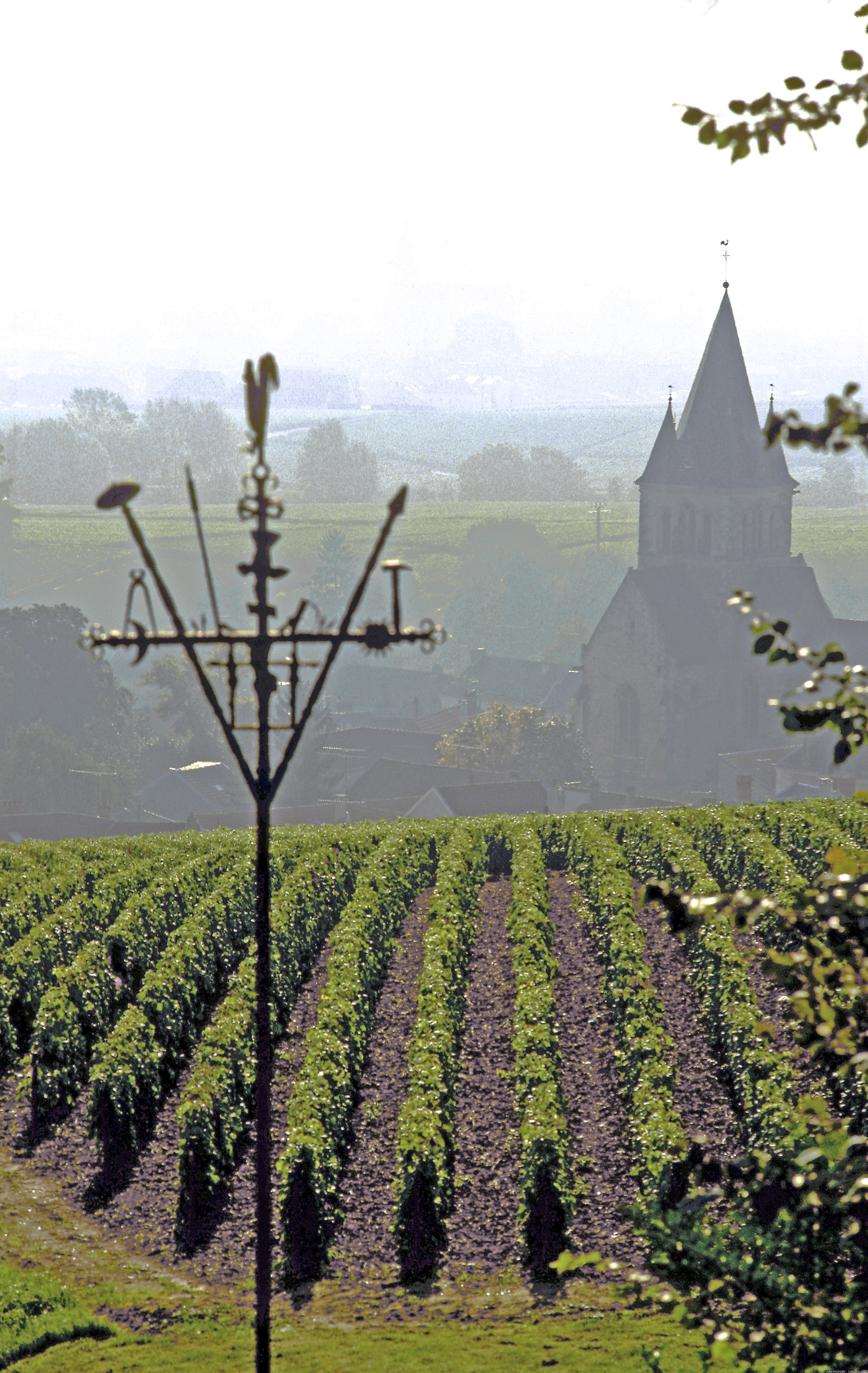
The Region of Champagne Takes the Lead on Climate Change

tiffany 053At a time when Paris is hosting the COP 21 talks that could pave the way for an agreement on combating climate change, the Champagne Region is contributing to the international effort through its pioneering commitment to sustainable and responsible wine-growing.

Global warming in the region is a fact: temperatures have increased by close to 1.2°C in 30 years and the blossoming and grape harvest dates have moved forward by a fortnight. “The Champagne Region very quickly grasped that climate change was a priority issue and we were duty-bound to plan ahead”, explains Vincent Perrin, the director general of the Comité Champagne.
The whole Champagne Region began to get involved in the 1980s, implementing solutions to protect the environment (technical specifications, decision-making tools, advice and support).

In 2003, Champagne was the world’s first wine-growing region to calculate its carbon footprint and implement a carbon plan which enabled several focus areas to be selected (sustainable wine-growing, transport and freight, building energy efficiency, responsible procurement and fostering active involvement) and led to truly innovative solutions being developed, such as reducing the weight of Champagne bottles by 7%.

In a decade, the region has managed to cut its greenhouse gas emissions by 15% per bottle shipped, making it one of the few industries to have reduced its emissions in absolute terms.
All of the region’s professionnals are now involved in the initiative.

Moreover, UNESCO’s decision to include the Champagne Slopes, Houses and Cellars on its World Heritage List is a source of encouragement for the efforts made and demonstrates the industry’s ability to preserve its heritage.

“The Champagne houses and growers are more united than ever before around a sustainable wine-growing strategy. Promoting our wines means constantly innovating so that we can pass on our economic and environmental heritage to future generations”, conclude Pascal Férat and Jean-Marie Barillère.

Source: CIVC, France


DUVAL-LEROY becomes the first “100% Vegan” Champagne House

champagne-spaThe Duval-Leroy family has just announced that their entire range is now 100% vegan friendly.

The Vertus-based producer reportedly made the move as part of a wider environmental plan it has been working towards for many years. Widely recognized today for its strong commitment to working in total harmony with nature, the Duval-Leroy has now passed a major new milestone in its history which dates back to 1859.


Charles Duval-Leroy explains: “To become 100% Vegan, we needed 20 years’ experience. A colossal project was mounted to arrive at a method of natural clarification, mainly through the lengthening of time spent in vat or in barrel. In this way the wines retain all their taste, giving champagnes which are both rich and concentrated. It’s the perfect culmination and complement to all the work that precedes it in the vineyard, in harmony with nature. With an effervescence that is even more refined, more delicate… more dynamic!”


Laboring the soils and the vines with the greatest respect for the environment, Duval-Leroy has invested in this 100% vegan approach in order to preserve and highlight the quality of the freshly picked grapes. 

Since its production is entirely in-house, Duval-Leroy can guarantee a perfect level of traceability for its “100% Vegan” wines. A natural final filtering allows the wines to retain all their proteins and polysaccharides, thus adding richness to the wines and creating an effervescence of even greater finesse.

The Duval-Leroy family are convinced that this more natural approach is a guarantee of increased quality for the years to come.

Champagne Duval-Leroy
www.Champagne Duval-Leroy
69, avenue de Bammental
CS 20037 – 51130 VERTUS – France

1st UNWTO Global Conference on Wine Tourism:September 2016 Kakheti, Georgia

1200x630_272696_kakheti-georgia-s-cradle-of-wineThe World Tourism Organization (UNWTO) in collaboration with the Georgian National Tourism Administration recently announced at the World Travel Market in London the 1st UNWTO Global Conference on Wine Tourism – the wine tourism conference will be held in the Kakheti wine region of Georgia September 7-9, 2016.

UNWTO Secretary-General, Taleb Rifai, who led the presentation with the Head of Georgian National Tourism Administration, George Chogovadze and the Georgian Ambassador to Spain, Zurab Pololikashvili, explained: “Wine tourism represents a growing segment with immense opportunities to diversify demand. In the case of Georgia, this potential is well-known and we are very pleased to be holding the first UNWTO Global Conference on Wine Tourism in the country”.

“Georgia’s unique wine-making traditions date back 8,000 years and are part of UNESCO’s intangible heritage, creating the ideal base to host the Wine Tourism Conference. Herewith, the country’s recent success in attracting a growing number of tourists, its development in terms of tourism products, branding and marketing present an excellent platform to share best practices, experience and knowledge” said Dimitry Kumsishvili, Minister of Economy and Sustainable Development of Georgia.

Gastronomy and wine have become key components for experiencing the culture and lifestyle of any destination and a growing travel motivation. To foster the development of this segment UNWTO launched in September, the UNWTO Gastronomy Network.

Unknown

For more information about the Conference, click here: 

http://affiliatemembers.unwto.org/event/1st-unwto-global-conference-wine-tourism

BULGARIAN – PART 3 – ROSSIDI WINERY

IMG_1128++Edward Kourian, owner of Rossidi Winery has been travelling with us throughout this journey and I was really looking forward to visiting his facility and tasting his wines. We drove into a gated industrial facility and parked. We have arrived at Rossidi Winery. So unique – just like the owner and his wines!
Rossidi Winery is located in the City of Sliven, 300 km east of Sofia and 130 km from both Greece and Turkey – its name is derived from the combination of the owner (Edward) and his lovely wife (Rossitsa) – hence ROSSIDI.

IMG_1126++

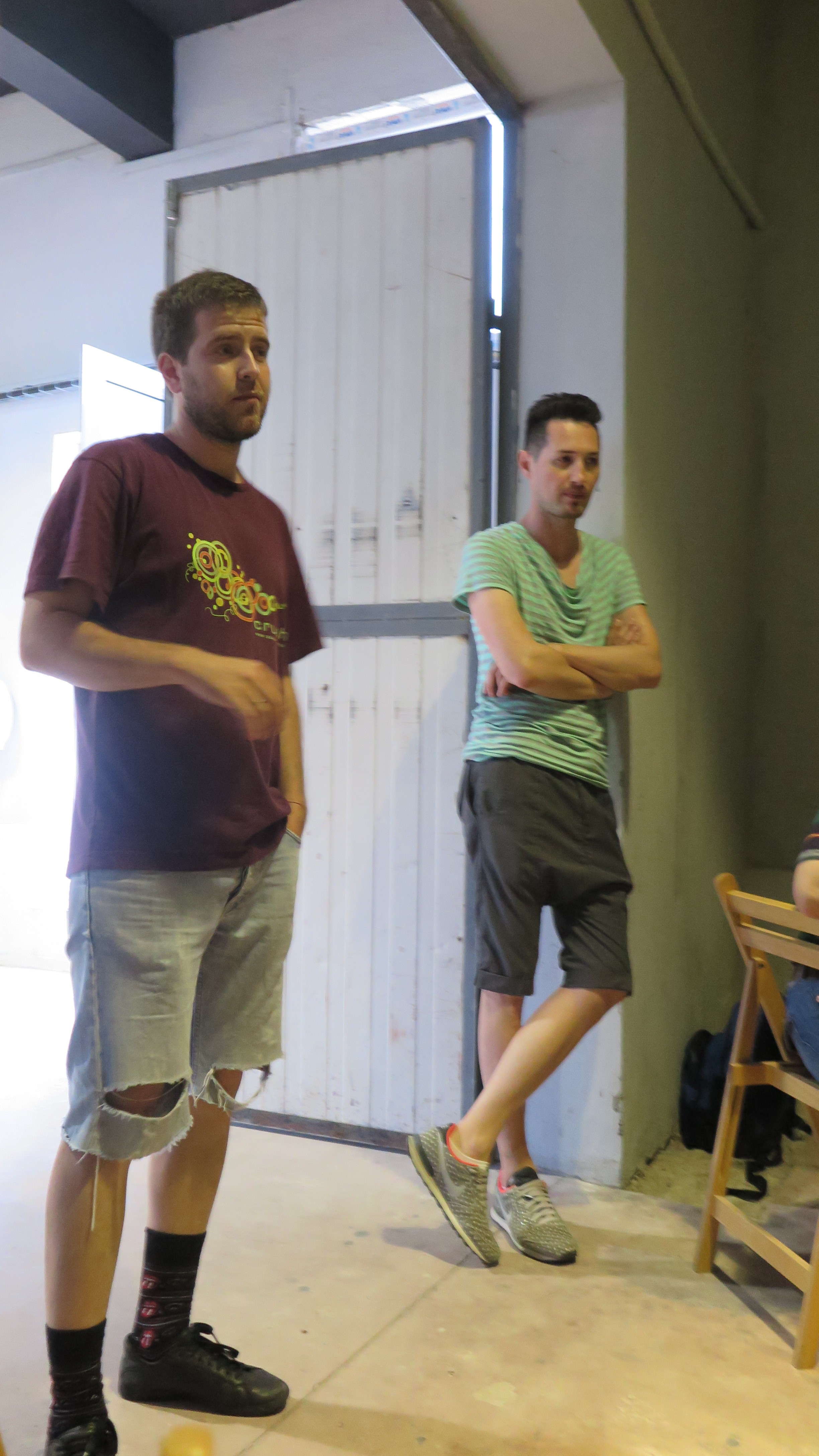
We spent the afternoon learning about Rossidi, it’s history, philosophies and indulged in some tasting. The tastings were lead by both Edward and Winemaker Peter Georgiev.

We learn that not only is Edward an oenologist, he has also studied music, engineering and graphic design, and is also one of the founding members of The Bulgarian Association of Independent Wine Growers.

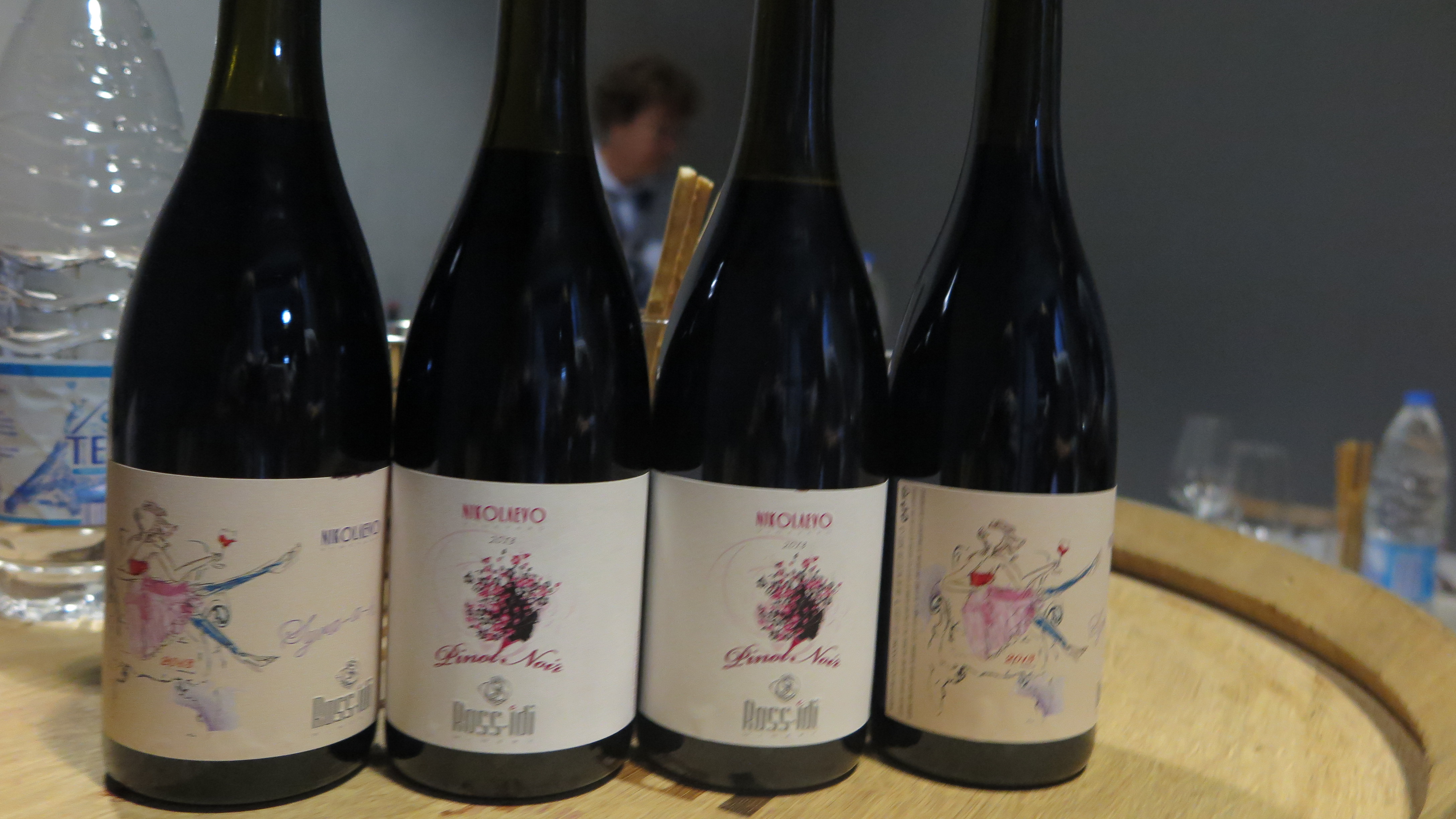
Rossidi has 40 hectares of vines with 7 currently yielding – located near the village of Nikolaevo in the Thracian Lowlands; with plantings of: chardonnay, Gewurztraminer, Pinot Noir, Merlot, Cabernet Sauvignon and Syrah. The unique labels are designed by Edward himself; each are vivid and bold reflecting the true character of the wine.

IMG_1103++


On the line up:

Rossidi Unison 2014

Rossidi Rose 2014

Rossidi Gewurztraminer 2013

Rossidi Pinot Noir 2013

*Ross-idi Winery Egg Fermented Nikolaevo 2013

Rossidi Cabernet Sauvignon 2013

Rossidi Syrah 2013

Rossidi Merlot 2013

Rossidi Cabernet Sauvignon 2012

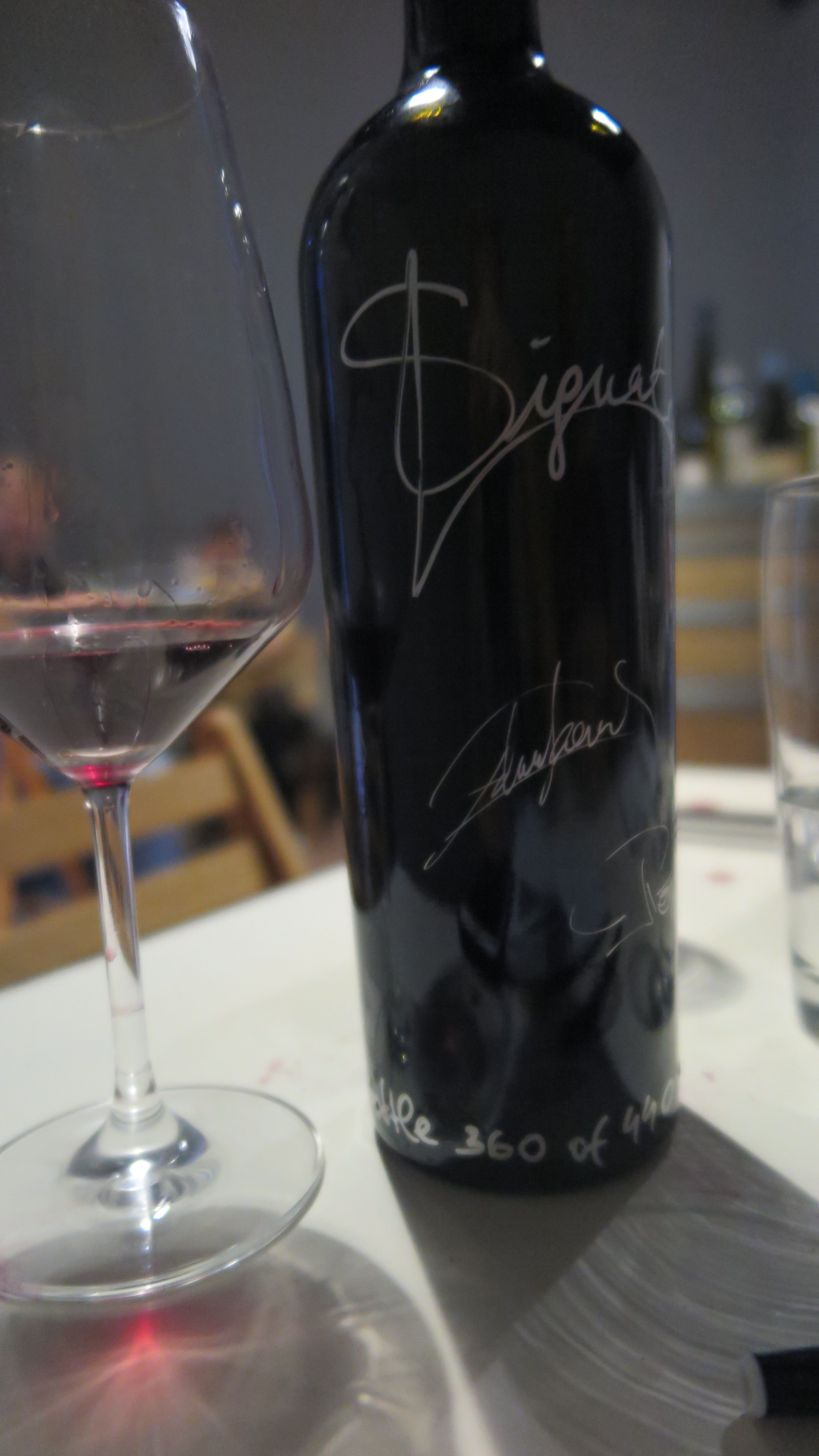
*Signature by Rossidi 2012

*Ross-idi Winery Egg Fermented Nikolaevo 2012

Rossidi Syrah 2012

Rossidi Pinot Noir 2011

Rossidi Pinot Noir 2009

*ones to watch for


IMG_1121++

Rossidi philosophy is: “The wine has to reflect the terroir it comes from and the main features of the variety it is made from and it should not be a commercial product deliberately shaped by the technologist to match the current fashionable tastes” he goes on to say “I believe we can be interesting not because we have copied someone but because we are ourselves and our wine reflects its terroir.”

IMG_1105

A distinct product is their Gewürztraminer – this grape variety is non-typical for Bulgaria

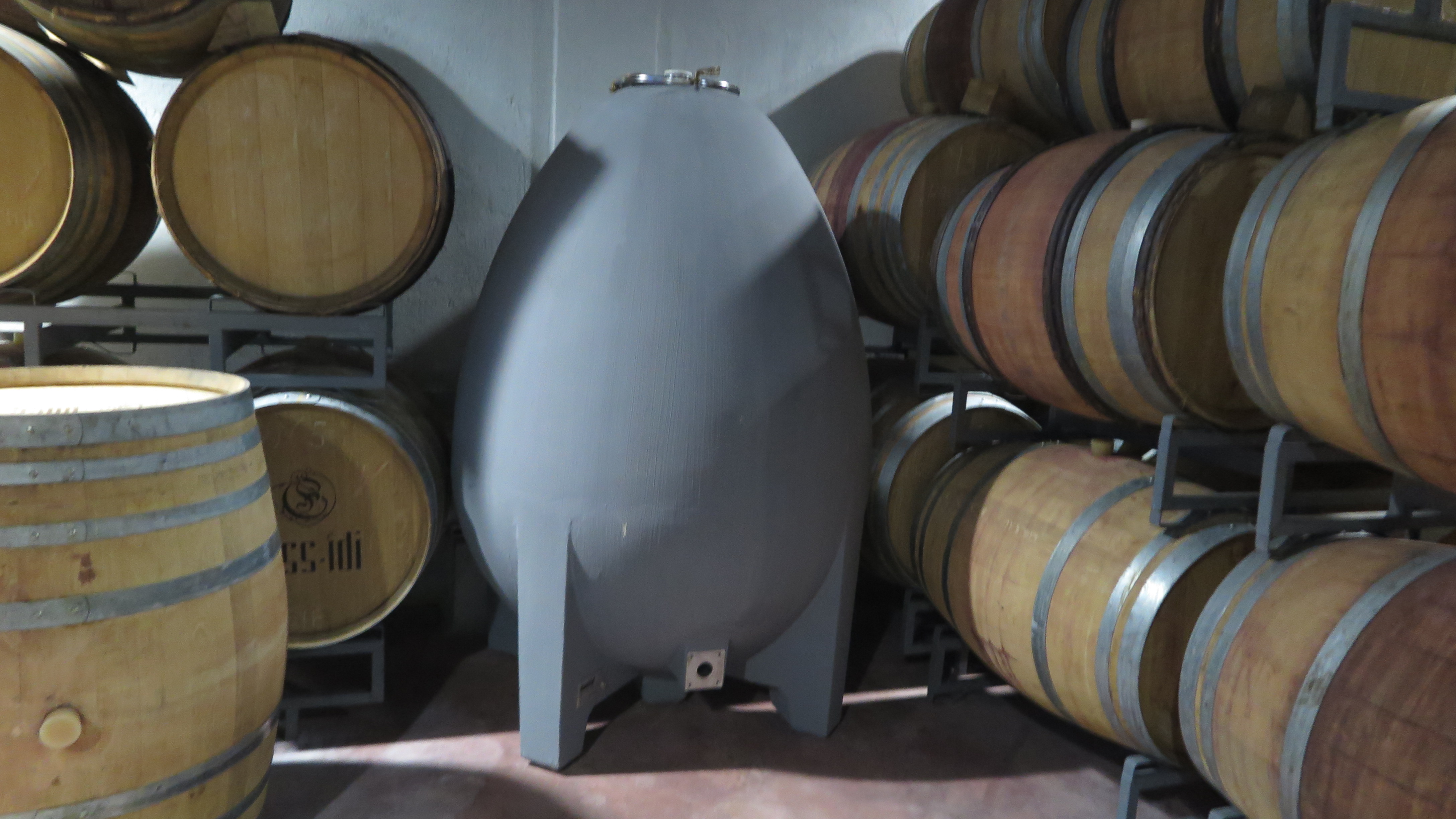
Another distinct product – they use the Egg-Shaped Concrete Fermenter for their chardonnay. With great success – for his first test run Rossidi won the only silver medal for Bulgaria at the International Wine Challenge London 2013, as well as a Decanter 2013 bronze medal.

Liz Palmer

BULGARIAN WINE – PART 2 – SOPOT WINERY

Our bus trip from Villa Teres to Sopot Winery took over two hours. Along the way we drove through the Valley of Roses – this is another beautiful part of the country. This lowland has three valleys, Balkin Mountains to the north and Sredna Gora hills to the south. Famous for its rose-growing industry, which has been cultivated for centuries, this area produces 85% of the world’s rose oil. It’s interesting to note that Bulgaria is one of the world’s largest exporter of rose oil, which is used in the production of: perfumes, creams, chocolates, liquors, jams, jellies and toothpaste. Towns of importance include: Kazanlak, Karlovo, Sopot, Kalofer and Pavel Banya. Unfortunately we missed the harvest, crowing of the Rose Queen and the sounds, sights, and wonderful fragrances of the festival by a few weeks.

IMG_0925

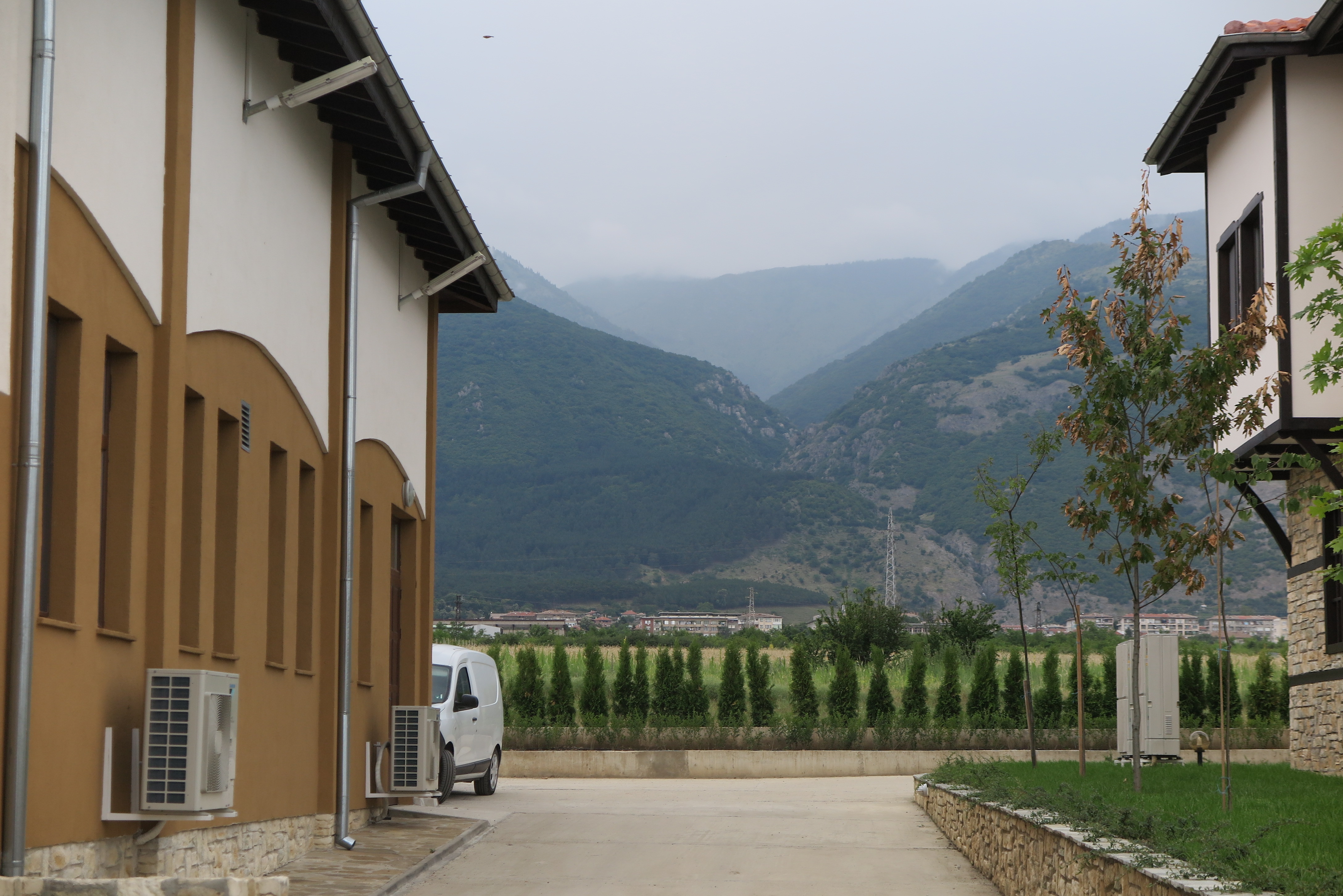
Arriving at Sopot Winery, which is 510 meters above sea level in the heart of the Valley of Roses, south of the town of Sopot – it’s one of the most favourable climatic zones for viticulture in Bulgaria, we saw spectacular views of the southern foothills of the central Balkan Mountain range.

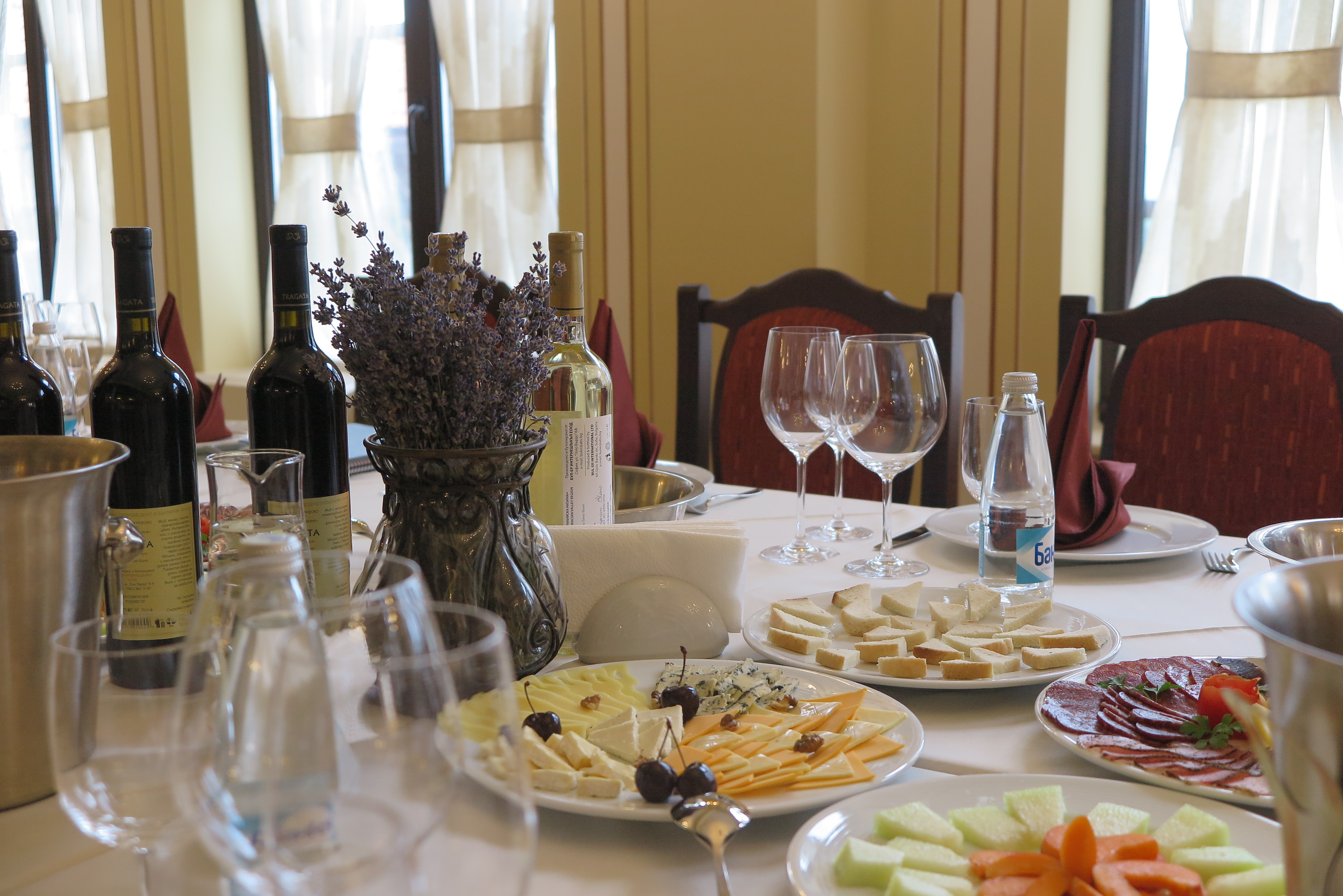
After our tour of the winery and hotel and settled in the restaurant for lunch and tasting.

IMG_0933

The principal owner is businessman Docho Shikov. Sopot Winery currently has 12 ha of vineyards, with 16-year-old vines, with majority plantings of Cabernet Sauvignon. The facility has modern, state-of-the-art equipment, with a full lab for conducting analysis and research. Head Wine Technologist, Georgi Dchorbadzhakov, goes on to say that they have “an annual production of 120,000 bottles”.

IMG_0949

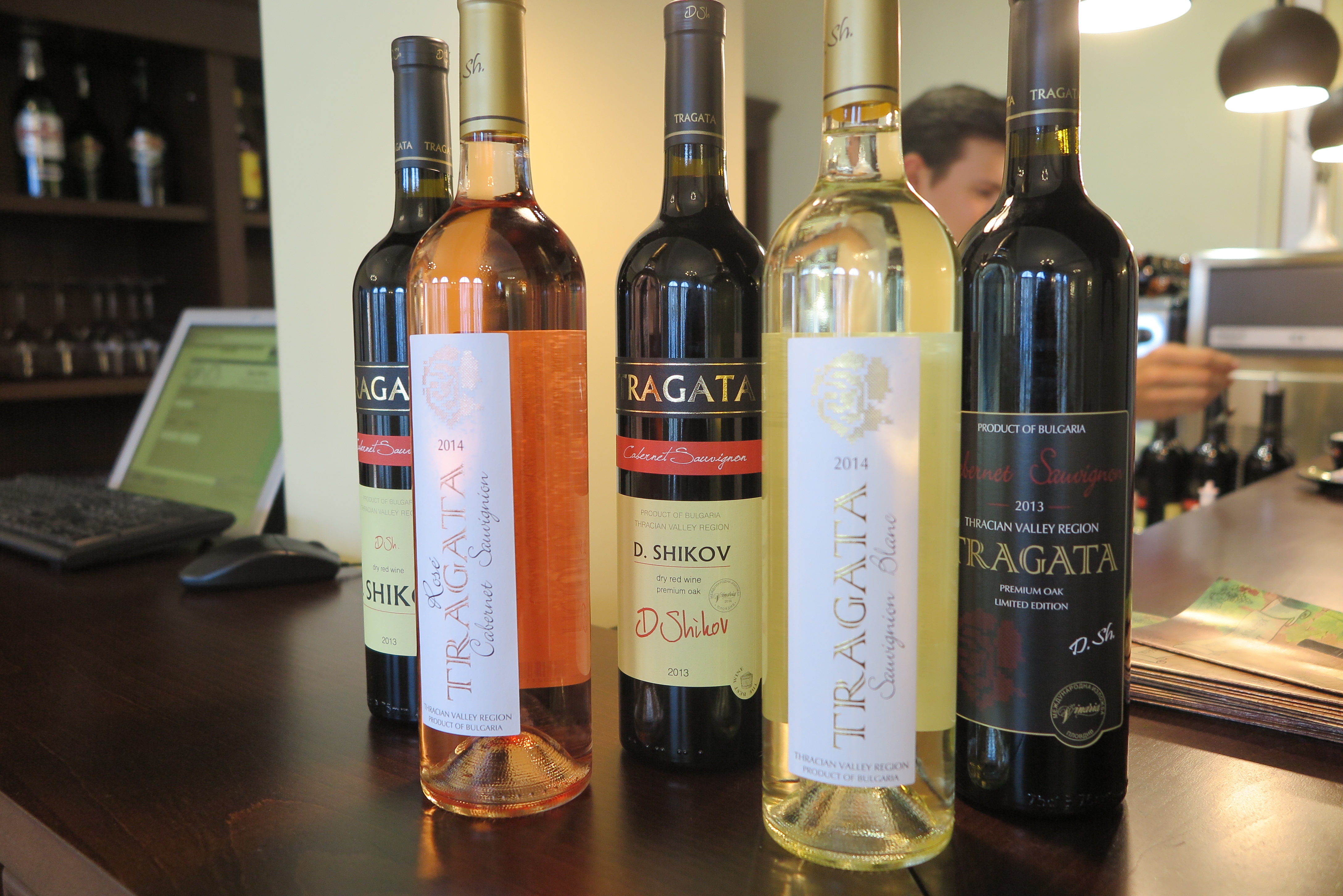
Wines worth tracking down:

Sopot Cabernet Sauvignon Limited Edition 2013
Sopot Syrah 2014

Liz Palmer