
California bars and restaurants can now offer outdoor seating

California’s bars and restaurants can reopen for table service as long as they can provide outdoor seating, according to new measures announced this week.

The Department of Alcoholic Beverage Control (ABC) in California has proposed regulations for bars and restaurants that will allow them to seat diners on the property that is “adjacent to the licensed premises”, such as pavements or car parks.

The ABC has previously ruled that on-trade outlets can offer take-out and home delivery to patrons so they could stay in business while the state’s lockdown measures are in place.

Pre-made cocktails and other alcoholic drinks are only to be sold as a take-out option if they are served with a meal.

California Governor Gavin Newsom issued a directive to close all bars, wineries, nightclubs and brewpubs in the state on March 15 and called for all seniors age 65 years or older to stay in self-isolation, in an effort to stop Covid-19 from spreading and putting a strain on local hospitals.

The temporary authorization only allows bars and restaurants to sell alcohol “during times in which bona fide meals are being served,” and allows them to use outdoor spaces that comply with public safety and welfare requirements.

Meanwhile, venues should still “encourage takeout and delivery service whenever possible,” according to California’s latest guidance for bars and restaurants issued last week.

The ABC updated its guidelines on May 19, and also ruled that licensees that do not have their kitchen facilities and do not prepare bona fide meals on the licensed premises to partner with businesses that do offer meals ( a “meal provider”) to “sell bona fide meals in conjunction with to-go containers of alcoholic beverages.”

The regulations have been amended to provide relief to the alcohol industry while it is unable to operate in full during lockdown.

Some US states are already coming out of their own lockdowns, with restaurants now able to take bookings.

The Centers for Disease Control and Prevention (CDC) issued guidance for bars preparing to reopen earlier this month as coronavirus lockdown restrictions eased.
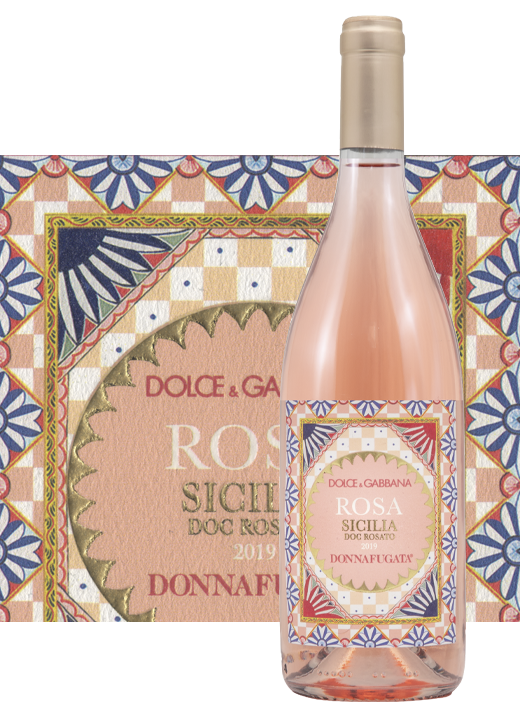
Donnafugata releases Dolce & Gabbana Rosé 2019

With rosé sales surging during lockdown, Italian fashion house Dolce & Gabbana has joined the party, and teamed up with Donnafugata by designing a label for a new Sicilian rosé – Dolce & Gabbana Rosé 2019.

Donnafugata Dolce & Gabbana Rosa 2019 is a Provençal-style pale pink made from a blend of native Sicilian grapes Nerello Mascalese and Nocera grown on the northern slopes of Mount Etna and on the hills of Contessa Entellina, near Palermo.

Tasting notes include notes of jasmine, wild strawberry, peach and bergamot, with the Nerello Mascalese adding a mineral component and the Nocera bringing red and stone fruit to the blend.

The bottle’s geometrically patterned blue, red, white and pink label, designed by Dolce & Gabbana, is inspired by the ornate detailing of traditional carts native to Sicily.

“We are Italian, we love to eat and drink a good wine, like Rosa, born from our collaboration with Donnafugata. For us it is like tasting the smells of our land, seeing it’s colours and feeling its atmosphere,” the fashion design duo said.

The wine goes on sale via the Dolce & Gabbana website June – just in time for summer.

This isn’t the first time Dolce & Gabbana have moved their brand beyond clothing. They have put their hands to everything from pasta tins for Pastificio di Martino to juicers, toasters and kettles in a lucrative collaboration with Smeg.

Website:  https://www.donnafugata.it/en/


Millennials are vital to Champagne’s future  

“Millennials are vital to Champagne’s future… because they are willing to look beyond the ‘just for celebrations’ mantra,” states Françoise Peretti, Director of the UK’s Champagne Information Bureau.

Millennials are deemed to be more digitally connected and open-minded than baby boomers.

Peretti further stressed the need to attract a younger generation of drinkers, and the potential demand among “open-minded” millennials.

“Unlike the Baby Boomers, they are open-minded consumers, willing to look beyond the ‘just for celebrations’ mantra,” she said of the age group, which covers those people from their early 20s to late 30s.

“This is their most important attribute: a desire to embrace the idea that Champagne can be a drink for the weekend, not simply New Year.”

Mentzendorff’s Andrew Hawes, who is the current chairman of the Champagne Agents Association believes that grower Champagnes are the key to unlocking the millennial market.

Hawes states “A quiet revolution has been building in the independent sector over the past few years.”  He further adds, “Independents are selling more and more grower Champagne to millennials – they are naturally drawn to the ‘craft’ credentials of smaller brands.”

In the US, Chicago-based sommelier Zach Jones recorded a similar development, and he goes on to say,  “Grower Champagne has had a huge surge in popularity with younger drinkers in the US, because there is a great story to tell and it gives younger consumers the sense that they are supporting a small family winery, not a massive machine.”

Sources:
Drinks Ontario
Champagne Information Bureau – UK

Wines of Argentina appoints Maximiliano Hernández Toso as new president

The Wines of Argentina has recently appointed Maximiliano Hernández Toso as its new president for the next two-year period.

Toso will serve a two-year term as president, supported by Guillermo Barzi, who will continue as acting vice president of the institution.

Tosco was appointed during an Ordinary General Assembly of Wines of Argentina yesterday, held over videoconference.

Hernández Toso is the co-founder and director of WHT Partners, an Argentine venture group that invests in high-end wine and owns Riglos and Huarpe wineries. He has been on Wines of Argentina’s board of directors since 2015, and previously occupying the role of treasurer.

He has an MBA from IDEA and the London Business School and a Master’s in public policy from Carnegie Mellon University, where he studied as a Fulbright fellow. Toso has also taught and directed the wine management programme at ADEN Business School and has also spent time working as a private and independent consultant to entrepreneurs, investors and multi-lateral organizations.

Commenting on his new role, Hernández Toso said: “It is a privilege for me to lead this institution, which I respect and admire for the great work it has done since its inception. We have many challenges ahead, but also great opportunities to innovate and continue bringing Vino Argentino closer to the world and raising the perception of Argentina as a modern winemaking country thanks to the enormous wealth and diversity of our terroirs.”

Vice president Guillermo Barzi, added: “Over the years, Argentina has shown that it is capable of surprising and competing internationally with great wines of the world. The goal is challenging, but we will keep the focus on collaboration agreements and education as a way to reach new audiences.”

Wines of Argentina website:  https://www.winesofargentina.org/en

Spring has finally arrived and so has the arrival of Sperling Vineyards “Spring Releases”

This vintage marks the third year of certified organic wines from Sperling Vineyards. Sperling Vineyards is British Columbia’s oldest heritage vineyard, and home of Canada’s leading organic and biodynamic winegrower Ann Sperling.

Ann Sperling and her family are pioneers, first in the history of agriculture in the Kelowna region, and in both biodynamic and organic viticulture, and winemaking practice. The proof of their success is in the long lineup of awards. Taste for yourself!  Their wines are known to be wines of elegance, texture & authenticity.

Sperling Vineyards Blueprint

Location: Kelowna, British Columbia, Canada

Established: Four generations: 1860s – land was cleared, settled and the farm was officially established in the1920s

 First vintage: 2008

Winemaker:  Ann Sperling

Viticultural Practices: Organic and Biodynamic

Estate: 45 acres

This anticipated release includes the following wines, with tasting notes.

Organic Market White 2018

Aromas of peach and orange with hints of honeysuckle;
soft on the palate with flavours of apple, apricot, grapefruit and pear; nice long and fresh finish
89 Points

Organic Pinot Gris 2018

This lovely estate-bottled PG has a nice weight; aromas of white fruits, on the mouth beach and honey, lingering with clean mineral flavours; refreshing acidity.
89 Points

Organic Natural Amber Pinot Gris 2018

Aromatically this orange wine has hints of earl gray tea, jasmine, and stone fruits; while the palate is fresh and long with texture and finishes fresh.

From the Vision series, this lovely orange wine is made from 40% whole cluster, 40% whole berry and 20% pressed juice from hand-picked Pinot Gris. Natural yeast and malolactic fermented, this wine has had nothing added and nothing taken away (no sulfites, or additives, and no fining or filtration). Being unfiltered it is slightly cloudy.
90 points

 Organic Pinot Noir 2017

This light ruby wine has some notes of spicy strawberry on the nose;
I found it to be a medium-bodied wine that is dry with some strawberry flavours and fresh acidity; excellent length.
91 points

Organic Vision Chardonnay 2017

Beautiful bright gold; on the nose, aromas of fresh apples, pear, and quince; while tasting I found it had a good weight with flavours of baked fruit and some spic; well-balanced acid keeps it fresh with a long finish.
89 Points

Organic Old Vines Foch Reserve 2017

Deep ruby colour; with a nose of plum and hints of spice; I found the wine to be medium-bodied, dry, with plum and cherry flavours; fresh and lively in the mouth with a long finish.
91 Points

Sperling Vineyards is also offering FREE SHIPPING across Canada right now, with some other tempting promotions – Market Series wines: buy 5 get the 6th free or spend $75 and we’ll include a gift with purchase.

Check out their website for details https://sperlingvineyards.com/