

Champagne Drappier is one of my favourite Aube producers in many ways. I’m happy to say that I have personally met Andre, Michel, and Charline on numerous occasions, along with my son, daughter and daughter-in-law. This wonderful family all left warm and memorable impressions.
This dynamic independent house is currently run by the charmingly and hospitable 7th and 8th generations: father Michel, daughter Charline and sons Hugo and Antoine.
Drappier is based in Urville in the Côte des Bar comes has a wide range of rich lush full-flavoured cuvees and also make still wines.
Fact: Champagne Drappier was Charles de Gaulle’s favourite Champagne and Madame de Gaulle was a great friend of the Drappier family.
The house of Drappier is unusual in many ways: they are neither a Grands Marques house, nor a grower; they own 60 hectares, so they are technically both a domaine and negociant house. Drappier is also one of the most experimental in Aube. They often use no dosage, they are pioneering ‘sans soufre’ no sulphur fizz (sulphur sensitivity runs in the family) and focus on organic viticulture.
The cuvée Carte d’Or expresses the identity of the house directed by the family since 1808.
Tasting Notes:
The Drappier Carte d’Or expresses all the aromas of Pinot Noir; this constitutes at least 80% of the blend, along with Chardonnay 15 %, and Pinot Meunier 5 %.
This champagne has a great aromatic richness of melon, apple and red fruits. The palate is intense, with notes of apple, peaches and quince wrapped in a red-fruit veil. It’s full-bodied and long with a lovely texture, and complex mouthfeel.
91 Points
#champagne #champagnelover #winelover #cheers #toast #winetasting #champagnelover #winelovers #ChampagneMoment #SavoirFaire #champagnelovers #drappier #nodryjanuaryhere #cuvee #cartedor #madeinfrance


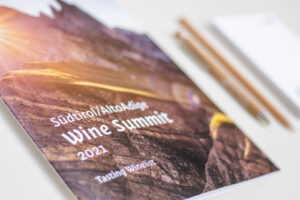
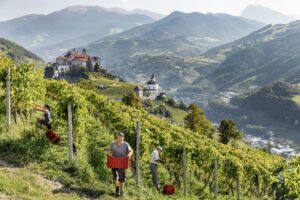 The Wine Summit is an extraordinary event that, through the masterful organization of “Consorzio Alto Adige Wines”, recants the stories and souls behind the bottles of wines from this magnificent land.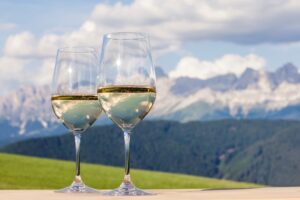
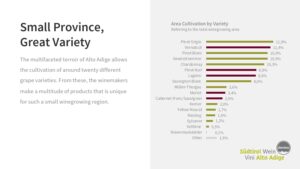 The last decades have marked a change in the level of wine production. In the past, this territory was mainly linked to two native vines: Schiava and Lagrain (two red varieties), nowadays in Alto Adige about 20 different varieties are cultivated. The air of change has been well received by the “altoatesini” winemakers, who, with conviction and passion, have changed the way of conceiving wine as a finished product, maintaining a strong link with the past. The Schiava, is still the second most used grape variety but today the production is divided into 64% production of white wines and 36% of red wines. Tradition and innovation combined to illuminate a territory that is difficult to explain just with words. In 1971 the DOC mark was introduced and today more than 98% of the viticultural surface has this certification. Today this is a land of varieties such as Pinot Blanc, Sauvignon Blanc, Gewürztraminer, Pinot Grigio, Riesling, Sylvaner, Veltliner, Müller Thurgau, Kerner, Schiava, Pinot Noir and Lagrein. They are recognized for great white wines, but also for red and sparkling wines. Elegant production characterized by exuberant freshness and important acidity is the key factor for the longevity of the wines.
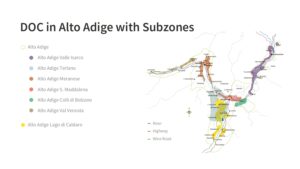 The heterogeneous features of the territory are combined with those of culture. Excellences coming from ancient traditions and the hard work of 5000 winegrowers. It is a territory united by the great love for the land, the wines produced come from private estates, micro wineries, and cooperatives. These cooperatives are aggregations of small producers who deliver their grapes each year. Even if these “cantine sociali” used to be linked to massive productions, it is important to underline that these big entities, in the last decades, have always aimed for great objectives, trying to speak for their land and reaching results of great quality. Alto Adige Doc is the smallest appellation in Italy, but probably one of the most complex. The necessity to transmit a better knowledge of this hidden territory, has oriented the Consortium towards a more detailed zonation and soil mapping to enhance the characteristics of each individual area. The officiality of the new zonation is still waiting for confirmation. However, it could be an important step for this wine district that would mark the path to follow in the future.
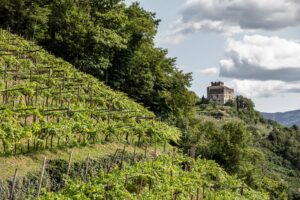 Alto Adige is an extreme and adrenaline-filled territory. A land made fascinating by the great balance of its contrasts. Nature is the master of this place, a painting with breath-taking views: white peaks, imposing mountain walls of the Dolomites, a UNESCO World Heritage site that rises up to more than 3,000m, forests, lakes, gentle green valleys and a unique play of light and shadow that is difficult to describe in a just a few lines. Alto Adige offers a wide range of travel experiences, unique for their visitors, to explore the world of wine. Mixing the greatest treats from the cellars with cuisine, sports, wellness, nature. Activities that turn the wine vacation both of wine connoisseurs and wine enthusiasts, into an unforgettable souvenir. Wine here is not just an experience linked exclusively to luxury. The history and culture of Alto Adige are deeply linked to rural traditions, men or rather “heroes” who have dedicated their lives to their precious land. It is a perfect destination for those who love less frenetic rhythms. You can spend days in the open air, between charming paths or ski slopes; walk through the different Weinberg (German word used for the vineyards, literally means “wine mountain”) and stay in authentic accommodation or participate in culinary experiences and tastings in the wineries also known as “Schloss”, the German word for “castle”. The variety of nature in Alto Adige/South Tyrol is combined with that of culture. The towns were coloured by many men of different cultures, Italians, Germans, and Latins. In this place of the thousand shades to discover, there is something that is never missing: Harmony. In South Tyrol you will leave a small piece of your heart.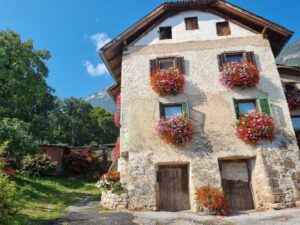

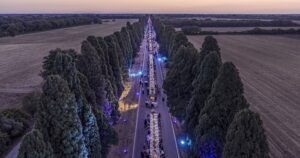
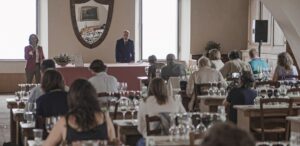
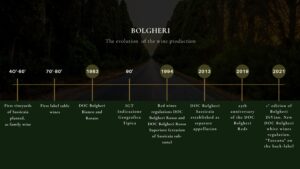
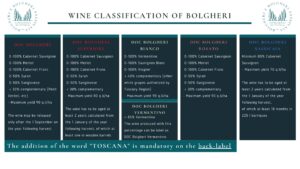
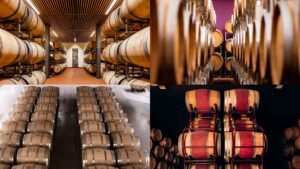 The diversification of the wineries, both in their own stories and their production, under the libertarian philosophy of the DOC cited above, permit the interpreters to tell their very personal interaction with the environment.
 I’d like to proudly underline that the Consorzio per la Tutela dei Vini DOC Bolgheri e DOC Bolgheri Sassicaia has recently become the first-ever Italian appellation WSET Corporate Patron. I am sure this collaboration will bring a great value in terms of education and qualifications to inspire and empower all the actors of the Bolgheri wine territory.