Report: AI Revolutionizes Food and Wine Tourism

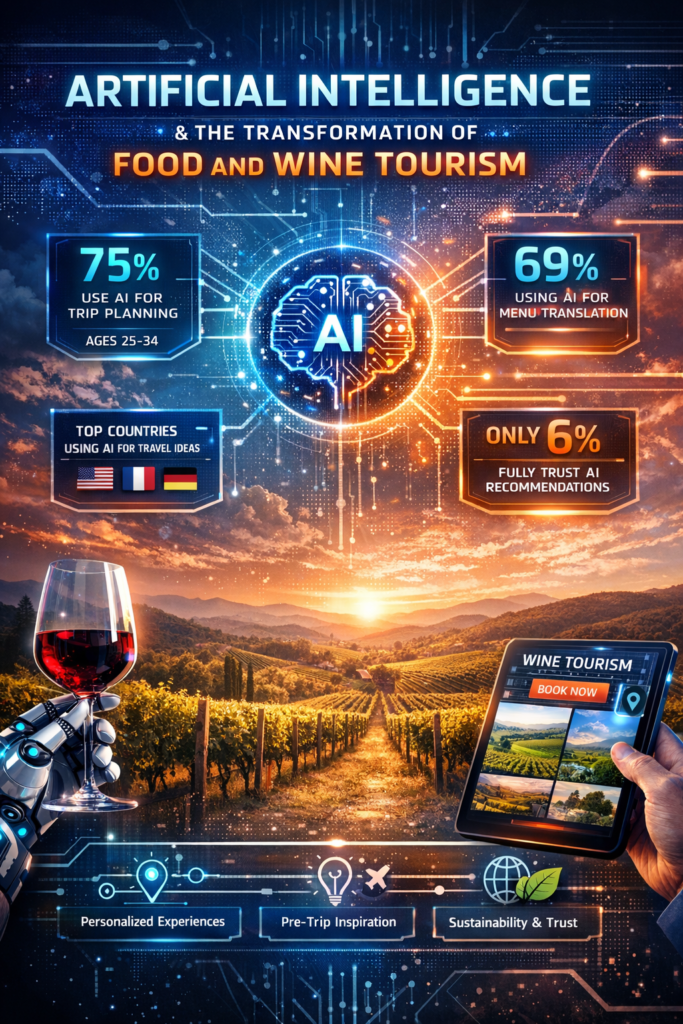
AI is fundamentally reshaping how travellers discover, plan, and experience food and wine tourism. This transformation is particularly pronounced among younger generations, as evidenced by findings from the Italian Food and Wine Tourism Report 2025.

This report, published by the Italian Association of Food and Wine Tourism (AITE) and curated by Professor Roberta Garibaldi, highlights AI’s growing role as a core decision-support tool for travellers seeking inspiration, personalization, and efficiency in trip planning. For many younger tourists, AI is no longer perceived as innovative or experimental, but rather as an integral and routine part of travel preparation.

Generational Shifts in AI Adoption

The report reveals a significant generational divide in the use of AI technologies. Seventy-five percent of travellers aged 25–34 report using AI tools to generate ideas for food and wine travel experiences, signaling a decisive shift in how destinations and experiences are discovered. Among this cohort, AI is viewed less as a novelty and more as a natural extension of digital research behaviour.

Primary Applications of AI in Travel Planning

Menu and content translation emerges as the most widespread application of AI, used by 69% of respondents overall and rising to 77% among travellers aged 25–34. This reflects the linguistic complexity of navigating regional cuisines, particularly in destinations such as Italy, where local food culture is deeply rooted in dialect and tradition.

Beyond translation, AI serves multiple planning functions:

60% of travellers use AI to generate inspiration and ideas; and

58% rely on it to search for destinations and accommodation.

These figures are notably higher among younger travellers, who integrate AI more seamlessly into their decision-making processes.

International Variations in AI Usage

AI adoption in food and wine tourism varies significantly across markets. The United States leads in the use of AI for food and wine inspiration, with 21% of travellers reporting active use, followed by France (18%) and Germany (16%). Adoption is comparatively lower in the United Kingdom, Austria, and Switzerland, where usage averages around 13%.

Trust levels follow a similar pattern. American travellers exhibit the highest confidence in AI-driven destination recommendations at 15%, compared with just 10% in Austria and Switzerland. Across all markets, however, AI functions primarily as a source of preliminary inspiration rather than a final authority.

Traditional sources remain dominant, with recommendations from friends and family commanding trust levels between 38% and 50%.

Changing Perceptions of Risk and Rising Expectations

The report notes a marked improvement in attitudes toward AI compared to previous years. Perceived risk is declining, particularly among younger travellers. 29% of individuals aged 18–24 believe the risks of AI outweigh its benefits, compared with 49% among those aged 35–44, suggesting that familiarity and repeated use foster confidence.

Travellers articulate clear expectations for AI-based services:

Ease of use (60%);

Strong data privacy protection (55% overall; 71% among 18–24-year-olds);
and

Accuracy and reliability of information (49%).

Looking ahead, respondents express strong interest in advanced AI functionalities, particularly automatic menu translation (46%) and personalized itinerary creation (36%). Younger and more experienced travellers also value detailed recommendations for food, wine, and beer pairings. Sustainability is an increasingly important factor, with approximately one-third of participants seeking low-impact routes and environmentally responsible experiences.

The Persistent Trust Gap

Despite rising usage, complete trust in AI remains limited. Only 6% of respondents report full confidence in algorithmic recommendations, though trust is higher among high-income and frequent travelers. Awareness of AI’s limitations, such as potential inaccuracies, opaque processes, and algorithmic bias, leads many users to cross-reference AI-generated suggestions with traditional sources, including personal networks and expert reviews.

Future Directions and Strategic Implications

The report identifies three key trajectories shaping the future of AI in food and wine tourism:

Growing demand for seamless and highly personalized experiences;

Increased emphasis on pre-trip inspiration rather than on-site assistance; and

The need to build trust through relevance, authenticity, and demonstrable value.

As AI becomes more deeply integrated into reservation systems and digital platforms, intelligent agents are expected to support customized, on-site experiences. For destinations and tourism operators, success will depend on providing high-quality, transparent data, particularly related to sustainability, local authenticity, and cultural integrity, which will ultimately influence how AI ranks, recommends, and promotes experiences.

As digital technologies continue to evolve, the future of food and wine tourism will be shaped by a dynamic interplay between advanced AI tools and trusted human expertise, redefining how travellers engage with culinary and wine landscapes worldwide.

Wines of South Africa has just introduced its dynamic new global brand identity “There’s Sunshine Inside”

More than a slogan, this new positioning seeks to capture the essence of South African wine – radiant, resilient, and deeply rooted in cultural authenticity.

The campaign emphasizes the distinctive qualities that define South Africa as a wine-producing nation. Under the generous African sun and across an extraordinary mosaic of terroirs, producers are crafting wines that balance vivid fruit expression with remarkable freshness and structure. Beyond stylistic excellence, the brand encapsulates an industry renowned for its innovation, sustainability initiatives, and commitment to diversity and inclusivity.

The new visual identity is bold and contemporary, featuring an updated logo and vibrant design elements that echo the energy and optimism of the country’s wines. These will be integrated across international markets beginning in 2026, supported by trade activations, digital engagement, and consumer-facing campaigns.

By unveiling “There’s Sunshine Inside” at CapeWine, the country’s flagship trade showcase, WoSA underscores its ambition to reinforce South Africa’s reputation as a distinctive, world-class wine origin. As WoSA’s new brand video illustrates, each glass of South African wine carries not only the brightness of its climate but also the spirit of its people: generous, dynamic, and forward-looking.

EU wine, spirits to face 15% US tariff starting August 1

European wine and spirits will face a 15% U.S. import tariff until a different deal is agreed in talks expected to continue in the autumn, the European Commission and EU diplomats said on Thursday, dashing producers’ hopes of an immediate reprieve.

A framework trade deal between Brussels and Washington on Sunday agreed a 15% tariff for most EU imports into the United States, although some sectors were expected to be exempted.

The U.S. tariff on European wine and spirits is currently 10%. Brussels is keen to reduce that to zero or, for wine at least, to the Most Favoured Nation (MFN) rates that are set on a fixed cost per litre basis, rather than in percentage terms.

“The Commission remains determined to achieve and secure the maximum number of carve-outs, including … wine and spirits,” Commission spokesperson for trade Olof Gill said.

“It is not our expectation that wine and spirits will be included as an exemption in the first group announced by the U.S. tomorrow. And therefore that sector will be captured by the 15% ceiling,” he said.

Winemakers said the tariff, even if temporary, would hurt the sector, especially when combined with the stronger euro.

“The 15% duty on EU wines, even if applied for some months until the negotiations are closed, would cause significant economic losses not only for EU wine producers but also for U.S. businesses involved throughout the supply chain,” said Ignacio Sanchez Recarte, secretary general of European wine producers group CEEV.

“When combined with the currency shift in the dollar/euro exchange rate, the overall financial burden on the sector could reach 30%. Investments will be halted and export volumes will decline while waiting for the final agreement,” he said.

U.S. Distilled Spirits Council President and CEO Chris Swonger also urged a quick deal to bring tariffs down to zero.

“It is extremely disappointing and utterly exasperating that the U.S. and EU have not yet come to an agreement on spirits, which is an easy win for the United States that will help secure our economic vitality during this challenging time for the hospitality industry,” Swonger said.

“It is critical for our great American distilleries, farmers and hospitality workers across the country that President Trump secure a permanent return to zero-for-zero tariffs on spirits with the European Union,” he said in a statement.

The U.S. is to publish an executive order on Friday, implementing the framework trade deal that was agreed on Sunday between U.S. President Donald Trump and European Commission President Ursula von der Leyen.

Separately, the EU and the U.S. are to publish a joint statement spelling out the details of the framework deal.

A senior diplomat said that talks on wine and spirits tariffs would continue after the joint statement. “(This will take place) probably in the autumn,” the diplomat said.

Until recently, spirits had benefited from zero tariffs between the U.S. and EU following an agreement in 1997 that also included other countries such as Canada and Japan.

That lasted until 2018, when the EU response to U.S. steel and aluminum tariffs included increased duties on U.S. bourbon and other spirits. These were suspended in 2021.

U.S. MFN rates for wine are 19.8 cents per litre for sparkling and 6.3 cents per litre for most other wines, which equates to very low rates in most cases.

Source:  Reuters

Enroute to the Vinho Verde Region [Portugal]

Heading northwest to the Vinho Verde region today. This regions spans from the Atlantic coast to the mountainous interior and iis shaped by a cool, wet climate and granitic soils that give rise to wines with distinct freshness and character.
 
Geography and Sub-Regions
Vinho Verde lies within the broader Minho region and borders the Douro Valley and Trás-os-Montes to the East, and the Dão & Lafões region to the South. The region is segmented into nine sub-regions, each contributing its own microclimatic influence and grape-growing identity:


·       Monção and Melgaço
·       Lima
·       Basto
·       Cávado
·       Ave
·       Amarante
·       Baião
·       Sousa
·       Paiva

From coastal vineyards to inland hills, these areas showcase incredible diversity in soil, elevation, and style.

Wine Styles: From Classic to Cutting-Edge
Vinho Verde is traditionally celebrated for its crisp, low-alcohol white wines, often lightly effervescent and youthful in spirit. These wines, especially those made from Alvarinho, Loureiro, and Arinto are the perfect companions for fresh seafood.
Yet today’s Vinho Verde is far from one-dimensional. Winemakers are pushing boundaries, crafting orange wines, pet-nat sparklers, and oak-aged whites that rival more established categories. This evolution reflects the region’s balance of deep-rooted heritage and dynamic innovation.

What’s in a Name?
“Vinho Verde” translates to “green wine,” but the term doesn’t refer to the color, instead, it captures the region’s essence: youthful, vibrant, and fresh. It’s a style that’s alive with acidity and minerality, echoing the region’s verdant landscape and Atlantic breezes.

Champagne Telmont Debuts the World’s First Ultra-Lightweight Standard Champagne Bottle

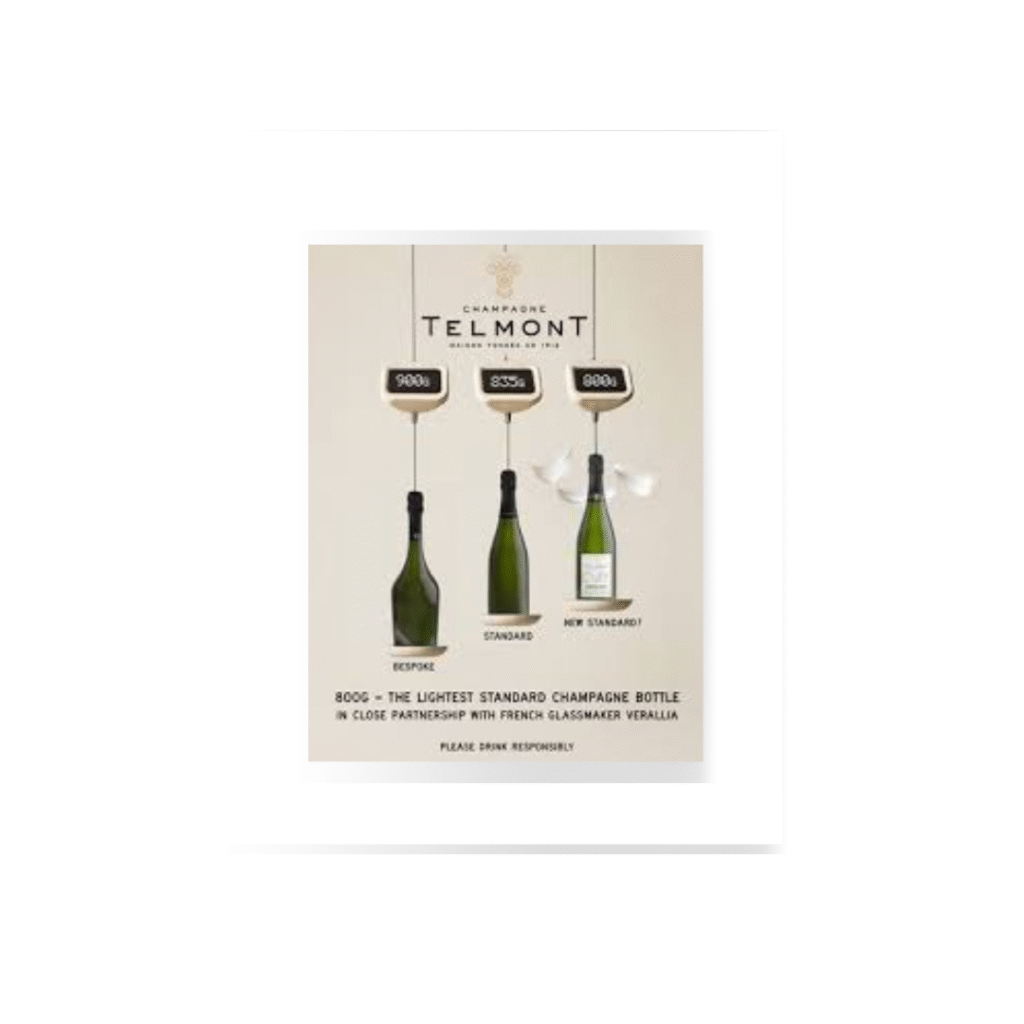
This Earth Day, Champagne Telmont introduced the world’s first ultra-lightweight standard champagne bottle to the U.S. market. Weighing 800 grams (1.76 pounds), this bottle’s debut with Champagne Telmont’s Réserve Brut marks a major milestone in sustainable winemaking, reducing carbon emissions by 4% per bottle and challenging long-held industry conventions.

Bottle manufacturing accounts for nearly 30% of Champagne’s carbon footprint. For over two decades, the standard bottle weight remained unchanged at 835 grams, with lighter alternatives dismissed as unviable due to the pressure requirements of champagne-making. But Telmont, driven by its In the Name of Mother Nature mission, challenged industry norms. After years of rigorous research and testing, the Maison vetted an eco-conscious bottle without compromising strength or elegance.

Developed in partnership with French glassmaker Verallia, Telmont co-developed a significantly lighter bottle while maintaining Champagne’s essential pressure resistance and refined aesthetic. This innovation requires no modifications to production processes or existing manufacturing equipment, ensuring seamless adoption across the industry.

“Creativity and innovation must go hand in hand with responsibility. By adopting this ultralightweight bottle, we aim to redefine industry standards and contribute to a more sustainable future for Champagne,” says Ludovic du Plessis, President of Champagne Telmont. “We aim with this new bottle to set a new standard for Champagne, in the name of Mother Nature.”

Telmont’s innovation could eliminate 8,000 tons of CO2 emissions annually if adopted industry-wide. This innovation is not subject to any exclusivity, ensuring that it benefits as many people as possible. There are no barriers to its immediate and widespread adoption across the entire Champagne region as a new standard for the appellation.

Telmont began producing the 800g bottles in 2022 with an initial run of 3,000 bottles. Following the required three-year aging process, these bottles are now arriving in the U.S. market. In 2023, production scaled to 30,000 bottles, followed by 220,000 bottles in 2024 and from 2025 on 100% of Telmont bottles will be produced at this new, lighter weight.

Champagne Telmont’s Réserve Brut will be rolling out in the 800-gram bottle through select in-person retailers and on Champagne Telmont’s website (HERE) for an SRP of $76.