
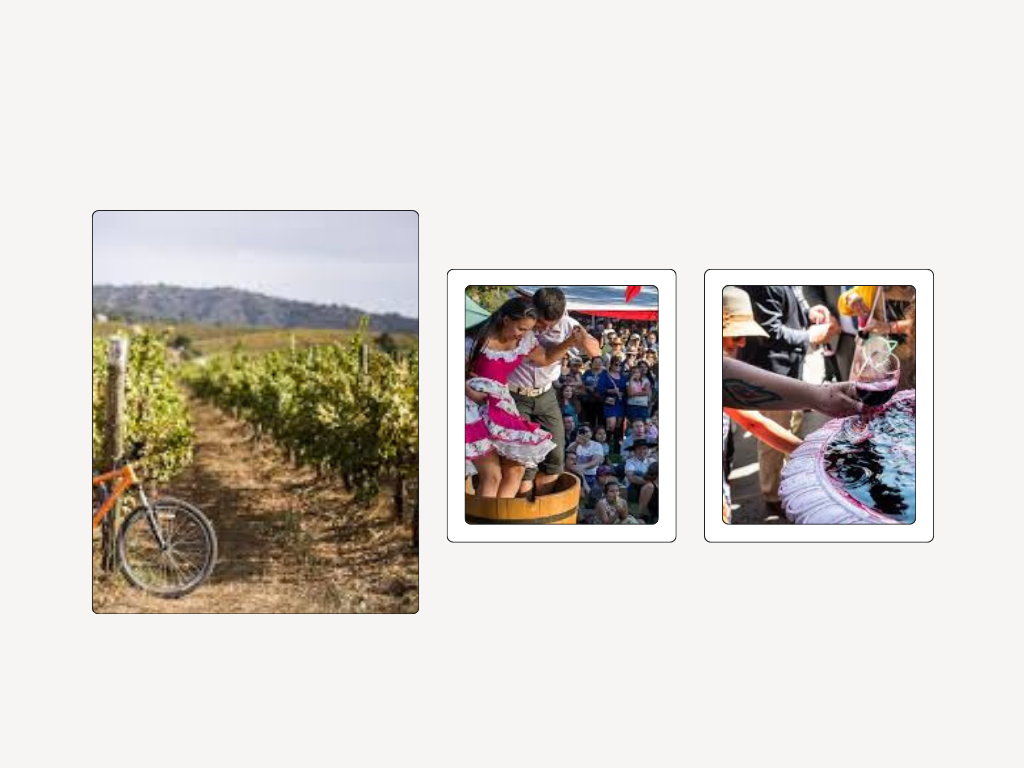
Between February and May 2026, Chile will host over forty grape harvest festivals (Fiestas de la Vendimia), transforming the annual vintage into one of the most comprehensive and strategically coordinated wine tourism programmes in the Southern Hemisphere. Extending from Arica y Parinacota in the north to La Araucanía in the south, these celebrations position viticulture not merely as an agricultural activity, but as a central instrument of regional development, cultural preservation, and experiential destination branding.
The 2026 season commenced February 13-15 in Palmilla and will conclude May 29 with the University Harvest of the University of Talca, reflecting both geographic and institutional diversity. This extended calendar enables Chile to leverage the harvest period as a sustained tourism corridor rather than a short, seasonal peak, reinforcing year-round visitation patterns and regional mobility.
Harvest Festivals as Engines of Place-Based Tourism
In recent years, Chile’s harvest festivals have evolved from localized celebrations into fully integrated tourism products. They now function as platforms through which visitors engage simultaneously with wine, gastronomy, heritage, and community life. These events increasingly reflect international best practices in experiential tourism, emphasizing authenticity, accessibility, and visitor immersion.
Rather than focusing exclusively on tastings, the festivals incorporate rural traditions, artisanal production, historical narratives, and landscape interpretation. This multidimensional approach aligns with contemporary models of wine tourism, which prioritize emotional connection, learning, and cultural participation over transactional consumption.
Visitor Profile and Market Loyalty
According to the Visitors Profile 2025, jointly developed by Chile’s Undersecretariat of Tourism, Enoturismo Chile, and the University of Talca, harvest festival audiences demonstrate strong regional embeddedness and repeat visitation patterns. The study reports that:
• 61% of attendees are female;
• 77.9% originate from the host region;
• 26.3% are first-time visitors;
• 62.2% attend multiple festivals per season.
These figures indicate a mature domestic market characterized by high levels of loyalty and social integration. Rather than relying primarily on international flows, Chile has successfully cultivated a resilient local and regional visitor base, strengthening economic sustainability and community participation.
Visitor satisfaction levels further reinforce this positioning. In 2025, 79.2% of participants rated their experience at six or seven on a seven-point scale, highlighting safety, service quality, and efficient access to tasting infrastructure as key determinants of perceived value.
Diversity, Innovation, and Regional Differentiation
Chile’s 2026 harvest calendar illustrates remarkable territorial diversity. Established events, such as the Curicó Harvest Festival (Chile’s oldest) and the Colchagua Harvest Festival, one of its most internationally recognized, coexist with innovative formats that reinterpret wine culture in contemporary contexts.
Notable examples include:
• Desert harvest celebrations in the Pampa del Tamarugal;
• Urban festivals in Santiago’s Barrio Italia;
• The centenary Pirque Wine Festival, featuring over thirty wineries;
• Heritage-based rural experiences combining traditional milling and gastronomy;
• The “Memory Train” initiative in the Aconcagua Valley.
This diversity enables Chile to present itself not as a monolithic wine destination, but as a network of distinctive micro-territories, each with its own narrative, identity, and tourism proposition.
Digital Infrastructure and Visitor Accessibility
A critical component of Chile’s harvest strategy is the integration of digital planning tools. Through the Enoturismo Chile Harvest Map, developed with support from CORFO, visitors can access real-time information on dates, locations, transport links, and programming.
As Alicia Ortiz, Manager of Enoturismo Chile, notes, the platform responds directly to the need for transparent and accessible information, enabling visitors to plan itineraries efficiently and reducing barriers to participation. This digital infrastructure reflects broader trends in destination management, where data-driven platforms increasingly mediate visitor engagement and spatial mobility.
Strategic Implications for Global Wine Tourism
Chile’s harvest festival model illustrates how coordinated event ecosystems can function as long-term destination assets. By integrating community participation, academic institutions, digital platforms, and quality certification, Chile has developed a replicable framework for sustainable wine tourism development.
The 2026 season reinforces the country’s leadership in Latin American enotourism and positions harvest festivals as instruments of cultural diplomacy, rural regeneration, and experiential branding. For international observers, Chile offers a compelling case study in how viticultural heritage can be mobilized within contemporary tourism economies.
Sources and References
• Undersecretariat of Tourism (Chile), Enoturismo Chile & University of Talca (2025). Visitors Profile 2025: Wine Tourism and Harvest Festivals.
• Enoturismo Chile. Mapa de Vendimias 2026. https://www.enoturismochile.cl/mapa-de-vendimias/
• CORFO Chile. Wine Tourism Development Programmes.
• De Chile al Paladar Team (2026). “Chile starts the grape harvest season with more than 40 festivals.”
• UN Tourism (2025). Global Report on Wine Tourism.