Champagne Deutz: A Holiday Standard

Nestled in the premier cru village of Aÿ, in the historic Champagne region of northeastern France, Maison Deutz occupies a place in the pantheon of classic Champagne houses that feels both rooted and unexpectedly electric. Founded in 1838 by William Deutz and Pierre-Hubert Geldermann, this house emerged from the great era of négociant ambition, carving out a reputation for finesse and stylistic consistency that has endured for nearly two centuries.

Location and Tourism

Aÿ sits like a jewelled hub just west of Épernay, think of it as Champagne’s scholarly precinct, where chalky soils and Pinot Noir harmonize across the landscape. Tourists, sommeliers, and curious travellers come here to explore terroir and technique. Tasting experiences in the Deutz cellars are examinations in slow maturation: centuries-old chalk caves that feel like cathedral crypts dedicated to bubbles, each bottle a lesson in time, texture, and terroir. Visiting Champagne Deutz is an immersion in the geography and geology of effervescent elegance.

Acquired in the late 20th century by the Rouzaud family, custodians of Louis Roederer, Deutz has blended its legacy with renewed vigour while preserving traditional techniques. The house today balances respect for its heritage with an eye toward how modern palates approach complexity, balance, and pleasure.

Champagne Deutz stands as a living museum of viticultural tradition: chalk labyrinths, vineyard tours through storied parcels of premier and grand cru, and tastings that pair textbook technique with experiential delight.

Celebrate the Holidays with Deutz Classic Brut

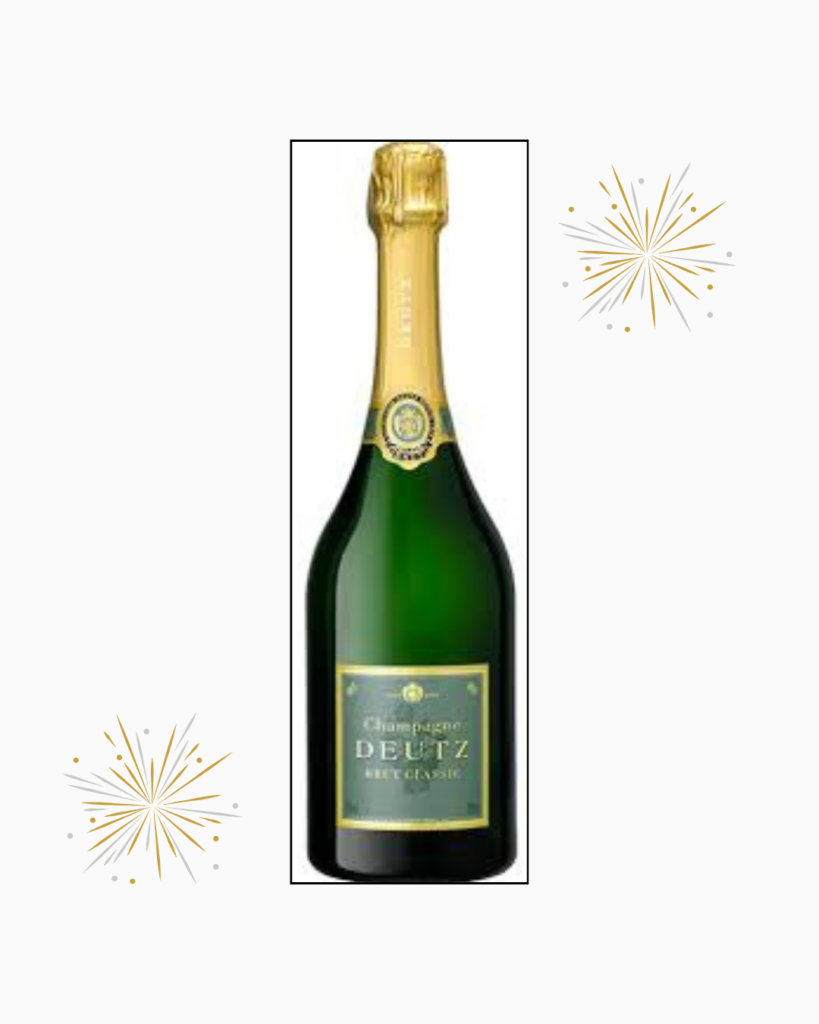
If you gravitate toward Champagnes that feel both classic and stimulating, not loud, simply intellectually stylish, Deutz Classic Brut is for you. This non-vintage blend is built on a near-perfect equilateral triangle of Chardonnay, Pinot Noir, and Pinot Meunier, each contributing about a third of the whole. Around 20–40% reserve wines are folded into the blend to maintain house consistency and depth year after year, an oenological time capsule that speaks to complexity without pomp.

Deutz Classic Brut: Tasting Notes

In the glass, it shows a deep golden hue with an ultra-fine mousse, the effervescent whisper synonymous with long cellar ageing. On the nose, it reveals delicate white florals offset by richer aromas of toasted brioche, marzipan, and ripe pear.

The palate brings crisp freshness from Chardonnay, wrapped in the supple richness that Pinot Noir provides so well. Integrated fruit notes lean toward apple and pear, with hints of citrus and an underlying mineral clarity. The finish lingers with textured elegance.

Why Champagne Deutz?

Drinking Deutz Classic Brut during the holidays is like revisiting a trusted chapter in a favourite book: it brings comfort, stylistic integrity, and small surprises with every sip. This is the Champagne that feels like a warm toast among old friends and new ideas, a bottle that honours the past while sparkling fully in the present.

Champagne Laurent-Perrier: Two Iconic Expressions for the Holiday Season

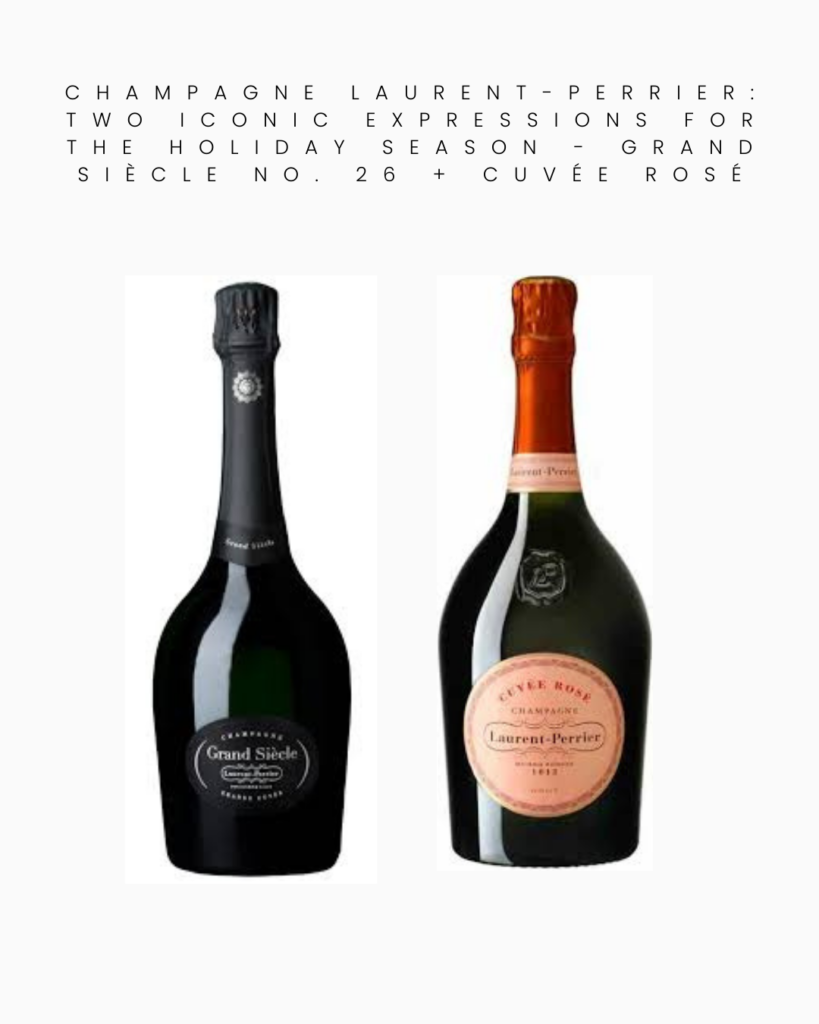
Among the many Champagne houses that balance intellectual rigour with pure pleasure, Laurent-Perrier stands confidently at the top of the pyramid. For the holiday season, two cuvées in particular capture my attention, both for celebratory exuberance and contemplative depth: Grand Siècle No. 26 and Laurent-Perrier Cuvée Rosé. Each expresses a different philosophy of luxury – one built on time, precision, and layered complexity, the other on immediacy, purity of fruit, and joy. Together, they form an ideal festive pairing.

About Champagne Laurent-Perrier

The house known today as Laurent-Perrier traces its origins to 1812, when André-Michel Pierlot, a cooper and bottler from Chigny-les-Roses, established his enterprise in the Grand Cru village of Tours-sur-Marne. His acquisition of vineyard parcels known as Les Plaisances and La Tour Glorieux laid the viticultural foundations for what would become one of Champagne’s most influential independent houses.

Over the course of the 20th century, particularly under the visionary leadership of Bernard de Nonancourt, Laurent-Perrier evolved from a respected regional producer into a global Grande Marque, exporting to more than 140 countries. The house became synonymous with freshness, elegance, and technical innovation, pioneering the use of stainless-steel fermentation and challenging conventions with non-dosé and rosé Champagnes produced by maceration.

Today, Laurent-Perrier remains a family-owned business, continuing to strike a balance between heritage and modernity. Its stylistic identity is unmistakable: Champagne is defined not by power alone, but by finesse, clarity, and restraint.

Tasting Notes

Laurent-Perrier Grand Siècle No. 26

This prestige multi-vintage cuvée is composed of three exceptional years rather than a single declared vintage. Predominantly Chardonnay, complemented by Pinot Noir, it is sourced exclusively from Grand Cru vineyards.

Grand Siècle is built on Laurent-Perrier’s philosophy of creating a “perfect vintage in a bottle.” Extended lees ageing in chalk cellars allows the wine to develop extraordinary depth while preserving freshness. It rewards both patient cellaring and thoughtful immediate enjoyment.

Tasting Profile

On opening, the nose is refined and expressive: brioche, toasted almonds, hazelnut, warm pastry, honeyed nuances, and citrus peel. With time in the glass, additional layers emerge, including candied citrus, white flowers, gentle spice, gingerbread, and a finely etched mineral line. The palate is rich yet controlled, with a creamy, seamless mousse and remarkable balance between acidity and depth. Flavours of toasted nuts, brioche, citrus zest, and subtle stone fruit unfold toward a long, mineral-driven finish. The impression is confident, complex, and quietly powerful.

This Champagne is for slow contemplation and refined holiday meals such as white truffle, veal, fine poultry, or a perfectly roasted turkey. Grand Siècle No. 26 doesn’t shout; it resonates.

97 Points
Liz Palmer

Laurent-Perrier Cuvée Brut Rosé

This non-vintage rosé Champagne is made from 100% Pinot Noir, produced using the saignée (maceration) method, rather than blending in red wine. This technique preserves purity, structure, and aromatic precision.

Vinified with meticulous attention to aromatic clarity, the wine reflects Laurent-Perrier’s hallmark freshness and technical precision. Stainless-steel fermentation and careful lees management deliver intensity without heaviness.

Tasting Profile

In the glass, a delicate salmon-petal hue with fine, energetic mousse. Aromatically vivid, offering freshly crushed raspberries, wild strawberries, red currant, and hints of cherry, accented by subtle florals and a whisper of brioche. On the palate, the texture is silky and rounded, with bright red-berry flavours leading into gentle creaminess, a light mineral edge, and a refreshing, balanced finish.

Charming, expressive, and endlessly versatile, this cuvée rosé shines as an aperitif and pairs effortlessly with seafood, lighter holiday dishes, or even spicy cuisine. It’s festive energy in a glass.

94 Points
Liz Palmer

Wine Tourism

Laurent-Perrier’s headquarters and principal vineyards are located in Tours-sur-Marne, in the heart of Champagne. Its prestigious Château de Louvois, a 17th-century estate associated with Grand Siècle, reinforces the house’s connection to heritage and grandeur. The château’s Orangery, restored in 2023 and awarded the Pierre Cheval Prize, reflects ongoing investment in cultural preservation.

Laurent-Perrier maintains a discreet, curated visitor policy. While public tours are not guaranteed, select visits—often for trade or VIPs—offer access to some of Champagne’s most extensive cellars. In the context of Champagne’s tourism boom following UNESCO designation, Laurent-Perrier appears strategically positioned for high-end, heritage-driven experiences rather than mass visitation.

Reflections: Why Laurent-Perrier Still Matters in 2025

Laurent-Perrier occupies a rare space in Champagne: intellectually serious, technically innovative, yet emotionally accessible. Its willingness to challenge tradition, while respecting it, has shaped a style that is fresh, refined, and enduring. In an era where wine tourism increasingly values authenticity and cultural depth, Laurent-Perrier’s quiet confidence and curated approach feel not only relevant but refreshingly modern.

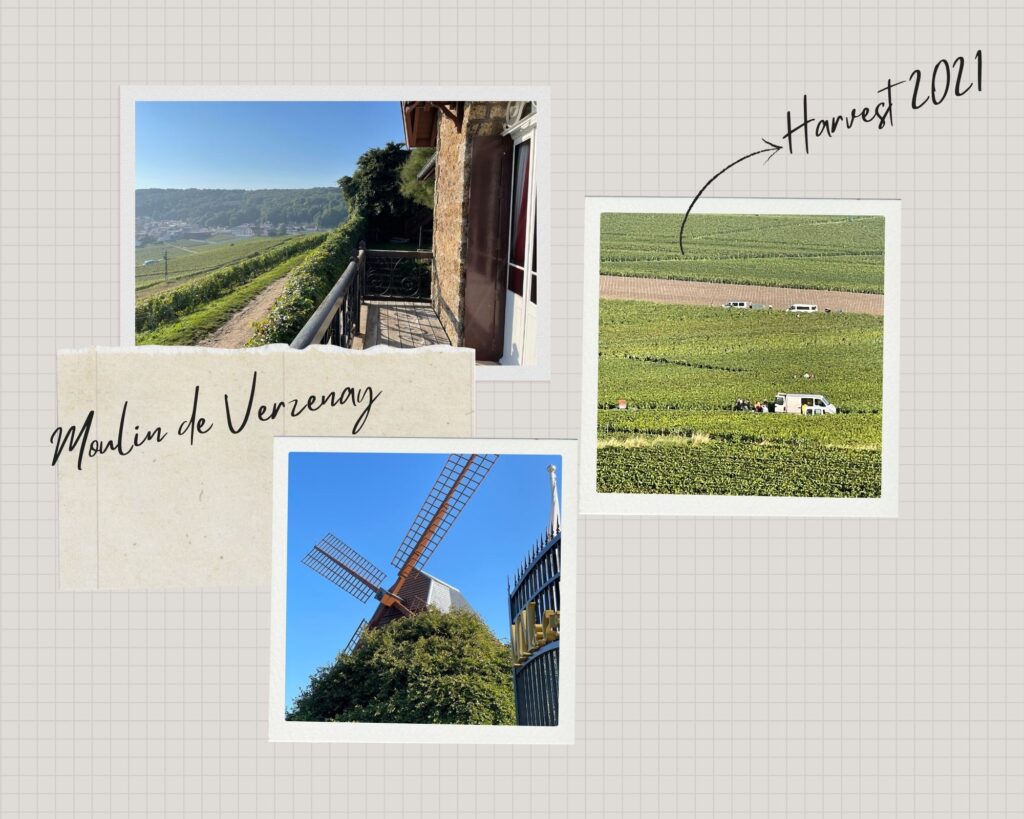
Some more photos of my visit to Moulin de Verzenay

Here are some more photos of my visit to Moulin de Verzenay and the surrounding views. 

Mumms 2021 Harvest – Part l – Moulin de Verzenay article can be found www.Liz-Palmer.com

#france #champagne #mumm #mummchampagne #moulin  #vineyard #architecture #winery #verzenay #routeduchampagne #history #harvest #wineharvest #moulindeverzenay #montagnedereims #mumm #cordonrouge #maisonmumm #ghmumm #pinotnoir #vineyards #grandcru #pinotmeunier #chardonnay #champagne #champagnelovers #winelover #winetourism #wineexperience #winetravel #winelovers #winedestinations #vendange #winehistory #MoulindeVerzenay 

Reims Tourism Office offers free Champagne to promote tourism

Attracting tourists post-Covid is undoubtedly a challenge. The Greater Reims Council has launched a new initiative called “Champagne, to make your summer awesome!” Visitors to the city will be treated to a bottle of grower Champagne. The greeting has an undeniably elegant touch, though there are some strings attached.


A total of 3,000 bottles, sourced from 68 different producers, will be given (one/adult) to those who qualify. The giveaway is said to have cost €50,000.


This initiative was launched July 15 and is subject to certain criteria. To qualify, tourists must spend at least two consecutive nights in the City of Reims, or the surrounding area, and stay in a hotel, guesthouse or gîte. Airbnb does not qualify. Also, during their trip, visitors must eat in a local restaurant and order at least one dish and drink. Fast food outlets are excluded from the list. Finally, in order to qualify, tourists must provide proof that they have paid for one leisure activity, such as renting a kayak, a winery visit, bike hire, or cinema ticket. Once they have paid for these holiday treats, visitors are required to go to the Reims tourist information office to receive their complimentary bottle.

This follows news of poor sales of Champagne during the Covid-19 pandemic. Industry body Comité Champagne said that sales were down 32% for the period January to May compared to the same period in 2019.

The Royal Champagne Hotel & Spa Opens

“Follow the road of the golden bubbles”
MAITRE DE MAISON – NICOLAS BÉLIARD –

 Champagne’s first contemporary luxury hotel, The Royal Champagne Hotel & Spa officially opened this week.

Embracing the lush bounty of the champagne houses and the surrounding UNESCO World Heritage sites, guests will have exclusive access to private Champagne houses, harvesting sessions with local wine producers and tastings personally curated by the in-house concierge team.

The Royal Champagne Hotel & Spa boasts an enviable location right in the middle of the vineyards that stripe the hills of Epernay, the capital of Champagne, and the historic villages of Champillon and Hautvillers of Dom Perignon fame. Reimagining a wine-country retreat for all seasons, local Reims-based architect Giovanni Pace has designed the property in the style of a contemporary amphitheatre, incorporating the original 19th Century Post House where it is said that King Charles X of France stopped over before heading to Reims for his coronation.

‘Champagne’ rooms start at £489.92 per night feature a king-size bed and private terrace.

The top tier ‘Josephine’ suite meanwhile, will set you back £1,068.71 a night and boasts a sitting room and balcony overlooking vineyards.

Each of the 49 rooms in the 16,000 square foot space features Hermès bath products.

The original property has been closed since 2014 after it was acquired by Boston-based Champagne Hospitality collection, a group of boutique luxury hotels and spas that includes the award-winning Le Barthelemy Hotel & Spa in St. Barths. The hotel is led by Nicolas Béliard, formerly General Manager of the Peninsula Paris.

Royal Champagne Hotel & Spa is home to the region’s first world-class destination spa spanning 16,000 ft. In partnership with acclaimed French brand Biologique Recherche, the wellness centre comprises nine treatment rooms; state of the art fitness facilities; a wood-lined yoga studio; eucalyptus-infused sauna; manicure and pedicure stations, and a mosaic-tiled Hammam. Completing the experience are two temperature-controlled, chaise longue-lined swimming pools – one indoor, one outdoor – along with dedicated staff who deliver invigorating juice blends and guide guests to multiple relaxation lounges. Biologique Recherche offers a highly personalised approach, with signature treatments including the ‘Soin seconde peau / Second skin treatment’, a regenerating and lifting facial treatment. All products are formulated using pure natural or biotechnological compounds and are fragrance free. Spa packages and retreats will also be available throughout the year.

Two-star Michelin chef Jean-Denis Rieubland is the Royal Champagne Hotel & Spa’s Executive Chef, where he leads the two gastronomic dining experiences – a gourmet dining room, Le Royal, and a more casual, all-day restaurant, Bellevue. Formerly Executive Chef of Le Chantecler at the Negresco Hotel in Nice, Chef Rieubland brings the highest level of gastronomy to Royal Champagne, where he will preserve French ‘know-how’ while injecting a contemporary touch. Rieubland’s cuisine is influenced by the local surroundings, working closely with farm producers of the region. He will also be developing a Chef’s garden on a large terrace overlooking the hills of Épernay.

www.royalchampagne.com