Pre–New Year’s Dinner: Why Louis Roederer Collection 245 and Cristal 2016 Redefine Celebration


Some evenings feel like prologues. The eve before New Year’s Eve is one of them, less noise, more contemplation. It’s the space where conversation deepens, and Champagne becomes less of a party trick and more of an essay in liquid form.

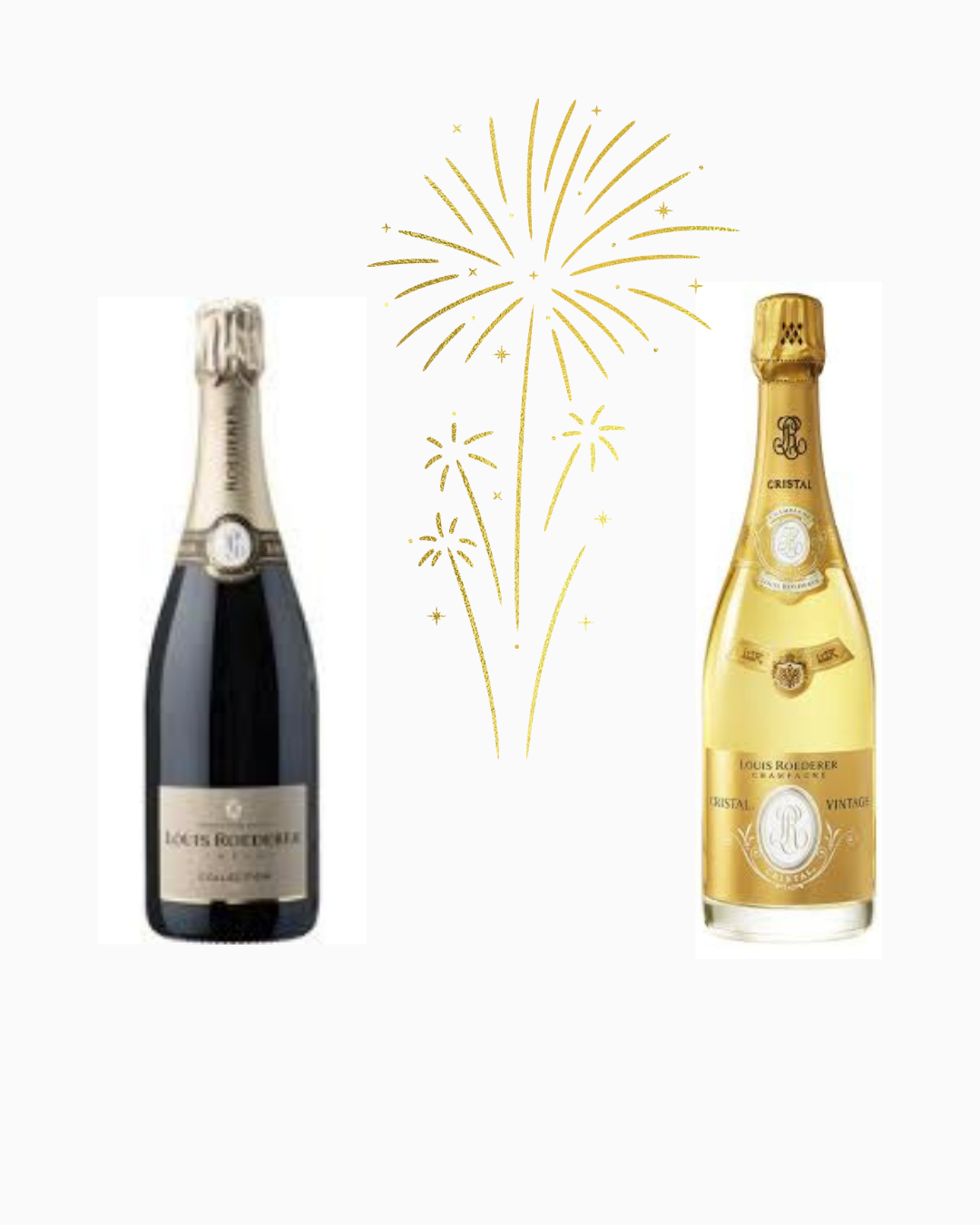
This year, my pre–New Year’s dinner is guided by the ethos of Louis Roederer: discipline in the vineyard, patience in the cellar, and a refusal to perform theatrics for their own sake. To explore that ethos at the table, I’ve chosen two Champagne classics whose architecture and restraint echo this sensibility: Louis Roederer Collection 245 and Louis Roederer Cristal 2016.

The House: Louis Roederer Precision as Philosophy

Founded in 1833 and based in Reims, Louis Roederer evolved from a respectable maison into one of Champagne’s most quietly rigorous estates. By the mid-19th century, Roederer did something radical for the time: it began purchasing vineyards rather than relying solely on growers. Controlling fruit quality became a long game, not an annual negotiation.

Today, the estate owns almost 250 hectares, with an increasing emphasis on organic and biodynamic practices. This underpins the house’s unmistakable personality: depth without heaviness, tension without austerity, and a calm, almost meditative finish.

Wine Tourism: Less Spectacle, More Insight

Visiting Roederer isn’t about neon-lit cellars and selfies with sabres. Experiences tend to privilege understanding over spectacle.

The estate provides guided vineyard walks, cellar visits, and tastings that unpack:

  • The role of reserve wines
  • The quiet architecture of blending
  • How climate change is reshaping decisions in real time

These experiences feel more like seminars than shows – the kind of visit that leaves your notebook full and your mind happily buzzing.

On the Table with Roederer’s Spirit

Louis Roederer Collection 245

This is Roederer’s perpetual-reserve concept in motion – perfect rhythm and balance. In the glass, the bubbles are fine and controlled. Aromatically, there are hints of ripe pear, Golden Delicious apple, lemon zest, and a faint line of brioche. There’s a saline whisper running underneath. On the palate, it moves with precision: orchard fruit, a touch of almond, subtle creaminess, and a clean, linear finish that leaves a chalk-dust memory.

Pairing for our pre–New Year’s dinner

This is the “conversation starter” wine. I paired this wine with oysters, with a light mignonette, and scallop carpaccio – dishes that respect the structure without overpowering it.

Louis Roederer Cristal 2016

The 2016 is sculpted: luminous citrus, white peach, subtle apricot skin, and that crystalline chalk character that defines Roederer’s grandest vineyards. There’s also a hint of hazelnut and delicate pastry, sitting quietly behind the mineral spine. The palate feels both weightless and deep, with a long, resonant finish. That’s power.

Pairing for a pre–New Year’s dinner

This wine was served later in the progression. I paired it with butter-poached lobster and roast capon with thyme and lemon. Perfection.

Why Louis Roederer Collection 245 and Louis Roederer Cristal 2016 Before New Year’s?

Because the night before the noise deserves reflection. Louis Roederer’s philosophy grounds the evening – time and patience.

And as the calendar inches toward midnight the next day, this pre-new year’s dinner became a quiet rehearsal, acknowledging change -reviewing the year before we write the next chapter.

Louis Roederer launches first biodynamic champagne

Louis Roederer has announced this week the release of its 2012 Cristal, the first to be made from 100% biodynamically farmed grapes. The house has been implementing biodynamics in its vineyards for the past 10 years and so far has converted 50% of their plots, while the remainder is 50% organic.

Louis Roederer has hailed the release as the “first-born from this new viticulture”. The 2012 vintage is a blend of 60% Pinot Noir and 40% Chardonnay with a dosage of 7.5g/l.

The 2012 vintage was described in a statement as “one of the most challenging and complicated years ever experienced in Champagne”, and while yields were low, warmer weather towards the end of the season led to “unusual levels of maturity” and with that, “full-bodied and structured wines”.

Website:  https://www.louis-roederer.com


Spectrum Wine’s Second Anniversary Auction Includes Krug and Cristal Champagne Brunch

Spectrum Wine Auctions’ Second Anniversary Auction will take place December 3rd & 4th at 11:00 a.m. at the Grand Hyatt Hong Kong Hotel.

All registered bidders are invited to celebrate the auction with a Champagne brunch featuring pours of Krug and Cristal, which starts promptly at 11:00 a.m. The two-day event features a total of 1,631 lots of rare and collectible wines, and carries a pre-sale estimate of HK $50.4 million.

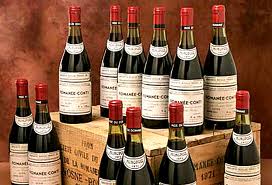
Highlights include more than 600 lots of top-shelf Burgundy including nearly 175 lots of Domaine de la Romanée-Conti, as well as H. Jayer Richebourg, Domaine Méo-Camuzet, Domaine Leroy. The sale also offers several cases of First Growth Bordeaux in OWC.

Bids may be placed live in the auction room, online, by phone, in advance via fax or through Spectrum Wine’s new iPhone/iPad bidding app. Interested buyers may preview 360-degree photographs of bottles from each lot prior to the sale, and may request a complimentary catalog at spectrumwine.com.

Liz Palmer
@champagnehouses

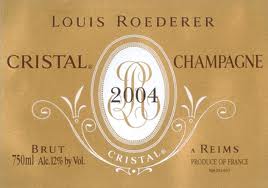
Champagne Louis Roederer’s Cristal 2004 [June 2011 Tasting]

Roederer is one of the leading ‘Boutique’ Champagne houses, which became popular for their celebrated ‘Cristal’. Cristal became chic with celebrities, athletes, and hip hop artists.

Originally founded in the late 18th century, Roederer’s consumers were predominately from the Russian community. In 1876, Tsar Alexander II, a great fan of Louis Roederer’s champagne, asked Roederer to “go one step further” to produce, for his personal consumption, a wine unique in quality and bottle. Roederer created an exceptional white crystal puntless bottle to house the best selection from the seven finest vineyards of his estate, thus creating the very first Prestige cuvee of Champagne.
______

Eight champagne enthusiasts gathered at Toronto’s LCBO Avenue Road Location on June 22, 2011 to taste Louis Roederer’s Cristal 2004.

Grape Varieties
55% Pinot Noir and 45% Chardonnay (20% of which is matured in oak casks with weekly batonnage).

Vinification
No malolactic fermentation occurs. Cristal ages an average of 5 years in the cellars and rests 8 months after disgorgement. Dosage between 8 and 10 g/l.

In the Glass
Unique golden color, combined with an ultra-fine, persistent, soft effervescence.

Bubbles
Ultra-energetic, rich and persistent bead.

On the Nose
The nose is intense and bursting with gorgeous aromas typical of great Pinot Noir grapes. Scents of sweet baked apples, white fruit, pollen, citrus with some mineral nuances.

The bouquet is rich and sweet, almost generous, remaining precise and impeccably refined.

On the Palate
Full and creamy, revealing concentrations of juicy fruits: peach, apricot, mango, with hints of grilled hazelnuts. There is a sophisticated touch of acid with some lively minerality.

The overriding impression is one of a true harmony of flavours, senses and silky textures.

Absolute sensuality!

Serving Suggestions
Nothing compliments Cristal better than caviar, oysters and lobster.

My rating: 95/100

Others:
The Wine Advocate rating: 97 Points
Wine Enthusiast rating: 97 Points
Wine & Spirits rating: 97 Points
Parker Points®: 96+
Wine Spectator rating: 93 Points

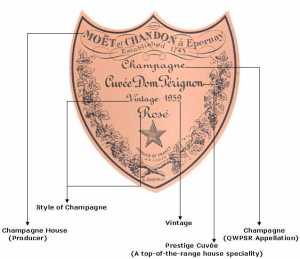
HOW TO READ A CHAMPAGNE LABEL

Champagne labeling laws differ from other parts of France because the entire region falls under a single AOP, the protected term ‘Champagne’ and the wines are categorized according to styles rather than designations. Here the status of the producer is more important than the vineyard sites.

To distinguish between the numerous different styles, Champagne labels use a range of terms as described below.

* Level of sweetness:
o Ultra Brut – Bone dry or very dry
o Brut – Dry
o Sec – Literally dry but has higher sugar level than Brut
o Demi-sec – Medium dry
o Doux – Sweet

* Non-vintage: A Champagne made from a blend of wines from different years.

Some Champagne houses may use up to hundred reserve wines from previous years to produce a consistent house style.

* Vintage: A champagne made from a single year’s harvest. The label must show the year of the harvest.

* Blanc de Blancs: This term on the label means that the Champagne has been produced entirely from white grapes, in other words, Chardonnay.

* Blanc de Noirs: Refers to Champagne made from black grape varieties (Pinot Noir and Pinot Meunier).

* Rosé: This is often made by blending a little red wine with whites.

* Grande Marque: Means ‘Great Brand’. A producer may use this term but according to AOP rules does not guarantee quality or any style.

* Cuvée de Prestige: These are the top-of-the-range releases from the Champagne houses and may come with a vintage on the label. Some examples include ‘Dom Pérignon’ from Moët et Chandon, ‘Cristal’ from Louis Roederer and ‘La Grande Dame’ from Veuve Clicquot Ponsardin.

* Marque d’Acheteur: Means ‘Buyer’s Own Brand’. These are often seen on Champagnes sold within a retail or supermarket chain that sells them using their own brand name.

Apart from these there are other non-mandatory terms that may appear on the label that specify type of Champagne producers, maturation time etc.

wine-searcher.com