The Region of Champagne Takes the Lead on Climate Change

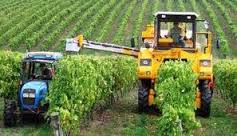
tiffany 053At a time when Paris is hosting the COP 21 talks that could pave the way for an agreement on combating climate change, the Champagne Region is contributing to the international effort through its pioneering commitment to sustainable and responsible wine-growing.

Global warming in the region is a fact: temperatures have increased by close to 1.2°C in 30 years and the blossoming and grape harvest dates have moved forward by a fortnight. “The Champagne Region very quickly grasped that climate change was a priority issue and we were duty-bound to plan ahead”, explains Vincent Perrin, the director general of the Comité Champagne.
The whole Champagne Region began to get involved in the 1980s, implementing solutions to protect the environment (technical specifications, decision-making tools, advice and support).

In 2003, Champagne was the world’s first wine-growing region to calculate its carbon footprint and implement a carbon plan which enabled several focus areas to be selected (sustainable wine-growing, transport and freight, building energy efficiency, responsible procurement and fostering active involvement) and led to truly innovative solutions being developed, such as reducing the weight of Champagne bottles by 7%.

In a decade, the region has managed to cut its greenhouse gas emissions by 15% per bottle shipped, making it one of the few industries to have reduced its emissions in absolute terms.
All of the region’s professionnals are now involved in the initiative.

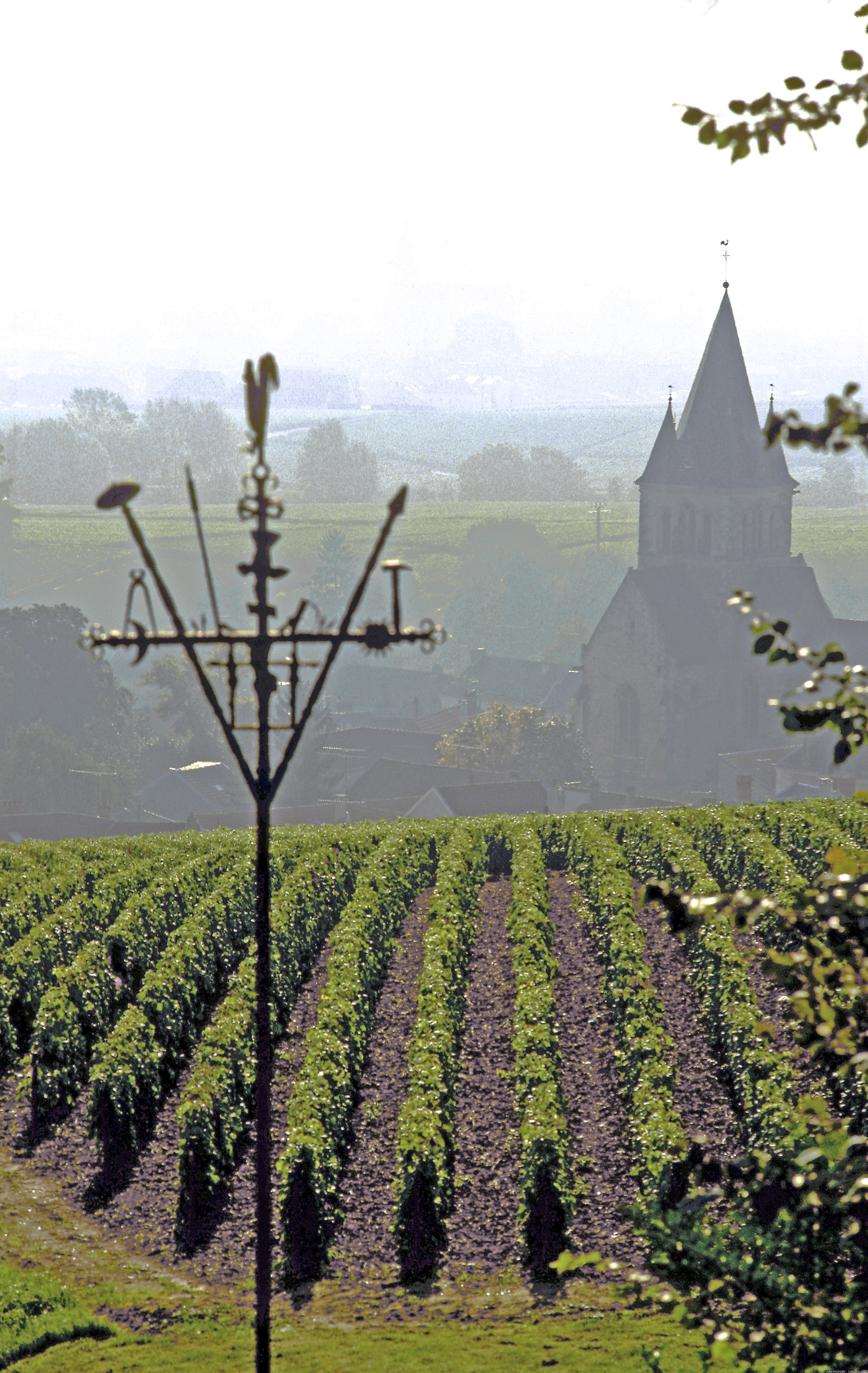
Moreover, UNESCO’s decision to include the Champagne Slopes, Houses and Cellars on its World Heritage List is a source of encouragement for the efforts made and demonstrates the industry’s ability to preserve its heritage.

“The Champagne houses and growers are more united than ever before around a sustainable wine-growing strategy. Promoting our wines means constantly innovating so that we can pass on our economic and environmental heritage to future generations”, conclude Pascal Férat and Jean-Marie Barillère.

Source: CIVC, France

2015 French Wine Crop Reaches 47.7 Million Hectolitres

harvestThe French Ministry of Agriculture has released its latest estimates for the year 2015. They state that France has harvested approximately 47.7 million hectolitres. The 2015 harvest is up 1% up from last year (47.1 mhl) and up 4% on the five-year average. Production of PGI wines and base wines for brandy is showing a significant increase last year, respectively +5% and +6%. Conversely, production of appellation wines, at 21.61 mhl is marginally down (-2%) on 2014 but 3% higher than the five-year average.

The Ministry of Agriculture ascribes the rise in estimated production to rainfall in August and September, which was particularly beneficial in the western part of the country, especially in Charentes. A report by Agreste states that “bunch weight is one of the highest this decade”. It also points to a surge in production of Cognac compared with previous estimates, with an extra 1 mhl harvested by producers.
France was divided into two halves this year, with the eastern part of the country enduring less favourable weather conditions than other regions. Drought affected Burgundy, Beaujolais and Corsica and reduced production potential compared with August forecasts. Alsace, which was also affected, but to a lesser extent. In the South-East of France, periods of rain in September brought forward harvesting and caused some losses. In Languedoc-Roussillon, the crop is expected to be virtually on a par with last year’s.

Source: Vitisphere

Veuve Clicquot Opens Hôtel du Marc to the public this weekend only

Hôtel du Marc, Veuve Clicquot Ponsardin’s private mansion in Reims, France is opened to the public this weekend only: Saturday, June 15 and Sunday, June 16. Usually serving as private lodgings for invited guests of Veuve Clicquot, the 173-year-old neoclassical abode will open its doors for a series of exclusive tours as part of Les Journées Particulières, the LVMH Group’s heritage celebration.
Constructed in 1840 under the supervision of Édouard Werlé, successor to “The Grand Dame of Champagne” Madame Clicquot, Hôtel du Marc has served as a home away from home for guests of the brand—who come from all over the world for invite-only tastings—for almost two centuries.

After a four-year renovation by renowned Architect Bruno Moinard (known for his work with Cartier, and the auction rooms at Christie’s New York) to its original grandeur, Hôtel du Marc reopened in the fall of 2011.

Each room is designed with its own theme and backstory, for instance, the Uzès Room is named after Duchesse d’Uzés, Madame Clicquot’s granddaughter and pays tribute to Veuve Clicquot’s longstanding relationship with Italy, which goes back to 1772, the year of the brand’s founding when the first 60 bottles of Champagne were sent to Venice.

Louis Bohne, a Veuve Clicquot salesman who singlehandedly helped to turn Russia into one of the world’s thirstiest champagne consumers during the French invasion of 1812, also has a room named in his honor. The faux fur headboard is meant to symbolize protection from the harsh Russian winters, which are seen in the block of crystal that forms the bench at the foot of the bed.

There is innovative artwork abound, with commissioned pieces from celebrated artists as Pablo Reinoso, whose spaghetti bench occupies the second floor landing – my favorite!

One of the house’s most enviable features is, of course, its private wine cellar—home to thousands of bottles and several vintages of Veuve Clicquot La Grande Dame, one of the brand’s rarest blends.

Throughout the mansion, there are lots of fun and unexpected twists. In the library, there’s a stuffed ostrich named Nicole — named after Madame Clicquot.

Will France’s Champagne vineyards be added to UNESCO’s prestigious World Heritage List?


The candidacy has been six years in the making and producers will have to wait until July 2014 to hear the decision.


The volume of fake champagne sold on the market is said to equal the stock of the real French product. That’s 330 million bottles, according to Jean-Luc Barbier, the director of the Interprofessional Committee of Champagne Wine (CIVC).


The competition is particularly unfair since fake bubbly is produced without respecting any of the traditional local rules of Champagne. Fakes rarely cost more than seven Euros, while an authentic Champagne bottle costs between 18 and 200 Euros, and more for exceptional vintages.


Champagne is not the first wine-producing region seeking the protection of the UNESCO classification. Five sites are already registered in the World Heritage List: Saint-Emilion, France, the Upper Douro Valley, Portugal, Tokaj Coast, Hungary, Lavaux, Switzerland and Pico Island, Azores.

A Photo Essay Capturing Richard Geoffroy’s (le chef de cave de Dom Pérignon) Natural Character

Written and Photographed by Liz Palmer

This photo essay is a collection of images of my interview with Richard Geoffrey, Chef de Cave, Dom Pérignon, capturing his expressions and movements.

Outside on the grounds of the Abbey

I met Richard Geoffroy at the Abbey of Hautvillers, the celestial home of Champagne, where in the 17th century the Benedictine monk Dom Pierre Pérignon conducted research and experiments on the wines of Champagne.


Richard Geoffroy has been the head winemaker for over 20 years of Moët & Chandon’s Cuvée Dom Pérignon, and shows no signs of slowing down. He greets me with a warm smile, quite personable and relaxed.

Tasting

The scientist at work: focused, attention to detail and perfection – wines often mirror their maker. I was absolutely thrilled to taste with one of the world’s premier Champagne artists. I paced myself in elegant moderation.

Richard Geoffroy’s comments:

“A seamless, silky texture is what I’m looking for – I am not looking for weight or power.”

“Dom Pérignon must be vibrant and long.”

“Dom Pérignon is all about pleasure and joy!” Richard Geoffroy

“Perfectly Balanced!” Liz Palmer

@Champagnehouses