Roederer launches Brut Nature 2006 in Toronto

Louis Roederer Champagne, known for its tête du cuvée Cristal, has launched its first new cuvée “Brut Nature 2006” in more than 40 years.

The new cuvée was created in collaboration with world-renowned French designer, Philippe Starck and is the first non-dosage for Louis Roederer.

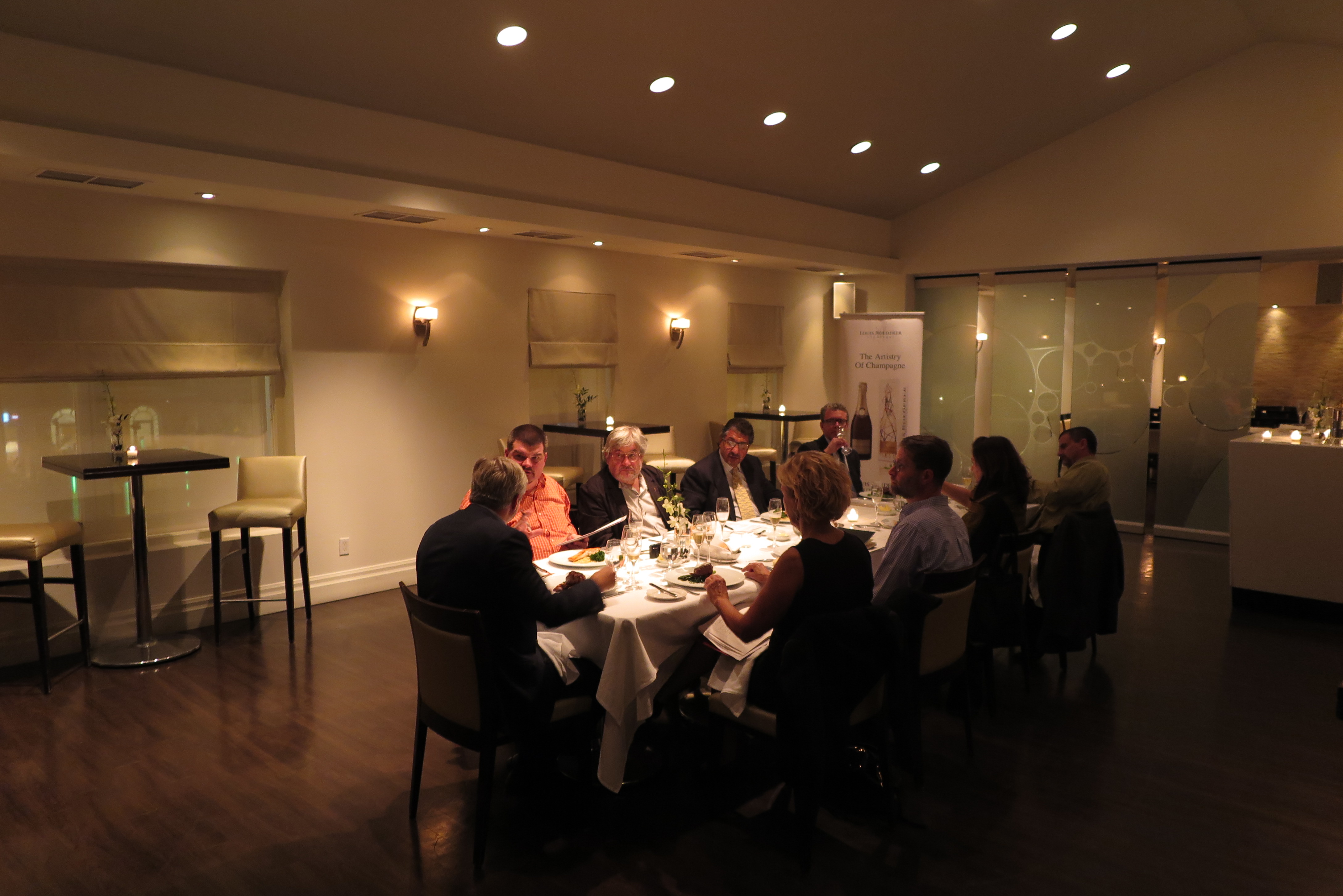
This non-malolactic, zero dosage vintage champagne was unveiled by Roederer’s Chef de Caves, Jean-Baptiste Lecaillon, during a launch event in Toronto a few weeks ago. In attendance was a select number of wine journalists and members of Authentic Wine & Spirits Merchants.

According to Lecaillon, his team carried out a series of bottling trials for 2003, 2004, and 2005 (extra-brut cuvées – 3-6 g/l of sugar). These wines were fine-tuned and culminated in the selection of the 2006 vintage and marked the birth of Louis Roederer Brut Nature.

“Before 2003 we didn’t have the raw materials…the grapes, the terroir, sufficient ripening with this texture—the natural ingredients that would allow uw to go further with [lowering the dosage] in Roederer’s non-malolactic style.”

“The land and soil are the keys to great wines” says Lecaillon in between sips of champagne.

The 2003 growing season was ideal – it was an excessively warm, sunny and a dry year. The grapes come from 10 hectares of south-facing, biodynamically-farmed vineyards in Cumieres. Lécaillon says “You have a higher ripeness with biodynamics, different texture and fruit,” he said. “This wine might not have been possible without biodynamics.”

Lecaillon further states that all the grapes were picked on the same day and pressed together ‘I didn’t want any varietal taste. The idea was to eliminate the varietal characters and let the terroir speak’.

The grapes were picked much riper than usual and as a result, the lower sugar level of the wine-making process was altered. Fifty percent of the wine was aged in 9,000 litre oak casks and bottling at the lower pressure of 4.5 atmospheres versus the widely used 6 aided the wine’s texture. “Pressure and texture interact,” explained Lécaillon. “If you’re too high in pressure, you lose the texture.”

‘This is a small production with 60,000 bottles. The next warm year to expect a no-dosage cuvee will the 2009 vintage’ says Lecaillon.

Brut Nature 2006 contains 56% Pinot Noir with equal parts Chardonnay and Pinot Meunier.
post2


Tasting Notes:

Brut Nature 2006   

This cuvée is ample, elegant, and pure.

The deep golden color with lively bubbles.
Layers of fruit with hints of lemon peel, pear, flowers with some hints of
hazelnut and spice.
On the palate – stones, fruit, mineral freshness with a creamy texture,with a
long powerful finish.

post4

“It’s a very good Champagne – definitely for foodies and sommeliers! “ Liz Palmer


Other Champagnes Tasted:


Brut, Blanc de Blancs, 2008       
Pale yellow with active bubbles and soft effervescence.
Roasted nuts, orchard fruits, with white flower aromas.
On the palate – elegant and fresh with a creamy texture, refined acidity with
hazelnut, slight minerality with a long finish.


Brut Vintage 2007

Pale gold with lively bubbles and soft effervescence.
Toasty, apple, pear, hazelnut, and vanilla aromas.
The palate is characteristic of Roederer’s vintages with the attack
being ample and dense with apple, pear, subtle citrus, almond, white chocolate and caramel flavors, ending with a long finish.


Brut Rose Vintage 2008   

Salmon color with active tiny bubbles.
Intriguing complex red fruits, orange peel, subtle spice, floral with chalk aromas.
On the palate –   full-bodied, creamy, well structured, cherry, raspberry, orange peel, some spice flavors with some minerality ending with a Long finish.


Cristal 2006

Pale gold color with plentiful lively bubbles.
Layered aromas of lemon, orange and toasted nut aromas, followed by apple, peach, ginger and mineral aromas.
On the palate – creamy delicate mousse with some pear, apple, citrus zest flavors and spicy notes, with some minerality, ending with a long finish.


Cristal 2002

This 12-year-old wine comes from 30-year-old vines.

Brilliant yellow with some amber highlights.
A beautiful mousse with fine beads
Intense and delicate on the nose, revealing hints of Biscuit, honey, cocoa, toasted hazelnuts and candied citrus.
One the palate – savory explosion of ripe fruit on the attack, revealing red fruit, white chocolate, caramel and pastry.
Intense, powerful, beautiful balance with a long finish.


Cristal 1995

Tasting this was another special treat – there is only a few hundred bottles left in the world.
This 19-year-old wine has been 10 years on lees.

“Time on less is powerful and important” says.. says Lecaillon

Bottles were opened two hours before serving in order for them to breathe.

Light golden color with a very strong mousse, with lively bubbles.
Deep, yeasty aromas which are dominated by toffee, butterscotch and toast.
Fresh in the mouth, with hints of yellow fruits, strawberry and toasty flavors.
Finishes long and lean with some mineral.


Liz Palmer
WIN dinner for 20 at Michelin-starred ‘nahm’ restaurant Halkin Hotel London

The Halkin has launched a series of celebratory events to commemorate its 20th Anniversary which focuses on cuisine, Champagne, culture, and design throughout the month of September.

First in the series of events, The Halkin has teamed up with Louis Roederer Champagne to create an exclusive ‘Halkin at Twenty’ celebration dinner. One lucky Halkin guest can expect to win a gourmet experience with 20 of their friends at London’s acclaimed Thai restaurant ‘nahm’. The dinner includes a menu created by Head Chef Matthew Albert, a selection of fine wines and Champagnes by Louis Roederer Champagne along with a Master of Wine (MW) to guide you through the menu and wine pairings.

About nahm
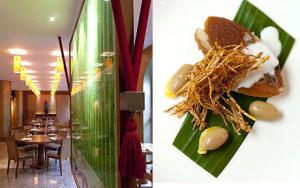
nahm is the first Michelin-starred Thai restaurant in Europe, and is for serious gourmands who value originality and tantalizing cuisine. The venue is decidedly modern and chic.

To become eligible, make your hotel reservation online between July 20th and August 20th. The lucky winner will be drawn on The Halkin’s anniversary on Tuesday 20th September 2011.


Tel +44 (0)20 7333 1059
Email res@halkin.como.bz
http://www.halkin.como.bz

Liz Palmer
Wine and Travel Writer

Moët & Chandon Drops Dosage in Brut Imperial

Moët & Chandon will be lowering the dosage of its market-leading Brut Impérial from 12 grams per litre to 9 g/l according to its chef de cave Benoît Gouez.
 This follows the decision by Dom Pérignon’s chef de cave Richard Geoffroy, who recently gradually lowered the sugar levels on the prestige cuvée champagnes. Geoffroy said, “There has been a strategy of lowering the dosage in the last 10 years and we are now between 6 and 7 g/l.”
 This decision by the biggest brand in the region follows a global trend towards adding less sugar to the world-famous fizz.
Partly explaining this development is kinder weather in Champagne, giving riper and more complex fruit with less reliance on a conventional dosage of between 10-12 g/l.
Michael Edwards from Drinks Business states “Even climate change skeptics cannot deny that, since 1990, harvests have progressively begun two to three weeks earlier than in the ’70s and ’80s – in better-tended, eco-friendly vineyards, under warmer autumnal skies.”
As for the right level of sugar, opinions vary, but a balance appears to have been struck between 6-8 g/l, ensuring there is enough sugar to enhance the Champagne’s aromas but also protect the wine from premature oxidation. (this is an important statement as sugar helps the wine from premature oxidation.
Philippe Thieffry, senior winemaker at Veuve Clicquot, says “If the Champagne has a moderate dosage – 6-8 g/l – and is well protected by SO2, it will release the same bouquet as one traditionally dosed at 10-12 g/l; it will not suffer oxidation.”
Below 6-8 g/l however, and Jean-Baptiste Lécaillon, vice-president at Louis Roederer, says “you reach an oxidative stage that quickly changes the fruit and aromas of the wine.”

TOP CHAMPAGNES IN BUSINESS AND FIRST CLASS – announced last month at The Business Traveller Cellars in the Sky Awards

The Business Traveller Cellars in the Sky Awards have been running since 1985, with a record number of 36 airlines taking part this year. Blind tastings took place over two days on November 4 and 5 at the Grosvenor House, London, with five judges independently scoring. The judges included:

• Charles Metcalfe, TV wine presenter and co-chairman of the
International Wine Challenge;

• Sam Harrop, Master of Wine and winemaking consultant;

• Derek Smedley, Master of Wine for more than 40 years,
consultant and co-chairman of the International Wine Challenge;

• Peter McCombie, Master of Wine, accredited tutor for the Wine and
Spirit Education Trust and consultant; and

• John Worontschak, leading winemaker and wine business development
consultant.

Business Class Sparkling

1. Qatar Airways – Laurent-Perrier Grand Siècle 1996;

2. Etihad – Henriot Blanc Souverain;

3. and
4. (JOINT) British Airways, Qantas and Singapore Airlines –
Charles Heidsieck Brut Réserve AND LAN – Louis Roederer Brut Premier; and

5. Jet Airways – Dom Pérignon 2002.

First Class Sparkling

1. Qantas – Taittinger Comtes de Champagne 1999;

2. United Airlines – Henriot Brut Millésimé 1996;

3. (JOINT) Qatar Airways, All Nippon Airways and Cathay Pacific –
Krug Grande Cuvée;

4. Thai Airways – Bollinger 1999; and

5. Malaysia Airlines and Jet Airways – Dom Pérignon 2002.

Participating Airlines:

Aer Lingus, Aegean Airlines, Air Astana, Air Canada, Air New Zealand, Alitalia, American Airlines, All Nippon Airlines, Austrian Airlines, British Airways, Brussels Airlines, Cathay Pacific, Delta Air Lines, El Al, Etihad, Emirates, Finnair, Gulf Air, Iberia, Jet Airways, Kenya Airways, Kingfisher Airlines, Korean Air, LAN, Lufthansa, Malaysia Airlines, Oman Air, Qantas, Qatar Airways, Scandinavian Airlines, Singapore Airlines, Swiss, South African Airways, TAM, Thai Airways and United Airlines.

Liz Palmer

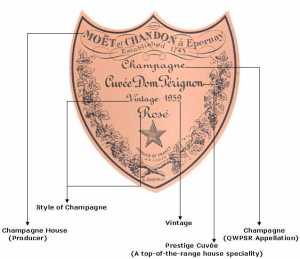
HOW TO READ A CHAMPAGNE LABEL

Champagne labeling laws differ from other parts of France because the entire region falls under a single AOP, the protected term ‘Champagne’ and the wines are categorized according to styles rather than designations. Here the status of the producer is more important than the vineyard sites.

To distinguish between the numerous different styles, Champagne labels use a range of terms as described below.

* Level of sweetness:
o Ultra Brut – Bone dry or very dry
o Brut – Dry
o Sec – Literally dry but has higher sugar level than Brut
o Demi-sec – Medium dry
o Doux – Sweet

* Non-vintage: A Champagne made from a blend of wines from different years.

Some Champagne houses may use up to hundred reserve wines from previous years to produce a consistent house style.

* Vintage: A champagne made from a single year’s harvest. The label must show the year of the harvest.

* Blanc de Blancs: This term on the label means that the Champagne has been produced entirely from white grapes, in other words, Chardonnay.

* Blanc de Noirs: Refers to Champagne made from black grape varieties (Pinot Noir and Pinot Meunier).

* Rosé: This is often made by blending a little red wine with whites.

* Grande Marque: Means ‘Great Brand’. A producer may use this term but according to AOP rules does not guarantee quality or any style.

* Cuvée de Prestige: These are the top-of-the-range releases from the Champagne houses and may come with a vintage on the label. Some examples include ‘Dom Pérignon’ from Moët et Chandon, ‘Cristal’ from Louis Roederer and ‘La Grande Dame’ from Veuve Clicquot Ponsardin.

* Marque d’Acheteur: Means ‘Buyer’s Own Brand’. These are often seen on Champagnes sold within a retail or supermarket chain that sells them using their own brand name.

Apart from these there are other non-mandatory terms that may appear on the label that specify type of Champagne producers, maturation time etc.

wine-searcher.com