
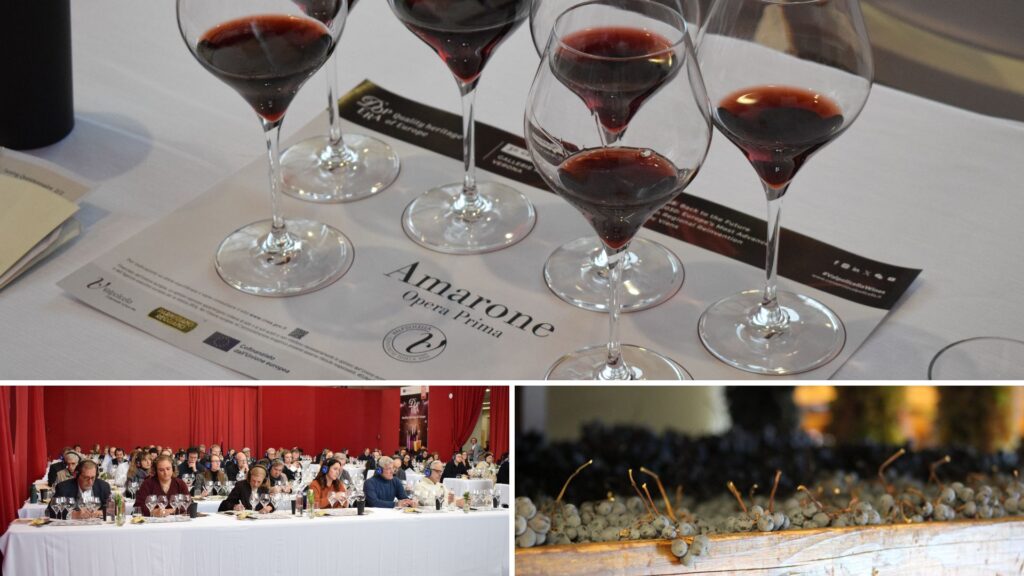
Valpolicella has reached a historic turning point in environmental stewardship, with certified sustainable practices now covering the majority of its vineyards for the first time. Speaking at Amarone Opera Prima in Verona, Christian Marchesini, President of the Valpolicella Wine Protection Consortium, announced that 53% of the denomination’s vineyard area is now certified, representing nearly 4,666 hectares of the region’s total 8,600 hectares.
The two-day event, held at the Gallerie Mercatali on January 31 and February 1, unveiled the 2021 vintage while highlighting a decisive shift toward sustainability as a strategic pillar for long-term competitiveness. The milestone reflects a broader recalibration of Valpolicella’s identity—one that integrates territorial heritage, environmental responsibility, and evolving market dynamics.
Representing more than 2,400 businesses across 19 municipalities in the province of Verona, the Valpolicella Wine Protection Consortium serves as the authoritative voice of one of Italy’s most distinguished wine regions. With annual revenues exceeding €600 million, largely driven by Amarone’s global success, the Consortium plays a central role in safeguarding and promoting the denomination both domestically and internationally.
The Future of Amarone: Sustainability and Market Resilience
At Amarone Opera Prima, 70 producers presented the new vintage, underscoring sustainability’s dual function as both an environmental imperative and a market asset.
“In an increasingly competitive landscape, Valpolicella is investing heavily in sustainability. It is a green asset for the territory and also a powerful market lever across key demand areas, from Northern Europe to North America, where it is perceived as a value-added factor,” Marchesini noted.
The rapid expansion of certified viticulture reflects this strategic commitment. Voluntary SQNPI certification (National Quality System for Integrated Production), which promotes sustainable practices in both vineyard and cellar, increased by 47% in 2025 alone and by 110% over the past three years. Of the certified area, approximately 1,100 hectares are organic, while nearly 3,500 hectares carry the Ministry of Agriculture’s official sustainability label.
Despite challenging market conditions in 2025, the denomination demonstrated notable resilience. Bottled volumes experienced modest declines—Amarone down 2.4% to approximately 102,000 hectolitres, Valpolicella down 2.7% to 123,800 hectolitres, and Ripasso down 3.7% to just over 205,000 hectolitres. However, export performance outpaced national trends.
Veneto PDO red wines in Valpolicella’s segment recorded a value decline of only 2.1% in the first ten months of the year, significantly outperforming the national red wine category’s 6.2% drop. Key international markets posted positive growth, including Canada (+4.8%), Germany (+5.1%), Sweden (+4.7%), the United Kingdom (+8.9%), and the Netherlands (+12%).
Regional Identity, Terroir, and Classification
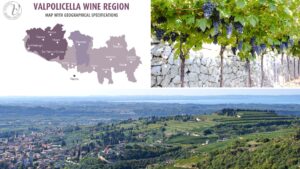
Valpolicella’s distinctiveness derives from its unique geographical position between the Dolomites and Lake Garda. The Monti Lessini plateau shields vineyards from Alpine cold, while Lake Garda moderates temperatures and provides natural ventilation. This combination enables extended growing seasons and supports the production of concentrated wines with vibrant acidity.
The region’s flagship Amarone is produced using the traditional appassimento method, whereby grapes are dried before fermentation to concentrate sugars, aromas, and structure. This centuries-old technique remains central to Valpolicella’s identity.
Unusually, all four principal styles of Valpolicella wine are produced throughout the region using the same limited selection of native grapes: Corvina, Corvinone, Rondinella, and Molinara.
By regulation, Valpolicella DOC wines must contain between 45% and 95% Corvina. Corvinone may substitute up to 50% of the required Corvina, contributing round, characteristic cherry notes. Rondinella constitutes 5% to 30% of the blend and is valued for its floral aromatics and resilience. Molinara, though used less frequently today, provides lean acidity and freshness.
The resulting wines are distinguished by their bright, lively, and balanced profile, marked by savoury sour cherry flavours and elegant structure.
The region produces four principal wines: Amarone della Valpolicella DOCG, Valpolicella DOC, Valpolicella Ripasso DOC, and Recioto della Valpolicella DOCG. These may originate from three territories: Valpolicella DOC, Valpolicella DOC Classico, and Valpolicella DOC Valpantena.
Experiencing Valpolicella: Culture, Cuisine, and Landscape
Beyond viticulture, Valpolicella offers a rich cultural and experiential landscape. Historic villages such as San Giorgio di Valpolicella showcase Romanesque architecture, while Fumane features the preserved Maso degli Orzi rural complex. San Pietro in Cariano’s Villa Serego Alighieri functions as both winery and museum.
Verona, a UNESCO World Heritage Site, provides an ideal base for exploration, with landmarks including the Roman Arena, Juliet’s House, and Piazza delle Erbe. Nearby Lake Garda offers water sports, scenic villages, and recreational opportunities.
Local gastronomy further enhances the visitor experience, with regional specialties such as bigoli with duck ragù and paparotte (cabbage and bean soup) complementing Valpolicella’s wines.
Heritage and the Path Forward
The Valpolicella community is currently seeking UNESCO Intangible Cultural Heritage status for its appassimento tradition. Rather than pursuing commercial advantage, the initiative aims to preserve and safeguard this cultural practice for future generations.
The application process has strengthened regional cohesion while allowing for diverse interpretations of tradition and innovation. Visitors can engage with this heritage through a wide range of accommodations, from family-run farmhouses to luxury wine resorts housed in restored Renaissance villas, all within easy reach of Verona.
My choices of Valpolicella’s producers
Below are a few notable producers that caught my eye, and palate, during this year’s Amarone Opera Prima event. They range from historic estates to new state-of-the-art wineries and small, passionate producers focused on terroir and sustainability.
Corte Figaretto — www.cortefigaretto.it
Mauro Bustaggi and his daughter Sofia lead this family-run estate in Valpantena. Known for elegant, terroir-driven wines, Corte Figaretto produces Amarone della Valpolicella Brolo del Figaretto and Valpolicella Superiore Alte Quare, noted for balance, finesse, and volcanic-limestone expression.
Cà la Bionda — www.calabionda.it
Founded in 1902, this historic estate in Marano di Valpolicella is managed by Alessandro and Nicola Castellani. Their Amarone Classico and single-vineyard Casalvegri exemplify traditional methods and limestone-driven minerality.
Villa Della Torre — www.villadellatorre.it
Owned by the Allegrini family, this Renaissance estate in Fumane serves as both cultural centre and winery. Production focuses on the historic Brolo vineyards, combining architectural heritage with precision winemaking.
Novaia — www.novaia.it
The Vaona family has stewarded this 15th-century estate since 1700. Certified organic, Novaia produces wines of freshness and mineral depth, including Amarone Corte Vaona and Amarone Riserva Le Balze.
Le Guaite di Noemi — www.leguaite.it
Noemi Pizzighella represents a new generation of Veneto winemakers. Her wines emphasize purity, balance, and restrained elegance, distancing themselves from excessive opulence.
La Collina dei Ciliegi — www.lacollinadeiciliegi.it
Founded by Massimo Gianolli, this high-altitude Valpantena estate produces wines with notable acidity and minerality. The restored Ca’ Del Moro offers immersive hospitality experiences.
Massimago — www.massimago.com
Dating to 1883, Massimago blends historic roots with contemporary hospitality. Under Camilla Rossi Chauvenet, the estate has developed a Wine Relais and diverse experiential programs.
Tenuta Villa Bellini — www.tenutavillabellini.com
A pioneer of organic viticulture in Valpolicella, this historic estate introduced wild yeast fermentation in the early 1990s and continues to emphasize biodynamic principles.
Zýmē — www.zyme.it
Founded by Celestino Gaspari in 1999, Zýmē is built within a former sandstone quarry. The winery embodies a synthesis of tradition, innovation, and environmental integration, producing wines that transparently express terroir.
Valpolicella’s evolution illustrates how historic wine regions can adapt to contemporary challenges without compromising identity. By integrating sustainability, market intelligence, and cultural preservation, the denomination is positioning itself for long-term relevance in a rapidly changing global landscape.
As Amarone Opera Prima demonstrated, Valpolicella’s future lies not in abandoning tradition, but in refining it—aligning environmental responsibility with excellence, resilience, and place-based authenticity.
Filippo Magnani