
For years, global wine tourism discussions have largely focused on iconic regions such as Napa Valley, Bordeaux, Champagne, Tuscany, and Rioja.
But last week in Palermo, something highly significant became increasingly clear:
Sicily is no longer emerging.
It has arrived as one of the world’s most strategically important wine tourism destinations.
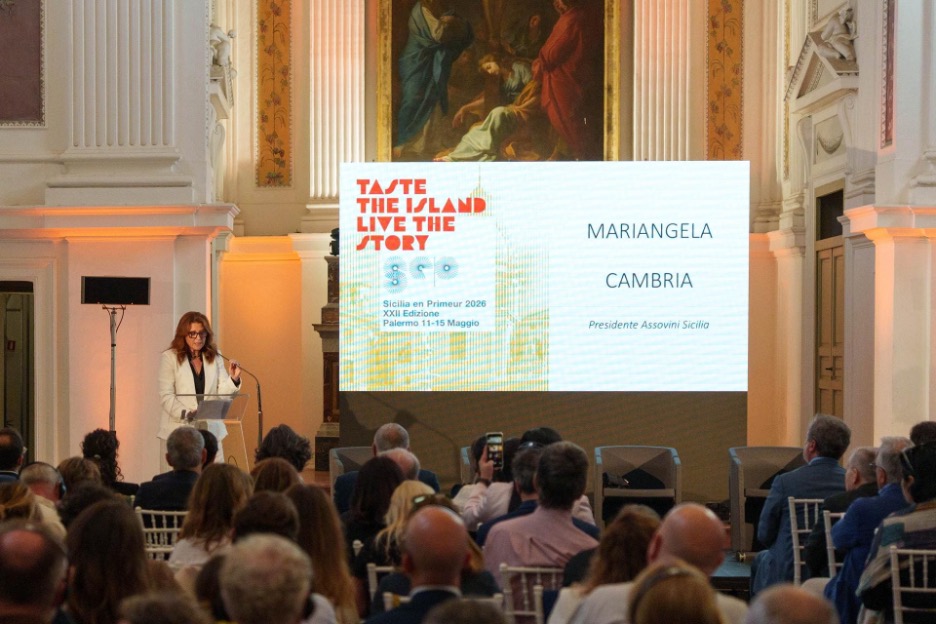
At the opening conference of the 22nd edition of Sicilia en Primeur 2026, organized by Assovini Sicilia, industry leaders, researchers, institutions, and international media gathered to discuss a topic reshaping the global wine sector: the future of wine tourism.
The conference, titled “Taste the Island. Live the Story,” explored how Sicily is building a distinctive wine tourism model rooted in sustainability, authenticity, culture, hospitality, digitalization, and experiential travel.
And importantly, the discussion was supported not by aspiration alone, but by measurable data.
Sicily Positions Wine Tourism as a Strategic Economic Driver
From May 11–15, Sicilia en Primeur welcomed more than 100 journalists from around the world to experience Sicilian wine through tastings, winery visits, cultural programs, and immersive regional experiences.
This year’s edition featured:
- 56 member wineries,
- more than 1,000 wines tasted,
- and events staged across some of Palermo’s most historic and culturally significant venues.
Among them:
- the recently restored Real Albergo delle Povere,
- the Church of Santa Maria dello Spasimo,
- and Palazzo Sant’Elia.
The decision to host the event in Palermo was itself strategic.
Rather than focusing exclusively on vineyards, organizers positioned Sicily’s wider cultural ecosystem: history, architecture, gastronomy, and heritage as part of the wine tourism narrative.
That distinction matters.
Increasingly, the world’s leading wine destinations are recognizing that modern travelers are no longer seeking only tastings.
They are seeking:
- cultural immersion,
- authenticity,
- emotional connection,
- local identity,
- sustainability,
- and curated destination experiences.
In many respects, Sicily appears to understand this evolution exceptionally well.
Wine Tourism in Sicily Is No Longer Secondary
Opening the conference, Mariangela Cambria framed wine tourism not as an ancillary activity, but as a core strategic pillar for the region.
“Talking about wine in Sicily inevitably means talking about a journey. A journey that goes beyond tasting and becomes a cultural experience, an encounter with the region, its communities and the island’s deep-rooted identities,” said Cambria.
She continued:
“Today, wine tourism is a key strategic asset: not simply an economic opportunity for businesses, but a powerful tool for telling the story of wine through Sicily’s landscape, cuisine, art and human heritage. This is the spirit behind our invitation: ‘taste the island, live the story’.”
Her remarks reflect a broader transformation taking place across the global wine industry.
Wine regions are increasingly transitioning:
from production-driven models
to experience-driven ecosystems.
And Sicily may now represent one of the clearest examples of this transition in action.
The Numbers Behind Sicily’s Wine Tourism Growth
One of the most important moments of the conference was the presentation of the Sicilian wine tourism report produced by CESEO – Centro Studi Enoturismo e Oleoturismo at Lumsa University.
The findings revealed a mature and increasingly international wine tourism sector.
According to the report:
- 61.4% of surveyed Sicilian wineries reported an increase in visitors in 2025,
- while 74.7% stated that most visitors were international travelers, primarily from Europe and the United States.
The report also demonstrated the growing economic significance of wine tourism across the region.
For 58.3% of wineries surveyed, wine tourism now accounts for approximately 10% of total turnover – excluding direct wine sales.
Meanwhile:
- guided tours,
- tastings,
- hospitality experiences,
- and educational programming
are becoming increasingly important marketing and brand-building tools.
This is a highly significant development.
Globally, wineries are increasingly recognizing that tourism experiences do not simply support wine sales, they build long-term emotional engagement with consumers.
Sustainability Is Becoming Central to the Sicilian Model
One of the strongest themes emerging from Sicilia en Primeur 2026 was sustainability.
The statistics are striking:
- 86.7% of wineries generate renewable energy,
- 56.2% meet at least 40% of energy needs through green energy,
- 88% have eliminated single-use plastics in hospitality facilities,
- and nearly 70% use lighter-weight wine bottles.
These figures position Sicily as one of the more progressive large-scale wine tourism ecosystems currently operating in Europe.
The research also revealed rapid evolution in hospitality offerings.
Tasting rooms, wine shops, guided experiences, and dedicated hospitality staff are now widespread throughout the region.
Notably, nearly six in ten wineries have already planned expanded tourism experiences for 2026, focusing increasingly on premium and immersive offerings.
The Digital Gap and Opportunity
While Sicily’s wine tourism infrastructure continues to expand, the report also identified areas for future growth.
Basic digitalization levels remain strong:
- websites,
- e-commerce platforms,
- and mailing lists
are now widely adopted.
However, more advanced digital tools remain limited.
Only:
- 20% of wineries currently operate formal Wine Clubs,
- while 30.6% report using artificial intelligence, primarily for marketing and communications.
This may ultimately represent one of Sicily’s largest future opportunities.
The next era of wine tourism will likely be shaped not only by hospitality excellence, but also by:
- AI-driven personalization,
- digital visitor engagement,
- predictive travel behavior,
- multilingual content ecosystems,
- and intelligent customer relationship management.
Younger Consumers Are Reshaping Wine Tourism
Another critical theme explored during the conference was the relationship between wine and younger generations.
Vincenzo Russo of IULM University presented findings from the Youth & Wine Observatory.
According to the research:
- 51% of Italians aged 20–24 now consume wine,
- representing the highest figure ever recorded for that age demographic.
Importantly, winery visits and experiential engagement were identified as major drivers of younger consumers’ interest in wine.
Russo explained:
“Nowadays, wine communication and marketing must be increasingly flexible and intergenerational, adapting strategies, products and activities at the winery to suit the target audience.”
He added:
“Young people are not averse to wine: They are looking for authentic experiences, connections and cultural content.”
That statement may ultimately summarize the future of wine tourism globally.
Sicily’s Wine Tourism Model May Become Increasingly Influential
What emerged from Sicilia en Primeur 2026 was not simply a showcase of Sicilian wines.
It was the presentation of a broader destination strategy.
One where:
- wine,
- culture,
- sustainability,
- tourism,
- hospitality,
- gastronomy,
- storytelling,
- and technology
are becoming deeply interconnected.
As global wine regions increasingly compete not only for consumers, but also for travelers, attention, and emotional relevance, Sicily’s integrated model may prove highly influential.
And perhaps most importantly, Sicily is not attempting to imitate other wine regions.
It is building a distinctly Sicilian identity.
That authenticity may ultimately become one of its greatest competitive advantages in the rapidly evolving global wine tourism economy.
Sources
- Assovini Sicilia
- Sicilia en Primeur
- Lumsa University
- ICE – Italian Trade Agency
- SOStain Sicilia Foundation