
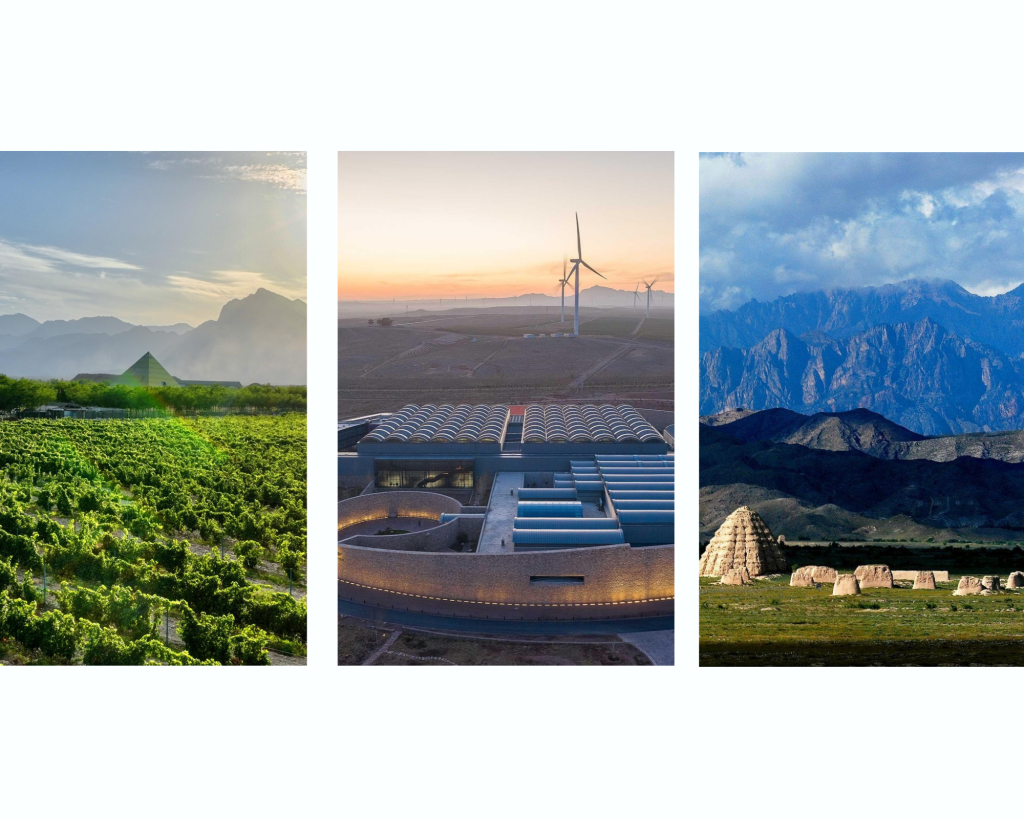
China’s Ningxia wine region is attracting renewed international attention, positioning itself as a compelling destination where wine tourism, ancient history and dramatic landscapes converge.
Situated in northwestern China, along the eastern foothills of the Helan Mountains, Ningxia has developed into one of the country’s most prominent wine-producing regions. Its vineyards, framed by rugged mountain scenery and expansive desert landscapes, offer a distinctive expression of Chinese viticulture.
A travel feature published by The Week on 15 November 2026 highlights the region’s growing appeal beyond its domestic visitor market, bringing international attention to its wineries, historical landmarks and cultural attractions.
Where Wine Meets Cultural Heritage
Among Ningxia’s notable wine destinations is Xige Estate, where contemporary winery architecture, wine experiences and hospitality reflect the region’s evolving tourism identity.
Beyond the vineyards, visitors can explore the Xixia Imperial Tombs, inscribed on the UNESCO World Heritage List in 2025. Dating from the 11th to 13th centuries, this remarkable archaeological complex preserves the legacy of the Xixia Dynasty and its connections to the ancient Silk Road.
The Helan Mountains also contain historic rock carvings, offering further insight into the region’s cultural past.
A New Perspective on Chinese Wine Tourism
Ningxia illustrates an increasingly important principle in destination development: successful wine tourism extends well beyond the tasting room.
By connecting viticulture with archaeology, architecture, regional history and natural landscapes, the region offers opportunities to attract culturally curious travellers seeking authentic experiences.
For Ningxia, the strategic opportunity lies in transforming its established domestic wine tourism appeal into stronger international recognition, supported by accessible visitor experiences, heritage conservation and a coherent destination identity.
As international interest in lesser-known wine regions develops, Ningxia presents a compelling example of how wine can become a gateway to discovering the wider cultural identity of a place.
Wine tourism is no longer simply about where wine is produced. It is about why a destination is worth discovering.
Sources: The Week, UNESCO World Heritage Centre, China Daily