
Each spring as vineyards across Europe enter a period of rapid growth, another harvest quietly unfolds across Portugal’s landscapes, one that is increasingly attracting the attention of wine travellers, sustainability advocates, and experiential tourists.
The annual cork harvest season has officially begun across Portugal, marking the return of one of the world’s oldest and most regenerative agricultural traditions. While cork has long been recognized as the preferred closure for many of the world’s finest wines, it is now emerging as something much larger: a powerful tourism asset that connects wine, culture, biodiversity, and sustainability.
As global wine tourism continues its evolution from product-centered visitation toward immersive destination experiences, Portugal’s cork oak forests, or montados, offer a compelling example of how agricultural heritage can become a cornerstone of modern tourism development.
The Harvest Behind the Heritage
The cork harvest is unlike any other agricultural practice in the world.
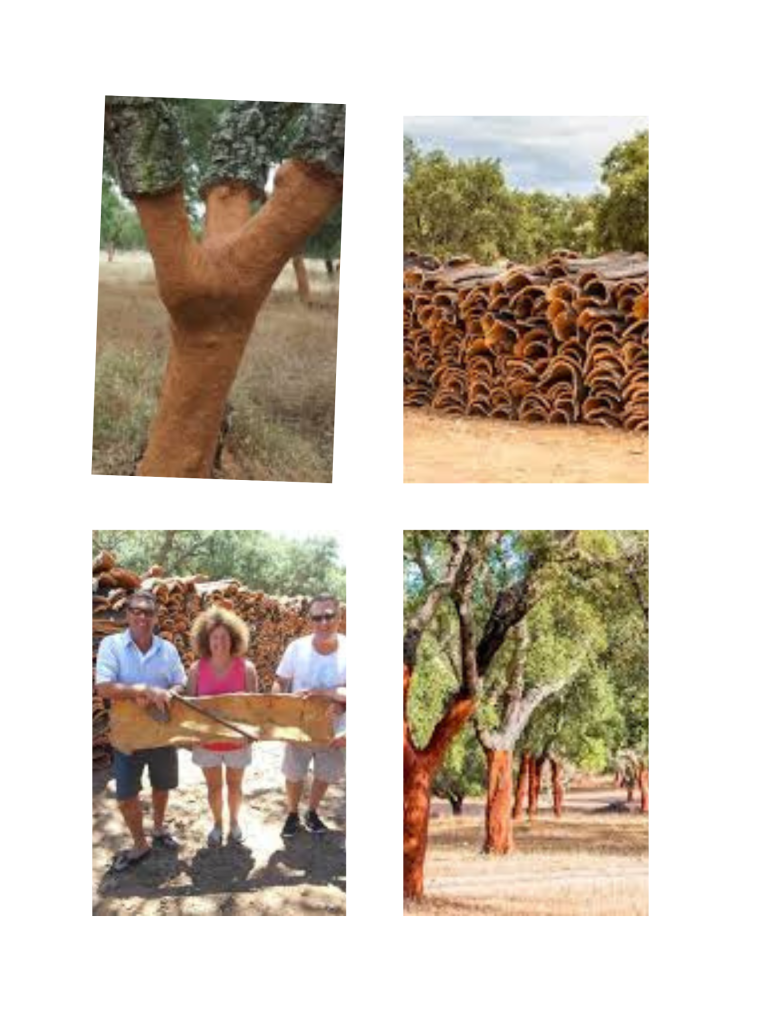
Using specialized axes and techniques passed down through generations, skilled harvesters carefully remove the outer bark of the cork oak tree (Quercus suber) without harming the tree itself. The process can only occur during a short seasonal window when the bark naturally separates from the trunk.
What makes cork remarkable is that the tree is never cut down. Instead, the bark regenerates naturally and can be harvested every nine years throughout the tree’s lifespan, which often exceeds 150 years.
According to the Portuguese Cork Association (APCOR), cork oak trees are not harvested until approximately 25 years of age, and it may take more than 40 years before the material becomes suitable for premium natural cork stoppers.
“Cork harvesting is a remarkable example of how tradition and sustainability can coexist,” notes Paulo Américo Oliveira, President of APCOR. “For centuries, this process has been carried out with deep respect for the tree and the surrounding ecosystem, ensuring that cork oak forests continue to flourish while supporting rural communities and global industries alike.”
In an era increasingly focused on regenerative tourism and environmental stewardship, few agricultural systems demonstrate sustainability as effectively as Portugal’s cork industry.
Why Cork Matters to Wine Tourism
For wine tourists, cork represents far more than a closure.
It symbolizes authenticity, craftsmanship, ritual, and heritage, qualities that remain central to premium wine experiences worldwide.
Portugal produces approximately 50 percent of the world’s cork supply and maintains more than 730,000 hectares of cork oak forests. These landscapes support over 8,000 direct jobs while contributing significantly to rural economies through tourism, gastronomy, hospitality, and related industries.
Increasingly, tourism operators and wine regions are recognizing that cork offers a unique storytelling opportunity.
Visitors are no longer satisfied with simply tasting wines.
Today’s wine traveller seeks deeper engagement with the landscapes, traditions, and people that shape a destination. Cork tourism delivers precisely that by providing access to working forests, harvest demonstrations, biodiversity education, artisanal craftsmanship, and local cultural traditions.
In many respects, cork tourism reflects the broader transformation taking place across global wine tourism.
The traditional model focused primarily on wine production and tasting.
The emerging model focuses on experiences, ecosystems, and emotional connection.
Portugal’s cork forests provide a powerful example of this shift.
The Montado: One of Europe’s Most Important Cultural Landscapes
The cork oak forests of southern Portugal are more than agricultural resources.
They are among Europe’s most significant ecological and cultural landscapes.
Recognized as biodiversity hotspots, these forests support hundreds of plant and animal species while playing an important role in carbon sequestration and climate resilience.
The montado ecosystem simultaneously supports:
- Cork production
- Wine production
- Olive cultivation
- Livestock grazing
- Wildlife conservation
- Rural tourism
This rare balance between environmental protection and economic productivity has become increasingly attractive to travellers seeking meaningful and sustainable tourism experiences.
As a result, Portugal’s cork-producing regions—particularly Alentejo and parts of the Algarve—are emerging as destinations where visitors can experience regenerative agriculture firsthand.
Four Cork Tourism Experiences Driving Interest
1. Portugal Farm Experience – Alentejo
One of the country’s most immersive cork tourism offerings allows visitors to walk through active cork forests while learning about harvesting techniques, sustainability practices, and local agricultural traditions.
Seasonal experiences often coincide with the harvest itself, providing a rare opportunity to observe one of the world’s most specialized agricultural crafts in action.
2. The Montado Landscapes of Alentejo
The Alentejo region has effectively become a large-scale cork tourism destination.
Visitors can explore cork forests through guided walks, cycling routes, wildlife experiences, photography tours, and integrated wine tourism programs that combine vineyards, olive groves, gastronomy, and rural accommodations.
These experiences illustrate how cork has become an integral component of destination development rather than simply a raw material.
3. São Brás de Alportel Cork Heritage Trail
Historically one of Portugal’s most important cork-processing centers, São Brás de Alportel in the Algarve offers visitors access to cork factories, artisanal workshops, educational exhibits, and forest excursions.
The destination demonstrates how industrial heritage can be successfully integrated into contemporary tourism experiences while supporting year-round visitation.
4. Amorim Cork Innovation Experiences
Portugal’s cork story is not limited to tradition.
Companies such as Amorim Cork have transformed cork into a symbol of innovation and circular economy leadership.
Visitors can explore applications of cork in architecture, design, aerospace, luxury products, and advanced wine closure technologies, showcasing how a centuries-old material continues to evolve in a modern sustainability-focused economy.
Cork Tourism and the Future of Wine Travel
At first glance, cork tourism may appear to be a niche segment.
In reality, it represents one of the most important trends shaping the future of wine tourism.
Travellers increasingly seek experiences that prioritize:
- Authenticity over mass tourism
- Sustainability over spectacle
- Heritage over commercialization
- Participation over observation
Portugal’s cork harvest embodies all of these values.
The forests tell a story of environmental stewardship.
The harvesters represent living cultural heritage.
The landscapes showcase regenerative land management.
And the resulting cork remains intrinsically connected to one of humanity’s oldest and most enduring wine traditions.
As wine tourism continues to evolve globally, Portugal’s cork harvest offers an important lesson for destinations worldwide.
The future of tourism may not be found solely in tasting rooms or luxury accommodations.
It may also be found in the forests, traditions, and cultural landscapes that give wine its deeper meaning.
For Portugal, cork was never simply a product.
It was always a story.
Today, travellers increasingly want to become part of that story.
Sources:
Portugal Farm Experience, Amorim Cork Sustainability, Cork Factory Tours Algarve, Cycle Portugal Cork Forest Guide, Natural Habitat Adventures – Wine, Cork & Wildlife Conservation