
ENOWAYS International Enotourism Summit 2026 | Basque Country, Spain | November 24, 2026 – Liz Palmer
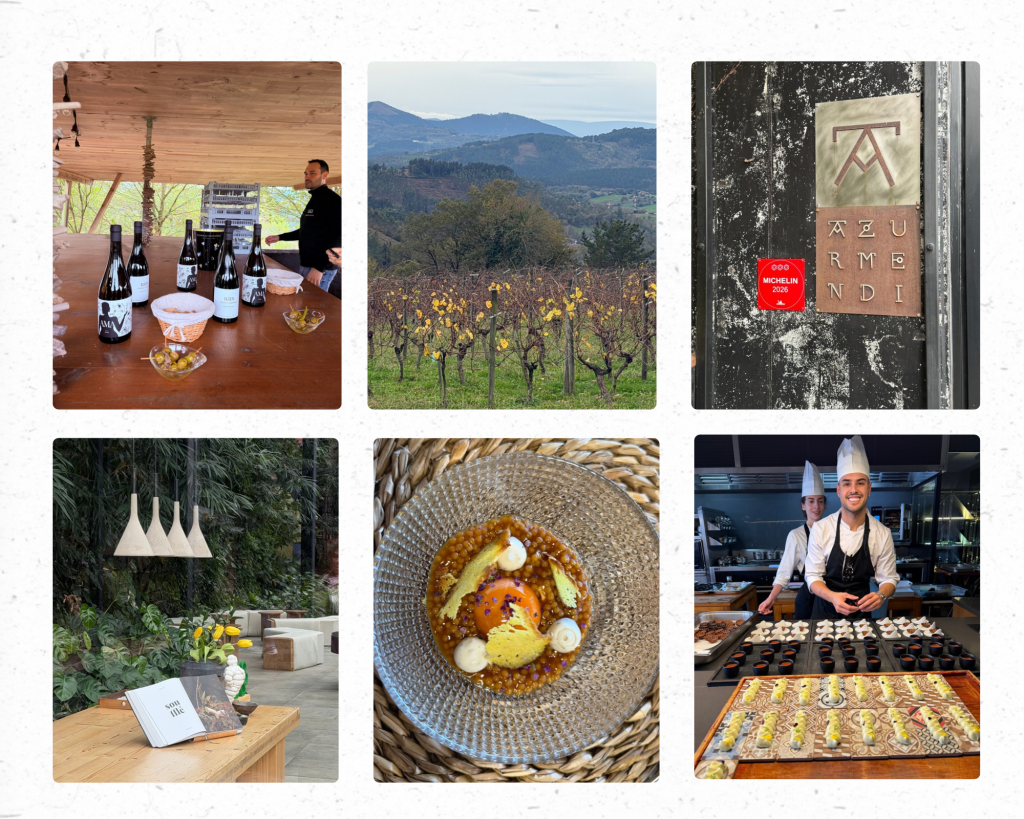
Today’s program at the ENOWAYS 2026 International Enotourism Summit took me through Bizkaia, one of the three provinces of Spain’s Basque Autonomous Community, exploring the evolution of the region’s signature wine, Txakoli, and its increasingly sophisticated relationship with contemporary gastronomy, viticultural innovation and sustainable wine tourism.
From the vineyards of Itsasmendi and Gorka Izagirre to the internationally acclaimed culinary world of chef Eneko Atxa, the itinerary revealed a region where tradition and innovation coexist, creating a compelling sense of place.
Txakoli: An Expression of Basque Identity
Txakoli (pronounced cha-ko-LEE) is more than the signature wine of the Basque Country; it is an expression of regional identity, Atlantic-influenced terroir, viticultural heritage and gastronomic culture.
Predominantly white, Txakoli is traditionally characterised by its vibrant acidity, freshness, citrus and green fruit aromas, relatively moderate alcohol content and, in certain styles, a gentle effervescence.
Its principal indigenous grape varieties include:
- Hondarrabi Zuri – the predominant white grape variety, prized for its freshness and aromatic character.
- Hondarrabi Zerratia – a white variety particularly important in Bizkaia, contributing aromatic complexity and structure.
- Hondarrabi Beltza – a red grape variety used in the production of rosé and red Txakoli.
The Basque Country encompasses three protected denominations of origin (DOs) for Txakoli:
| Denomination of origin | Territory | Distinctive characteristics |
| Getariako Txakolina | Gipuzkoa | Coastal influences, vibrant acidity and traditionally lightly effervescent styles |
| Bizkaiko Txakolina | Bizkaia | Diverse terroirs and wine styles, including structured and complex expressions |
| Arabako Txakolina | Álava (Araba) | Inland Atlantic-influenced viticulture, particularly in the Ayala Valley |
The evolution of Txakoli from a traditional regional wine into a more diverse and sophisticated category reinforces the Basque Country’s potential as a distinctive international wine tourism destination.
Itsasmendi Winery: Exploring the Diversity of Atlantic Terroir
The first stop of the day was Bodegas Itsasmendi, situated in the UNESCO-designated Urdaibai Biosphere Reserve, an exceptional natural landscape distinguished by its ecological and geographical diversity.
Itsasmendi represents an innovative approach to Basque viticulture, with a strong emphasis on research, experimentation, micro-vinification and the individual expression of vineyard sites.
The winery’s dedicated research and development facilities and micro-vinification capabilities enable its winemaking team to investigate the influence of individual vineyard parcels, soils and microclimates, producing wines that reflect the diversity of Bizkaia’s terroir.
Its approach demonstrates how scientific research and precision winemaking can complement regional viticultural traditions while expanding the stylistic possibilities of Txakoli.
Gorka Izagirre: Redefining Contemporary Txakoli
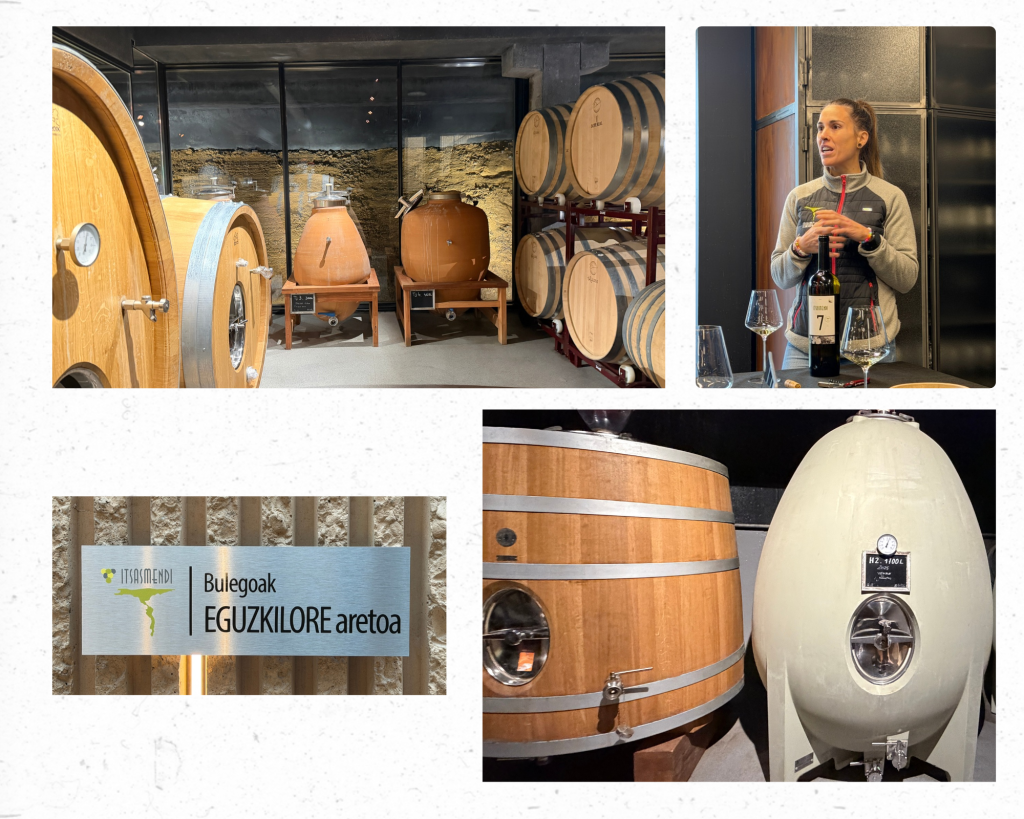
We then continued to the family-run Gorka Izagirre Winery in Larrabetzu, near Bilbao, for a closer exploration of its vineyards and wines.
Established in 2005 by the Izagirre family, the winery was founded with a vision to revitalise Bizkaia’s wine culture, champion indigenous grape varieties and advance the international recognition of Txakoli.
The winery manages more than 40 hectares of vineyards distributed across smaller parcels within Bizkaia’s rolling landscapes. Individual vineyard management and separate vinification allow the winemaking team to preserve the distinctive characteristics of each site.
Specializing in Hondarrabi Zuri, Hondarrabi Zerratia and Hondarrabi Beltza, Gorka Izagirre is demonstrating the remarkable versatility of these indigenous varieties through wines that extend beyond conventional expectations of Txakoli. Its portfolio includes expressions developed through oak fermentation, fine-lees maturation and extended bottle ageing.
The winery’s philosophy reflects a broader movement within Basque viticulture towards greater complexity, quality and international recognition, without compromising regional authenticity.
Azurmendi: Where Michelin-Starred Gastronomy Meets Sustainability
The afternoon brought gastronomy, architectural innovation and environmental responsibility into focus with a tour of Azurmendi, the internationally acclaimed restaurant of Basque chef Eneko Atxa.
Holder of three Michelin stars since 2012, Azurmendi occupies a remarkable bioclimatic building integrated into a hillside surrounded by vineyards. Its architectural and operational philosophy incorporates renewable energy, rainwater recovery, greenhouses and the preservation of local agricultural biodiversity.
The connection between Azurmendi and Gorka Izagirre brings together contemporary winemaking, haute cuisine, environmental responsibility and Basque culinary heritage within a shared geographical setting.
This integrated approach offers a compelling example of how wine tourism and gastronomy can reinforce regional identity, enhance destination differentiation and create a more meaningful visitor experience.
Lunch at ENEKO: A Celebration of Basque Gastronomy
The culinary journey continued with lunch at ENEKO in Larrabetzu, another of Eneko Atxa’s gastronomic establishments, distinguished by one Michelin star.
Our dining experience featured the collaborative talents of French, Italian and Portuguese chefs, who presented a gastronomic interpretation of Basque cuisine, accompanied by carefully paired white and red local Txakoli wines.
The experience highlighted the versatility of Txakoli as a gastronomic partner. Its natural acidity, freshness and diverse stylistic expressions make it particularly well suited to Basque cuisine, from traditional pintxos, anchovies, oysters and grilled seafood to more elaborate contemporary culinary creations.
It also illustrated how international culinary perspectives can engage with local ingredients, regional wines and established gastronomic traditions while maintaining a strong connection to place.
Beyond the Glass: Wine Tourism as a Destination Strategy
One of my most significant discoveries today was the considerable stylistic diversity and ageing potential of contemporary Txakoli. Although traditionally regarded as a youthful, refreshing wine, producers such as Itsasmendi and Gorka Izagirre are challenging conventional perceptions through experimentation, terroir-focused winemaking, lees ageing and oak fermentation.
Equally compelling was the relationship between the region’s wines and its gastronomic excellence, demonstrating how indigenous grape varieties, culinary creativity, environmental responsibility and cultural heritage can collectively strengthen a destination’s international positioning.
From the vineyards of Bizkaia to the Michelin-starred kitchens of Eneko Atxa, today’s experience served as a powerful reminder that wine tourism extends far beyond the tasting room. At its most meaningful, it tells a much larger story of place – its people, landscapes, traditions, ingenuity and aspirations for the future.
Bizkaia is not simply preserving its viticultural and gastronomic heritage; it is actively reinterpreting it for a new generation of international travellers.