
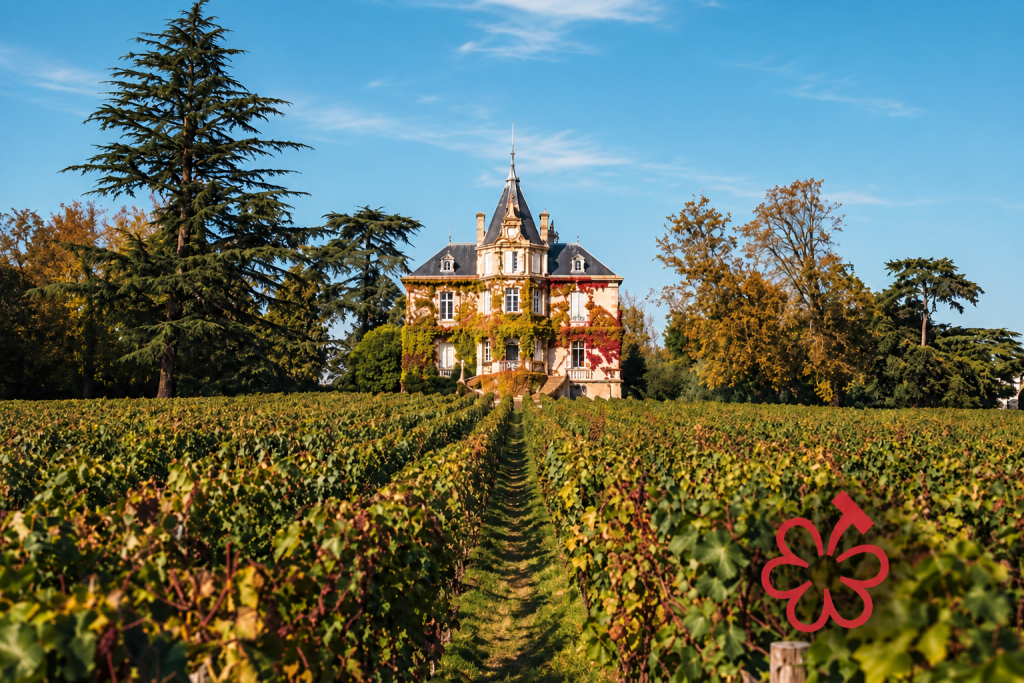
The MICHELIN Guide has expanded its new Grape distinction to Bordeaux, recognizing 83 estates across some of the region’s most celebrated appellations and awarding its highest Three-Grape distinction to nine châteaux.
Following the launch of its first Grape Selection in Burgundy, The MICHELIN Guide has turned its attention to Bordeaux, unveiling its inaugural 2026 selection at the Cité du Vin.
The new Bordeaux selection encompasses 83 estates, with 62 awarded MICHELIN Grapes: nine receive Three Grapes, 16 receive Two Grapes and 37 receive One Grape. A further 21 châteaux are included as Selected estates.
The selection covers many of Bordeaux’s most important appellations across the Left Bank, Right Bank and Sauternes, including Médoc, Pessac-Léognan, Saint-Émilion, Pomerol, Sauternes and Barsac.
The Top Winners: Nine Châteaux Awarded Three MICHELIN Grapes
Reserved for what MICHELIN describes as “exceptional producers whose wines can be approached with complete confidence, regardless of the vintage,” the Three-Grape distinction represents the highest level of the new classification.
The nine top recipients are:
- Château Léoville-Las-Cases — Saint-Julien
- Château Lafite-Rothschild — Pauillac
- Château Montrose — Saint-Estèphe
- Petrus — Pomerol
- Château La Conseillante — Pomerol
- Château Lafleur — Vin de France
- Château Cheval Blanc — Saint-Émilion
- Château-Figeac — Saint-Émilion
- Château d’Yquem — Sauternes
The Three-Grape recipients span some of Bordeaux’s most prestigious terroirs, from the Cabernet Sauvignon-dominated Médoc to Pomerol, Saint-Émilion and the great, sweet wines of Sauternes.
How the MICHELIN Grape Selection Works
The selection is conducted by dedicated wine inspectors employed by the Michelin Group, including experienced wine specialists, former sommeliers, specialized critics and production experts. Recommendations are made collectively and independently.
Every estate is assessed according to five criteria applied by MICHELIN internationally: quality of agronomy, technical mastery, identity, balance and consistency.
The system has four levels: Three Grapes for exceptional producers; Two Grapes for outstanding producers demonstrating remarkable quality and consistency; One Grape for high-quality producers crafting wines of character and style; and selectedfor trusted producers recognized for consistency and quality.
Bordeaux: Tradition Meets a New Generation
Beyond Bordeaux’s internationally renowned names, MICHELIN says its inspectors encountered a new generation of winemakers and estates combining heritage with evolving viticultural and winemaking practices.
Gwendal Poullennec, International Director of The MICHELIN Guide, describes the selection as revealing a Bordeaux that remains deeply connected to its history while continuing to reinvent itself and pursue increasingly precise and authentic expressions of terroir.
The Bordeaux selection is also expected to evolve, with MICHELIN stating that it is intended to grow year after year as its inspection teams continue their work in the region.
Following Burgundy and now Bordeaux, the MICHELIN Grape Selection introduces a significant new international benchmark for wine estates and another way for wine lovers to discover the producers and terroirs shaping some of the world’s leading wine regions.
For the full Bordeaux Selection and additional information:
The MICHELIN Guide