
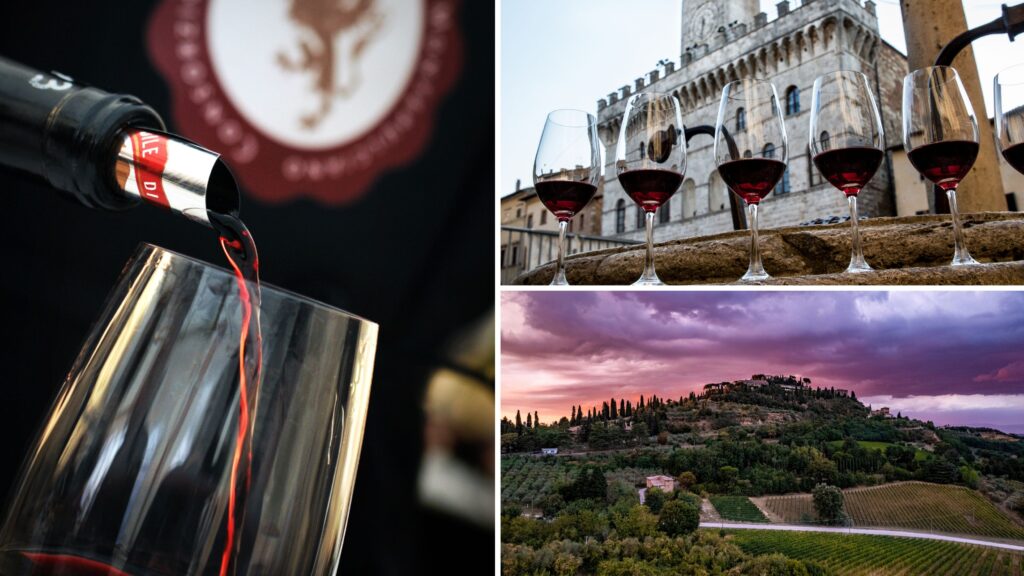
Every February, wine professionals and enthusiasts converge on Montepulciano for one of Italy’s longest-running wine events. The Anteprima di Vino Nobile, now in its 32nd year, takes place within the atmospheric walls of the Fortezza di Montepulciano, where industry insiders and dedicated collectors gather to taste the latest vintage prepared for market release.
This year’s preview featured the 2023 Vino Nobile, which has completed its mandatory two-year aging period and is now cleared for commercial release. The first day focused on the 2023 vintage alongside the 2022 Riserva and the region’s two DOC wines: Rosso di Montepulciano and Vin Santo di Montepulciano. The second day was dedicated to the Pieve wines, allowing attendees to explore these distinctive parish-designated bottlings in depth.
Yet beyond the annual tasting ritual, something more significant is taking place.
The Pieve classification system has moved from concept to market reality. Wines from the 2021 vintage, bearing specific parish designations, are now appearing on retail shelves and restaurant lists worldwide.
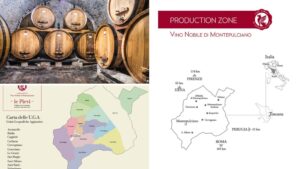
This is not merely another wine category. Montepulciano has looked to its medieval past to create a contemporary terroir classification system, dividing the appellation into twelve zones based on ancient parish boundaries. These were not arbitrary administrative divisions.
Historically, both Roman and Lombard territorial organization often followed natural geological formations, watersheds, and microclimates. In many ways, these earlier civilizations understood terroir long before the modern vocabulary existed to describe it.
How the Pieve System Works
The regulatory framework behind the Pieve designation is both clear and demanding.
A wine must be produced from 100 percent Sangiovese grown within estate vineyards located in a single parish zone. The same estate must cultivate the grapes, vinify the wine, and bottle it, with a minimum aging period of 36 months.
In practical terms, this eliminates the possibility of purchasing fruit from outside the designated area and labeling it as Pieve. Each wine must also pass review by the Consorzio del Vino Nobile di Montepulciano’s technical commission before certification is granted.
The result is an unusually high level of traceability and accountability.
When a bottle carries the designation Pieve di Gracciano or Pieve di Valiano, buyers can identify precisely where the grapes were grown and who produced the wine. For professionals navigating the broader Vino Nobile category, this geographical precision provides an important tool for differentiation.
Market analysts currently project retail pricing between €40 and €70 for most Pieve wines, while reserve bottlings may reach €70 to €100 or more.
The Consortium has also supported the classification through educational initiatives. A dedicated web series profiles each Pieve zone, explaining the geological and climatic factors that shape its wines. For trade professionals and consumers alike, the project offers valuable context for understanding these emerging sub-appellations.
This initiative aligns with Montepulciano’s broader sustainability strategy. In May 2022, the denomination became Italy’s first Equalitas-certified appellation, committing producers to measurable standards involving carbon footprint reduction, water management, and labor practices. Across the territory, 50 weather stations now collect environmental data used to support climate-adaptation planning.
The Numbers Behind the Wine
Although relatively compact, Montepulciano represents a significant wine economy.
The municipality covers 16,500 hectares, of which 2,000 hectares are planted to vineyards. Within this area, 1,411 hectares are registered under the Vino Nobile di Montepulciano DOCG, while 587 hectares produce Rosso di Montepulciano DOC.
The region includes 82 estates bottling wine and approximately 250 grape growers, collectively supporting around 1,000 permanent jobs, in addition to seasonal agricultural labor.
Annual production value is estimated at €65 million, while the total asset base – including land, infrastructure, and inventory – approaches €1 billion.
Sales figures remain robust. In 2025, production reached 6.4 million bottles of Vino Nobile and 2.5 million bottles of Rosso di Montepulciano.
Export markets account for 64.5 percent of total production, with Germany representing 36 percent and the United States 27.5 percent.
Organic certification also continues to expand. Approximately 50 percent of domestic sales are now certified organic, while export markets have reached 34 percent. What was once considered niche has become a clear indicator of evolving consumer preferences.
What to Expect When Visiting Montepulciano
The town of Montepulciano sits atop a limestone ridge between the Val di Chiana and Val d’Orcia valleys. Its historic center has remained largely unchanged since the sixteenth century.
In Piazza Grande, the seventeenth-century Duomo anchors the town’s architectural core. Just beyond the city walls stands the Temple of San Biagio, framed by the iconic Tuscan cypress-lined approach.
Within the historic center, visitors encounter a layered landscape of Etruscan ruins, Renaissance palazzi, historic churches housing significant artworks, and the Teatro Poliziano, which continues to host cultural performances.
One of the most innovative recent developments is the Pilgrimage program, created by the Consortium. The initiative organizes hiking routes through the twelve Pieve territories, culminating in evening tastings featuring wines produced in the zones visitors have just traversed.
The concept effectively connects landscape with sensory experience. Visitors spend the day walking through vineyards and terrain before tasting the wines that emerge from those soils. The physical experience deepens the understanding of terroir.
For traditional wine tourism, Montepulciano offers a wide range of possibilities. Some estates operate cellars beneath medieval buildings, while others showcase contemporary winery architecture. Most visits require appointments, although the Consortium’s enoteca within the restored fortress provides accessible walk-in tastings representing the broader appellation.
Accommodation ranges from rooms on working wine estates to boutique hotels within the centro storico.
Many visitors return repeatedly, each trip revealing a new dimension of the region. First visits often focus on the town’s art, architecture, and historical orientation. Subsequent journeys typically extend into the countryside to explore individual producers and understand the distinctions among the parish zones.
Why Montepulciano Matters Now
Tuscany offers no shortage of picturesque hill towns producing excellent wine. What distinguishes Montepulciano is its rigorous commitment to terroir expression and its transparency about how that expression is defined.
The Pieve classification is not simply a marketing construct. It represents a serious attempt to map the nuanced differences among vineyard sites within a relatively compact appellation.
For trade buyers, this creates meaningful opportunities. Instead of presenting a generalized Vino Nobile, merchants and sommeliers can discuss specific parish zones and the characteristics that distinguish them.
At the same time, the region’s organic production and Equalitas sustainability certification address growing market expectations surrounding responsible sourcing.
From a pricing perspective, Vino Nobile occupies a strategic position between Chianti Classico and Brunello di Montalcino, offering both quality credibility and relative value.
For wine travellers, the appeal is equally compelling.
Unlike some Tuscan destinations that have become heavily dominated by tourism, Montepulciano remains fundamentally anchored in agriculture. Wine production continues to drive the local economy, and many residents maintain generational ties to viticulture.
The result is a destination where wine tourism feels authentic rather than staged.
Visitors can spend mornings exploring Etruscan artifacts and Renaissance art, afternoons walking through vineyards, and evenings tasting wines shaped by the landscape they have just experienced.
The Pieve system reinforces this connection.
These twelve zones are not invented categories but historical territories that correspond closely to geological realities. When wines from different Pieve areas are tasted side by side, the distinctions become evident: variations in limestone composition, altitude, sun exposure, and microclimate all influence how Sangiovese expresses itself.
After more than three decades of hosting its annual preview event, Montepulciano has evolved from a respected regional producer into a sophisticated appellation with clearly defined internal geography.
The Pieve classification provides precision, the sustainability initiatives address contemporary environmental concerns, and the town itself offers enough cultural depth to transform wine tourism into an educational experience.
For travellers seeking to look beyond Tuscany’s most familiar destinations, Montepulciano represents a place where history, landscape, and wine remain profoundly interconnected.
Filippo Magnani