
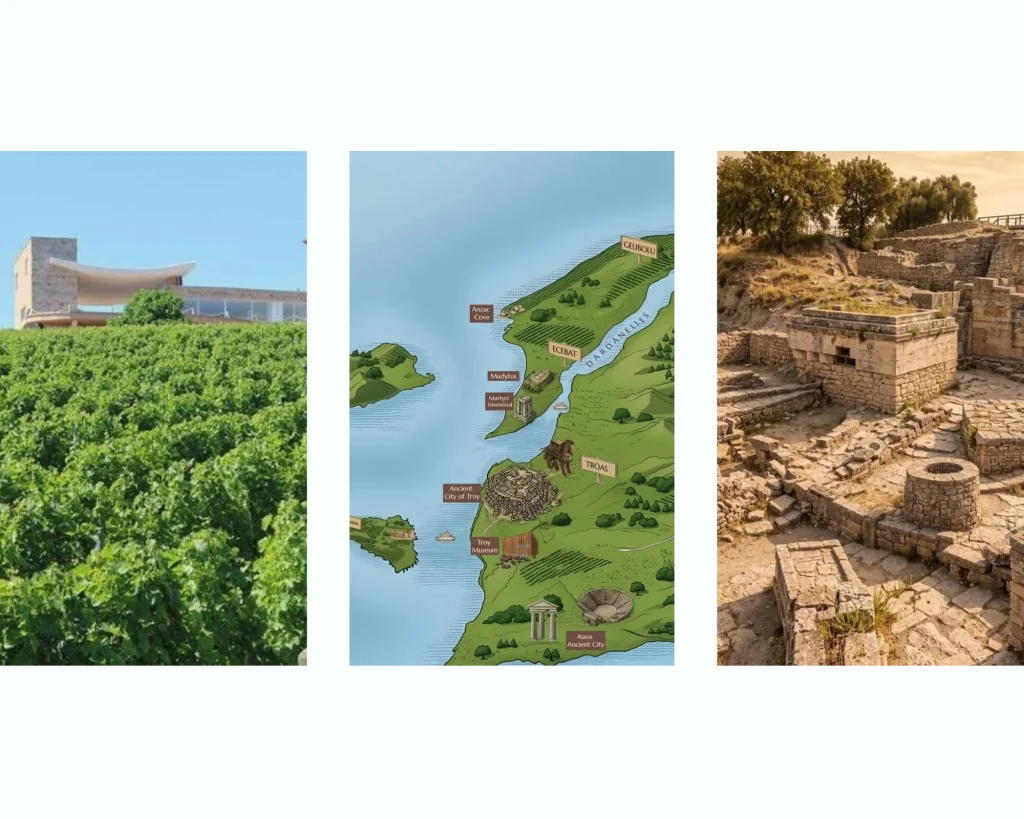
Türkiye is strengthening its wine tourism offering with the Troia Wine Route, a new itinerary in the northwestern province of Çanakkale that integrates ancient history, viticultural heritage, gastronomy and experiential travel.
Stretching across the Gallipoli Peninsula, Eceabat and the island of Bozcaada, the route connects wineries and vineyards with significant archaeological landmarks, including the ancient city of Troy and the Troy Museum. The initiative positions wine tourism as a means of interpreting the region’s cultural landscape while expanding its appeal beyond traditional summer tourism.
Preserving Indigenous Viticultural Heritage
A defining feature of the initiative is its emphasis on traditional grape varieties, particularly those associated with Bozcaada, historically known as Tenedos.
These include Bozcaada Çavuşu, which received geographical indication recognition in 2020; Vasilaki, an early-ripening white variety; and the indigenous red varieties Kuntra (Karasakız) and Karalahna.
By incorporating these grapes into its destination narrative, the route seeks to reinforce regional identity and preserve viticultural knowledge while introducing international visitors to Türkiye’s distinctive wine heritage.
Wine Tourism as a Destination Development Strategy
Beyond its cultural significance, the Troia Wine Route illustrates an increasingly important approach to destination management: integrating wine, gastronomy, archaeology and hospitality into a cohesive visitor experience.
The initiative aims to encourage year-round travel, extend visitor stays and strengthen the region’s international visibility. Its emphasis on heritage preservation and seasonal diversification also provides a potentially valuable framework for more sustainable tourism development.
Why It Matters
The Troia Wine Route demonstrates how wine tourism can contribute to destination differentiation by connecting contemporary wine production with historical landscapes and living agricultural traditions.
Its broader significance lies in moving beyond conventional winery visits toward integrated, place-based tourism experiences, where indigenous grape varieties, cultural heritage and regional gastronomy collectively shape destination identity.
For wine-producing regions seeking to diversify their tourism economies, Troy offers an emerging case study in heritage-led wine tourism development. The initiative’s longer-term effectiveness will depend on measurable outcomes, including visitor distribution, length of stay and benefits to local communities.
For further information: https://troiawineroute.com/en/story-of-the-road/
Read more: Türkiye’s New Troy Wine Route: Connecting Ancient Heritage, Indigenous Grapes and Sustainable Wine Tourism Read more: Türkiye’s New Troy Wine Route: Connecting Ancient Heritage, Indigenous Grapes and Sustainable Wine TourismSources: La Repubblica, Troia Wine Route, GoTürkiye