
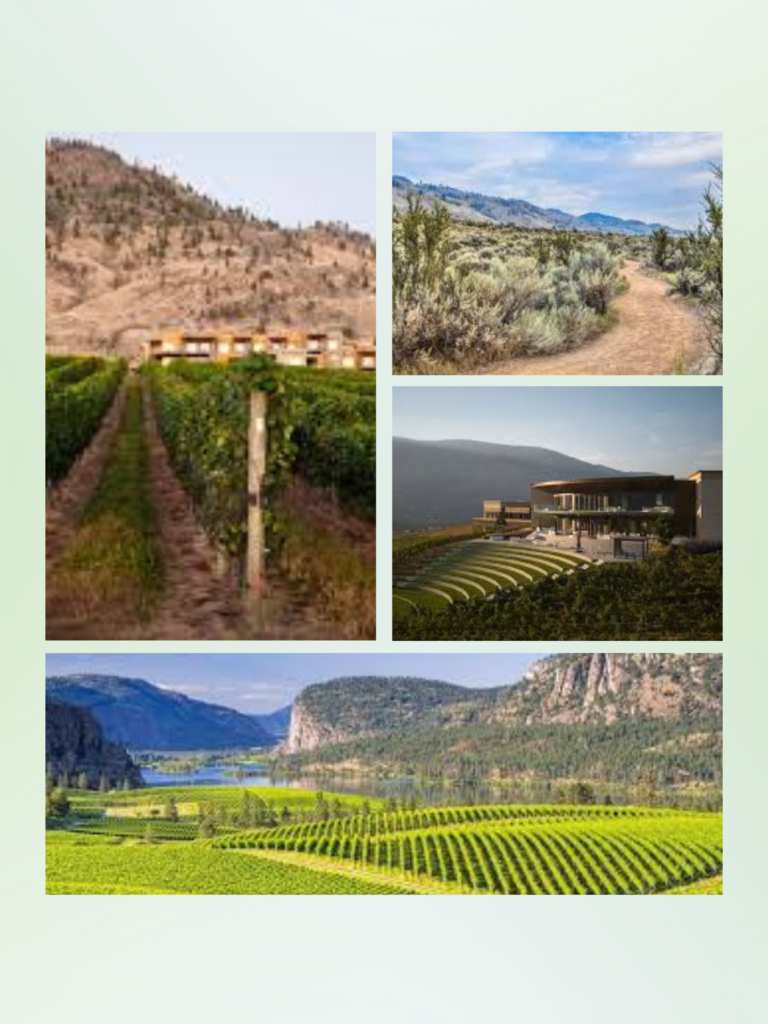
In global wine tourism, certain regions capture attention not simply for the wines they produce but for the landscapes and cultural narratives that shape them. In Canada, few destinations illustrate this relationship more vividly than the Oliver–Osoyoos corridor in British Columbia’s South Okanagan Valley, a striking wine region where vineyards thrive within the country’s only desert ecosystem.
Located at the southern end of the Okanagan Valley, this distinctive corridor has emerged over the past two decades as one of North America’s most intriguing cool-climate wine destinations. While Canada is internationally recognized for its Icewine production, the South Okanagan has increasingly gained attention for structured red wines, terroir-driven viticulture, and a rapidly evolving wine tourism culture.
For travellers seeking a destination that combines dramatic geography, innovative wineries, and immersive visitor experiences, the Oliver–Osoyoos corridor offers a compelling expression of modern Canadian wine tourism.
A Rare Desert Landscape in Canada
The landscape surrounding Osoyoos forms part of the Okanagan Desert, the northern extension of the Great Basin Desert system that stretches north from the American Southwest. This fragile ecosystem, characterized by sagebrush, bunchgrass, and prickly pear cactus, represents Canada’s only true desert environment.
The contrast is striking. Visitors arriving from Vancouver or the coastal rainforests of British Columbia are often surprised to encounter rolling hills dotted with desert vegetation, golden grasslands, and expansive vineyard terraces overlooking bright blue lakes.
Despite the sun-drenched terrain, the region remains firmly within the category of cool-climate viticulture. Its northern latitude, roughly the same as Champagne, ensures cold winters and a short but intense growing season. Summer temperatures regularly exceed 35°C (95°F), while winter lows can fall below −20°C, producing a climatic cycle that strongly influences grape physiology.
These climatic extremes contribute to a defining feature of South Okanagan wines: balance between ripeness and acidity.
Equally significant are the dramatic diurnal temperature variations, with warm daytime temperatures followed by cool nighttime air descending from surrounding mountains. This daily temperature shift helps preserve aromatic complexity while allowing grapes to ripen fully during the long, sunny growing season.
Annual rainfall averages only 250 millimetres (approximately 10 inches), far lower than most Canadian agricultural regions. As a result, vineyard irrigation and water management are central to viticultural practice. Many growers rely on careful drip irrigation systems that balance vine health with the preservation of the surrounding desert ecosystem.
Additional information about the region’s wine industry and vineyard distribution can be found through Wine Growers British Columbia, which represents more than 370 wineries across the province (https://winebc.com).
Geology and Microclimates: The Foundations of Terroir
Beyond climate, the South Okanagan’s viticultural potential is shaped by a complex geological history. During the last Ice Age, glacial activity carved out the Okanagan Valley, leaving behind a mosaic of soils that today define the region’s vineyard sites.
Across the Oliver–Osoyoos corridor, soils range from sandy desert deposits and gravelly glacial tills to clay benches and alluvial fans formed by ancient waterways. These variations allow winemakers to match grape varieties with highly specific terroir conditions.
One of the most celebrated vineyard subregions is the Black Sage Bench, a sun-exposed terrace east of Oliver that provides ideal conditions for heat-loving red varieties such as Cabernet Sauvignon and Syrah. Gravel soils and south-facing slopes enhance drainage and heat retention, supporting the development of deeply structured wines.
Nearby, the moderating influence of Osoyoos Lake and the Okanagan River further refines local microclimates. These bodies of water help regulate temperature extremes and reduce the risk of frost during the growing season.
The result is a remarkable concentration of terroirs within a relatively compact area—an advantage that has encouraged both experimentation and specialization among South Okanagan producers.
The Rise of the Oliver–Osoyoos Wine Identity
Historically, the Okanagan Valley was known primarily for orchard agriculture. Apples, peaches, and cherries dominated the landscape throughout much of the twentieth century. However, beginning in the late 1980s and accelerating through the 1990s, many growers transitioned toward viticulture as global demand for premium wines increased.
Today, the South Okanagan stands as British Columbia’s most significant red wine region, with the Oliver–Osoyoos corridor representing the warmest and driest area in the valley.
Red grape varieties that perform particularly well here include:
• Cabernet Sauvignon
• Cabernet Franc
• Merlot
• Syrah
• Malbec
These grapes benefit from the region’s extended ripening season, producing wines with concentrated fruit expression, structured tannins, and considerable aging potential.
White varieties such as Viognier, Chardonnay, and Pinot Gris also flourish, often displaying vibrant aromatics supported by fresh acidity.
Perhaps most uniquely, the region’s harsh winters allow producers to craft Icewine, Canada’s iconic dessert wine style. Grapes are harvested while naturally frozen on the vine, concentrating sugars and acidity to produce wines of remarkable intensity.
Together, these diverse wine styles contribute to a regional identity that is both distinctly Canadian and increasingly global in its appeal.
A New Era of Wine Tourism
As wine quality has improved, the Oliver–Osoyoos corridor has evolved into a sophisticated wine tourism destination. Visitors now encounter a diverse range of experiences, from boutique family-run wineries to large-scale architectural estates designed to rival leading wine destinations around the world.
Among the most prominent estates is Phantom Creek Estates, a visually striking winery located on the Black Sage Bench (https://phantomcreekestates.com). The property combines contemporary architecture with vineyard-focused storytelling and a significant art collection that integrates wine, landscape, and culture.
Visitors can participate in guided estate tours, which explore the winery’s organic and biodynamic vineyard practices, before concluding with structured tastings overlooking the valley.
Another landmark in the region is Nk’Mip Cellars (https://nkmipcellars.com). Operated by the Osoyoos Indian Band, Nk’Mip holds the distinction of being North America’s first Indigenous-owned winery. The winery forms part of a broader destination that includes the Nk’Mip Desert Cultural Centre, offering visitors insights into the history, ecology, and cultural traditions of the region’s Indigenous communities.
In Oliver, Platinum Bench Estate Winery (https://platinumbench.ca) represents a more intimate wine tourism experience. Known for small-lot, terroir-driven wines, the winery offers tastings on a rustic patio overlooking the surrounding vineyards. Its Syrah expressions in particular showcase the spice-driven character associated with the Black Sage Bench.
Nearby, Hester Creek Estate Winery (https://hestercreek.com) has become a destination in its own right. Beyond its portfolio of Cabernet Franc, Merlot, Chardonnay, and Pinot Gris, the winery features Terrafina, a Tuscan-inspired restaurant that reflects the region’s growing reputation for culinary tourism.
Across Osoyoos Lake, LaStella Winery (https://lastella.ca) draws inspiration from Italian winemaking traditions. Its wines are named after musical terminology, with the Maestoso “Solo” Merlot standing out as a signature expression of the South Okanagan’s warm-climate potential.
Equally notable is Moon Curser Vineyards (https://mooncurser.com), a producer recognized for its adventurous approach to Mediterranean grape varieties such as Tannat, Tempranillo, and Dolcetto. The winery’s celebrated red blend “Dead of Night” exemplifies the bold stylistic possibilities of the region.
Festivals, Culinary Culture, and Seasonal Experiences
Wine tourism in the Okanagan Valley extends well beyond individual tasting rooms. Seasonal festivals and culinary programming have become essential components of the region’s visitor economy.
The Okanagan Wine Festival (https://thewinefestivals.com) remains one of Canada’s largest wine celebrations. Held twice annually—in spring and autumn—it connects visitors with more than 100 wineries across the valley, offering tastings, vineyard tours, winemaker dinners, and culinary collaborations with local chefs.
These events provide visitors with opportunities to explore the broader cultural landscape of the Okanagan while sampling wines directly from producers.
Beyond formal festivals, the South Okanagan’s tourism appeal also lies in its slower rhythms. Scenic vineyard drives, lakeside dining, cycling routes through wine country, and sunset tastings overlooking Osoyoos Lake create experiences that emphasize place as much as product.
A Distinctive Future for Canadian Wine Tourism
The Oliver–Osoyoos corridor illustrates how a region can transform geographic uniqueness into a powerful wine tourism narrative. Its desert environment, complex terroir, and evolving hospitality infrastructure have positioned the South Okanagan among North America’s most intriguing emerging wine destinations.
For international travellers accustomed to the vineyards of Napa Valley, Tuscany, or Bordeaux, the South Okanagan offers something refreshingly different: a wine region shaped by extreme climate, dramatic landscapes, and a spirit of experimentation.
In this desert corner of Canada, the relationship between landscape and wine is unmistakable. And for those willing to venture beyond the expected, the Oliver–Osoyoos corridor offers a wine tourism experience that is both distinctive and memorable.