
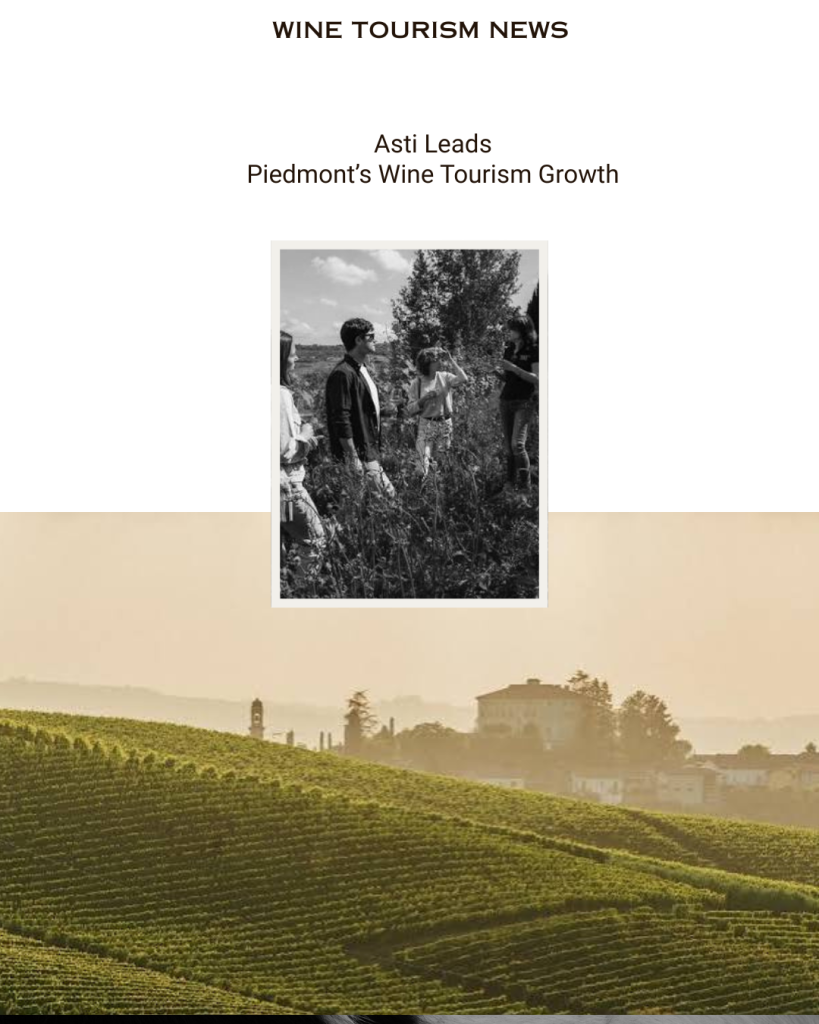
The Asti region is emerging as one of Piedmont’s strongest tourism performers in 2026, demonstrating how the strategic integration of wine, cultural heritage, gastronomy and landscape can strengthen destination competitiveness.
According to figures cited in their regional report, Asti recorded the largest tourism increase in Piedmont, at 4.15%, representing approximately 30,000 additional visitors. More broadly, Piedmont reported an 8.5% increase in arrivals and a 9.6% rise in overnight stays during the first half of 2026, alongside a reported 9.9% increase in presences compared with 2025.
These results are significant from a wine tourism perspective. Rather than relying on wine as an isolated attraction, Asti and the wider Monferrato territory are increasingly presenting visitors with an integrated destination experience in which vineyards, historic villages, gastronomy, festivals, architecture and cultural heritage reinforce one another.
From Wine Region to Cultural Landscape
Monferrato’s strength lies in the relationship between its viticultural identity and its wider cultural landscape. Wine routes are complemented by religious heritage, Romanesque architecture, historic villages and panoramic vineyard landscapes, creating opportunities for visitors to experience the territory beyond the traditional cellar-door model.
This approach reflects an important evolution in contemporary wine tourism. Successful destinations increasingly compete not simply through the quality of their wines, but through the quality, diversity and authenticity of the complete visitor experience.
For Asti, the vineyard becomes part of a broader cultural ecosystem: wine provides a point of entry into the destination, while heritage, gastronomy, architecture, events and local communities provide reasons to stay longer and explore more deeply.
Events as Instruments of Destination Development
Cultural programming is another important component of Asti’s tourism growth. The destination’s calendar extends from the Festival delle Sagre to theatre productions and acoustic music programmes staged within castles, historic squares and courtyards, including initiatives such as the Storymoving Festival.
This use of heritage spaces as venues is strategically important. It transforms historic assets from passive attractions into active components of the visitor experience while creating additional reasons to travel throughout the season.
Regional investment is also supporting local participation. The report identifies support for 553 Pro Loco associations, alongside more than €4 million allocated for event equipment to 358 entities.
Community involvement is particularly relevant to sustainable wine tourism because destination identity cannot be manufactured solely through marketing. It is strengthened when local organizations, producers, cultural institutions and residents participate directly in shaping the visitor experience.
Expanding the Geography of Tourism
Asti’s tourism strategy is also extending visitor attention beyond its established centres.
The 2026 regional list of tourist municipalities includes 66 localities within the Asti area, with Buttigliera d’Asti, Castelnuovo Don Bosco, Cisterna, Cortazzone and San Damiano newly recognized as high-quality destinations.
This geographic diversification has considerable value. Encouraging visitors to explore smaller towns and rural communities can distribute tourism expenditure more widely, reduce concentration around established attractions and provide lesser-known communities with an opportunity to develop distinctive experiences of their own
It also encourages a shift from the traditional winery visit towards territorial exploration -where the wine becomes inseparable from the village, landscape, cuisine, architecture and people responsible for its identity.
Extending the Tourism Season
Perhaps the most important implication is Asti’s ability to use cultural and wine-related programming to influence visitor flows.
Local stakeholders report that the combination of culture, food and landscape is transforming traditional events into extended summer programming, helping to lengthen the tourism season.
Seasonality remains one of the structural challenges facing many wine destinations. Developing experiences that extend beyond harvest periods and major festivals can generate more consistent demand for accommodation, restaurants, wineries and other local businesses.
Asti therefore provides an interesting example of how wine tourism can function as part of a broader destination-development strategy, rather than simply as a collection of winery visits.
Where Is Monferrato?
Region: Monferrato, Piedmont, Italy
Monferrato – Open in Google Maps