
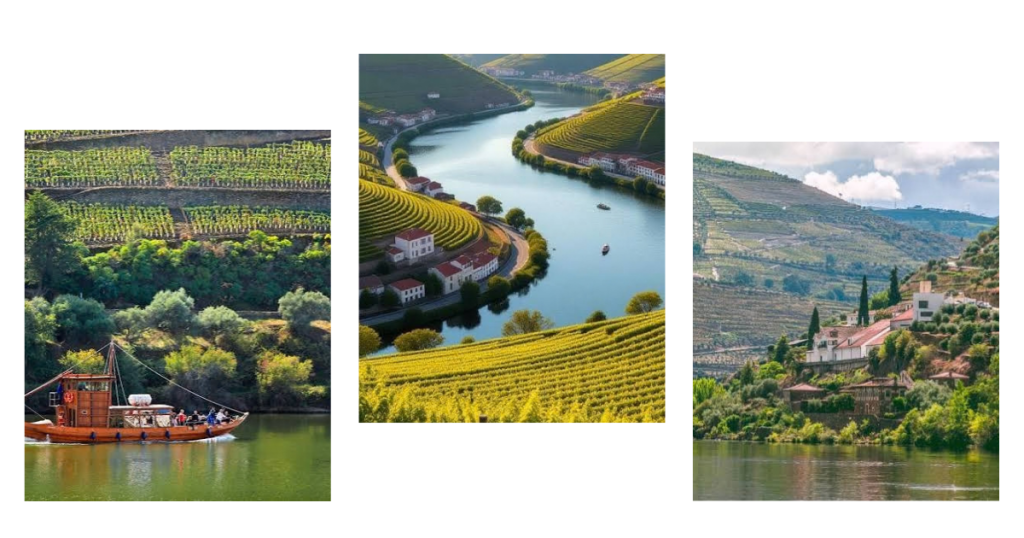
Portugal’s Douro Valley is marking 25 years as a UNESCO World Heritage Site and new figures demonstrate just how significant wine tourism has become to the region’s economy.
When the Alto Douro Wine Region was inscribed on UNESCO’s World Heritage List in December 2001, the designation recognised a cultural landscape shaped by centuries of viticulture, its dramatic terraced vineyards and the relationship between people, wine and place.
Twenty-five years later, that recognition has helped transform the Douro into one of the world’s most internationally recognized wine tourism destinations.
According to Luís Pedro Martins, president of Turismo do Porto e Norte de Portugal, UNESCO recognition has strengthened the Douro’s international profile while helping attract increased tourism and investment to the region.
Perhaps the most revealing figure, however, is the growing economic importance of wine tourism itself.
For businesses combining wine production, distribution and tourism, wine-tourism-related sales now represent approximately 30% of total sales.
That is a significant shift for a region whose economy and identity have historically been inseparable from viticulture.
Beyond the Cellar Door
The Douro’s evolution also demonstrates how the definition of wine tourism is expanding.
Visitors are no longer coming simply to tour a winery and taste Port or Douro wines. The destination increasingly offers harvest participation, vineyard walks and picnics, gastronomy, olive-oil experiences, thermal and wellness tourism, river journeys and encounters with the region’s agricultural and cultural traditions.
The international market is responding. The United States is now identified as the Douro’s leading international source market, while American tourism to Portugal’s North region has continued to grow.
The economic trajectory is particularly striking. Research published on the Douro found that between 2017 and 2024 [excluding the pandemic years] he region recorded a 65.1% increase in overnight stays and a 165.3% increase in total tourist spending.
A Model for the Future of Wine Regions?
The Douro story carries significance well beyond Portugal.
At a time when many established wine regions are confronting declining wine consumption, climate pressures, rural depopulation and changing consumer behaviour, wine tourism can provide producers with an additional source of revenue while creating economic opportunities throughout the destination.
Hotels, restaurants, guides, transportation companies, artisans, farmers and cultural attractions can all become part of the wine tourism ecosystem.
Yet growth also brings responsibility. Protecting the landscape, supporting local communities and ensuring that tourism contributes to the long-term sustainability of viticulture will be increasingly important as visitor numbers and investment continue to rise.
The Douro is already looking ahead through the Douro 2050 initiative, which is examining the demographic, climatic and economic challenges facing the region and how it can balance preservation of its authenticity with innovation and future development.
After 25 years of UNESCO recognition, perhaps the Douro’s most important lesson is this:
Wine tourism is no longer simply an extension of the wine business. Properly developed, it can become part of the economic strategy of an entire wine region.
Sources:
TNEWS – Douro assinala 25 anos como Património Mundial da UNESCO com mais turistas e investimento
Jornal Económico / Lusa -Distinção da UNESCO trouxe projeção, turistas e investimento ao Douro
Livro Verde Douro 2050: um exercício coletivo para preparar a Região para o próximo quarto de século