
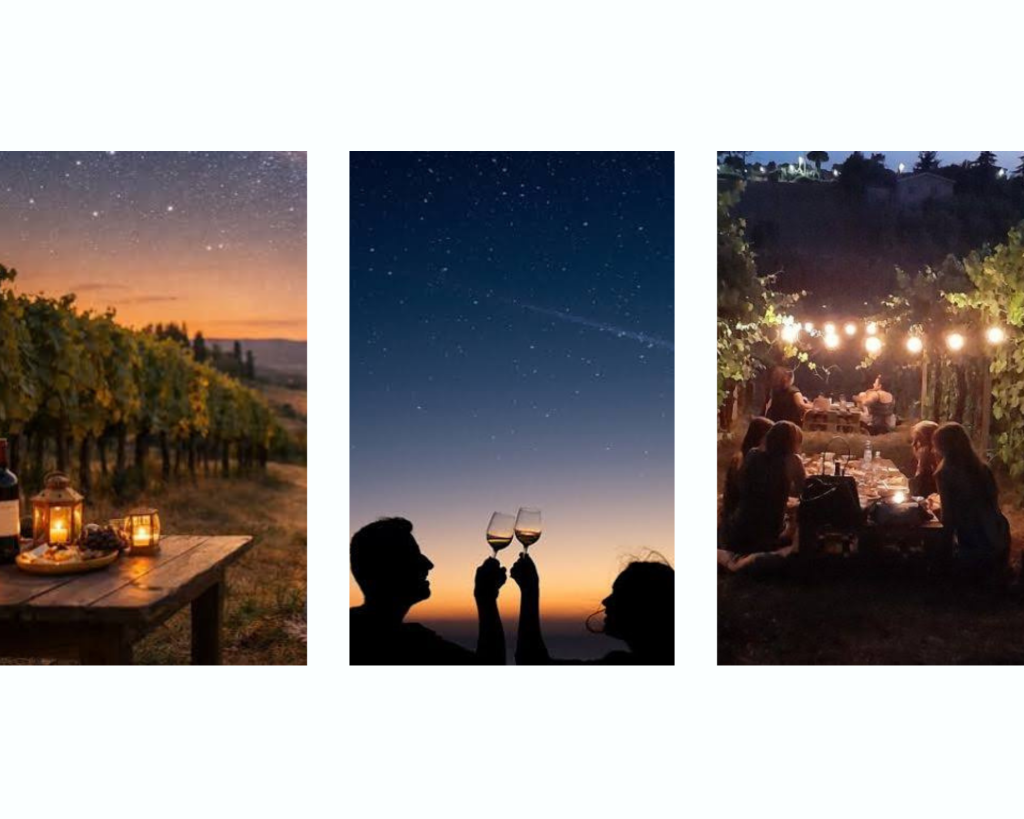
As wine tourism continues to evolve, travellers, we are learning, are seeking far more than exceptional wines. They want authentic experiences, meaningful connections with place, and memorable moments that combine culture, gastronomy, heritage, and landscape.
Tuscany certainly delivers this.
From July 24 to August 16, Tuscany’s renowned Calici di Stelle (Goblets Under the Stars) returns with more than 50 events that transform vineyards, medieval villages, and historic wine estates into immersive destinations celebrating wine beneath some of Italy’s most spectacular night skies.
Organized by Movimento Turismo del Vino Toscana, the festival brings together approximately 30 wineries and nine Tuscan municipalities through a diverse programme of vineyard dinners, guided tastings, sunset aperitifs, moonlit vineyard walks, cellar tours, astronomy experiences, live music, local cuisine, and cultural performances.
What makes Calici di Stelle particularly significant is that it reflects a much broader shift occurring across global wine tourism.
Tuscany’s Leadership Extends Beyond Wine
Recent research presented by CESEO (Centre for Wine and Olive Oil Tourism Studies at LUMSA University) demonstrates why Tuscany continues to lead Italy’s wine tourism sector.
The findings reveal that:
- 95% of Tuscan wineries actively promote the surrounding landscape.
- 74% showcase the region’s cultural heritage.
- More than two-thirds have introduced innovative visitor experiences.
- 63% offer at least five different tourism activities.
These figures demonstrate that Tuscany is no longer simply marketing wine—it is curating complete destination experiences.
According to CESEO Director Donatella Cinelli Colombini, Tuscany also remains Italy’s leading destination for international wine travellers, with 66% of wineries reporting that more than half of their visitors come from overseas. That international appeal not only strengthens tourism but also reinforces the global reputation and export potential of Tuscan wines.
A Festival That Celebrates Place
Since its launch in 1996, Calici di Stelle has grown into one of Italy’s best-known wine festivals, attracting more than one million visitors during last year’s edition.
Rather than offering a single event, the festival invites each participating estate to interpret the experience in its own way.
Visitors can enjoy vineyard dinners beneath the stars at Buccia Nera, music and tastings in the Medici gardens of Tenuta di Artimino, sunset picnics at Lamole di Lamole, elegant evenings at Campo alle Comete in Bolgheri, Brunello tastings beneath dark skies at Podere La Vigna, and astronomy experiences throughout the region.
One of the signature events takes place on August 10 at Tenuta di Nozzole, where Ambrogio e Giovanni Folonari Tenute presents the fourth edition of Calici Sotto le Stelle, featuring wines from across the Folonari estates, a vertical tasting celebrating 40 vintages of La Pietra Chardonnay Toscana IGT, cuisine by Antica Macelleria Cecchini, astronomy sessions, and live artistic performances.
A Blueprint for the Future of Wine Tourism
As someone who studies wine tourism destinations around the world, I see Calici di Stelle as much more than a summer festival.
It represents a sophisticated destination strategy.
Every experience integrates wine, landscape, gastronomy, heritage, astronomy, and community into a single visitor journey. The festival encourages guests to slow down, engage with local culture, and develop a deeper appreciation for the people and places behind every bottle.
This integrated approach has become one of Tuscany’s greatest competitive advantages.
Increasingly, successful wine destinations are moving beyond tastings alone. They are designing immersive experiences that create lasting emotional connections – connections that inspire repeat visitation, strengthen destination brands, and generate long-term economic value.
Calici di Stelle demonstrates that the future of wine tourism lies not simply in producing outstanding wines, but in creating unforgettable experiences rooted in authenticity.