
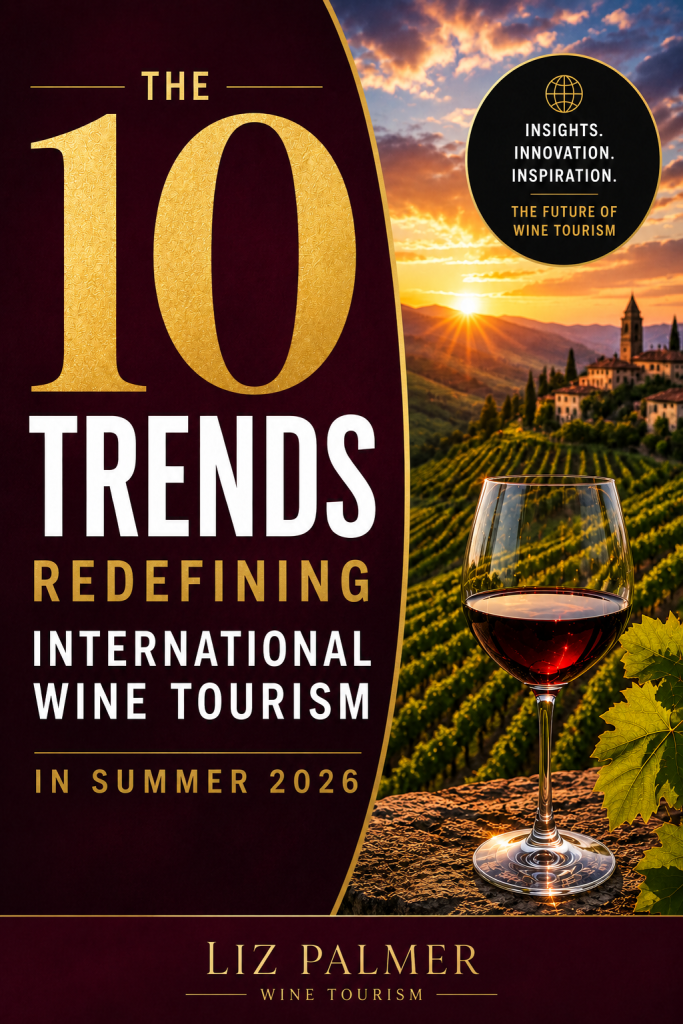
For decades, wine tourism was defined by tasting rooms, cellar doors, and the quality of the wines poured into guests’ glasses. Today, that model is evolving rapidly.
The summer of 2026 marks a significant turning point for the global wine tourism industry. While exceptional wines remain the foundation of every successful destination, they are no longer enough to attract today’s discerning oenotourists. Instead, they are seeking immersive experiences that combine wine with gastronomy, culture, wellness, sustainability, outdoor recreation, and authentic local storytelling.
At the same time, governments, tourism organizations, and wine regions increasingly recognize wine tourism as a strategic driver of regional economic development, cultural preservation, and destination competitiveness.
These ten trends are reshaping not only where wine tourists choose to travel, but also how wine destinations must position themselves for the future.
1. Authenticity Has Become the New Luxury
Luxury remains an important element of premium wine tourism, but today’s tourists are looking beyond exclusivity.
They seek meaningful experiences that foster genuine connections with people and place. Meeting winemakers, exploring historic villages, participating in the harvest, learning regional traditions, and discovering indigenous grape varieties often create far more lasting memories than exclusive tastings alone.
Authenticity has become one of the industry’s greatest competitive advantages.
2. Wine and Gastronomy Are Now One Experience
The boundaries between culinary tourism and wine tourism have largely disappeared.
Leading destinations increasingly integrate:
- Michelin-recognized restaurants
- Farm-to-table dining
- Local markets
- Artisan producers
- Cooking schools
- Regional food traditions
Rather than promoting wineries independently, successful destinations now present complete gastronomic ecosystems that encourage oenotourists to stay longer.
3. Climate Change Is Influencing Where and When We Travel
Climate is becoming one of the most influential forces shaping international wine tourism.
Rising summer temperatures across parts of Southern Europe are encouraging wine tourists to explore higher-altitude vineyards, coastal wine regions, and northern destinations. At the same time, many wineries are adapting by offering earlier morning vineyard tours, shaded outdoor experiences, and expanding programming into the spring and autumn shoulder seasons.
Climate resilience is becoming an essential element of destination competitiveness rather than simply an environmental discussion.
4. Emerging Wine Regions Are Capturing Global Attention
Today’s tourists increasingly value discovery.
Rather than returning to the same iconic wine regions, many are seeking lesser-known destinations that offer authentic experiences, fewer crowds, and a distinctive sense of place.
Regions such as Spain’s Arlanza, Sicily’s Etna, Texas Hill Country, Canada’s Okanagan Valley, Slovenia, Croatia, and Portugal’s Alentejo are benefiting from this shift.
For these destinations, wine tourism has become a powerful catalyst for regional economic development and international destination branding.
5. Sustainability Has Become an Expectation
Sustainability is no longer a marketing differentiator – it has become an expectation.
Today’s tourists increasingly expect wineries to demonstrate:
- Environmental stewardship
- Biodiversity protection
- Responsible water management
- Renewable energy initiatives
- Local sourcing
- Heritage preservation
Increasingly, oenophiles judge destinations not only by the quality of their wines, but also by how responsibly they manage their landscapes, communities, and cultural heritage.
6. Wellness and Wine Tourism Continue to Converge
One of the fastest-growing segments of luxury travel combines wine with wellness.
Across international wine regions, oenotourists are increasingly seeking:
- Vineyard yoga
- Spa experiences
- Cycling tours
- Hiking trails
- Kayaking adventures
- Forest bathing
- Healthy regional cuisine
- Mindfulness retreats
Wine has become part of a broader lifestyle experience centred on health, nature, and personal well-being.
7. Storytelling Is Becoming a Competitive Advantage
Tourists remember stories more than tasting notes.
Successful wineries are investing in interpreting their heritage through architecture, family history, local traditions, cultural landscapes, and community identity.
The most memorable wine tourism experiences create emotional connections that extend far beyond the bottle.
8. Digital Discovery Is Reshaping Travel Decisions
Artificial intelligence, search engines, social media, and digital storytelling are transforming how oenotourists discover and select destinations.
Increasingly, wineries are found through authoritative online content, destination videos, LinkedIn thought leadership, Instagram, and AI-powered search results.
For wine destinations, digital visibility has become just as important as physical accessibility.
9. Investment Readiness Is Emerging as a Strategic Priority
Wine tourism is increasingly viewed as an investment ecosystem rather than simply a collection of individual wineries.
Forward-looking destinations are investing in:
- Boutique accommodations
- Premium transportation
- Visitor centres
- Cycling infrastructure
- Cultural attractions
- Year-round programming
- Hospitality training
The regions that succeed over the next decade will be those capable of attracting long-term investment while preserving authenticity, environmental stewardship, and community identity.
10. Wine Tourism Has Become a Destination Development Strategy
Perhaps the most significant shift is conceptual.
Wine tourism is no longer simply a tourism product.
It is increasingly recognized as a catalyst for:
- Rural economic development
- Destination branding
- Cultural heritage preservation
- Investment attraction
- Employment growth
- Community resilience
- Year-round tourism
This broader perspective aligns closely with the priorities promoted by UN Tourism, the OECD, and national tourism authorities around the world.
For policymakers and destination leaders, wine tourism has evolved into a strategic economic development tool capable of generating value well beyond the vineyard.
Looking Ahead
The next generation of wine tourism will not be defined by the wines a region produces, but by the experiences it curates, the stories it tells, and the lasting emotional connections it creates. In an increasingly competitive global marketplace, the most successful wine destinations will be those that understand they are no longer selling bottles – they are shaping places, preserving heritage, and creating experiences that travellers cannot replicate elsewhere.
References
OECD. OECD Tourism Trends and Policies 2026. OECD Publishing, 2026.
Hochschule Geisenheim University, WineTourism.com, UN Tourism, OIV & Great Wine Capitals. Global Wine Tourism Report 2025.
OECD. Tourism Trends, Performance and Outlook – OECD Tourism Trends and Policies 2026.