In Verona this spring, the mood is shifting.
At Vinitaly 2026, taking place April 14–17, 2026, the global wine community will once again gather to taste, negotiate, and forecast. Yet this year, something fundamental has changed.
The conversation is no longer centred solely on vintages, pricing, or export markets.
Instead, it is about people, place, and experience.
Wine tourism, once a refined but secondary offering, has moved decisively to the forefront, emerging as a defining force shaping the future of the global wine industry.
👉 Registration: https://www.vinitaly.com/en/visit/register/
The Exhibition That Became an Ecosystem
For decades, Vinitaly has served as a barometer for industry direction. What appears on its floors today often becomes global practice tomorrow.
In 2026, wine tourism is no longer positioned at the margins. It is embedded – structurally, commercially, and strategically, through dedicated tourism hubs, curated business meetings, and programming designed to connect wineries with international travel designers and cultural curators.
Wine is no longer presented as a product alone.
It is positioned as an entry point into a destination.
From Cellar Doors to Cultural Gateways
The traditional model of wine distribution, producer to importer to consumer, is being quietly reengineered.
Today’s traveller does not simply purchase wine. They encounter it:
- At vineyards set within historic landscapes
- Through chef-led tastings that unite gastronomy and terroir
- Across curated itineraries blending wine, culture, and design
In this context, the winery becomes something more than a place of production. It becomes a cultural gateway.
The Business of Experience
Behind the romance of vineyard sunsets lies a measurable shift:
Experience is driving revenue.
Wineries investing in wine tourism infrastructure are reporting:
- Increased direct-to-consumer sales
- Higher average spend/visitor
- Stronger long-term brand loyalty
The tasting room is no longer an add-on.
It is a commercial engine.
Data, Design, and the New Competitive Edge
If wine tourism once relied on storytelling, it now increasingly depends on systems and data.
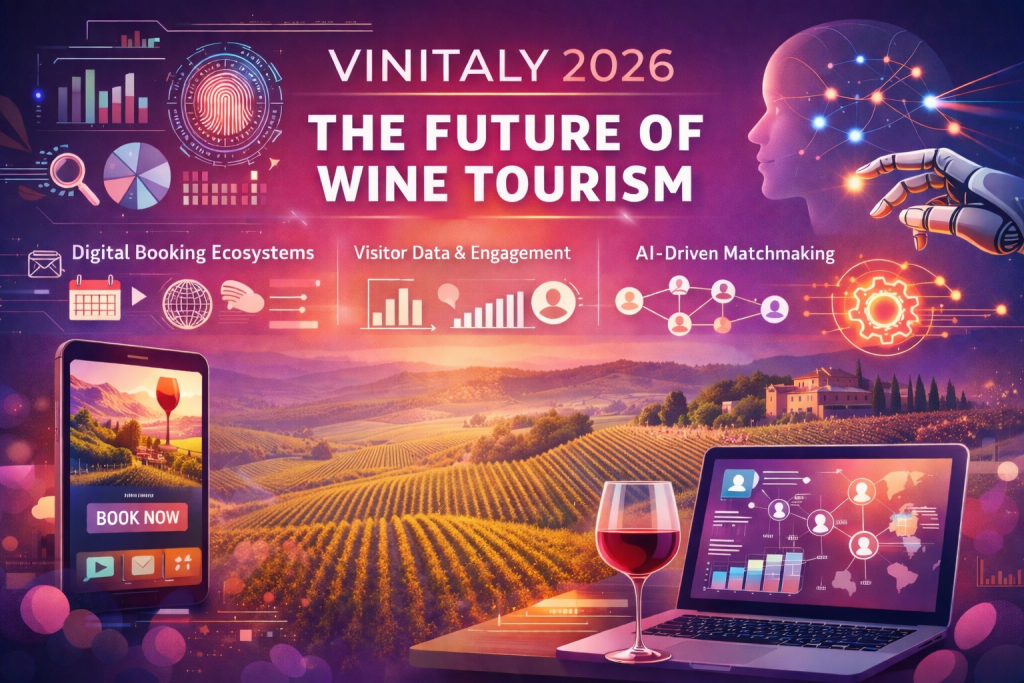
Vinitaly 2026 reflects this evolution, with a focus on:
- Digital booking ecosystems
- Visitor data and engagement tracking
- AI-driven matchmaking
- Experience design optimization
Wine tourism is entering its next phase – where data enhances experience, and experience drives measurable outcomes.
The Future, Poured Differently
In Verona, amid the swirl of glasses and conversations, one idea lingers:
The future of wine will not be defined solely by what is in the bottle,
but by where it takes you.
Stay ahead of global wine tourism trends, destination strategy, and industry intelligence @ www.liz-palmer.com