
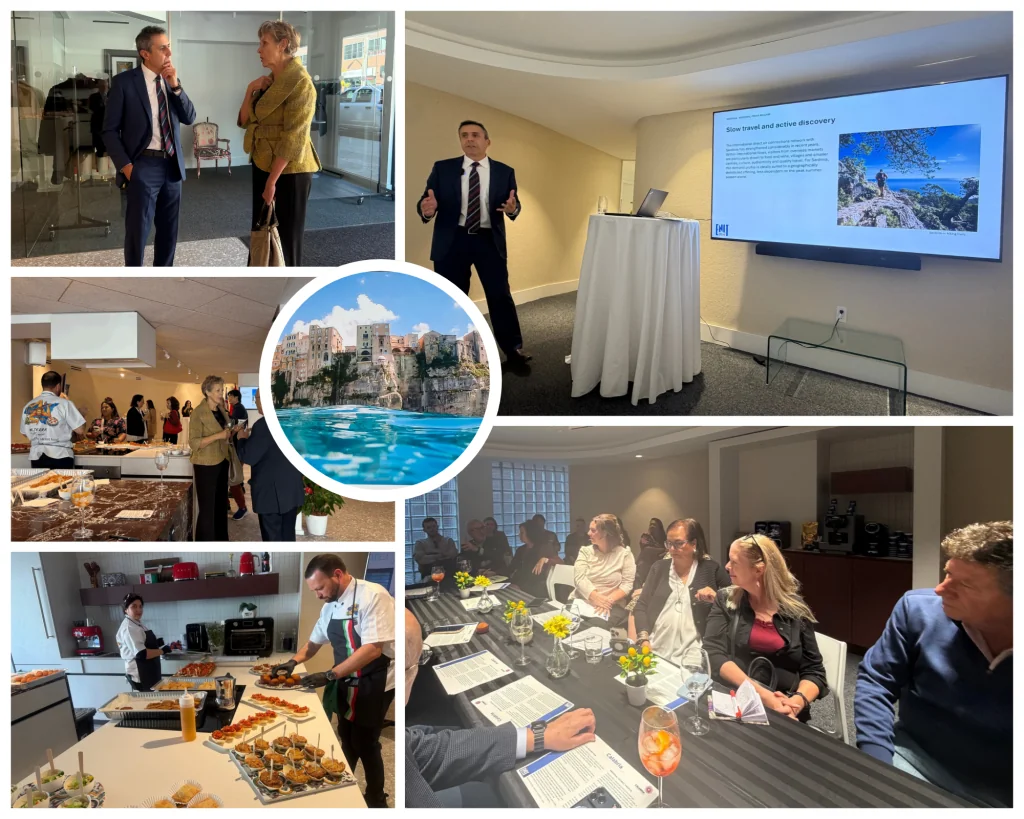
Calabria, Sardinia and Sicily demonstrate the potential of experiential tourism, regional identity and year-round destination development.
I attended the Italian National Tourist Board (ENIT) Press Day at Spazio Camera, in Toronto’s Little Italy, where over 25 journalists and tourism trade professionals gathered to explore the evolving tourism proposition of Calabria, Sardinia and Sicily.
Led by Salvatore Basile, ENIT’s Country Manager for Canada, the event highlighted Southern Italy’s potential for experiential travel, gastronomic tourism and cultural immersion, with particular emphasis on extending visitor demand beyond the traditional summer season.
The programme examined each region’s distinctive tourism assets, supported by first-hand destination perspectives and regional culinary experiences. We sampled traditional specialities, including arancini al ragù, fregola and stuffed sun-dried tomatoes, accompanied by Italian wines.
Three Regions – Three Distinctive Destination Identities
Calabria presents opportunities for heritage-led and nature-based tourism, combining protected landscapes, historic villages, indigenous grape varieties and traditional gastronomy. Its relatively underexplored wine regions offer potential for developing authentic, place-based visitor experiences.
Sardinia offers a differentiated tourism proposition centred on cultural heritage, rural hospitality and slow travel. Its established wine traditions, particularly Cannonau and Vermentino, complement archaeological sites, traditional food production and immersive experiences beyond the island’s coastal resorts.
Sicily combines internationally recognised wine regions, volcanic landscapes, UNESCO heritage and a sophisticated gastronomic identity. Its diverse tourism infrastructure and cultural assets support the development of integrated, multi-day itineraries extending beyond seasonal coastal tourism.
Canadian Market Growth and Year-Round Tourism
According to figures presented by ENIT, approximately 1.2 million Canadians visited Italy in 2025, with further growth recorded during the first half of 2026.
The event also addressed the importance of air, sea and ground connectivity between Sicily, Sardinia and mainland Italy, alongside opportunities to strengthen shoulder-season visitation.
These considerations are increasingly relevant to destination management strategies seeking to improve seasonal demand distribution, encourage longer stays and extend tourism’s economic benefits to inland and rural communities.
Wine Tourism as a Strategic Destination Asset
From a wine tourism perspective, Southern Italy’s competitive advantage lies in the integration of indigenous grape varieties, regional gastronomy, cultural landscapes and local heritage.
Rather than positioning wine tourism as a standalone activity, these regions have opportunities to develop interconnected visitor experiences that support destination differentiation, local value creation and more geographically dispersed tourism expenditure.
ENIT’s Toronto initiative also demonstrates the importance of international market engagement and destination storytelling in communicating lesser-known regional tourism assets.
The broader opportunity for Southern Italy is not simply to attract additional visitors, but to develop a more diversified, year-round tourism economy rooted in authenticity, cultural preservation and a strong sense of place.
As international travel preferences continue to evolve, Calabria, Sardinia and Sicily offer compelling examples of how wine, gastronomy and cultural heritage can contribute to sustainable destination competitiveness.
For further insights: www.liz-palmer.com