
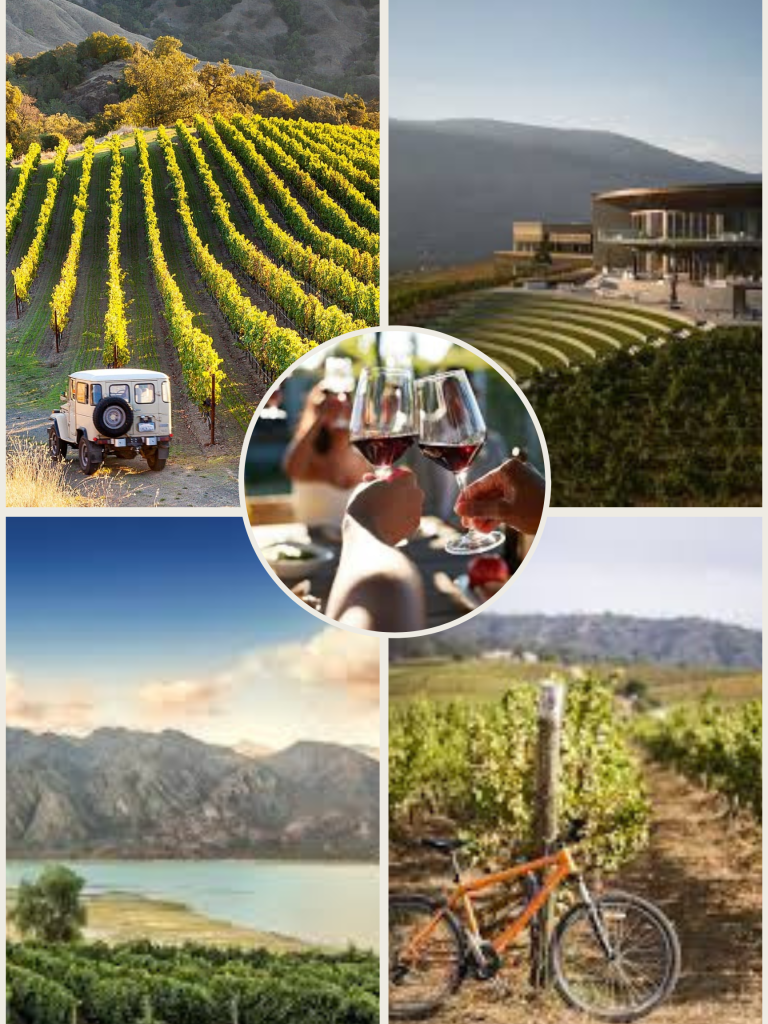
The global wine tourism industry is entering a new phase of maturity. While exceptional wines, beautiful landscapes, and authentic visitor experiences remain fundamental, they are no longer enough to guarantee long-term success, as previously discussed. Increasingly, the destinations that will lead the next generation of wine tourism are those capable of attracting sustained investment, building resilient infrastructure, and creating an environment where both visitors and businesses can thrive.
This shift was recently reinforced by the World Travel & Tourism Council’s recent release of its Seven Principles for Attracting Tourism Investment – a framework designed to help destinations become investment-ready while encouraging sustainable tourism growth. Although the framework addresses tourism broadly, its implications for wine tourism are particularly significant.
For decades, wine tourism has largely focused on storytelling, hospitality, and destination marketing. These remain essential pillars of success, but today’s most competitive wine regions are demonstrating that strategic investment is becoming just as important as visitor experience. The future belongs not only to destinations that produce outstanding wines, but to those that understand how to attract the capital needed to build world-class tourism ecosystems.
Why Tourism Investment Matters More Than Ever
Tourism has become one of the world’s most powerful economic development tools. Governments increasingly recognize that well-managed tourism stimulates employment, encourages entrepreneurship, supports rural communities, preserves cultural heritage, and attracts international investment.
Wine tourism amplifies these benefits.
Unlike many tourism sectors concentrated in urban centres, wine tourism directs economic activity into rural regions where vineyards, wineries, restaurants, boutique accommodations, transportation providers, artisans, and local producers all benefit from visitor spending. Every successful wine destination creates a multiplier effect that extends well beyond the cellar door.
Today’s wine travellers also expect considerably more than a tasting flight. They seek immersive experiences that combine wine, gastronomy, culture, wellness, outdoor recreation, history, and authentic engagement with local communities. Delivering these experiences requires significant investment—not only in wineries, but also in roads, accommodation, visitor centres, digital infrastructure, transportation, sustainability initiatives, and destination management.
In other words, great wine tourism does not happen by accident. It is built through long-term planning and strategic investment.
Understanding WTTC’s Seven Principles
The WTTC framework identifies seven characteristics consistently found in destinations that successfully attract tourism investment:
- Legal certainty and regulatory stability
- A one-stop investment process
- Tourism strategies aligned across stakeholders
- Competitive fiscal and investment incentives
- Visible government leadership
- Comprehensive destination master plans
- Sustained market demand supported by strong tourism fundamentals
Viewed collectively, these principles represent far more than an investment checklist. They describe the governance, collaboration, and strategic planning required to build competitive tourism destinations over decades rather than years.
For wine tourism destinations, these principles provide an important lens through which to evaluate future competitiveness.
What the Principles Mean for Wine Tourism
Stability Creates Confidence
Wine tourism investments often involve long planning horizons. Luxury vineyard accommodations, winery expansions, visitor centres, architectural projects, and hospitality developments require substantial capital commitments.
Investors are naturally drawn to destinations where planning regulations are transparent, environmental policies are consistent, and government decision-making is predictable. Regulatory uncertainty can delay projects for years or discourage investment altogether.
For wine regions seeking sustainable growth, legal certainty becomes a competitive advantage.
Simplifying the Investment Journey
Many wine regions involve multiple layers of government, planning authorities, tourism agencies, environmental regulators, and agricultural organizations.
When investment approvals become fragmented, opportunities are often lost.
Creating a coordinated investment process reduces complexity and encourages both domestic and international investors to explore tourism projects that enhance the overall visitor experience.
Efficiency, in this context, becomes an economic development strategy.
Collaboration Is Essential
Perhaps the most important lesson from successful wine destinations is that no single organization builds a wine tourism region alone.
Successful destinations require alignment between wineries, tourism organizations, municipalities, regional governments, hospitality businesses, transportation providers, cultural institutions, and local communities.
The strongest destinations operate as integrated ecosystems rather than independent attractions.
Collaboration transforms individual wineries into internationally recognized wine regions.
Investment Incentives Shape Growth
Governments have an important role to play in encouraging responsible tourism development.
Appropriate tax incentives, infrastructure funding, sustainability grants, and financing programs can accelerate investment in boutique hotels, winery hospitality facilities, cycling infrastructure, visitor experiences, renewable energy projects, and heritage conservation.
These investments enhance visitor satisfaction while strengthening local economies.
Leadership Matters
Across the world’s leading wine destinations, political leadership has consistently played an important role in supporting long-term tourism development.
Governments that recognize tourism as a strategic economic sector are more likely to invest in transportation, destination branding, skills development, environmental stewardship, and international marketing.
Visible leadership also provides investors with confidence that tourism remains a long-term priority rather than a short-term initiative.
Planning Beyond the Vintage
The most successful wine tourism destinations rarely evolve by chance.
Comprehensive destination master plans identify future opportunities while balancing tourism growth with environmental sustainability, community well-being, and cultural preservation.
Long-term planning allows destinations to develop accommodation, transportation, visitor attractions, event programming, and supporting infrastructure in a coordinated manner.
For wine regions, master planning ensures that tourism enhances—not overwhelms—the character that visitors travel to experience.
Demand Must Be Supported
Even the most attractive investment opportunities depend upon strong visitor demand.
Fortunately, wine tourism continues to benefit from changing consumer preferences. Travellers increasingly prioritize authentic experiences over traditional sightseeing, seeking opportunities to connect with local culture through food, wine, history, and nature.
This evolution positions wine tourism at the intersection of several rapidly growing sectors, including culinary tourism, luxury travel, wellness tourism, cultural tourism, and sustainable travel.
The challenge now is ensuring destinations have the infrastructure necessary to meet that demand.
Lessons from Leading Wine Regions
Several international wine destinations already demonstrate many of these investment principles in practice.
Portugal has successfully integrated wine tourism into broader regional development strategies, combining vineyard experiences with river cruising, gastronomy, historic villages, and luxury hospitality.
Spain continues to strengthen wine tourism through coordinated regional wine routes, heritage conservation, and destination branding that links culture, architecture, gastronomy, and wine into cohesive visitor experiences.
Italy offers numerous examples where wine tourism benefits from close integration with cultural landscapes, UNESCO heritage sites, agritourism, and regional identity, creating diversified tourism economies that extend well beyond wine itself.
Australia has positioned wine tourism within broader visitor economies by investing in infrastructure, premium hospitality, culinary tourism, and experiential travel that appeals to both domestic and international markets.
Canada’s Okanagan Valley represents one of the country’s strongest examples of integrated destination development. International recognition of Kelowna as Canada’s first UNESCO Creative City of Gastronomy reinforces the growing convergence of wine, food, outdoor recreation, Indigenous tourism, and destination branding. Continued investment in visitor experiences, transportation, luxury accommodation, and tourism infrastructure is positioning the region to compete on an increasingly global stage.
Each of these regions illustrates the same lesson: successful wine tourism depends not only on exceptional wines, but on sustained investment, strategic planning, and long-term collaboration.
Looking Ahead
The future of wine tourism will not be defined solely by the quality of a destination’s vineyards or the excellence of its wineries. Increasingly, success will depend on whether destinations can create investment-ready environments that encourage innovation while preserving authenticity.
The World Travel & Tourism Council’s Seven Principles provide more than a framework for governments—they offer a roadmap for wine regions seeking sustainable growth in an increasingly competitive global marketplace.
For destination leaders, winery owners, policymakers, and tourism organizations, the message is clear. The next generation of world-class wine tourism destinations will not simply be distinguished by memorable wines and unforgettable visitor experiences. They will be recognized for their ability to attract strategic, long-term investment that strengthens communities, preserves cultural heritage, and builds resilient tourism economies for generations to come.
Source: The World Travel & Tourism Council (WTTC)