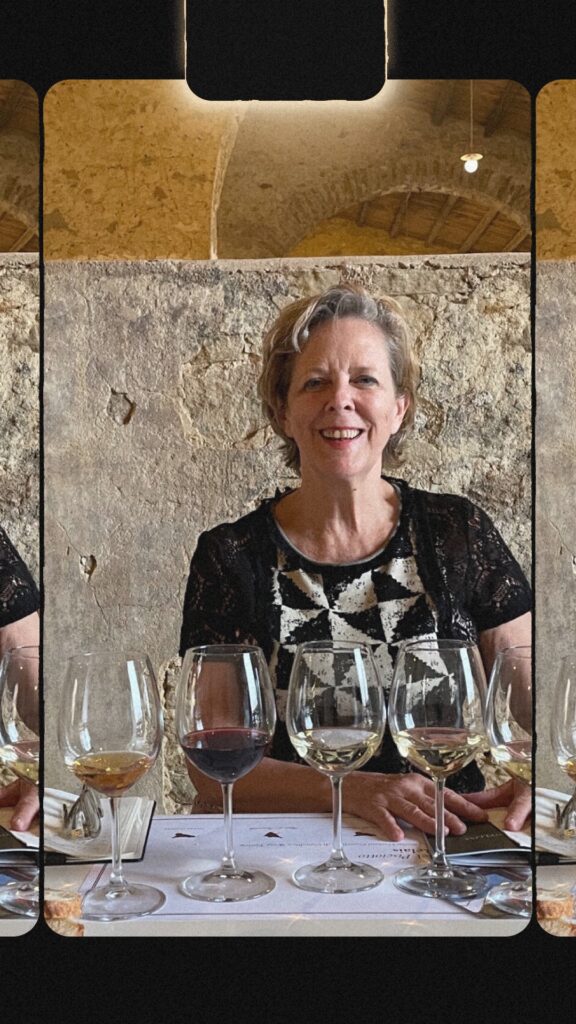

Trailblazing Winemaker Susana Balbo: An Exclusive Interview with Liz Palmer + Tasting Notes

Susana Balbo, a trailblazer in the wine industry, renowned for her pioneering contributions as Argentina’s first female winemaker and the visionary owner of Susana Balbo Wines. Her academic journey began with a transition from nuclear physics to enology, culminating in her graduation with honors from Don Bosco University in Mendoza in 1981. Navigating the challenges posed by a traditionally male-dominated profession, she revolutionized the Argentine wine sector and gained recognition for her innovative approach to viticulture. Her expertise in cultivating and refining Torrontés—a signature white grape variety of Argentina—earned her the title of “Queen of Torrontés.” Today, Susana Balbo’s winery stands as a testament to her resilience, creativity, and commitment to elevating Argentine wines on the global stage.

Expanding on her extraordinary journey and accomplishments, Susana Balbo opens up with me in this thoughtful and engaging interview, offering invaluable insights into her experiences, challenges, and aspirations for the future.

Liz Palmer: Which influential women in the wine industry have inspired you throughout your journey?

Susana Balbo: In my early days in Cafayate, I did not know any. There was no internet; I lived in a completely isolated town. We did not have a telephone, let alone any means of communication to connect with other women in the world. I did not travel the world either. Therefore, my inspiration has fundamentally been an obsession with quality. One of my teachers was Father Francisco Oreglia, who was the founder of the Technological School of Oenology and Fruit and Vegetable Industries in Mendoza. He was a perfectionist, and always inspired me to do things exceptionally well, constantly improving and getting better. However, at that time, I did not know any women from the wine world. Once the internet became available and information was easier to access, I already had over fifteen years of experience in my profession and was traveling around the world as a wine consultant. Honestly, I consider myself a self-made woman.

Liz Palmer: Could you share a particularly memorable experience or achievement in your illustrious career?

Susana Balbo: When I arrived in Cafayate, Salta, in 1981, Torrontés made up 75% of the grapes planted in the winery where I worked. Therefore, either I had to learn how to make good Torrontés wines or my job would not last long. Putting that aside, which is more anecdotal today, what I do differently is to work in a very respectful way with the variety, leaving aside some aromas in order to achieve complexity and elegance. What I see in Torrontés is an incredible versatility that allows you to create all kinds of things: you can make alcohol-free juices, low-alcohol wines with interesting aromas, natural sweet wines for young people who enjoy sweet, chilled wines, more serious wines fermented in oak barrels, and you can even use it for blends. It is a variety of extraordinay versatility, and it expresses a very distinct personality depending on the soil and terroir where it is grown. Its possibilities are endless.

A more recent achievement for which I feel deeply grateful is being recognized by Decanter with the prestigious Decanter Hall of Fame 2024 award. I share this accomplishment with my team, who have supported me throughout the years, and especially with my two children, who have been by my side for the past 12 years.

Liz Palmer: What recent technological innovations have you and your team integrated into your winemaking process?

Susana Balbo: We have recently implemented several technological innovations in our winemaking process. One of them is the use of a press that employs inert gases, allowing us to better preserve the quality of the must during pressing by minimizing oxidation.

Additionally, we are using clayvers and amphorae in various shapes (spherical, oval, horizontal, and vertical) to determine which provides the best results in both the fermentation and aging of white wines.

We have also incorporated the use of special barrels, known as “Perle,” which work under pressure and enable carbonic maceration and fermentation with minimal intervention. This results in red wines with remarkable aromatic purity and excellent structure.

Liz Palmer: How do you ensure sustainability and uphold environmental responsibility in your vineyard and winery operations?

Susana Balbo: We believe that sustainability means performing actions with commitment. That is why we have worked as a team on defining our purpose: we nurture a culture of shared growth in all our relationships, aiming to boost the development of people and resources. We always work on creating value in terms of sustainability’s three dimensions: the people, the environment and the business.

As regards the environment, we focus on its preservation in every step of the winemaking process: from the vineyard to the bottle. Regarding the vineyards, we take care of them with the highest global standards of quality and sustainability. Significantly, our vineyard in Agrelo (where the winery is located) is certified organic, showcasing our dedication to environmentally friendly practices. Our daily hard work, for instance, is reflected on the Sustainability Certificate issued by Bodegas de Argentina. In addition, last year we renewed our BRC Global Standard for Food Safety certification, an achievement that reveals our commitment to quality and the environment. Some of the winery’s eco-friendly practices I can mention are:  managing the use of energy in our daily activities, disposing of waste in a responsible manner and recycling important materials such as cork, wood, cardboard and nylon, using kraft boxes and bottles that are lighter than the traditional ones, implementing a drip irrigation system for vineyards and reusing sewer water coming from the common-use areas, among others.

Liz Palmer: What are your perspectives on the No and Low Alcohol Wine Revolution, and how has your wine estate adapted to this burgeoning movement?

Susana Balbo: As a winery that constantly pursues innovation, we believe it is important to offer products that meet the needs of these consumers. In 2022, we launched our sub-line CRIOS SUSTENTIA, focused on responsible consumption and ecological awareness. Under this premise, we offer a Chardonnay—being exclusively for the international market—with an alcohol content of 8 to 9 degrees, considered as a “light wine.” It is low in alcohol by Argentine standards, where due to our climate, it is easy for both whites and rosés—and even more so for red wines—to reach levels above 13 degrees.

Liz Palmer: How do you and your team stay abreast of the latest trends and advancements in the wine industry?

Susana Balbo: We stay up to date with the latest trends and advancements in the wine industry through continuous learning about new developments. This includes reading scientific journals, attending technological conferences, and participating in technical talks. Additionally, we keep close contact with industry colleagues, which enriches our knowledge and allows us to exchange experiences.

Liz Palmer: What advice would you offer to young women aspiring to enter the wine industry?

Susana Balbo: To be able to lead and make changes in the industry we sometimes have to leave our comfort zone.

Another piece of advice is to focus on making quality wines, each of them reflecting the doer’s personality. Likewise, the story behind a wine must be consistent with that wine and with what the consumer tastes. A wine is recommended to others when the consumer and the clients quickly perceive consistency. Therefore, to enter into the world of wine, one must be convinced that there is a rocky road ahead but it is not an impossible road to take. This path should be clearly consistent with one’s goals.

Wine Tasting Notes
Susana Balbo Signature Malbec 2022
and
Susana Balbo Signature Barrel Fermented Torrontés 2024

Susana Balbo Signature Barrel Fermented Torrontés 2024

This Torrontés is the first of its kind, produced with grapes from Paraje Altamira, Valley de Uco in Mendoza at 3,770 feet.

A luminous pale golden hue. On the nose, it offers a captivating bouquet of orange blossom and white peach, complemented by subtle undertones of nutmeg and vanilla derived from its four months of fermentation in French oak barrels. On the palate, the wine delivers a lively and harmonious profile, with vibrant floral and citrus notes balanced by a creamy texture with some hints of toast from the oak. Its crisp acidity provides excellent structure, leading to a refined and lingering finish. This innovative expression of Torrontés highlights the influence of high-altitude vineyards in Paraje Altamira, Valle de Uco.
92 Points
Liz Palmer

Susana Balbo Signature Malbec 2022

“Making great wines requires courage, determination and passion. With over forty years of experience since my start as the first female winemaker in Argentina I am proud to off the best of myself through my signature wines.  This Malbec is one of the most cherished wines from my winery.  Produced with grapes from Paraje Altamira, Valley de Uco in Mendoza at 3,770 feet” Susana Balbo

This Malbec exemplifies elegance and depth, showcasing the unique character of high-altitude Mendoza vineyards. In the glass, it reveals a deep ruby color with violet undertones. The nose is expressive and layered, offering aromas of ripe blackberries, plums, and blueberries, intertwined with hints of violet, mocha, and a touch of sweet spice.

On the palate, this Susana Balbo Signature Malbec is full-bodied yet impeccably balanced, with silky tannins and a vibrant acidity that provides structure and freshness. The fruit flavors are complemented by subtle notes of dark chocolate and toasted oak, a result of careful aging in French oak barrels. The finish is long and refined, leaving a lasting impression of elegance and complexity.
92 Points
Liz Palmer

 Susana Balbo Website:  https://en.susanabalbowines.com.ar/

Women in Wine Talks Interview With: Melissa Marotta-Paolicelli and Angela Marotta of Two Sisters Vineyards – Niagara-on-the-Lake, ON

Discover Two Sisters Vineyards

Located in the heart of Niagara-on-the-Lake’s renowned wine region,Two Sisters Vineyards exemplifies the Marotta family’s steadfast commitment to achieving excellence in both viticulture and hospitality. Established by sisters Melissa Marotta-Paolicelli and Angela Marotta, the winery embodies their shared vision of producing ultra-premium wines that honour the distinctive terroir of the Niagara River sub-appellation.

The estate encompasses over 130 acres, with cultivated varietals including Cabernet Franc, Cabernet Sauvignon, Merlot, Petit Verdot, Chardonnay, Riesling, and Sauvignon Blanc. Renowned for their dedication to sustainable farming practices, Two Sisters Vineyards have achieved recognition for its environmentally conscious approach.

At the heart of Two Sisters Vineyards lies a guiding philosophy: to craft super-premium and luxury wines through a non-interventionist approach to winemaking. By prioritizing the integrity of the fruit and the uniqueness of their property’s terroir, the winery consistently delivers exceptional, world-class wines.

Since its inception in 2014, Two Sisters Vineyards has garnered numerous accolades, including being named “Best Small Winery in Canada” by the National Wine Awards of Canada. Their 2014 Cabernet Franc, in particular, earned a prestigious platinum medal, showcasing the winery’s commitment to quality and innovation.

Melissa and Angela together have created a destination that combines exceptional wines with Italian-inspired culinary offerings at their onsite restaurant, Kitchen76.

The winery’s dedication to excellence extends to its digital presence, with an engaging website (Two Sisters Vineyards) and active social media platforms, including Facebook and TikTok, where they connect with wine enthusiasts worldwide. Two Sisters Vineyards stands as a beacon of innovation and tradition.

Interview With: Melissa Marotta-Paolicelli and Angela Marotta of Two Sisters Vineyards
Niagara-on-the-Lake, ON

Liz Palmer: Which influential women in the wine industry have inspired you throughout your journey?

Melissa Marotta-Paolicelli and Angela Marotta: We are inspired by the women who work alongside us at Two Sisters Vineyards. Many of us are mothers, daughters and sisters who work tirelessly together to make an impact here at TSV while juggling the demands outside the workplace. The wine industry in Ontario has many amazing inspiring women, many who are winemakers and stakeholders/owners.

Sue Ann Staff has been integral to the landscape here for many years. Thirty Bench has a very talented winemaker, Emma Garner, as does Tawse with Jessica Otting. There are many women working behind the scenes as well as out in the vineyard and in overall management. The industry has many talented women who are truly pivotal to each wineries success. Debbie Zimmerman stands out so much as CEO of the Grape Growers of Ontario.  It all starts with the farmers here in NOTL and we very much advocate for all wineries here in the region to support and buy grapes locally. Debbie has been pivotal to raising this awareness and supporting this part of the industry here. At TSV all our fruit is estate grown and when needed, depending on the year, we will first and foremost support our neighbouring grape growers.

Liz Palmer: Could you share a particularly memorable experience or achievement
in your illustrious career?

Melissa Marotta-Paolicelli and Angela Marotta: When we won Best Canadian Winery in 2018, we knew we were doing many things right!  It was a very proud moment for our team here in Niagara on the Lake. Adam Pearce our winemaker has been producing award-winning wines for TSV since we opened our doors and to see him get that recognition from his peers and the industry was very exhilarating. In 2019 we were recognized as one of Canada’s Top Growing Companies by The Globe and Mail which gave us great exposure and the confidence to know we were scaling the company in the right direction.

Liz Palmer: What recent technological innovations have you and your team integrated into your winemaking process?

Melissa Marotta-Paolicelli and Angela Marotta: In the last year we have invested in a temperature-controlled storage for our barrel fermentations. This allows for ideal conditions to ensure consistent quality. In an effort towards sustainable packaging, we have been working with a company to reduce our carbon footprint by washing and sanitizing a portion of our wine bottles to be reused for future wines. We also invested in a mechanical grape harvester so we can hone in on our picking date and time and efficiently pick our fruit at it’s ideal peak in ripeness and quality.

Liz Palmer: How do you ensure sustainability and uphold environmental responsibility in your vineyard and winery operations?

Melissa Marotta-Paolicelli and Angela Marotta: We have several key practices that uphold our commitment to environmental responsibility, from sustainable farming to major conservation initiatives. We prioritize soil health by conducting annual nutrient sampling on our vines and soils across all blocks. Our vineyards are Certified Sustainable by Sustainable Winegrowing Ontario. The program makes sure it is a sustainable journey from grape to glass. When it comes to energy efficiency, we implement technologies such as the Gregoire grape harvester and mechanical leaf removal. For waste reduction, we compost all our grape pomace. Additionally, our Integrated Pest Management (IPM) program collaborates with a local university to scout our vineyards and conduct trials each year, ensuring the best understanding of vineyard pests. At every stage, sustainability remains a top priority as we farm with future generations in mind.

Liz Palmer:
What are your perspectives on the No and Low Alcohol Wine Revolution, and how has your wine estate adapted to this burgeoning movement?

Melissa Marotta-Paolicelli and Angela Marotta: We feel that drinking wine in moderation is the best way to achieve a well balance lifestyle.  Europeans have wine almost every day. There are also reports stating that drinking red wine is good for the heart (and soul!). Wine should not be categorized the same as hard spirits and this can get lost with those advocating for zero alcohol consumption. Wine is very much part of the enjoyment of food and is at our table for most meals. There needs to be a continued appreciation for winemaking as it is an art.  The cultivation and farming of grape from vineyards echoes the history that is deep rooted in our region and elsewhere in the world!

Liz Palmer: How do you and your team stay abreast of the latest trends and advancements in the wine industry?

Melissa Marotta-Paolicelli and Angela Marotta: We focus on quality and don’t necessarily follow all the trends. If there are advancements that we are made aware of we will get informed however we are not large producers and as a result, we lean towards a more traditional way of winemaking that values high quality barrels for longer aging.  We don’t want to mess up a good thing and to date focus on farming, hand tending to each vine, dropping fruit for lower yields and a talented winemaking team is what has made us successful and garnered our wines many accolades domestically and internationally.

Liz Palmer: What advice would you offer to young women aspiring to enter the
wine industry?

Melissa Marotta-Paolicelli and Angela Marotta: Focus on quality not quantity. Consumers who appreciate wine will respect anyone who is passionately focused on producing high quality premium wine. Also, don’t focus on growing and scaling too quickly. Make the effort to know the economics of the industry as it can be very risk oriented. Create a demand for your wine and focus always on producing the best that you can.

Wine Reviews: Two Sisters Blanc de Franc Sparkling 2020 +
Two Sisters Eleventh Post 2018

Two Sisters Blanc de Franc Sparkling 2020

Crafted in the Traditional Method from 100% Cabernet Franc, this sparkling wine stands as a hallmark of Two Sisters’ esteemed repertoire.
Displaying a luminous light lemon hue, this sparkling wine exhibits a persistent and vigorous effervescence. Aromatically, it unfolds with layers of elegance, showcasing fresh red berries interwoven with nuanced herbal undertones, vibrant lemon zest, and the refined allure of brioche.

On the palate, this sparkling wine is a symphony of freshness and complexity. The lively, creamy mousse provides a seamless foundation for flavours of crisp apple, red berry medley, with a delicate touch of lemon. Subtle brioche accents and a whisper of toast contribute to the wine’s creamy depth and complexity. Elevated by a bright, well-integrated acidity, it delivers a finely tuned structure that culminates in a medium-length, polished finish. This is a compelling and articulate expression of Cabernet Franc in sparkling form, offering sophistication and balance in every sip.
92 points
Liz Palmer

Two Sisters Eleventh Post 2018

The Two Sisters Eleventh Post 2018, a Bordeaux-style blend of Merlot (48%), Cabernet Franc (24%), and Cabernet Sauvignon (28%), captures the essence of Niagara’s terroir.

This wine visually presents itself with a medium-intensity garnet hue. On the nose, it offers a sophisticated bouquet of cassis, black cherry, and ripe plum, interwoven with subtle dried herbs, anise, along with hints of cinnamon and clove from its oak maturation. These inviting aromas are complemented by delicate hints of wood char and dark chocolate.

The palate reveals a medium body, with rich and ripe flavours of black fruit, plums, and hints of black pepper. The velvet tannins provide structure, while vibrant acidity ensures freshness and balance. Layers of black cherries and nuanced dark fruit persist through to the finish, which is long, polished, and refined, leaving traces of spice and earthy undertones.

A standout in the Two Sisters portfolio, it exemplifies the finesse and depth of Niagara’s viticultural promise.
91 points
Liz Palmer

Liz Palmer Announces “Celebrating Women in Wine” Series

In recognition of March as “International Women’s History Month,” I have selected several industry-leading women from around the world to interview—women who have made their mark and continue to excel in the wine industry. This one-month celebration will extend into April, given the abundance of inspiring stories to share.

Throughout this series, I will publish interview articles that feature these exceptional women, accompanied by my tasting notes on the wines they have crafted. These interviews will highlight the journeys of these female founders and pioneers, offering stories that are sure to leave you inspired! These remarkable women draw upon their life experiences and personal passions, which have shaped their extraordinary careers and significant contributions to the industry.

Starting the week of March 17th the articles will be available on my website www.liz-palmer.com and across my social media platforms:

Instagram / Facebook https://www.instagram.com/lizpalmer_
Instagram / Facebook “Women in Wine Talks” series
https://www.instagram.com/womeninwinetalks/

LinkedIn https://www.linkedin.com/in/liz-palmer/?originalSubdomain=ca

LinkedIn https://www.linkedin.com/company/womeninwinetalks/?viewAsMember=true

Liz Palmer

Toasting to Trailblazers: Madame Louise Pommery and Women in Wine This Holiday Season

During the holiday season, as we celebrate and toast to good times, it is important to remember the remarkable women who have paved the way in the wine industry. These trailblazers have influenced the world of wine and left an indelible mark on history. Let’s take a moment to honour and celebrate them.

One such extraordinary woman is Madame Louise Pommery. A true visionary of the 19th century, Madame Pommery was one of the iconic widows who revolutionized the Champagne industry. After her husband’s death, she took the helm of the Pommery estate and transformed it into one of the most renowned Champagne houses in the world.

Madame Pommery’s pioneering spirit and innovative approach played a crucial role in developing modern Champagne as we know it today. She came up with the invention of “brut” Champagne. At that time dosage was added to champagne which was varied and unregulated resulting in sweet wines; she wanted something more elegant and fresher. Madame Pommery also popularized the use of caves for aging Champagne and is credited with pioneering wine tourism. Her relentless pursuit of excellence and dedication to quality established Pommery as a symbol of elegance and sophistication.

As we enjoy this holiday season with a glass of champagne in hand, let us raise our glasses to Madame Louise Pommery and all the incredible women who have contributed to the wine industry. Their legacy continues to inspire and shape the future of winemaking.

I’m sharing Pommery Brut Rose with my family and friends over the holidays, and toasting to all Women in Wine – Past, Now and Future!

Champagne Pommery is available at LCBO  

NO HST (ONTARIO) THIS HOLIDAY SEASON !!

Champagne Pommery Brut Rose LCBO #38632

Champagne Pommery Grand Cru Royal Brut 2009  LCBO #40870

Champagne Review: Laurent-Perrier “Grand Siècle” Iteration No. 26 Brut Champagne

Laurent-Perrier’s “Grand Siècle” Iteration No. 26 is a meticulously crafted multi-vintage blend, incorporating 65% 2012, 25% 2008, and 10% 2007 vintages. This cuvée is also composed of 58% Chardonnay and 42% Pinot Noir, exclusively sourced from grand cru vineyards. The Chardonnay component is selected from Mesnil-sur-Oger, Cramant, Avize, and Oger, while the Pinot Noir is derived from the prestigious terroirs of Ambonnay, Bouzy, and Verzy.

Tasting Notes:
Aged for a decade sur lattes, this champagne offers an extraordinary aromatic profile, with complex layers of ripe apple, white peach, fresh-baked brioche, and mineral-rich chalkiness. Delicate undertones of caraway seed, dried florals, with a hint of smokiness which adds depth. On the palate, it demonstrates remarkable purity and structure, presenting a full-bodied profile with a refined mousse and finishes with length and complexity, showcasing impeccable balance and a vibrant core of fruit.

Although this wine is still youthful, it promises to evolve beautifully over the next five to ten years, rewarding patience with further layers of complexity.

Rating: 98+