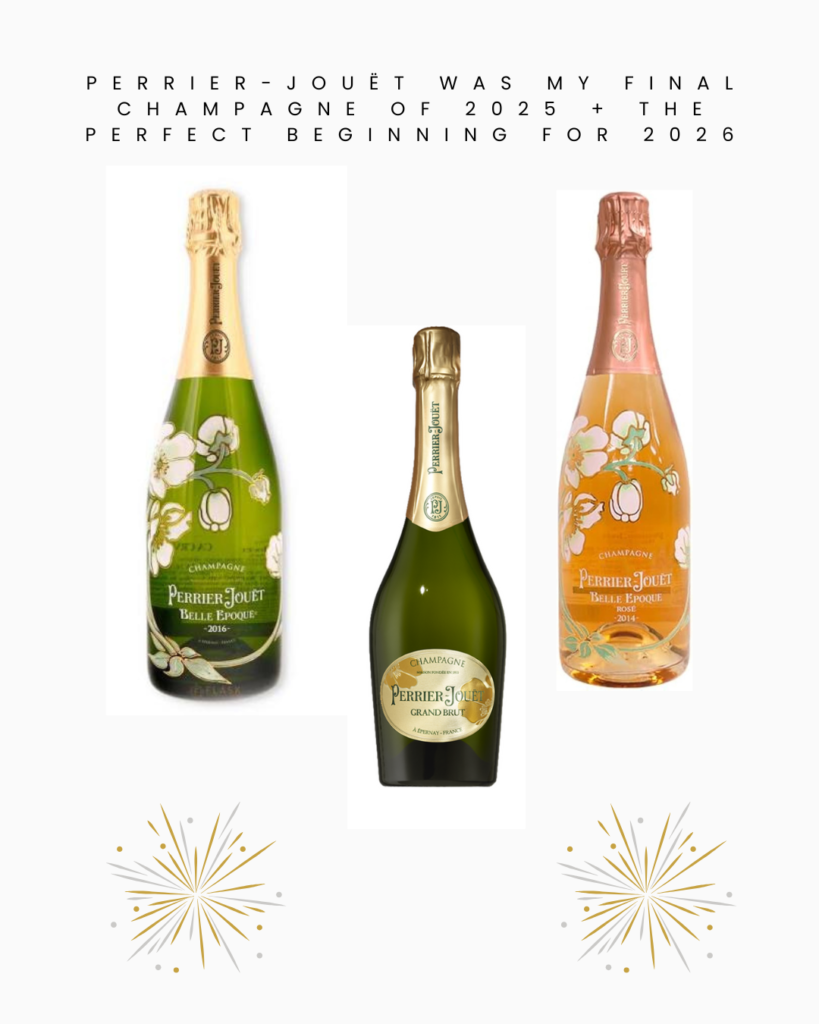
Perrier-Jouët was my final Champagne of 2025 + the perfect beginning for 2026

The final dinner of the year always feels symbolic, a quiet threshold between what has been and what is about to begin. To close 2025 and welcome 2026, I chose Perrier-Jouët. Some Champagnes feel like an occasion before the cork even moves, and Perrier-Jouët belongs to that rare category, a house whose history is inseparable from the aesthetics of refinement.

Perrier-Jouët manages something timeless: honouring tradition while moving confidently into the future. That is exactly the energy a turning year deserves.

A House Defined by Grace

Founded in 1811 in Épernay by Pierre-Nicolas Perrier and Rose-Adélaïde Jouët, the house was shaped from the beginning by discipline and precision. Vineyard selection, controlled yields, and meticulous blending became its quiet signature. Over generations, Perrier-Jouët developed a deep affinity with Chardonnay from the Côte des Blancs, prized for its floral character, purity, and mineral drive.

In 1902, artist Émile Gallé created the iconic anemone motif that now adorns Belle Époque bottles. Far more than decoration, it reflected the philosophy of Art Nouveau: harmony with nature, craftsmanship, and beauty with intention.

Beneath Épernay, Perrier-Jouët’s chalk cellars cradle the wines, regulating temperature and allowing time to do its patient work. The resulting house style is unmistakable: shimmering freshness, fine-boned structure, and delicacy with poise.

Tasting and Food Pairing: Perrier-Jouët Grand Brut Champagne, Perrier-Jouët Belle Époque Brut Rosé Champagne 2014 and Perrier-Jouët Belle Époque Brut Champagne 2016

Perrier-Jouët Grand Brut

Grand Brut is the introduction to the house style. The blend brings together Chardonnay with Pinot Noir and Meunier, balancing lift and generosity.

Aromas recall citrus blossom, white peach, brioche, and a subtle almond note. The palate shows fine mousse, orchard fruit, and a touch of toast, finishing with bright, linear acidity.

Pairing:
We opened this early in the evening with oysters and seafood canapés, effortless, conversational, quietly refined.

Perrier-Jouët Belle Époque Brut Rosé 2014

Belle Epoque Rosé always carries a lyrical quality, and 2014 adds precision and tension. Its pale salmon hue conceals layered depth.

The nose suggests strawberry, blood orange, pomegranate, and rose petals, with delicate pastry tones. The palate is textured and mineral, structured yet graceful.

Pairing:
This was the centrepiece at dinner: duck breast with cherries and roasted potatoes. The wine elevated the dish, harmonizing rather than overpowering.

Perrier-Jouët Belle Époque Brut 2016

Belle Epoque 2016 feels composed and confident. It opens with pear, lemon zest, acacia, and fresh hazelnut. The palate is crystalline and precise, finishing with a saline whisper, proof that great Champagne doesn’t need volume to make its point.

Pairing:
Our midnight bottle. We served it with aged Comté and caviar-topped blinis, salt, richness, and bright acidity coming together in an elegant, poetic final act.

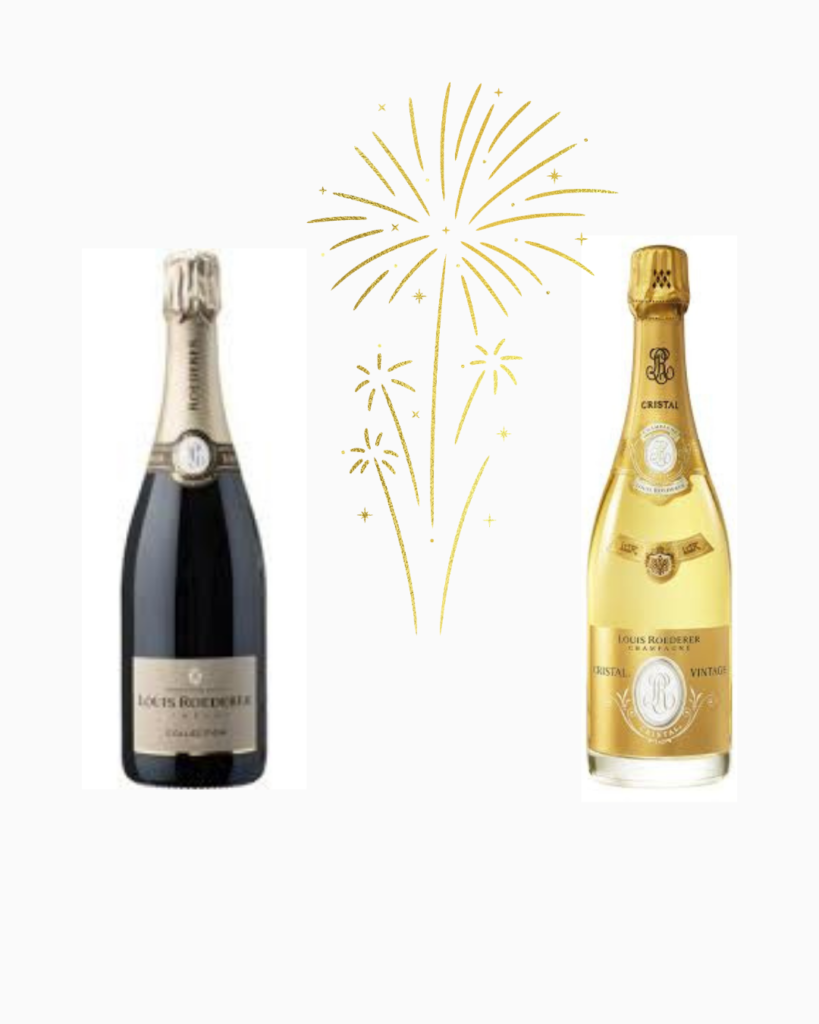
Pre–New Year’s Dinner: Why Louis Roederer Collection 245 and Cristal 2016 Redefine Celebration


Some evenings feel like prologues. The eve before New Year’s Eve is one of them, less noise, more contemplation. It’s the space where conversation deepens, and Champagne becomes less of a party trick and more of an essay in liquid form.

This year, my pre–New Year’s dinner is guided by the ethos of Louis Roederer: discipline in the vineyard, patience in the cellar, and a refusal to perform theatrics for their own sake. To explore that ethos at the table, I’ve chosen two Champagne classics whose architecture and restraint echo this sensibility: Louis Roederer Collection 245 and Louis Roederer Cristal 2016.

The House: Louis Roederer Precision as Philosophy

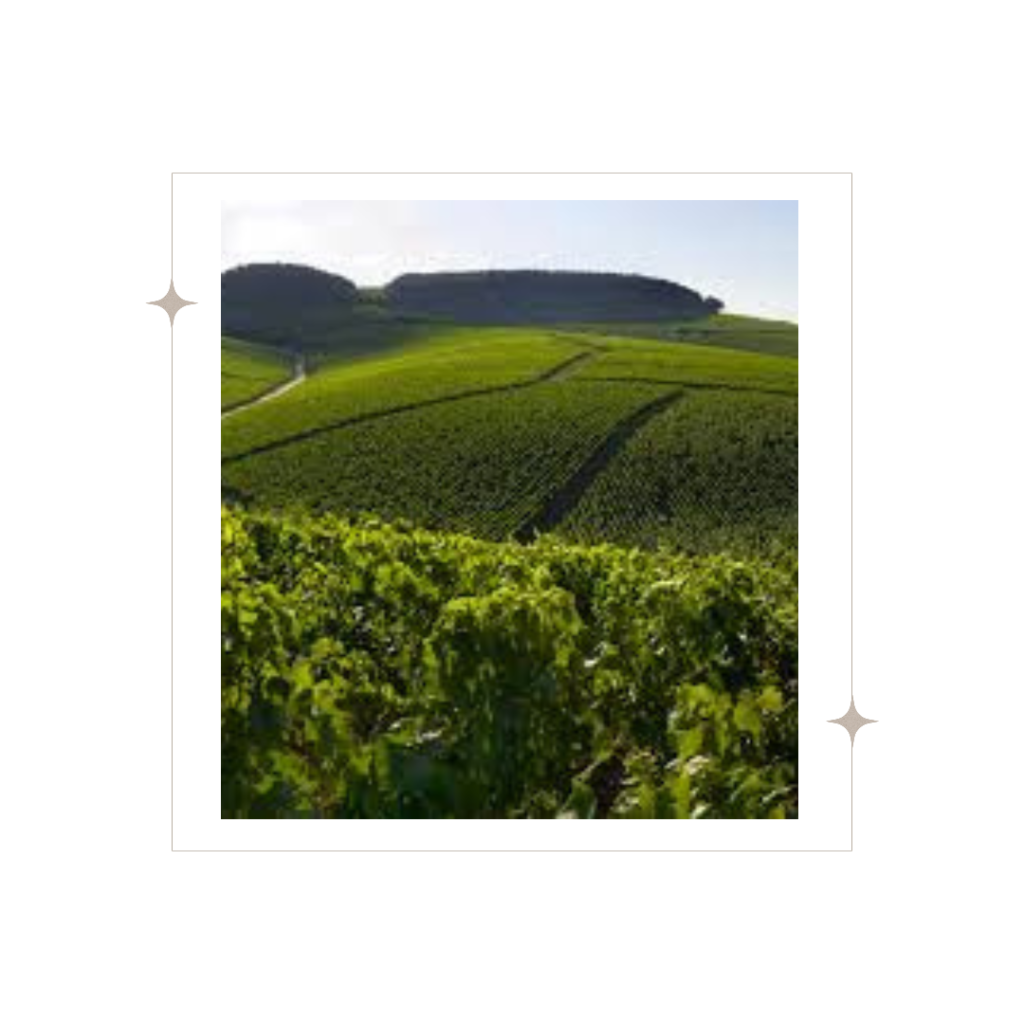
Founded in 1833 and based in Reims, Louis Roederer evolved from a respectable maison into one of Champagne’s most quietly rigorous estates. By the mid-19th century, Roederer did something radical for the time: it began purchasing vineyards rather than relying solely on growers. Controlling fruit quality became a long game, not an annual negotiation.

Today, the estate owns almost 250 hectares, with an increasing emphasis on organic and biodynamic practices. This underpins the house’s unmistakable personality: depth without heaviness, tension without austerity, and a calm, almost meditative finish.

Wine Tourism: Less Spectacle, More Insight

Visiting Roederer isn’t about neon-lit cellars and selfies with sabres. Experiences tend to privilege understanding over spectacle.

The estate provides guided vineyard walks, cellar visits, and tastings that unpack:

  • The role of reserve wines
  • The quiet architecture of blending
  • How climate change is reshaping decisions in real time

These experiences feel more like seminars than shows – the kind of visit that leaves your notebook full and your mind happily buzzing.

On the Table with Roederer’s Spirit

Louis Roederer Collection 245

This is Roederer’s perpetual-reserve concept in motion – perfect rhythm and balance. In the glass, the bubbles are fine and controlled. Aromatically, there are hints of ripe pear, Golden Delicious apple, lemon zest, and a faint line of brioche. There’s a saline whisper running underneath. On the palate, it moves with precision: orchard fruit, a touch of almond, subtle creaminess, and a clean, linear finish that leaves a chalk-dust memory.

Pairing for our pre–New Year’s dinner

This is the “conversation starter” wine. I paired this wine with oysters, with a light mignonette, and scallop carpaccio – dishes that respect the structure without overpowering it.

Louis Roederer Cristal 2016

The 2016 is sculpted: luminous citrus, white peach, subtle apricot skin, and that crystalline chalk character that defines Roederer’s grandest vineyards. There’s also a hint of hazelnut and delicate pastry, sitting quietly behind the mineral spine. The palate feels both weightless and deep, with a long, resonant finish. That’s power.

Pairing for a pre–New Year’s dinner

This wine was served later in the progression. I paired it with butter-poached lobster and roast capon with thyme and lemon. Perfection.

Why Louis Roederer Collection 245 and Louis Roederer Cristal 2016 Before New Year’s?

Because the night before the noise deserves reflection. Louis Roederer’s philosophy grounds the evening – time and patience.

And as the calendar inches toward midnight the next day, this pre-new year’s dinner became a quiet rehearsal, acknowledging change -reviewing the year before we write the next chapter.

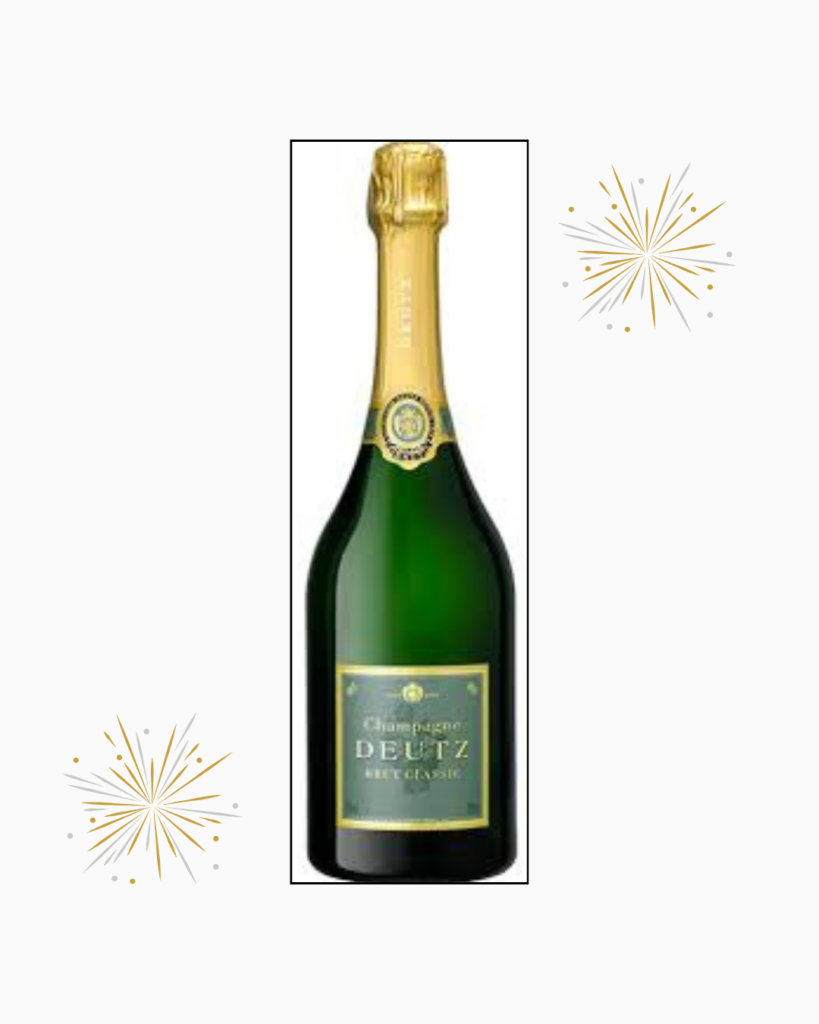
Champagne Deutz: A Holiday Standard

Nestled in the premier cru village of Aÿ, in the historic Champagne region of northeastern France, Maison Deutz occupies a place in the pantheon of classic Champagne houses that feels both rooted and unexpectedly electric. Founded in 1838 by William Deutz and Pierre-Hubert Geldermann, this house emerged from the great era of négociant ambition, carving out a reputation for finesse and stylistic consistency that has endured for nearly two centuries.

Location and Tourism

Aÿ sits like a jewelled hub just west of Épernay, think of it as Champagne’s scholarly precinct, where chalky soils and Pinot Noir harmonize across the landscape. Tourists, sommeliers, and curious travellers come here to explore terroir and technique. Tasting experiences in the Deutz cellars are examinations in slow maturation: centuries-old chalk caves that feel like cathedral crypts dedicated to bubbles, each bottle a lesson in time, texture, and terroir. Visiting Champagne Deutz is an immersion in the geography and geology of effervescent elegance.

Acquired in the late 20th century by the Rouzaud family, custodians of Louis Roederer, Deutz has blended its legacy with renewed vigour while preserving traditional techniques. The house today balances respect for its heritage with an eye toward how modern palates approach complexity, balance, and pleasure.

Champagne Deutz stands as a living museum of viticultural tradition: chalk labyrinths, vineyard tours through storied parcels of premier and grand cru, and tastings that pair textbook technique with experiential delight.

Celebrate the Holidays with Deutz Classic Brut

If you gravitate toward Champagnes that feel both classic and stimulating, not loud, simply intellectually stylish, Deutz Classic Brut is for you. This non-vintage blend is built on a near-perfect equilateral triangle of Chardonnay, Pinot Noir, and Pinot Meunier, each contributing about a third of the whole. Around 20–40% reserve wines are folded into the blend to maintain house consistency and depth year after year, an oenological time capsule that speaks to complexity without pomp.

Deutz Classic Brut: Tasting Notes

In the glass, it shows a deep golden hue with an ultra-fine mousse, the effervescent whisper synonymous with long cellar ageing. On the nose, it reveals delicate white florals offset by richer aromas of toasted brioche, marzipan, and ripe pear.

The palate brings crisp freshness from Chardonnay, wrapped in the supple richness that Pinot Noir provides so well. Integrated fruit notes lean toward apple and pear, with hints of citrus and an underlying mineral clarity. The finish lingers with textured elegance.

Why Champagne Deutz?

Drinking Deutz Classic Brut during the holidays is like revisiting a trusted chapter in a favourite book: it brings comfort, stylistic integrity, and small surprises with every sip. This is the Champagne that feels like a warm toast among old friends and new ideas, a bottle that honours the past while sparkling fully in the present.

Adapting Terroir to a Changing Climate: An Overview of Chablis’ 2025 Vineyard Regulation Reforms

The 2025 regulatory revisions for the Chablis appellation represent a strategically calibrated response to accelerating climatic pressures. The adjustments—ranging from reduced vine density to higher authorized yields are intended to reinforce vineyard resilience without compromising the appellation’s stylistic integrity. These changes, outlined by The Drinks Business and corroborated through EUR-Lex, signal a regional shift toward adaptive viticultural governance.

The most consequential reform concerns vine density, which has been lowered from 8,000 to 5,500 vines per hectare. This reduction widens row spacing and improves accessibility for mechanization, particularly on slopes where labour constraints and erosion pressures intersect. Expanded spacing norms, averaging up to 1.20 metres, and reaching 1.60 metres on steeper gradients, provide growers with enhanced flexibility. In irregular blocks, spacing may now extend to 2 metres, acknowledging the topographic complexity of the Chablis landscape.

Revisions to yield thresholds similarly reflect an attempt to stabilize production under increasingly erratic weather. New maximum yields now reach 75 hl/ha for standard Chablis (previously 70 hl/ha) and 73 hl/ha for Premier Cru (up from 68 hl/ha). These adjustments offer producers a buffer against frost events, hail episodes, and challenging ripening conditions—phenomena that have become emblematic of recent vintages.

Changes to trellising requirements deepen the focus on canopy management. A minimum foliage height equal to 0.6 times the row spacing is now mandated, supported by structured trellising systems. This emphasizes balanced vegetative growth, improved light interception, and better control of disease pressure; central pillars of contemporary cool-climate viticulture.

These reforms operate alongside long-standing regulations that continue to define the Chablis identity. Chardonnay remains the sole authorized variety, while the hierarchical appellation system, Petit Chablis, Chablis, Premier Cru, and Grand Cru, maintains its established parameters. Minimum alcohol levels (9.5% for Chablis, 10.5% for Premier Cru, and 11% for Grand Cru) remain unchanged, preserving the sensory and structural benchmarks of the region. The geological foundation of Chablis, its Kimmeridgian limestone soils, continues to be recognized as the primary determinant of minerality. Traditional protective practices persist, now complemented by an increasing emphasis on sustainable farming.

Together, these updates depict a region actively reconciling heritage with necessity. Chablis is preserving its historical identity while embracing adaptive strategies capable of sustaining quality and viability in an era defined by climatic volatility. The 2025 framework stands as a model of regulatory evolution rooted in both tradition and foresight, an approach many wine regions are now compelled to consider as environmental uncertainty intensifies.

The Return of Pink Chardonnay: A Lost Heir Rejoins Champagne’s Noble Lineage

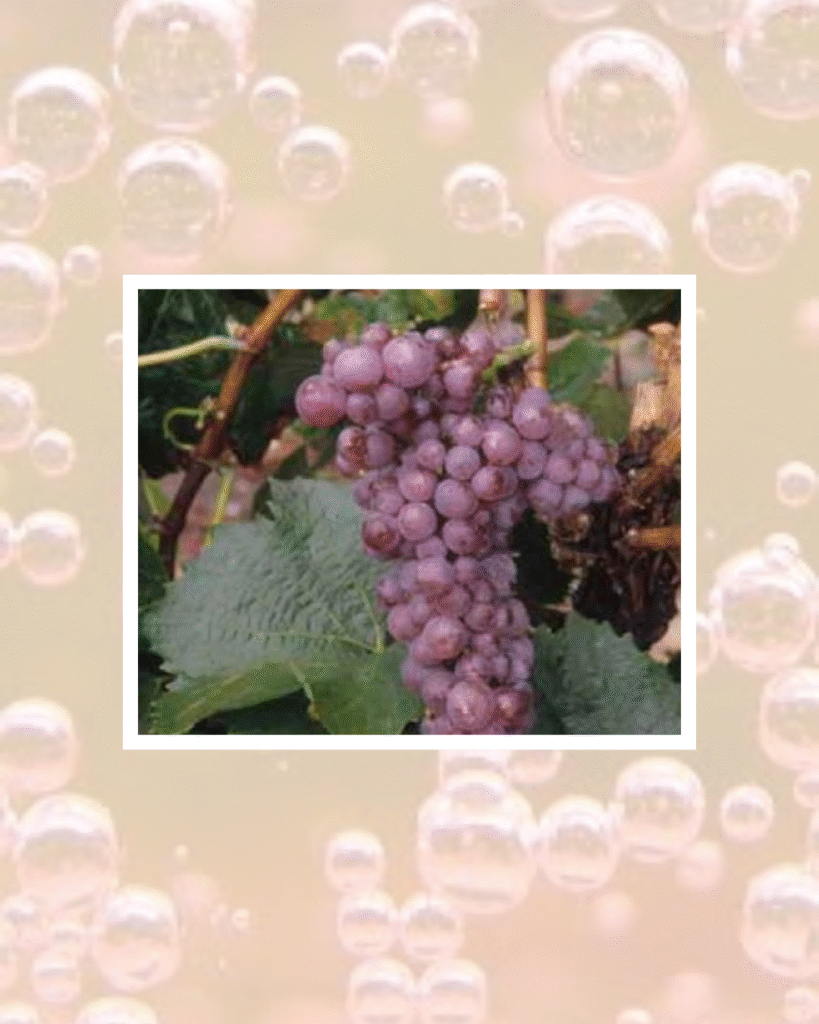
Pink Chardonnay, officially recognized in the Champagne appellation since July 31, 2025, marks a historic return of a nearly forgotten grape variety to its rightful place in the region’s viticultural legacy. A natural mutation of white Chardonnay, this rediscovered gem becomes the eighth authorized grape variety in Champagne, joining the traditional seven and reflecting both heritage preservation and forward-thinking adaptation to climate change.

A Return to Heritage

First identified in the early 1900s in both Champagne and Burgundy, Pink Chardonnay [also known as Chardonnay rose] had long lingered in obscurity. Sustained only by the dedication of a few visionary growers, it was largely confined to experimental collections or isolated vineyard rows. Its inclusion in the French National Catalogue in 2018 conferred official recognition, enabling its propagation and preservation as part of France’s viticultural biodiversity.

Official Recognition and Symbolic Significance

The decision to include Pink Chardonnay in the Champagne appellation’s official specifications symbolizes a renewed commitment to genetic diversity and historical authenticity. Pink Chardonnay is a spontaneous natural mutation, proof that innovation in viticulture can arise organically from nature itself. This recognition not only restores a piece of Champagne’s past but also reflects the region’s intelligence in adapting to new environmental realities.

Viticultural and Oenological Qualities

In both the vineyard and the cellar, Pink Chardonnay closely mirrors its white counterpart. Its agronomic behaviour and oenological performance demonstrate similar freshness, balance, and finesse, qualities that have long defined the elegance of Champagne wines. Yet, beyond its technical attributes, the grape’s deeper value lies in its narrative: a story of rediscovery, resilience, and the enduring dialogue between tradition and innovation.

Diversity Within Continuity

While Pinot Noir, Meunier, and white Chardonnay continue to dominate Champagne’s 34,000 hectares of vines, minority varieties, including Arbane, Petit Meslier, Pinot Blanc, Pinot Gris, and now Pink Chardonnay, account for only 0.5% of total plantings. Their preservation reinforces Champagne’s identity as a living, evolving ecosystem, one that values both its cultural roots and its scientific capacity for renewal.

Learn more at www.champagne.fr