Trailblazing Winemaker Susana Balbo: An Exclusive Interview with Liz Palmer + Tasting Notes

Susana Balbo, a trailblazer in the wine industry, renowned for her pioneering contributions as Argentina’s first female winemaker and the visionary owner of Susana Balbo Wines. Her academic journey began with a transition from nuclear physics to enology, culminating in her graduation with honors from Don Bosco University in Mendoza in 1981. Navigating the challenges posed by a traditionally male-dominated profession, she revolutionized the Argentine wine sector and gained recognition for her innovative approach to viticulture. Her expertise in cultivating and refining Torrontés—a signature white grape variety of Argentina—earned her the title of “Queen of Torrontés.” Today, Susana Balbo’s winery stands as a testament to her resilience, creativity, and commitment to elevating Argentine wines on the global stage.

Expanding on her extraordinary journey and accomplishments, Susana Balbo opens up with me in this thoughtful and engaging interview, offering invaluable insights into her experiences, challenges, and aspirations for the future.

Liz Palmer: Which influential women in the wine industry have inspired you throughout your journey?

Susana Balbo: In my early days in Cafayate, I did not know any. There was no internet; I lived in a completely isolated town. We did not have a telephone, let alone any means of communication to connect with other women in the world. I did not travel the world either. Therefore, my inspiration has fundamentally been an obsession with quality. One of my teachers was Father Francisco Oreglia, who was the founder of the Technological School of Oenology and Fruit and Vegetable Industries in Mendoza. He was a perfectionist, and always inspired me to do things exceptionally well, constantly improving and getting better. However, at that time, I did not know any women from the wine world. Once the internet became available and information was easier to access, I already had over fifteen years of experience in my profession and was traveling around the world as a wine consultant. Honestly, I consider myself a self-made woman.

Liz Palmer: Could you share a particularly memorable experience or achievement in your illustrious career?

Susana Balbo: When I arrived in Cafayate, Salta, in 1981, Torrontés made up 75% of the grapes planted in the winery where I worked. Therefore, either I had to learn how to make good Torrontés wines or my job would not last long. Putting that aside, which is more anecdotal today, what I do differently is to work in a very respectful way with the variety, leaving aside some aromas in order to achieve complexity and elegance. What I see in Torrontés is an incredible versatility that allows you to create all kinds of things: you can make alcohol-free juices, low-alcohol wines with interesting aromas, natural sweet wines for young people who enjoy sweet, chilled wines, more serious wines fermented in oak barrels, and you can even use it for blends. It is a variety of extraordinay versatility, and it expresses a very distinct personality depending on the soil and terroir where it is grown. Its possibilities are endless.

A more recent achievement for which I feel deeply grateful is being recognized by Decanter with the prestigious Decanter Hall of Fame 2024 award. I share this accomplishment with my team, who have supported me throughout the years, and especially with my two children, who have been by my side for the past 12 years.

Liz Palmer: What recent technological innovations have you and your team integrated into your winemaking process?

Susana Balbo: We have recently implemented several technological innovations in our winemaking process. One of them is the use of a press that employs inert gases, allowing us to better preserve the quality of the must during pressing by minimizing oxidation.

Additionally, we are using clayvers and amphorae in various shapes (spherical, oval, horizontal, and vertical) to determine which provides the best results in both the fermentation and aging of white wines.

We have also incorporated the use of special barrels, known as “Perle,” which work under pressure and enable carbonic maceration and fermentation with minimal intervention. This results in red wines with remarkable aromatic purity and excellent structure.

Liz Palmer: How do you ensure sustainability and uphold environmental responsibility in your vineyard and winery operations?

Susana Balbo: We believe that sustainability means performing actions with commitment. That is why we have worked as a team on defining our purpose: we nurture a culture of shared growth in all our relationships, aiming to boost the development of people and resources. We always work on creating value in terms of sustainability’s three dimensions: the people, the environment and the business.

As regards the environment, we focus on its preservation in every step of the winemaking process: from the vineyard to the bottle. Regarding the vineyards, we take care of them with the highest global standards of quality and sustainability. Significantly, our vineyard in Agrelo (where the winery is located) is certified organic, showcasing our dedication to environmentally friendly practices. Our daily hard work, for instance, is reflected on the Sustainability Certificate issued by Bodegas de Argentina. In addition, last year we renewed our BRC Global Standard for Food Safety certification, an achievement that reveals our commitment to quality and the environment. Some of the winery’s eco-friendly practices I can mention are:  managing the use of energy in our daily activities, disposing of waste in a responsible manner and recycling important materials such as cork, wood, cardboard and nylon, using kraft boxes and bottles that are lighter than the traditional ones, implementing a drip irrigation system for vineyards and reusing sewer water coming from the common-use areas, among others.

Liz Palmer: What are your perspectives on the No and Low Alcohol Wine Revolution, and how has your wine estate adapted to this burgeoning movement?

Susana Balbo: As a winery that constantly pursues innovation, we believe it is important to offer products that meet the needs of these consumers. In 2022, we launched our sub-line CRIOS SUSTENTIA, focused on responsible consumption and ecological awareness. Under this premise, we offer a Chardonnay—being exclusively for the international market—with an alcohol content of 8 to 9 degrees, considered as a “light wine.” It is low in alcohol by Argentine standards, where due to our climate, it is easy for both whites and rosés—and even more so for red wines—to reach levels above 13 degrees.

Liz Palmer: How do you and your team stay abreast of the latest trends and advancements in the wine industry?

Susana Balbo: We stay up to date with the latest trends and advancements in the wine industry through continuous learning about new developments. This includes reading scientific journals, attending technological conferences, and participating in technical talks. Additionally, we keep close contact with industry colleagues, which enriches our knowledge and allows us to exchange experiences.

Liz Palmer: What advice would you offer to young women aspiring to enter the wine industry?

Susana Balbo: To be able to lead and make changes in the industry we sometimes have to leave our comfort zone.

Another piece of advice is to focus on making quality wines, each of them reflecting the doer’s personality. Likewise, the story behind a wine must be consistent with that wine and with what the consumer tastes. A wine is recommended to others when the consumer and the clients quickly perceive consistency. Therefore, to enter into the world of wine, one must be convinced that there is a rocky road ahead but it is not an impossible road to take. This path should be clearly consistent with one’s goals.

Wine Tasting Notes
Susana Balbo Signature Malbec 2022
and
Susana Balbo Signature Barrel Fermented Torrontés 2024

Susana Balbo Signature Barrel Fermented Torrontés 2024

This Torrontés is the first of its kind, produced with grapes from Paraje Altamira, Valley de Uco in Mendoza at 3,770 feet.

A luminous pale golden hue. On the nose, it offers a captivating bouquet of orange blossom and white peach, complemented by subtle undertones of nutmeg and vanilla derived from its four months of fermentation in French oak barrels. On the palate, the wine delivers a lively and harmonious profile, with vibrant floral and citrus notes balanced by a creamy texture with some hints of toast from the oak. Its crisp acidity provides excellent structure, leading to a refined and lingering finish. This innovative expression of Torrontés highlights the influence of high-altitude vineyards in Paraje Altamira, Valle de Uco.
92 Points
Liz Palmer

Susana Balbo Signature Malbec 2022

“Making great wines requires courage, determination and passion. With over forty years of experience since my start as the first female winemaker in Argentina I am proud to off the best of myself through my signature wines.  This Malbec is one of the most cherished wines from my winery.  Produced with grapes from Paraje Altamira, Valley de Uco in Mendoza at 3,770 feet” Susana Balbo

This Malbec exemplifies elegance and depth, showcasing the unique character of high-altitude Mendoza vineyards. In the glass, it reveals a deep ruby color with violet undertones. The nose is expressive and layered, offering aromas of ripe blackberries, plums, and blueberries, intertwined with hints of violet, mocha, and a touch of sweet spice.

On the palate, this Susana Balbo Signature Malbec is full-bodied yet impeccably balanced, with silky tannins and a vibrant acidity that provides structure and freshness. The fruit flavors are complemented by subtle notes of dark chocolate and toasted oak, a result of careful aging in French oak barrels. The finish is long and refined, leaving a lasting impression of elegance and complexity.
92 Points
Liz Palmer

 Susana Balbo Website:  https://en.susanabalbowines.com.ar/

Discover the World’s 20 Happiest Countries in 2025

While Finland once again tops the World Happiness Report’s rankings, the United States, at No. 24, earned its lowest ranking according to the 2025 report. The report released Thursday marks United Nation’s “International Day of Happiness,” and uses data from sources such as the Lloyd’s Register Foundation World Risk Poll and the Gallup World Poll to determine the state of happiness around the world.

In the United States and parts of Europe, declining happiness and social trust have contributed significantly to the rise of political polarization and votes against “the system,” the report finds.

But in brighter news, global research shows that people are much kinder than we expect.

“People’s fellow citizens are better than they think they are, and to realize that will make you happier, of course, but it’ll also change the way you think about your neighbors,” said John Helliwell, a founding editor of the World Happiness Report.

“And so you’re more inclined to think of a stranger in the street as simply a friend you haven’t met and not somebody who poses a threat to you,” said Helliwell, who is an economics professor emeritus at the University of British Columbia.

There’s “room for improvement,” Helliwell said, in believing that we’re all part of a larger group that looks out for each other. It’s an important source of happiness that we haven’t properly tapped, he said.

The report draws on Gallup World Poll data from people in more than 140 countries. Countries are ranked on happiness based on their average life evaluations over the three preceding years, in this case 2022 to 2024. The report is a partnership of Gallup, the Oxford Wellbeing Research Centre, the UN Sustainable Development Solutions Network and an editorial board.

The survey asks each participant to score their life as a whole and rankings are based on those life evaluations. The report then looks at six key variables to help explain life evaluations: GDP per capita, social support, healthy life expectancy, freedom, generosity and perceptions of corruption.

Finland, Denmark, Iceland and Sweden – the top four – remain in the same order as 2024. And Norway is again No. 7.c

World’s 20 Happiest Countries in 2025

1. Finland

2. Denmark

3. Iceland

4. Sweden

5. Netherlands

6. Costa Rica

7. Norway

8. Israel

9. Luxembourg

10. Mexico

11. Australia

12. New Zealand

13. Switzerland

14. Belgium

15. Ireland

16. Lithuania

17. Austria

18. Canada

19. Slovenia

20. Czech Republic

Wine Review: Tedeschi Amarone della Valpolicella 2021 – Liz Palmer

Tasting Notes:

This wine is a Symphony of Flavors, showcasing a deep, dark inky red hue that captivates. On the nose, it reveals an intricate bouquet of dark cherry, dried fig, and grilled herbs, intertwined with subtle hints of dark chocolate and spice. The palate is a harmonious blend of savory and sweet, with flavors of bacon, dark cherry, and dried figgy fruit, with a touch of dark chocolate and spice. The wine is full-bodied and balanced by velvety tannins and a long, lingering finish that leaves a lasting impression and wanting more.
93 Points
Liz Palmer

Food Pairing:

This Amarone is a versatile companion to a variety of dishes. Its robust flavors pair beautifully with roasted venison, beef daube, and leg of lamb. For a more traditional pairing, try it with polenta dishes or pasta with a rich tomato sauce. The wine’s complexity also makes it a delightful match for aged cheeses like Parmigiano Reggiano or Gorgonzola.

Wine Review: Two Wines from Marqués de Riscal [voted #1 Vineyard in the World]

Marqués de Riscal

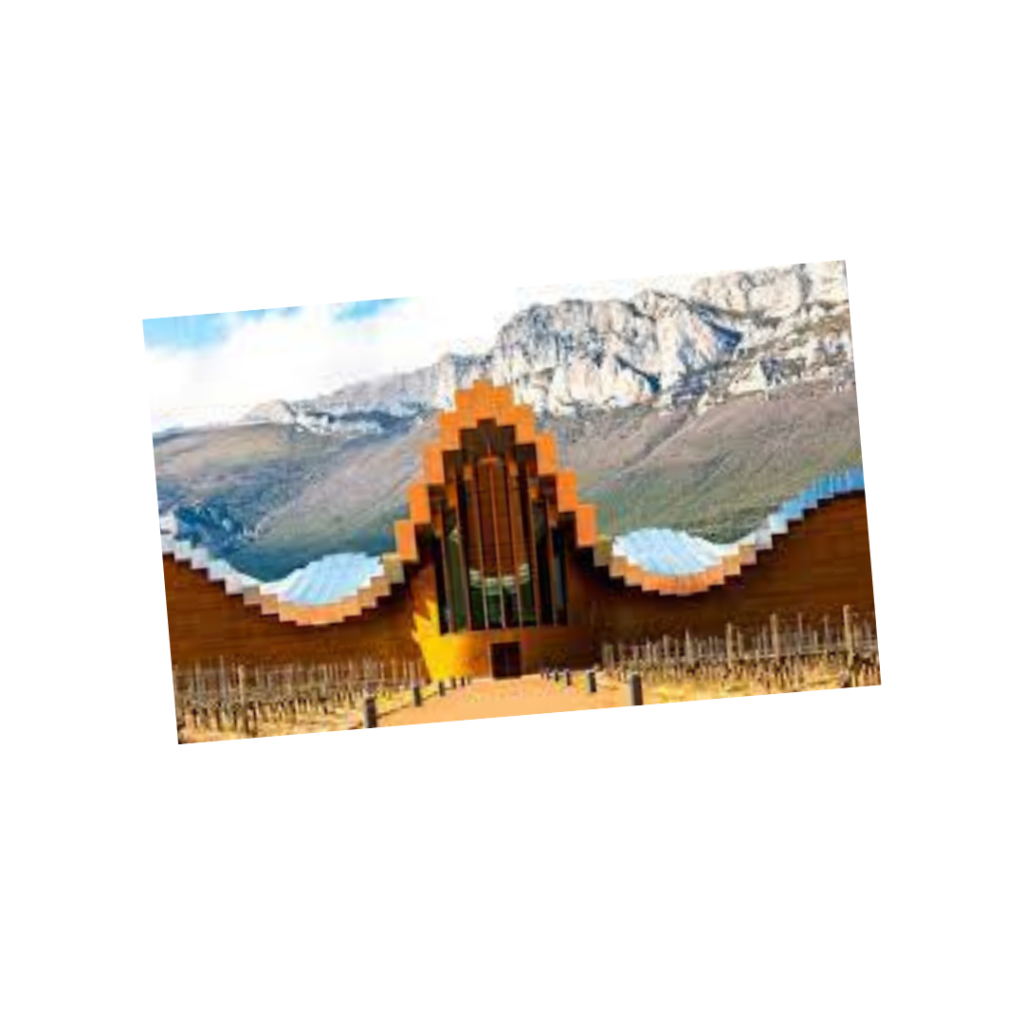
Located in the picturesque Basque Country, the Marques De Riscal winery in Elciego, Spain, is a beacon of viticultural excellence. This historic winery, founded in 1858, has recently been voted the #1 vineyard in the world by the World’s Best Vineyards 2024 and received the Best Vineyard in Europe Award. The winery’s commitment to innovation and quality is also evident in every bottle they produce, making it a must-visit destination. You can explore the stunning vineyards, tour the state-of-the-art winery facilities, and indulge in tastings of their award-winning wines.

At the heart of the Marqués de Riscal City of Wine stands Hotel Marques De Riscal, designed by the renowned architect Frank Gehry. This hotel offers a unique and unforgettable experience, blending modern design with the rich history of the region. With its combination of award-winning wines, luxurious accommodations, and rich cultural experiences, Marques De Riscal is truly a destination that should be on your bucket list!

Website Link: https://www.marquesderiscal.com/en

Wine Reviews

2023 Marques de Riscal Rueda

This organic wine is a testament to Marqués de Riscal’s commitment to quality and innovation. This vibrant white wine, crafted from the Verdejo grape, offers a bouquet of white flowers with hints of grass and fennel. On the palate, it is crisp and refreshing, with a well-balanced acidity that makes it a perfect companion for seafood dishes and light salads. The finish is clean and lingering, leaving a pleasant aftertaste that invites another sip.

90 Points
Liz Palmer

2020 Marques de Riscal Reserva

This Rioja wine is a robust red wine that showcases the depth and complexity of the Tempranillo grape. Aged for 24 months in American oak barrels, this wine exudes rich aromas of licorice, cinnamon and black pepper. The palate is full-bodied and velvety, with well-integrated tannins with a long, persistent finish.

This Rioja Reserva pairs beautifully with grilled meats, hearty stews, and aged cheeses, making it a versatile choice for any occasion.

93 Points
Liz Palmer

Exploring Irpinia: Italy’s Hidden Gem of Natural Beauty and Winemaking Excellence

Campania is the region of southern Italy that includes the magnificent active volcano Vesuvius, stunning seaside towns and villages like those of the sunny Amalfi coast, the unique city of Naples, fascinating ancient sites such as Pompeii and the crystal-clear blue waters of Capri and other islands. There is much more to this region – Inland Campania shows a different character with striking landscapes encompassing wooded hillsides, winding rivers, majestic mountains and cool breezes that contrast greatly with the warm coastal areas – this area is known as Irpinia.

WHERE IS IRPINIA?

Irpinia, from the local word hurpos, wolves, covers the entire province of Avellino, 60 km east of Naples. The origin of the word Irpinia says a lot about the area and its people. The people of Irpinia are not fishermen like those you find in Positano and other villages on the coast, but shepherds. They are strong, stubborn people, tied firmly to their roots and very different from the open personalities of those living by the sea.

The lands of Irpinia are highly varied and cover approximately 3,000 sq.km with the main city, Avellino, in the southwest. Nearby are the tuff quarries of Tufo, hill towns such as Montefalcione and Rocca San Felice, and the plateau of Ariano Irpino is further north. Irpinia shares borders with the Puglia region (which forms the heel of Italy’s boot) to the northeast, the province of Benevento to the northwest, Naples to the west and Salerno to the south, with the Vulture area, well-known for its Aglianico, to the east.

The mountains reach an altitude of 1800m asl, shelter the area from warm winds coming from the sea, creating a cool climate with steep day-night temperature swings that are ideal for viticulture.

WINE AREAS

Irpinia is the green heart of Campania, but above all it is a wine region, with an impressive concentration of excellence. In fact, three of the Campania region’s four DOCG wines are produced here, including the oldest DOCG of southern Italy: Taurasi which gained the denomination in 1993. Irpinia’s other two DOCGs are the whites Fiano di Avellino and Greco di Tufo, both certified in 2003.

Another denomination, Irpinia DOC, which has been in place since 2005, covers an area including 118 towns, while the Campi Taurasini DOC area includes only 24 towns, 17 of which are also included in the red Taurasi DOCG area.

GRAPES & WINES

The Aglianico grape is Irpinia’s flagship red, although other red varieties are grown here too, such as Piedirosso and Sciascinoso. Aglianico is the main grape of the DOCG Taurasi denomination with a minimum 85% of the blend (although most of producers make 100% Aglianico wines) and a minimum of 12 months aging in wooden vessels.

Aglianico is a difficult grape to grow: it’s late ripening, its thin skin is prone to mildew and it can be challenging to harvest this grape with several vineyard passages required in order to pick healthy grapes. It’s a difficult variety to manage in terms of winemaking too: when young, it tends to be tannic, acidic, rather harsh and sometimes rustic. Aglianico is certainly one for patient drinkers and lovers of the variety who need to give the wine the time it deserves. It’s very much a food wine and pairs perfectly with the local food which has many pork-based dishes, tasty cheeses, mushrooms and hearty soups.

Fiano is a very versatile grape, one of Italy’s great whites with an excellent reputation among producers and critics, for its elegance, age-ability and the concentration of terpenes that make it a semi-aromatic variety. The Fiano di Avellino DOCG production zone covers 26 municipal areas in a wide area with a range of different soils, aspects and altitudes making for very different styles of wine.

Fiano is a grape that adapts easily to different conditions and recently it has even been planted outside Italy in areas including California and Australia.

Greco is the alter ego of Fiano. The two white grapes share some similarities, including a long history – both are very ancient grapes and both are the main varieties for the two DOCG whites of Irpinia, respectively Greco di Tufo and Fiano di Avellino.

Greco however has completely different characteristics from Fiano. It’s grown in the territories of only eight towns in volcanic, yellow tuff soils. The wines are intensely coloured wine with great minerality, saltiness and complex depth.

IRPINIA – QUICK FACTS

Irpinia produces about 28% of the Campania region’s wines.

In 2005 Robert Parker said, “Aglianico is next big thing”.

There are several biotypes of Aglianico, including one for Taurasi and also Aglianico del Taburno and Aglianico del Vulture.

Aglianico, Fiano and Greco are among Italy’s most ancient grape varieties, brought over from Greece thousands of years ago.

Tenuta Cavalier Pepe in Irpinia was ranked 14th overall in the 2024 World’s Best Vineyards awards – the best in Italy.

A destination for wine connoisseurs and oenophiles to discover the secrets behind some of southern Italy’s finest micro-wineries.

The Irpinia wine region has developed rapidly in recent years, with the two major players, Mastroberardino and Feudi di San Gregorio, sharing the market with small niche wineries, some of them specializing in single-vineyard wines.

Although Irpinia is just an hour’s drive from Naples, it still plays second fiddle to the better-known destinations of the Campania region such as the Amalfi Coast, Pompeii, Vesuvius, and so on, while at the same time having great potential flows of tourism.

For this reason, many family-run wineries, each with their own distinctive characters, have started to offer authentic wine experiences.

Thanks to this mix of visionary producers, independent family-run wineries, contemporary or traditional estates and revolutionary winemakers, Irpinia has become one of Italy’s most fascinating wine areas, particularly for its whites.

The local tourism scene is developing steadily through joint ventures and new openings of hotels and resorts. Wine therapy and wine spas are another aspect that’s growing in this hilly area, and both private investments and European funding are increasingly oriented towards boosting tourism in the area.

Along with the increasing success of Irpinia’s wine production, this patch of land has developed a genuine and positive attitude towards hospitality and there are numerous services on offer in terms of hospitality and incoming experiences. Visitors can choose to stay at a cosy B&B, a charming countryside farmhouse or a luxury resort and vineyard tours, lunch in the barrel room or meeting with the winemakers are among the most popular wine experiences offered by wineries.

Irpinia is a perfect destination both for visitors who want to immerse themselves in the authentic local culture and for those looking for an adventurous off-the-beaten-track experience.

WINERIES per la sezione hospitality

  • Feudi di San Gregorio
  • Mastroberardino
  • Tenuta Cavalier Pepe
  • Cantine di Marzo
  • Fonzone
  • Tenuta del Meriggio
  • Villa Raiano
  • Tenuta Scuotto
  • Di Meo===============
    Filippo Magnani,
    Wine Tourism Expert