Category: Bordeaux

  • From Terroir to Total Experience: Why Bordeaux Is Emerging as a Global Benchmark for Wine Tourism Strategy

    From Terroir to Total Experience: Why Bordeaux Is Emerging as a Global Benchmark for Wine Tourism Strategy

    In a time where destinations compete not only on heritage but on experience, accessibility, and sustainability, Bordeaux offers a compelling case study in strategic tourism transformation.

    Long recognized as one of the world’s most prestigious wine capitals, Bordeaux is now redefining itself as a fully integrated wine, culture, and lifestyle destination. This shift reflects a broader recalibration in global travel, where visitors increasingly seek immersive, narrative-rich, and responsibly managed experiences.

    Bordeaux’s evolution illustrates how wine regions can transition from production-led identities to mature tourism ecosystems.

    Reframing Wine Identity in the Experience Economy

    Historically, Bordeaux’s international reputation rested on export markets, appellation prestige, and trade influence. While these foundations remain critical, contemporary destination competitiveness now depends on experiential differentiation.

    Bordeaux has responded by repositioning wine as a gateway rather than a gatekeeper.

    Through interpretive centres, guided storytelling, accessible tastings, and curated vineyard itineraries, the region has lowered entry barriers while preserving cultural depth. Wine tourism has become inclusive, educational, and emotionally engaging qualities that resonate strongly with global travellers.

    This shift has expanded Bordeaux’s appeal beyond connoisseurs to lifestyle tourists, cultural explorers, and premium leisure markets.

    Hospitality Investment as Strategic Infrastructure

    One of the most significant drivers of Bordeaux’s repositioning has been sustained investment in hospitality.

    The city now benefits from a diversified accommodation ecosystem that includes:

    • Heritage and luxury hotels
    • Design-led lifestyle properties
    • Boutique urban residences
    • Vineyard-adjacent lodges

    This segmentation enables Bordeaux to serve multiple visitor profiles while maintaining consistent service standards. More importantly, hospitality infrastructure functions as strategic tourism capital, reinforcing the region’s ability to attract long-haul, high-spend, and repeat visitors.

    It also supports seasonality management, allowing Bordeaux to cultivate year-round demand rather than concentrated peak flows.


    Connectivity and Spatial Integration

    Accessibility plays a decisive role in destination competitiveness. Bordeaux’s high-speed rail links, expanding air routes, and integrated urban transport systems have strengthened its position within European and transatlantic travel networks.

    Efficient mobility enables:

    • Short-stay and extended itineraries
    • Multi-destination travel integration
    • Reduced environmental pressure
    • Enhanced visitor circulation

    By prioritizing walkability, cycling, and public transport, Bordeaux aligns tourism growth with urban liveability, an increasingly important metric for destination resilience.

    From Vineyard Visits to Cultural Landscapes

    Bordeaux’s tourism model increasingly reflects a landscape-based approach, integrating urban heritage, riverfront regeneration, gastronomy, and viticulture into a coherent narrative framework.

    Visitors engage not only with individual châteaux, but with:

    • UNESCO-designated urban environments
    • Contemporary wine museums
    • Culinary ecosystems
    • Rural terroir corridors

    This spatial integration extends length of stay, deepens visitor engagement, and increases economic spillover across sectors.
    It also reinforces Bordeaux’s identity as a living cultural landscape rather than a static wine brand.

    Sustainability as Brand Governance

    Bordeaux’s development trajectory is characterised by strong alignment with sustainability and heritage governance frameworks.

    Urban planning and tourism policy emphasise:

    • Architectural continuity
    • Landscape preservation
    • Low-impact transport
    • Community-centred services

    This approach enhances institutional credibility and responds to growing demand for ethically managed destinations. In wine tourism markets, sustainability increasingly functions as a reputational asset rather than a compliance exercise.

    Bordeaux’s governance model demonstrates how environmental stewardship and premium positioning can coexist.


    Strategic Lessons for Global Wine Regions

    Bordeaux’s experience offers transferable insights for wine
    destinations worldwide:

    1. Wine should anchor, not dominate, the visitor narrative
    2. Hospitality is strategic infrastructure, not ancillary service
    3. Accessibility shapes experiential quality
    4. Sustainability underpins long-term brand equity
    5. Integrated storytelling strengthens destination coherence

    Rather than relying solely on legacy prestige, Bordeaux has invested in institutional coordination, experiential design, and service ecosystems.

    This systemic approach distinguishes mature destinations from emerging ones.

    Looking Ahead: A Model of Mature Wine Tourism Development
    Bordeaux’s ongoing evolution reflects a transition from product-led branding to destination-led management.

    By aligning wine heritage, hospitality, culture, mobility, and governance, the region has created a resilient tourism platform capable of adapting to changing market expectations.

    As global travellers increasingly prioritise slower, deeper, and more meaningful journeys, Bordeaux stands as a benchmark for how wine regions can future-proof their relevance.

    Liz Palmer
    Global Wine Journalist | Wine Tourism Strategist | Destination Branding Advisor

    References
    1. Hall, C. M., & Mitchell, R. (2008). Wine Marketing: A Practical Guide. Butterworth-Heinemann.
    2. UNWTO (2019). Wine Tourism and Sustainable Development. World Tourism Organization.
    3. OECD (2020). Tourism Trends and Policies. OECD Publishing.
    4. Getz, D., & Brown, G. (2006). “Critical Success Factors for Wine Tourism Regions.” Tourism Management, 27(1), 146–158.
    5. Charters, S. (2006). Wine and Society: The Social and Cultural Context of a Drink. Elsevier Butterworth-Heinemann.

  • Historic Shake-Up: Château Lafleur Exits the Pomerol Appellation

    Historic Shake-Up: Château Lafleur Exits the Pomerol Appellation

    Château Lafleur announced a few days ago that it is withdrawing from both the Pomerol AOC and wider Bordeaux designation from the 2025 vintage, with all six wines in the Société Civile du Château Lafleur group set to become Vins de France.

    Here are some excerpts from the Guinaudeau family Letter:

    “Climate is changing fast and hard, that much is clear. The vintages 2015, 2019, and above all 2022, were all strong evidence of that. 2025 goes a step further. We must think, readapt, act.”

    “Our decision-making and the resulting practices are in fact evolving much faster than what is authorised in our Appellations of Origine system.”

    “Consequently, while maintaining the utmost respect for our fellow producers and the appellations of Pomerol and Bordeaux, we have decided to cease adhering to the appellations of Pomerol and Bordeaux beginning with the 2025 vintage.”

    “The six wines of Société Civile du Château Lafleur will be designated as Vin de France beginning with the 2025 vintage.”

  • France Reigns Supreme at the 2025 Decanter Awards, Redefining the Benchmark for World-Class Wine

    France Reigns Supreme at the 2025 Decanter Awards, Redefining the Benchmark for World-Class Wine

    The results of the 2025 Decanter World Wine Awards, announced last week, reaffirmed France’s preeminent position in the global wine hierarchy. In this year’s competition, France secured an extraordinary 3,200 medals, a remarkable 1,000 more than its closest rival, alongside 14 Best in Show accolades. Notably, the category of Champagne emerged with 27 honours.

    Italy, another powerhouse of the wine world, earned 2,204 medals, including six Best in Show distinctions, marking an improvement of 31 top-tier honours compared to its performance in 2024. Meanwhile, Spain amassed 2,025 medals and five Best in Show wins, with its Rioja region gaining special attention. Garnering three Platinum medals and 21 Gold medals, Rioja shines as an ideal destination for wine lovers, a hidden gem for those seeking to explore the richness of Spanish winemaking beyond the bustling tourist centers of Andalusia and Catalonia.

    The remainder of the top ten medal-winning nations included Australia, Portugal, South Africa, Argentina, Croatia, Canada, and Chile, a testament to the growing diversity and global reach of the wine industry.

    In 2025, the Decanter World Wine Awards once again illuminate the evolving landscape of fine wine, reaffirming France as a timeless beacon of excellence and craftsmanship for wine lovers, connoisseurs and collectors.

    For further details: https://tinyurl.com/4smsvh7u

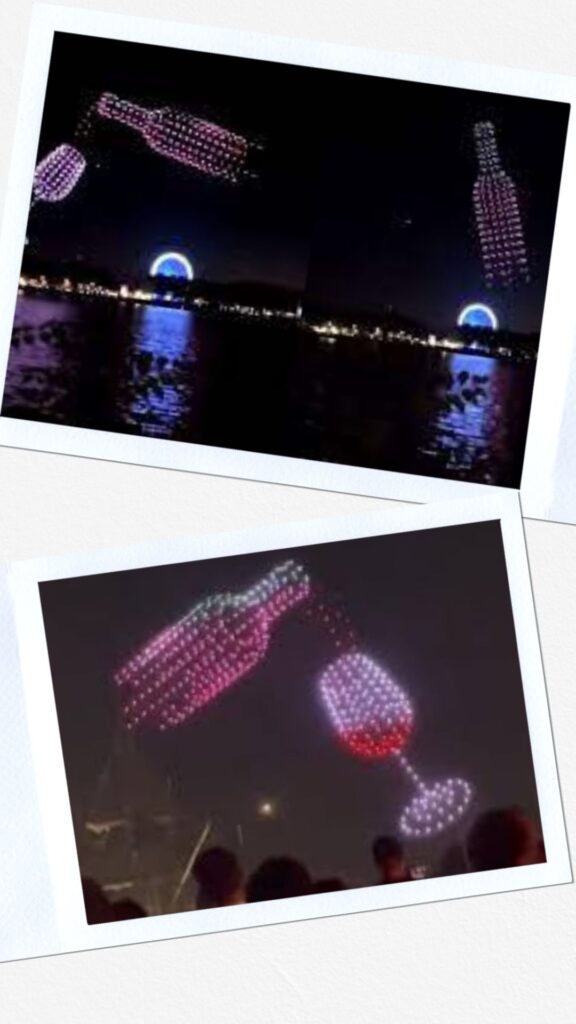
  • Bordeaux Launches “Wine By The Glass” To Captivate the Next Generation

    Bordeaux Launches “Wine By The Glass” To Captivate the Next Generation

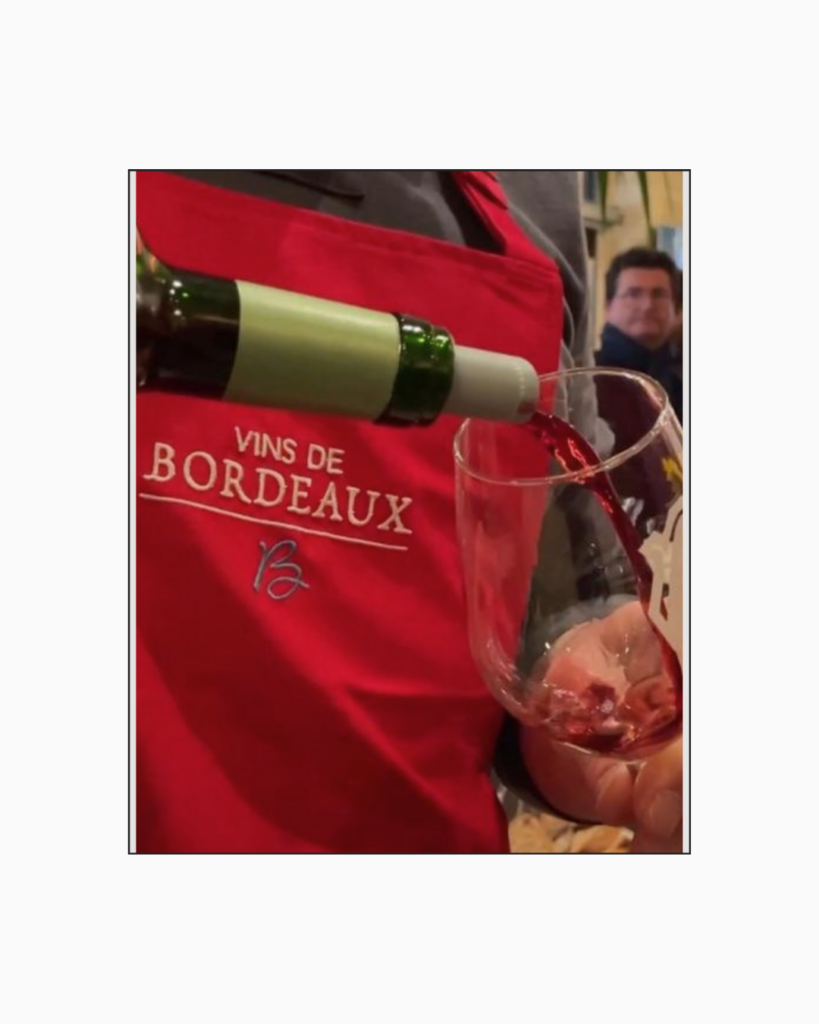
    Bordeaux is launching a new campaign aimed at encouraging wine consumption by the glass, as the region faces declining exports, shifting consumer preferences, and growing competition from beer. The initiative, called “Bordeaux se met au verre” (“Bordeaux by the glass”), is being rolled out across approximately 100 bars and restaurants in the city. Each participating venue will receive a €250 promotional kit if they commit to offering at least three wines by the glass, including one organic option and one priced at €5 or less.

    The campaign is being led by Bordeaux’s Green mayor, Pierre Hurmic, who said the goal is to modernize the image of Bordeaux wines and make them more accessible to younger consumers. “We want to rejuvenate the image of Bordeaux’s wines,” Hurmic said. “It’s also about making the people of Bordeaux and the four million tourists who come here each year more aware of the variety of our wines, not just reds, but whites, rosés and sparkling crémants.”

    The move comes as Bordeaux’s traditional full-bodied red wines are losing ground to lighter styles such as Pinot Noir from Burgundy. At the same time, overproduction has forced some growers in the region to uproot vines due to falling demand. Younger French drinkers are increasingly turning to beer, which is often cheaper and perceived as more casual.

    Christophe Chateau of the Conseil Interprofessionnel du Vin de Bordeaux (CIVB) said that changing habits in restaurants are also affecting wine sales. “Sales of bottles of wine in restaurants have fallen as people are drinking less and more now order glasses, especially couples when one wants red and the other white,” he said. “You see a lot of Bordeaux wines by the bottle on restaurant wine lists, but not so many by the glass.”

    To support the campaign, the Bordeaux Wine School will offer training for restaurant staff on how to properly store and serve wine by the glass. The use of wine-on-tap systems is also being considered as a way to reduce waste and maintain quality.

  • Lunch Wines at The Bordeaux Grands Crus Classés 2020-2023 [London]

    Lunch Wines at The Bordeaux Grands Crus Classés 2020-2023 [London]

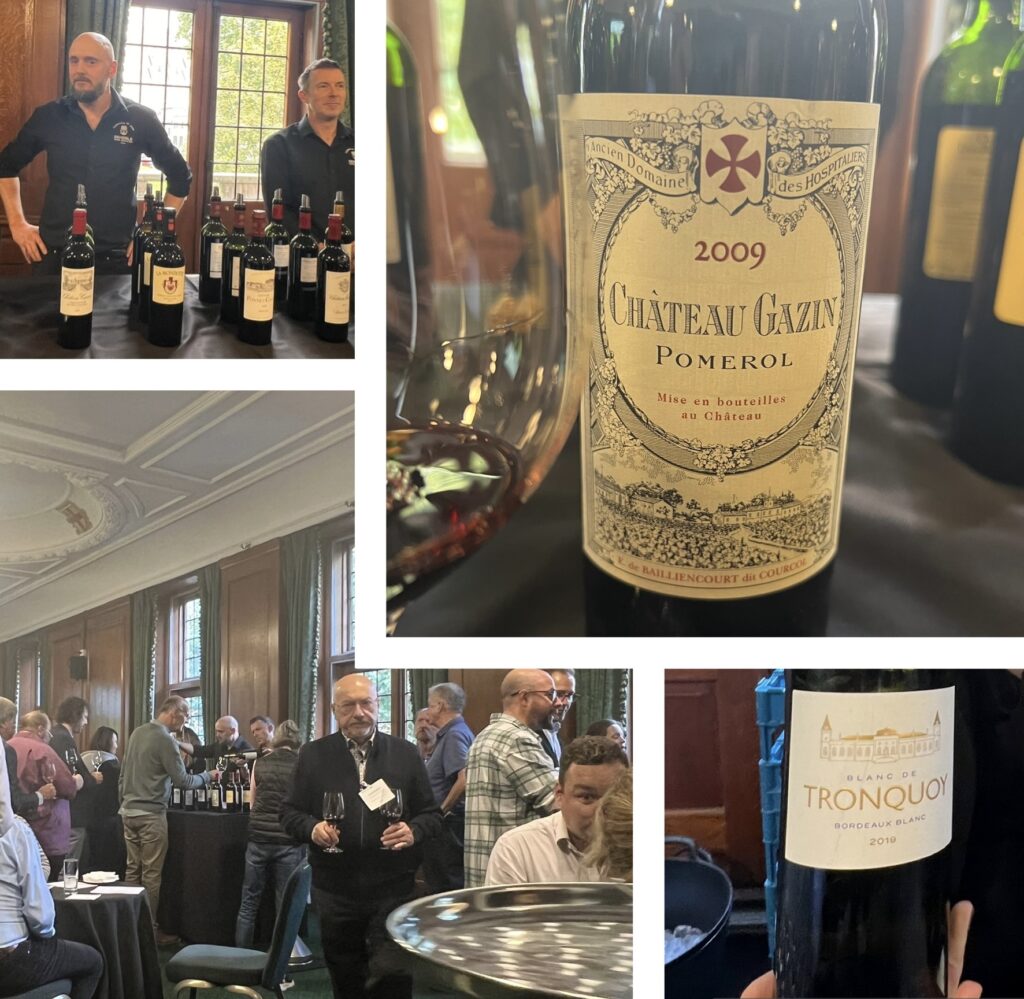
    The Bordeaux Grands Crus Classés tasting, held yesterday at the historic Church House in London, brought together key figures from the wine industry—journalists, sommeliers, and wine trade professionals. Lunch showcased a selection of Bordeaux’s iconic appellations, including Pomerol, Saint-Estèphe, Sauternes, Saint-Julien, Pessac-Léognan, Saint-Émilion, Pauillac, and Margaux with vintages from 2008 to 2019.

    The white wines provided a refreshing prelude to the reds, exhibiting the precise craftsmanship of Bordeaux winemakers in their balance of acidity, fruit expression, and oak integration. Notably, the 2019 Château Tronquoy Blanc (Magnum) from Saint-Estèphe impressed with its elegance and minerality, while the 2010 Château Guiraud 1er Grand Cru Classé from Sauternes offered the hallmark sweetness and complexity characteristic of top-tier dessert wines.

    The red wines took center stage, offering a tour de force of Bordeaux’s diverse terroirs and winemaking styles. The lineup included:

    2017 Château Branaire-Ducru (Saint-Julien), exhibiting fine tannins and a fresh, vibrant finish.

    2016 Château Smith Haut Lafitte (Pessac-Léognan), with notes of black fruit and tobacco, showcasing its structured elegance.

    2016 Château Canon (Saint-Émilion),and 2016 La Mondotte (Saint-Émilion), representing the rich, powerful styles of Saint-Émilion.

    2016 Château Pontet-Canet (Pauillac), with its signature depth and concentrated flavors.

    2015 Château Montrose (Saint-Estèphe), which stood out as a personal favorite, revealing an impeccable balance of bold fruit, earthiness, and a long finish—epitomizing the power of Montrose.

    2014 Château Rauzan-Ségla (Margaux), offering elegance and finesse.

    2009 Château Gazin (Pomerol), another standout with its lush, velvety texture and layers of complexity—a highlight of the tasting.

    2008 Château Léoville Poyferré (Saint-Julien), with its refined structure and aging potential.

    My personal favorites from this exceptional tasting were the 2009 Château Gazin from Pomerol and the 2015 Château Montrose from Saint-Estèphe, each offering distinct profiles that perfectly showcased the diversity of Bordeaux’s terroirs.