The Michelin Guide Expands Its Expertise in Recommendations and Introduces a New Distinction in the World of Wine

For 125 years, the MICHELIN Guide has celebrated places and talents that embody excellence in gastronomy and hospitality, with the MICHELIN Stars introduced in 1926 and the MICHELIN Keys launched in 2024. This expertise now naturally extends to wine, a key reference in the gastronomic experience. The MICHELIN Guide has long highlighted exceptional wine lists and sommeliers, notably through the ‘wine’ pictogram created in 2004 to distinguish outstanding food and wine pairings. In 2019, the MICHELIN Sommelier Award was introduced to honour professionals whose expertise enhances the guest experience through exemplary mastery of wine selection and service.

The MICHELIN Grape, MICHELIN Guide’s new distinction, will now spotlight wine estates across different regions of the world. It will assess their overall excellence based on five universal criteria applied consistently.

Gwendal Poullennec, International Director for the MICHELIN Guide, explains:

” After having oriented wine-lovers towards the finest tables in more than 70 destinations and to the world’s most elegant hotels, the MICHELIN Guide is delighted to open a new chapter with the world of wine. This new reference is designed for both the curious amateur and the most ardent expert – it rewards the men and women who are building the most demanding vineyards around the world.” 

The MICHELIN Grapes: a new reference for discovering and showcasing wine-growing talent

In the world of wine, the MICHELIN Guide rewards not only the vineyards but also the men and women who personify them. With this new distinction, the Guide will be using a strict and independent methodology – it will also provide wine-lovers with a trusted benchmark: Grapes 1, 2 or 3 and, additionally, a selection of recommended vineyards.

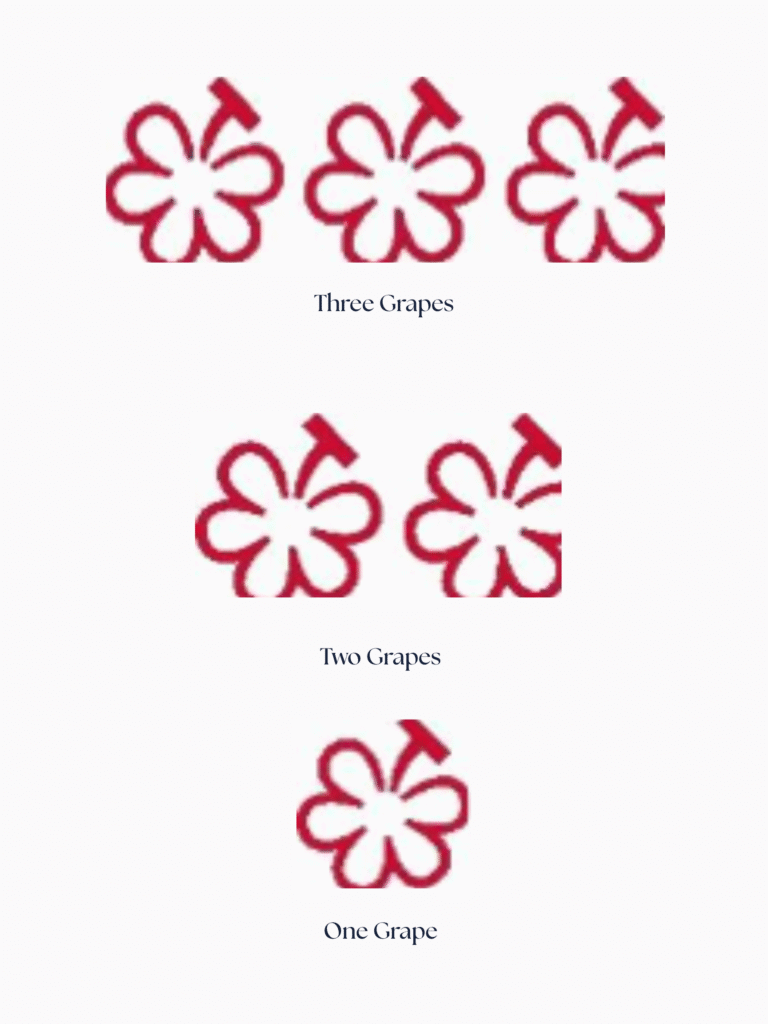
  Three Grapes

Exceptional producers. Whatever the vintage, wine lovers can turn to the estate’s creations with complete confidence.

  Two Grapes

Excellent producers who stand out as exceptional within their peer group and region for both quality and consistency.

One Grape

Very good producers who craft wines of character and style, especially in the best vintages.

Selected 

Dependable producers who have been chosen for regular review, producing well-made wines that deliver a quality experience.

Here is the methodology based on 5 criteria: 

For its new distinction, true to its fundamental values of excellence and independence, the MICHELIN Guide applies five criteria uniformly and wherever it may be.

  1. The quality of agronomy
    The assessment evaluates the vitality of the soil, the balance of the vine stocks, as well as the care provided for the vines. All essential factors that directly influence wine quality.
  2. Technical mastery
    The evaluation focuses on the technical skills in the wine-making process. Our inspectors are seeking precise and rigorous wine-making processes producing well-developed wines which reflect the terroir and the vine types, without any distracting flaws.
  3. Identity
    The Guide will highlight winemakers who craft wines that express the personality, the sense of place, and the culture behind them.
  4. Balance
    Evaluation of the harmony between acidity, tannins, oak, alcohol, and sweetness.
  5. Consistency 
    Wines will be evaluated across multiple vintages to ensure unwavering consistency in quality, even in the most challenging years. The Guide celebrates wines that reveal greater depth and excellence as time goes by.

    Expertise at the heart of the assessments 

Future selections will rely on the expertise of dedicated wine inspectors, all professionals employed by the Michelin Group. This team, which makes its recommendations collectively and with complete independence, will bring together seasoned wine specialists and newly recruited inspectors.

All team members have been selected not only based on their qualifications, but also on their ability to assess a vineyard with rigour and integrity. They are all seasoned professionals in the sector, i.e., former sommeliers, specialized critics or production experts, all bringing concrete and in-depth experience of the wine-producing world to the team.

Their assessments follow a rigorous methodology, including a panel review process and editorial supervision.

In 2026, the MICHELIN Grapes adventure will be writing its initial chapter in the heart of two mythical French wine-producing areas: Burgundy and the Bordeaux region

The MICHELIN Grapes project will start with two regions among the most emblematic in the worldwide wine-producing landscape: Burgundy and the region around Bordeaux. A compelling choice, celebrating the diversity, the historical intensity and the cultural richness of wine à la française.

Over the centuries, Bordeaux has established itself as a historic force in the world of wine. Its distinguished vineyards and their reputation go far beyond our borders.  The entire prestigious Bordeaux region is renowned throughout the world for its innovations and its traditions.

Burgundy, for its part, differentiates itself by its approach, deeply rooted in the local heritage. Its human-sized, family-owned vineyards reflect rigorous traditions and care imposed at each stage in the production process. From generation to generation, legacies have curated the local identity and forged the worldwide reputation of Burgundy.

Stay tuned in 2026 for the very first selections of the MICHELIN Grapes.

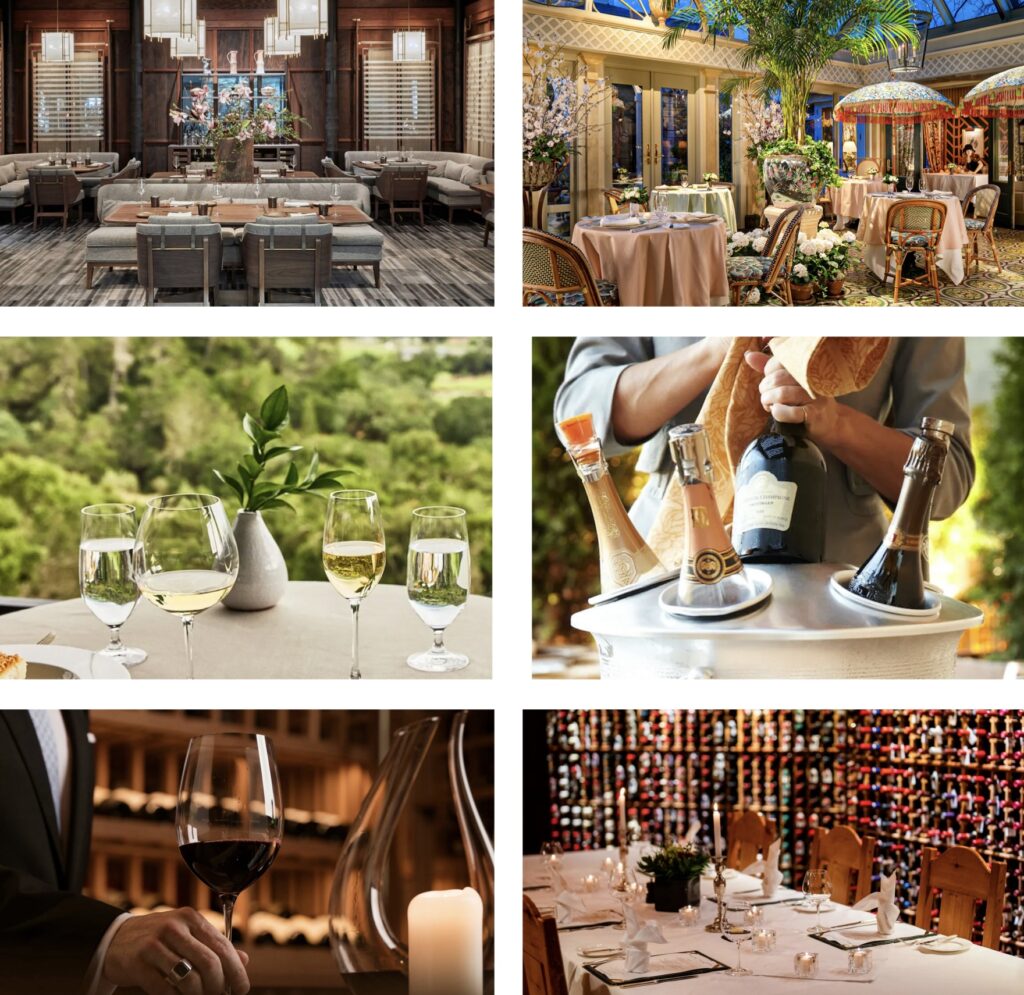
The Best Hotel Wine Cellars in North America according to MICHELIN Guide

Wine has long been intertwined with the art of hospitality, yet a select number of hotels elevate the experience to the highest level by curating world-class cellars that rival esteemed restaurants and private collections. According to MICHELIN Guide, these properties redefine the concept of luxury lodging, offering immersive oenological journeys that appeal to both seasoned connoisseurs and aspiring enthusiasts.

At these destinations, wine is not simply an accompaniment to a fine meal; it is the foundation of the entire stay. Guests may encounter sommeliers who serve as personal guides, expansive cellars that read like encyclopedias of viticulture, and opportunities to pair rest with rare vintages.

From California’s iconic Cabernet Sauvignon estates to the refined lakeside retreats of Québec, these hotels embody the essence of wine tourism in North America. They serve as cultural crossroads, blending terroir, tradition, and innovation into an experience that extends beyond the bottle.

Rosewood Miramar Beach, Montecito, California

This Two-MICHELIN-Key resort looks and feels like a posh summer home. It’s fitting then that Caruso’s isn’t just a MICHELIN-Starred and Green Star restaurant with an ocean view—it’s also home to one of Southern California’s most extravagant wine cellars, stocked with 22,000+ bottles and a serious Burgundy collection. The sommelier team is armed with rare verticals and white gloves, and you’ll find that most guests here dress for dinner, even if they’re just heading downstairs, or opting to enjoy from their suite. Also located at Rosewood Miramar Beach? AMA Sushi with edomae-style sushi, available à la carte or as an omakase.

Rosewood Miramar Beach Wine Cellar, Napa Valley, California

A 15,000-bottle cellar. Lunch overlooking the Rutherford vines. And a wine list that reads like the Napa Valley Book of Genesis. This Three-MICHELIN-Key resort with a MICHELIN-Starred restaurant of the same name doesn’t shout — it purrs, in silky Bordeaux and well-structured Chardonnay. Whether you’re toasting at the bar or reclining in a vineyard-view suite, every sip is a reminder that heaven might just be spelled C-A-B.

SingleThread Inn, Sonoma, California

SingleThread is a unicorn; it’s a Three-MICHELIN-Key hotel with a Three-MICHELIN-Star and Green Star restaurant tucked inside. Here in this culinary sanctuary, dinner unfolds like a symphony, and the wine pairings are its most delicate movement. Located in California’s Wine Country, the inn’s cellar is both impressive and intimate; designed not just to dazzle, but to deepen your understanding of the bottle in front of you. Expect somm-led education, rare local vintages and a breakfast that might just come with a splash of Pét-Nat.

The Little Nell, Aspen, Colorado

Come for the snow, stay for the Pinot Noir. The One-MICHELIN-Key Little Nell may be best known for ski-in, ski-out luxury and its Element 47 restaurant, but oenophiles know it for its award–winning wine cellar: over 20,000 bottles deep, with verticals that rival some European royalty. Prefer your wine with altitude? Book a sommelier-led ski tour, complete with slope-side sabrage. Yes, really.

The Inn at Little Washington, Washington, D.C.

This spot is in a sleepy little town outside of Washington, D.C., but just happens to be home to the region’s only Three-MICHELIN-Star and Green Star restaurant. The dining room is like a Versailles fever dream, and the wine cellar could double as a museum. At Patrick O’Connell’s countryside fantasy, the wine program is an experience unto itself, with deep French and American verticals, pairing flights that border on spiritual and tours that feel like a pilgrimage. You’ll sleep well—but not before a Château d’Yquem nightcap.

Post Hotel & Spa, Lake Louise, Canada

You’ll come for the glacial views and stay for the cellar, which spans more than 22,000 bottles. Discover rare vintages, winemaker dinners and private tastings—all housed in this MICHELIN-Key alpine lodge. It’s the kind of place where après-ski means Amarone, and the wine cellar is deeper than the snowpack.

Manoir Hovey, Québec

Québec’s most refined country escape comes with a serious side of vin. The Two-MICHELIN-Key Manoir Hovey houses a 15,000-bottle cellar and leans proudly into local pairings, offering Québécois wines you won’t find at your downtown wine bar. Book a table at Le Hatley for fine dining or Le Tap Room for a more casual setting. It’s as much about terroir as it is about taste—and yes, there’s foie gras involved.

As wine tourism continues to flourish globally, the MICHELIN Guide’s recognition of these hotels underscores a growing trend: travellers no longer seek only a destination, but a holistic experience that marries luxury, culture, and vinous discovery.

Source:  MICHELIN Guide

The Lumiares Hotel & Spa: Is A Chic Urban Retreat in the Heart of Lisbon

Tucked away in Lisbon’s charismatic Bairro Alto district, The Lumiares Hotel & Spa is not just a hotel; it’s a design-forward, soulfully Portuguese experience that seamlessly blends elegance, authenticity, and a deep sense of place. This five-star boutique gem, part of Small Luxury Hotels of the World and featured in the Condé Nast Johansens Luxury Hotels 2025 guide, has earned accolades for its intuitive hospitality and earned the 2024 award for Best Bar in Europe, for good reason.

Set in a beautifully restored 18th-century palace, The Lumiares reimagines luxury for the modern traveller. The design tells a distinctly Portuguese story: think bold patterned tiles, original artworks by Lisbon-based creatives, handcrafted furniture, and warm textures that nod to the city’s vibrant culture.

Each of the 47 apartment-style suites, from Studios to the two-bedroom Penthouse, offers both style and space. Fully equipped kitchens with SMEG appliances, elegant living and dining areas, and plush king-sized beds ensure guests feel truly at home. Oversized windows frame iconic cityscapes of terracotta rooftops, winding cobblestone alleys, and distant river views.

A true highlight of my stay was the Lumi Rooftop Bar & Restaurant. Set high above Lisbon, it offers sweeping 180° views of the Tagus River and the timeless charm of the Alfama historic skyline.

What made it so special? The atmosphere strikes the perfect balance between polished sophistication and laid-back charm. Chef João Silva’s seasonal menus showcase fresh, local ingredients with creativity and flair, while the craft cocktails celebrate Portugal’s rich culinary heritage with inventive twists.

It’s no surprise that Lumi was awarded Best Bar in Europe 2024 by Condé Nast Johansens, a well-earned recognition for a truly memorable experience.

The Lumiares Spa is a hidden oasis in the city. The treatment menu includes everything from deep-tissue and Ayurvedic massages to organic facials and detoxifying rituals. Facilities include a sauna, steam room, and a 24-hour gym.

The Lumiares Concierge team excels at curating bespoke experiences tailored to each guest. Think:

  • Private tuk-tuk tours through Lisbon’s oldest quarters
  • Artisan-led azulejo tile painting workshops
  • Food and wine tastings showcasing local petiscos and boutique wines
  • Sunset sailing on the Tagus River
  • Fado music nights in nearby Alfama

For oenophiles, the hotel can arrange private vineyard day trips to Setúbal or Colares, two of Portugal’s most fascinating and under-discovered wine regions.

The hotel’s enviable central location makes it an ideal base for walking and exploring:

  • Chiado and Principe Real shopping districts – 5-minute walk
  • Miradouro de São Pedro de Alcântara – just steps away, perfect for golden hour
  • Elevador da Glória – right outside, connects guests to downtown Baixa
  • Carmo Convent and Santa Justa Lift – under 10 minutes on foot
  • Time Out Market and the Ribeira waterfront – 15-minute stroll

“The Lumiares is effortlessly Lisbon: layered, expressive, welcoming, and deeply rooted in place. It invites you not just to visit the city, but to live it.”  Liz Palmer

AliveTaste’25 – A Celebration of Portugal’s Wine Culture and Gastronomic Excellence

I recently had the honour of attending the 9th Edition of AliveTaste’25 in Portugal, an extraordinary celebration of Portuguese wine, gastronomy, and cultural excellence. My journey across the country offered profound insights into the evolution of its wine culture, from the Atlantic-influenced Vinho Verde to the dramatic terraces of the Douro Valley and culminated in a multisensory experience at AliveTaste’25, hosted at the iconic Palácio do Freixo in Porto.

Exploring the Vinho Verde Wine Region: Tradition Meets Innovation

My exploration began in the Vinho Verde region, a landscape defined by granitic soils, verdant valleys, and cool Atlantic breezes. The appellation spans nine sub-regions, from Monção and Melgaço in the north to Paiva in the southeast, each contributing unique microclimatic influences and terroir expressions.

Long associated with low-alcohol, lightly effervescent white wines, Vinho Verde is undergoing a dynamic renaissance. During my visit, I discovered winemakers pushing boundaries, experimenting with single-varietal expressions that highlight the region’s diverse terroirs and microclimates, including an exciting emergence of red wines.

Producers are crafting distinctive wines from Alvarinho, Loureiro, and Arinto, each showcasing freshness, minerality, and structure. The grape varietals Alvarinho and Loureiro are being further refined through innovative techniques such as oak aging, which adds greater depth, complexity, and character.

Vinho Verde is also gaining recognition as a vibrant wine tourism destination. Many wineries now offer curated experiences that go beyond tastings, inviting visitors to explore the natural beauty of the region through tours, cultural activities, and immersive leisure experiences that seamlessly blend wine, hospitality, and landscape.

“Vinho Verde is certainly one of Europe’s most exciting wine destinations—and it’s only getting better” — Liz Palmer

Aveleda Wines: A Living Legacy of Portuguese Viticulture

One of the highlights of my travels in the Vinho Verde region was a visit to Aveleda, one of Portugal’s oldest and most respected wine estates. Founded in 1870 and still family-owned, Aveleda exemplifies the convergence of innovation, biodiversity, and sustainability. The estate spans over 200 hectares, and its commitment to ecological integrity is evident in its viticultural and architectural choices.

During my visit, I toured the historic gardens and cellars, participated in a technical tasting of their Alvarinho and Loureiro, and enjoyed an amazing outdoor wine tasting in the historic gardens, followed by a wine-paired lunch that reflected the region’s gastronomic richness. Aveleda’s wines are crisp, expressive, and exported to over 80 countries; they are true ambassadors of the Vinho Verde DOC.

The Douro Valley: A UNESCO World Heritage Landscape of Wine

My wine travels continue and have led me to the Douro Valley.

Home to over 33,000 grape growers and spanning nearly 250,000 hectares, the Douro Valley is one of the world’s oldest demarcated wine regions, officially established in 1756. This UNESCO World Heritage Site is renowned for its dramatic terraced vineyards that cling to steep schist slopes, some with gradients reportedly exceeding 70%. Long celebrated as the birthplace of Port wine, the Douro is now equally acclaimed for its bold, expressive still wines crafted from indigenous grape varieties such as Touriga Nacional, Touriga Franca, and Tinta Roriz. With over 200 wine estates or quintas, this region offers an exceptional wine tourism experience, blending rich viticultural heritage, striking architecture, and awe-inspiring landscapes into a destination that embodies the essence of Portugal’s wine culture.

I spent the night at Quinta de Ventozelo, one of the oldest and most expansive estates in the Douro Valley, which offers a compelling integration of heritage, hospitality, and enotourism. The estate’s architectural restoration thoughtfully preserves its 16th-century origins while adapting the structures into refined accommodations that blend comfort with historical authenticity. Nestled amidst 400 hectares of vineyards, forests, and olive groves, the property provides a unique immersion into the cultural and environmental landscape of the region.

A highlight of the estate is its panoramic infinity pool, positioned to frame the sweeping curves of the Douro River, an ideal vantage point for contemplating the viticultural terrain. Beyond its natural beauty, guests at the wine estate are encouraged to explore a network of ecological walking trails, participate in guided vineyard tours, and visit the Interpretation Centre, which offers in-depth insights into the estate’s biodiversity and sustainable practices. This holistic approach positions the property not merely as a wine resort, but as a living expression of the Douro’s enduring viticultural legacy.

I participated in a curated wine tasting that featured a selection of estate labels, from crisp whites and expressive reds to elegant Ports, each reflecting the terroir and heritage of Ventozelo. Wines and Ports that stood out: Quinta de Ventozelo Rose, 2023, Quinta de Ventozelo Malvasia Fina, 2023, Quinta de Ventozelo, 2018 Vintage Port, and Quinta de Ventozelo Colheita Port 2014.

As dusk settled over the terraced vineyards, I enjoyed an intimate dinner with other colleagues at Cantina de Ventozelo, the estate’s signature restaurant. The menu showcased locally sourced ingredients, many grown on-site, and paired seamlessly with Ventozelo’s wines. The panoramic view overlooking the Douro Valley added cinematic depth to the evening, transforming the meal into a sensory journey that felt both grounded in tradition and rich in discovery.

Visiting Douro Icons: Adega de Favaios & Quinta de São Luiz

Venturing deeper into the Douro Valley, I visited Adega de Favaios, a historic cooperative revered for its iconic Moscatel Galego Branco. Situated at elevations between 600 and 800 meters, the vineyards benefit from significant diurnal temperature shifts—ideal conditions for cultivating wines with refined floral and tropical aromatics. During my visit, I sampled a beautifully aged vintage Moscatel, a compelling expression of the region’s aging potential and steadfast commitment to quality.

Founded in 1952, Adega Cooperativa de Favaios stands as one of Portugal’s most esteemed wine institutions, uniting over 550 dedicated growers. While Moscatel de Favaios remains its signature, the cooperative also cultivates a diverse range of native grape varieties, including Touriga Nacional, Rabigato, and Gouveio. The winery seamlessly blends tradition and modernity in its state-of-the-art cellar, where innovative techniques honour long-standing practices, producing wines that are both expressive and enduring hallmarks of Portuguese wine culture.

I enjoyed a guided tour of the winery, gaining insight into the cooperative’s rich history and its meticulous winemaking process. The experience culminated in a tasting of their portfolio, including several still wines and the iconic Moscatel de Favaios; a beautifully aromatic and balanced expression of the Moscatel Galego Branco grape.

En route to Quinta de São Luiz – our drive from Adega de Favaios to Quinta de São Luiz included a breathtaking journey through the heart of the Douro Valley, winding past terraced vineyards, centuries-old quintas, and panoramic views of the Douro River. As we descended from the elevated Favaios plateau, the landscape unfolded dramatically; steep schist slopes lined with vines, charming hillside villages, and the glint of rabelos drifting along the water below.

Quinta de São Luiz, the historic birthplace of the Kopke brand, is one of the Douro Valley’s most iconic wine estates, with roots tracing back to 1638, making it the oldest Port wine house in Portugal. Located on the left bank of the Douro River between Régua and Pinhão, in the village of Tabuaço, the estate is renowned for its production of Tawny Colheita Ports, white wines, and premium Douro DOC wines. We were welcomed with a guided tour through the Romilã vineyard, insights into traditional winemaking at the Casa do Alambique, and curated tastings on the scenic São Luiz Terrace, which was relocated due to the heat to one of the tasting rooms. The estate also hosts engaging activities such as treasure hunts and mystery tours for groups, making it a versatile and immersive destination for wine enthusiasts and cultural explorers.

Hotel Tivoli Kopke Porto Gaia

I had the pleasure of dining with my group and special guest, Frederico Falcão, President of ViniPortugal, at 1638 Restaurant & Wine Bar by Chef Nacho Manzano, [third Michelin star chef]. The décor is sophisticated yet understated, blending warm wood accents, soft lighting, and expansive views over the Douro River and the city of Porto, creating a refined, timeless setting. Service was impeccable: attentive without being intrusive, with staff deeply knowledgeable about both the cuisine and the exceptional Kopke wine and Port pairings. Chef Nacho Manzano’s tasting menu was a masterclass in culinary precision, each course artfully balancing purity of flavour with innovative techniques like low-temperature cooking and steaming. Highlights included delicate seafood, seasonal vegetables, and heritage meats, all elevated by rare Kopke Ports and Douro DOC wines from Quinta de São Luiz and Quinta da Boavista. It was an extraordinary gastronomic journey, one that perfectly reflected Porto’s rich culinary and winemaking heritage in every bite.

The World of Wine (WOW): Porto’s Cultural Beacon

No trip to Porto is complete without a visit to WOW or the “World of Wine” a pioneering cultural district in Vila Nova de Gaia. I spent an afternoon exploring the museums, including The Wine Experience, Planet Cork, and The Bridge Collection. WOW also features 12 restaurants, a wine school, boutique shopping, and panoramic views over the Douro River, a dynamic nexus of culture, education, and luxury wine tourism.

During my exploration of the local wine landscape, I had the opportunity to stay at a selection of hotels that exemplified a sophisticated integration of luxury accommodations and strategic geographic positioning.

Renaissance Porto Lapa Hotel – Porto’s newest 5-star property, it combines modern sophistication with sweeping city views. An ideal base for wine professionals and tourists alike, it’s located within easy access to both urban and wine country adventures.

Pestana Douro Riverside – This elegant property is a restored perfume and soap factory known as the Floral Factory. Dinner at Aroma, its signature restaurant, was a standout experience. The interiors blend exposed beams and iron columns with a soft, modern palette, an aesthetic that tells the story of industrial heritage reimagined.

Tivoli Kopke Porto Hotel – Strategically located near the Vila Nova de Gaia wine cellars, this hotel offers direct access to key wine tourism sites. Its stylish interiors evoke understated luxury, ideal for oenophiles. A dinner at 1638 Restaurant & Wine Bar by Nacho Manzano was a culinary masterpiece, featuring haute cuisine paired with Kopke’s award-winning Ports and still wines.

AliveTaste’25: Portugal’s Pinnacle Event for Wine and Gastronomy

In the heart of Portugal’s storied wine country, where centuries-old traditions meet contemporary elegance, this year’s AliveTaste’25 was nothing short of a sensory revelation.

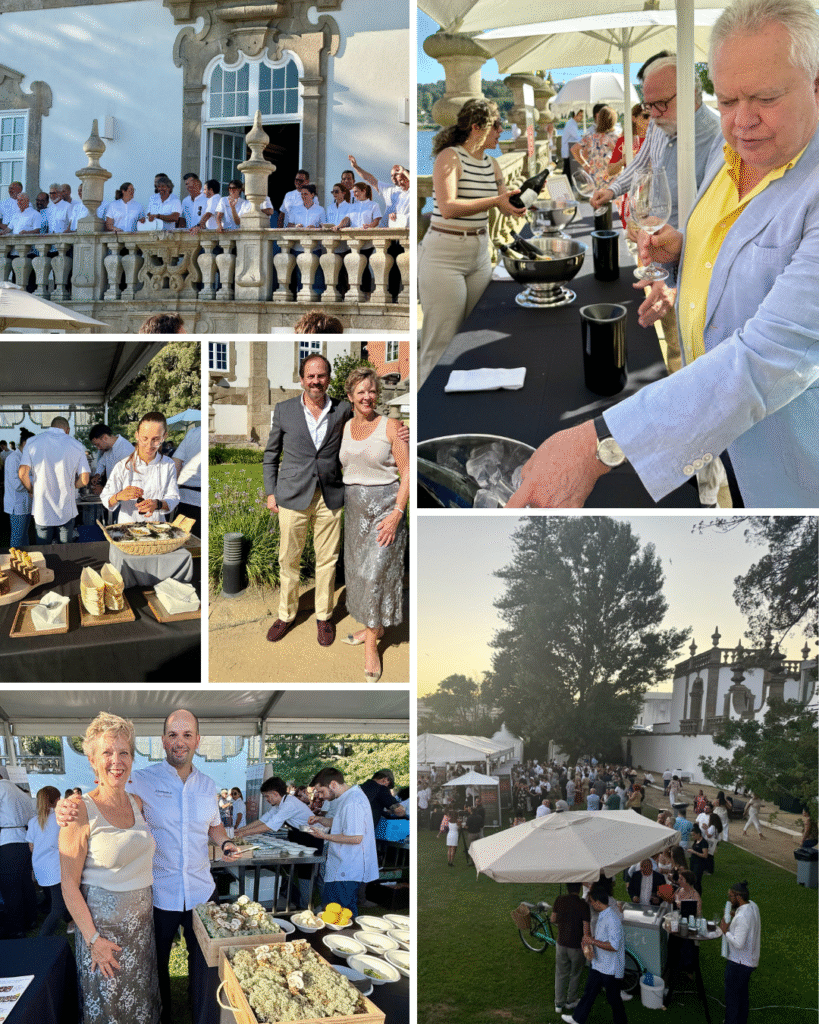
Held at the magnificent Portuguese Baroque Pestana Palácio do Freixo, Douro, the event unfolded as a harmonious symphony of taste, culture, and refined hospitality. It brought together 26 chefs and 20 wine producers, featuring culinary creations from the chefs paired with wines from the participating producers.

The event was attended by an eclectic mix of luminaries: international wine critics, Michelin-starred chefs, top sommeliers, and luxury travel insiders. From Canada to Paris to São Paulo to South Korea, the guest list read like a passport through the world’s wine capitals. Both Portuguese wines and gastronomy took center stage, joined by leading producers from across the country, bringing the global wine world together in one extraordinary setting.

AliveTaste’25 is more than a celebration of fine wine; it is a tribute to the terroir, the people, and the compelling stories that are shaping Portugal’s growing influence in gastronomy and luxury wine tourism. In 2025, the event once again raised the bar, elevating the experience to new heights.

“AliveTaste’25 was nothing short of a sensory revelation” Liz Palmer

For further details, visit: https://alivetaste.com

Celebrating Excellence in Global Wine Hospitality: 2025 Regional Winners of The World’s Best Wine Lists Announced

The World of Fine Wine has just unveiled the winners of the 2025 World’s Best Wine Lists – Regional Category Awards, which honour outstanding achievements in global wine hospitality.

Following a rigorous evaluation process, leading establishments across six major global regions: Asia, Australasia, Europe, the Middle East and Africa, North America, and South & Central America, including the Caribbean, have been recognized for their exceptional wine list curation. These venues demonstrated outstanding depth, breadth, and originality in their wine selections, along with a steadfast commitment to quality, education, and exemplary service.

In total, awards were presented across 21 distinct categories in each region, recognizing restaurants, wine bars, hotels, and other establishments that exemplify best practices and innovation in wine list development.

Regional winners will now advance to the final stage of adjudication, competing for the prestigious Global Category Awards, which will be officially announced at the 2025 World’s Best Wine Lists Awards Ceremony, to be held at The Savoy, London, on September 15, 2025.

This initiative underscores the evolving standards of excellence in wine service and highlights the critical role of curated wine programs in enriching the global gastronomic landscape.

“As ever, we were delighted by the exceptionally high standard and endless variety of the wine lists entered into this year’s World’s Best Wine Lists Awards,” said the chairman of the World’s Best Wine Lists Awards and editor of The World of Fine Wine, Neil Beckett.

“To be judged the best on their respective continent in one of these categories is a huge achievement for any establishment, and each of the Regional Category Awards winners has every right to be extremely proud of the prestigious titles they have already won,” Beckett continued.

The World’s Best Wine Lists is a global awards program created in 2014 by the multi-award-winning publication The World of Fine Wine.

Judged according to a rigorous protocol by independent, international panels of leading professionals, including World Champion Sommeliers, Master Sommeliers, Masters of Wine, and highly respected wine writers, it is the first awards program to acknowledge the crucial importance of a good wine selection, regardless of size, in the modern dining experience all around the world.

Commenting on the new format for the awards ceremony, which will elevate the event from a walk-around tasting to an “elegant” gala dinner, Beckett said, “We are thrilled to introduce this new format on September 15.

“This transformation will not only provide a more relaxed and sophisticated ambience but will also nurture even more meaningful networking and tasting opportunities, allowing attendees to connect and build lasting relationships with key clients and industry leaders while sharing a range of fine wines in the context of a sumptuous meal.”

Tickets for this exclusive event, which are limited, can be purchased from the World’s Best Wine Lists Awards 2025 site: https://nsmg.eventsonlineregister.com/tc-events/world-of-fine-wine-the-worlds-best-wine-list-awards-2025/

World’s Best Wine Lists 2025 Regional Category Winners


Best Long Wine List (more than 500 wines)

Evett, Seoul, South Korea—Asia

Jonah’s Restaurant and Boutique Hotel, Palm Beach, New South Wales, Australia—Australasia

Affinatore, Milan, Italy—Europe

Blue Penny Cellar, Constance Belle Mare Plage, Poste de Flacq, Mauritius—Middle East & Africa

Blue Hill at Stone Barns, Tarrytown, New York, USA—North America

Grand Old House, George Town, Grand Cayman, Cayman Islands—South & Central America and the Caribbean

Best Medium Wine List (fewer than 500 wines)

Côte by Mauro Colagreco, Bangkok, Thailand—Asia

Shell House, Sydney, New South Wales, Australia—Australasia

Blandford Comptoir, London, UK—Europe

Nobu, Dubai, UAE—Middle East & Africa

Compline Restaurant, Napa, California, USA—North America

Bu’ul at Chablé Maroma, Playa del Carmen, Mexico—South & Central America and the Caribbean

Best Short Wine List (fewer than 250 wines)

Sushi Oono, Singapore—Asia

The Wine Bar at The International, Sydney, New South Wales, Australia—Australasia

Liath, Dublin, Ireland—Europe

Moonrise, Dubai, UAE—Middle East & Africa

Atoboy, New York City, New York, USA—North America

Best Micro Wine List (fewer than 100 wines or 4 pages)

Le Salon de Thé de Joël Robuchon, IFC Mall, Hong Kong, China—Asia

Bar Miette, Brisbane, Queensland, Australia—Australasia

Mina’s, London, UK—Europe

Kru, Brooklyn, New York City, New York, USA—North America

Best Regional Wine List (in the region)

Cai Lin Xuan, Ritz-Carlton Reserve, Rissai Valley, Jiuzhaigou, China—Asia

Ten Minutes by Tractor, Main Ridge, Victoria, Australia—Australasia

Rei dos Leitões, Mealhada, Portugal—Europe

Sabi Sabi, Johannesburg, South Africa—Middle East & Africa

Treadwell Cuisine, Niagara-on-the-Lake, Ontario, Canada—North America

Aramara, The Four Seasons Resort, Punta Mita, Mexico—South & Central America and the Caribbean

Best Regional Wine List (outside the region)

Burnt Ends, Singapore (for Australia)—Asia

Grossi Florentino, Melbourne, Victoria, Australia (for Italy)—Australasia

NapaGrill, Zürich, Switzerland (for USA)—Europe

Blue Penny Cellar, Constance Belle Mare Plage, Poste de Flacq, Mauritius (for France)—Middle East & Africa

Acquerello, San Francisco, California, USA (for Italy)—North America

Ajualä, Santo Domingo, Dominican Republic (for Spain)—South & Central America and the Caribbean

Best Champagne & Sparkling Wine List

Evett, Seoul, South Korea—Asia

Quay, Sydney, New South Wales, Australia—Australasia

Affinatore, Milan, Italy—Europe

The Lana, Dorchester Collection, Dubai, UAE—Middle East & Africa

Acquerello, San Francisco, California, USA—North America

Grand Old House, George Town, Grand Cayman, Cayman Islands—South & Central America and the Caribbean

Best Dessert & Fortified Wine List

Grossi Florentino, Melbourne, Victoria, Australia—Australasia

Wunderbrunnen, Opfikon, Switzerland—Europe

Blue Penny Cellar, Constance Belle Mare Plage, Poste de Flacq, Mauritius—Middle East & Africa

Southall Farm & Inn, Franklin, Tennessee, USA—North America

Graycliff Hotel & Restaurant, Nassau, Bahamas—South & Central America and the Caribbean

Best Organic Wine List

Potong, Bangkok, Thailand—Asia

Gimlet Cavendish House, Melbourne, Victoria, Australia—Australasia

La Cuverie by Comte Liger-Belair, Vosne-Romanée, France—Europe

Jing Restaurant, Constance Halaveli, Maldives—Middle East & Africa

Barcelona Wine Bar, Washington, DC, USA—North America

Best Sake List (outside Japan)

Palace Garden Grand Lisboa Palace, Macao—Asia

The Chedi Andermatt, Andermatt, Switzerland—Europe

Hakkasan, Abu Dhabi, UAE—Middle East & Africa

Sushi Nakazawa, New York City, NY, USA—North America

Graycliff Hotel & Restaurant, Nassau, Bahamas—South & Central America and the Caribbean

Best Spirits List

The Datai Langkawi, Kedah, Malaysia—Asia

Society, Melbourne, Victoria, Australia—Australasia

Visselulles Vinbar, Sønderborg, Denmark—Europe

Nobu, Dubai, UAE—Middle East & Africa

The Pines Modern Steakhouse, Highland, California, USA—North America

Graycliff Hotel & Restaurant, Nassau, Bahamas—South & Central America and the Caribbean

Best Wine-by-the-Glass List (with Coravin®)

Côte by Mauro Colagreco, Bangkok, Thailand—Asia

Maison Bâtard, Melbourne, Victoria, Australia—Australasia

67 Pall Mall, London, UK—Europe

Blue Penny Cellar, Constance Belle Mare Plage, Poste de Flacq, Mauritius—Middle East & Africa

Wine Bar George, Lake Buenavista, Florida, USA—North America

Ajualä, Santo Domingo, Dominican Republic—South & Central America and the Caribbean

Best Wine-by-the-Glass List (without Coravin®)

Chún, MGM Cotai, Macao—Asia

Ten Minutes by Tractor, Main Ridge, Victoria, Australia—Australasia

Hakkasan, Abu Dhabi, UAE—Middle East & Africa

Vintage ’78 Wine Bar, Overland Park, Kansas, USA—North America

Best Wine Bar List

Big Wine Freaks, Singapore—Asia

Cellar Door Christchurch, Christchurch, New Zealand—Australasia

Sticks & Stones A Terroir Bar by Justin Leone, Munich, Germany—Europe

The Library, Houston, Texas, USA—North America

Best Hotel Wine List

Palace Garden Grand Lisboa Palace, Macao—Asia

Wickens at Royal Mail Hotel, Dunkeld, Victoria, Australia—Australasia

Hotel Almhof Schneider, Lech, Austria—Europe

Blue Penny Cellar, Constance Belle Mare Plage, Poste de Flacq, Mauritius—Middle East & Africa

The Little Nell, Aspen, Colorado, USA—North America

Graycliff Hotel & Restaurant, Nassau, Bahamas—South & Central America and the Caribbean

Most Original Wine List

Potong, Bangkok, Thailand—Asia

Ten Minutes by Tractor, Main Ridge, Victoria, Australia—Australasia

Kupaj Fine Wines and Gourmet Tapas, Cluj-Napoca, Romania—Europe

Sabi Sabi, Johannesburg, South Africa—Middle East & Africa

Ada’s Food + Wine, Las Vegas, Nevada, USA—North America

Best Designed Wine List

Potong, Bangkok, Thailand—Asia

The Grill at The International, Sydney, New South Wales, Australia—Australasia

Frog by Adam Handling, London, UK—Europe

The Lana, Dorchester Collection, Dubai, UAE—Middle East & Africa

March, Houston, Texas, USA—North America

Best New Wine List (since 2022)

Big Wine Freaks, Singapore—Asia

The Grill at The International, Sydney, New South Wales, Australia—Australasia

Sticks & Stones A Terroir Bar by Justin Leone, Munich, Germany—Europe

The Lana, Dorchester Collection, Dubai, UAE—Middle East & Africa

Chez Fifi, New York City, New York, USA—North America

Best Value Wine List

Bar Miette, Brisbane, Queensland, Australia—Asia

The Grape Escape, Cheltenham, UK—Europe

Sabi Sabi, Johannesburg, South Africa—Middle East & Africa

C Lazy U Ranch, Granby, Colorado, USA—North America

Best All-Inclusive Wine List

Ozen Reserve Bolifushi, Kaafu Atoll, Maldives—Asia

Alizée Restaurant, Constance Moofushi, Maldives—Middle East & Africa

Best Half-Bottle Wine List

Spago at Marina Bay Sands, Singapore—Asia

Grill Americano, Melbourne, Victoria, Australia—Australasia

Hotel Almhof Schneider, Lech, Austria—Europe

Blue Penny Cellar, Constance Belle Mare Plage, Poste de Flacq, Mauritius—Middle East & Africa

One White Street, New York City, New York, USA—North America

Graycliff Hotel & Restaurant, Nassau, Bahamas—South & Central America and the Caribbean

Best Large-Format Wine List

Zuicho Grand Lisboa Palace, Macao—Asia

Aria, Sydney, New South Wales, Australia—Australasia

Einstein Gourmet, St Gallen, Switzerland—Europe

Blue Penny Cellar, Constance Belle Mare Plage, Poste de Flacq, Mauritius—Middle East & Africa

Grill 23 & Bar, Boston, Massachusetts, USA—North America

Grand Old House, George Town, Grand Cayman, Cayman Islands— South & Central America and the Caribbean