A Classic Hostess Gift for the Holidays: Nicolas Feuillatte Réserve Exclusive Gift Pack with Two Flutes

Amid the endless swirl of holiday gifting, a few offerings strike the elusive balance between polish and pleasure quite like the Nicolas Feuillatte Réserve Exclusive Gift Pack, complete with two refined Champagne flutes. It is an effortlessly gracious hostess gift – considered, celebratory, and refreshingly unpretentious.

Tasting Notes
At its core is Nicolas Feuillatte’s Réserve Exclusive Brut, a finely tuned blend of Pinot Noir, Meunier, and Chardonnay. The Champagne delivers both approachability and depth, revealing layers of orchard fruit, subtle brioche, and a lifted mineral finish. It shows good structure and is elegant and expressive.

Classic Pairings
At the table, Nicolas Feuillatte Réserve Exclusive Brut proves endlessly versatile. It pairs beautifully with holiday classics such as smoked salmon, roast turkey, or festive canapés, and shines just as brightly on its own as a refined aperitif. With its thoughtful presentation and timeless appeal, this gift pack elevates any gathering – proof that the best gifts are those that feel both celebratory and sincere.

Wine Tourism
Nicolas Feuillatte is based in Chouilly, in the heart of the Côte des Blancs, where it operates one of the most advanced Champagne facilities in the region. While the brand is globally recognized, it remains deeply connected to its grower network and regional identity. The Centre Vinicole – Champagne Nicolas Feuillatte also welcomes visitors, offering curated tastings and guided experiences that explore Champagne production, blending philosophy, and the cooperative model. It is a meaningful stop for wine tourism enthusiasts seeking both education and immersion.

Champagne Telmont: Where Heritage Meets the Future of Sustainable Champagne + Wine Review

 Champagne is a region built on centuries of tradition, but every so often, a house emerges that doesn’t just update the rule book; it edits the whole document. Telmont, the organically driven, sustainability-obsessed house from Damery, is one of the most compelling modern narratives in Champagne today. With a history that stretches back more than a century and a present that leans confidently into ecological transformation, Telmont stands at the crossroads of heritage and next‑generation innovation.

A Champagne House Born in 1912 and Reborn in the 21st Century

Telmont was founded in 1912, when winegrower Henri Lhôpital established a small estate rooted in traditional Champagne viticulture. For much of the 20th century, the family-built maison remained a local, agriculture‑focused producer, known for meticulous vineyard work and precise blending.

The plot twist arrived in 2020, when Telmont received significant support from partners aligned with its environmental mission, including an investment from actor and environmental advocate Leonardo DiCaprio in 2022. Rather than pivot toward celebrity gloss, Telmont doubled down on its ecological commitments. By 2025, the house had emerged as one of Champagne’s most resolute voices in sustainability, championing:

  • Organic certification for 100% of its vines (a multi‑year transition nearing completion)
  • Zero unnecessary packaging
  • Full transparency in labelling
  • Renewable energy integration
  • A “leave no trace” approach across production and the supply chain

This ethos has earned Telmont a devoted following among sommeliers, collectors, and environmentally conscious drinkers, including the sustainably minded Gen Z audience, who treat vineyard biodiversity with the same reverence earlier generations reserved for luxury labels.

Location

Telmont’s home village of Damery sits in the Vallée de la Marne, west of Épernay. Historically dominated by Meunier, the region benefits from clay‑rich soils and cooler ripening conditions that allow the grape to express freshness and aromatic precision.

The estate farms vineyards in Damery as well as parcels in nearby villages, including Cumières, Hautvillers, and Boursault, creating a diverse mosaic of chalk, clay, sand, limestone, and flint soils. This range enables Telmont to craft blends that emphasize finesse, lift, and orchard‑fruit purity.

Damery itself offers a humble, pastoral counterpoint to Champagne’s grander tourism hubs. It is a village where winemakers still know their neighbours, tractors hum through the early morning light, and the Marne River glints softly between vineyard slopes.

Telmont Réserve Brut – Wine Review

No. 145037/312589
Disgorged in 2024
Dosage 3.4 g/l
40% Chardonnay
29%Meunier
31% Pinot Noir
Extra Brut

The Réserve Brut is Telmont’s thesis statement: a Champagne that foregrounds orchard fruit, chalk‑driven minerality, and winemaking restraint.

Appearance: A luminous golden hue with fine, persistent bubbles and an elegant mousse.

Aromas: Pear, apple, and peach, layered with hints of honeysuckle and almond.

Palate: Crisp apple and citrus notes intertwine with delicate brioche, supported by precise, refreshing acidity. The mousse is refined and persistent, carrying a mineral thread from start to finish.

Finish: Long, harmonious, and mineral‑driven, with lingering notes of candied fruit and citrus that echo the Vallée de la Marne’s signature finesse.

This is a Champagne that feels effortlessly composed, akin to a minimalist painting where every brushstroke matters.

92 Points
Liz Palmer

There are many reasons why I chose Champagne Telmont as one of my holiday favourites, including their wines’ favouring clarity over artifice, vineyard truth over marketing gloss, and ecological health over short-term convenience. In 2025, that stance resonates with a global audience seeking luxury aligned with values.

This house bridges Champagne’s agricultural past with its environmentally conscious future, proving that sustainability is not a trend, but a pathway to deeper, more authentic expression.

The 34th edition of Benvenuto Brunello: Italy’s premier wine preview showcases a vintage of elegance and restraint

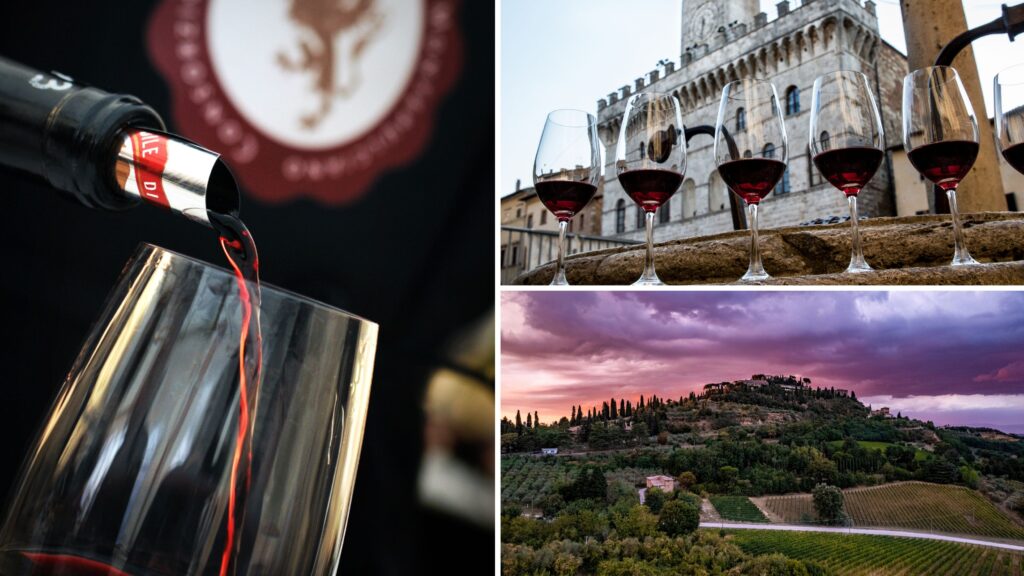
Montalcino opened its historic cellars and welcomed the world once again for the 34th edition of Benvenuto Brunello, held November 20–24 at the Chiostro di Sant’Agostino. As Italy’s longest-running wine preview event, this year’s gathering brought the international wine community together to taste the highly anticipated Brunello di Montalcino 2021, alongside Brunello Riserva 2020 and Rosso di Montalcino 2024. With 122 wineries presenting their wines and approximately 100 journalists and industry professionals in attendance, the event underscored Brunello’s enduring status as one of Italy’s most prestigious wine denominations. The international presence was particularly notable, with nearly half of the attending journalists coming from abroad, reflecting Brunello’s truly global appeal.

The event maintained its successful dual format pioneered in previous years. The first three days (November 20–22) were reserved for trade and media, featuring technical tastings. The final two days opened to Italian and international wine lovers, restaurant professionals, wine merchants, and sommeliers for walk-around sessions where they could meet producers directly.

Brunello’s continued market strength

Brunello di Montalcino has achieved what few wine denominations can claim: sustained growth in both prestige and commercial success over the past half-century. The denomination’s popularity continues to expand in world markets, driven by rising average prices, stable volumes, and growth in strategic regions. Recent data from Wine Intelligence confirms Brunello’s exceptional brand recognition in Italy, where it is known by two out of three consumers, surpassing in notoriety even neighbouring Tuscan appellations.

Rosso di Montalcino continues to show impressive growth. Following the expansion of vineyard area, bottlings in the first ten months reached nearly 4 million State Seals issued, marking a 29% year-on-year increase. This secondary appellation has become an important entry point for consumers discovering the territory while also serving as an earlier-drinking expression of Montalcino’s terroir. The Consorzio announced plans to launch a new promotional program for the denomination in 2026, involving collective participation in primary markets, particularly the United States, as well as additional strategic destinations. The aim is to diversify business opportunities for producers as much as possible, ensuring the denomination’s continued growth across multiple markets rather than relying too heavily on any single region.

Understanding the 2021 vintage

One of the highlights of the event was the presentation of the 2021 vintage characteristics through Brunello Forma, the Consorzio’s comprehensive technical analysis program. Now utilizing data from 60 weather stations (a 54% increase over 2020) and comparable to the 30-year historical average (1996–2025), the analysis provided detailed insights into what shaped this distinctive vintage. The 2021 growing season was defined by two main weather anomalies: a notably colder spring than historical norms, especially during March, April, and May, and a significantly warmer, drier September.

What made 2021 particularly unusual was the complete absence of rain between late August and early September, a pattern atypical for the Montalcino area. The vintage narrative began dramatically on April 8 with one of the most severe spring frosts of the past two decades. Following an early budbreak prompted by rapidly increasing temperatures from March 24 onward, the sudden plunge in minimum temperatures, exacerbated by a strong North Atlantic cold front, delayed the entire vegetative cycle and significantly reduced yields in some areas.

Summer brought a pronounced water deficit rather than thermal excess. Despite the persistent drought, maximum temperatures remained moderate, with only brief heatwaves observed. This restraint proved crucial to wine quality. The marked diurnal temperature variation, combined with the absence of prolonged heat stress, allowed the grapes to maintain freshness and aromatic complexity even under challenging conditions. Harvest commenced in the second half of September under clear skies and concluded rapidly in early October, with all fruit brought in before the first significant rainfall arrived after October 5. The resulting wines reflect a vintage shaped by discipline and precision: approachable yet structured, elegant yet concentrated, offering immediate appeal while promising graceful evolution over time.

A unique territory for the pure expression of Sangiovese

The Brunello production area corresponds to the historical limits of the Municipality of Montalcino, a picturesque village just 40 km south of Siena, surrounded by vineyards, olive groves, and historical sites. The Montalcino district comprises 3,500 hectares of vineyards registered under the DOC and DOCG designations. The production area is shaped like a square around the town, and it’s fascinating to observe the microclimate differences in such a compact territory.

This is a dry land encompassing a multitude of microclimates and soils. Generally speaking, grapes located in the cooler northern areas of the DOCG tend to ripen more slowly. These vineyard sites are located at higher elevations (but never over 600 meters) and are planted in gravelly Galestro soil. On the south side, the grapes grow in an entirely different environment. The soils are richer, such as clay; the sunlight is more intense; sea breezes blow from the Tyrrhenian Sea; and the resulting wines are more powerful. Furthermore, the presence of Mount Amiata (1,740 m) to the south has an important influence by shielding the grapes from strong atmospheric phenomena and providing breezes that help keep the climate dry and the vines healthy.

Tasting impressions of the 2021 vintage

After tasting most of the Brunello di Montalcino 2021 samples, the overall impression is of a vintage that shows approachable drinkability supported by good structure and finesse. The wines reflect the character of a season defined by moderate temperatures, marked diurnal variation, and water stress without extreme heat. The result is a Brunello that balances freshness with concentration, offering elegance and refinement that will continue to evolve beautifully over time.

The Sangiovese Grosso: the fingerprint of Brunello

Brunello di Montalcino is a 100% Sangiovese-based wine that needs long periods of aging before reaching its quality peak, but once achieved, it represents a true champion of balance, complexity, and maturity. Sangiovese is the only grape allowed in the Brunello di Montalcino DOCG. It is a very sensitive native grape and one of the highest-quality varieties, requiring careful practice and impeccable attention throughout its production process, harvest, and vinification.

It is a variety that shows fragrant notes of cherry and plum, hints of spice, and an extraordinary texture. The natural tannic structure and high acidity levels of Sangiovese are the main factors behind its longevity. It performs differently in each site and changes depending on its environment. The terroir, combined with the play of time, has always produced elegant wines with perfectly balanced, rich bouquets. Brunello di Montalcino never fails to surprise. It is an example of impressive year-by-year quality persistence, and every vintage reveals a different profile of Sangiovese’s beauty, showcasing a new nuance of its character each time.

Montalcino: a year-round wine destination

Montalcino was historically an important stop on the Via Francigena, a road that ran from England to Rome, and therefore it welcomed and hosted influential figures, including nobles, politicians, and popes. The great wines of Montalcino were crafted to satisfy the illustrious visitors traveling to the Eternal City, which is why the hamlet has displayed absolute quality winemaking for centuries.

Montalcino today is internationally recognized as an authentic, high-end wine destination. Visiting Montalcino is not just about tasting. It is connected to the history of its people and helps visitors understand why wine is so deeply integrated into the culture of its inhabitants, who, from generation to generation, continue to pass on their passion and know-how.

While Benvenuto Brunello represents a highlight in Montalcino’s calendar, the region offers exceptional wine experiences throughout the year. Many of the 122 participating wineries welcome visitors year-round, though reservations are essential. Experiences range from basic tastings to elaborate tours, including vertical tastings of multiple vintages, vineyard walks with detailed explanations of different terroirs, barrel tastings in historic cellars, and food-and-wine pairing experiences. Some estates offer helicopter tours of the denomination and harvest experiences during September and October.

The territory hosts several notable events beyond Benvenuto Brunello. The Brunello Crossing in February features competitive and recreational hiking trails through the vineyards, offering routes ranging from 10 to 44 kilometers. The Jazz & Wine Festival in July combines world-class jazz performances with wine tastings in historic settings. L’Eroica in October, the famous vintage bicycle race traversing the scenic white roads of Tuscany, includes a special route through the Brunello vineyards. Honey Week in September celebrates local honey production with tastings and pairings with Moscadello di Montalcino.

The surrounding UNESCO World Heritage landscape of Val d’Orcia offers activities for every interest, from hiking and biking trails to the iconic cypress-lined roads featured in countless photographs and films. Historic abbeys, including Sant’Antimo, where Gregorian chants still echo through the stone halls—natural hot springs in nearby Bagno Vignoni and San Filippo, and the artistic treasures of Pienza and San Quirico d’Orcia provide rich cultural experiences.

The town welcomes many visitors, and the care devoted to hospitality has become just as important as the attention given to its wine. Ancient buildings and modern B&Bs, luxurious accommodations within wine estates, and impeccable hotels offer diverse lodging options to suit different preferences and budgets.

Filippo Magnani

Holiday Indulgence: Curated Champagnes, Wines + Spirits Worth Savouring

The holidays arrive not simply as a date, but as a shift in rhythm, a soft glow settling over the season, where ritual, elegance, and togetherness take centre stage. It’s the moment when the bottles we open matter just as much as the company we keep, and when craftsmanship becomes part of the celebration.

Starting this week, I’ll be launching an editorial series dedicated to the most compelling champagnes, wines, and spirits of the season. Each bottle is selected for its pedigree, its precision, and the narrative woven through its creation. Think heritage, terroir, and the subtle artistry that defines truly exceptional producers and distillers.

Each instalment will unveil standout labels, complete with tasting notes, pairing inspiration, and glimpses into the wine tourism landscapes that bring these bottles to life. These aren’t mere recommendations; they’re curated experiences, designed to transport, enchant, and elevate your holiday table.

Whether you’re leaning into intimate fireside evenings or hosting gatherings that shimmer long past midnight, this series is crafted to inspire. Follow along for weekly editions that let the season unfold in layers of flavour, culture, and holiday sophistication, making every pour feel like a moment worth savouring.

Liz Palmer

The Michelin Guide Expands Its Expertise in Recommendations and Introduces a New Distinction in the World of Wine

For 125 years, the MICHELIN Guide has celebrated places and talents that embody excellence in gastronomy and hospitality, with the MICHELIN Stars introduced in 1926 and the MICHELIN Keys launched in 2024. This expertise now naturally extends to wine, a key reference in the gastronomic experience. The MICHELIN Guide has long highlighted exceptional wine lists and sommeliers, notably through the ‘wine’ pictogram created in 2004 to distinguish outstanding food and wine pairings. In 2019, the MICHELIN Sommelier Award was introduced to honour professionals whose expertise enhances the guest experience through exemplary mastery of wine selection and service.

The MICHELIN Grape, MICHELIN Guide’s new distinction, will now spotlight wine estates across different regions of the world. It will assess their overall excellence based on five universal criteria applied consistently.

Gwendal Poullennec, International Director for the MICHELIN Guide, explains:

” After having oriented wine-lovers towards the finest tables in more than 70 destinations and to the world’s most elegant hotels, the MICHELIN Guide is delighted to open a new chapter with the world of wine. This new reference is designed for both the curious amateur and the most ardent expert – it rewards the men and women who are building the most demanding vineyards around the world.” 

The MICHELIN Grapes: a new reference for discovering and showcasing wine-growing talent

In the world of wine, the MICHELIN Guide rewards not only the vineyards but also the men and women who personify them. With this new distinction, the Guide will be using a strict and independent methodology – it will also provide wine-lovers with a trusted benchmark: Grapes 1, 2 or 3 and, additionally, a selection of recommended vineyards.

  Three Grapes

Exceptional producers. Whatever the vintage, wine lovers can turn to the estate’s creations with complete confidence.

  Two Grapes

Excellent producers who stand out as exceptional within their peer group and region for both quality and consistency.

One Grape

Very good producers who craft wines of character and style, especially in the best vintages.

Selected 

Dependable producers who have been chosen for regular review, producing well-made wines that deliver a quality experience.

Here is the methodology based on 5 criteria: 

For its new distinction, true to its fundamental values of excellence and independence, the MICHELIN Guide applies five criteria uniformly and wherever it may be.

  1. The quality of agronomy
    The assessment evaluates the vitality of the soil, the balance of the vine stocks, as well as the care provided for the vines. All essential factors that directly influence wine quality.
  2. Technical mastery
    The evaluation focuses on the technical skills in the wine-making process. Our inspectors are seeking precise and rigorous wine-making processes producing well-developed wines which reflect the terroir and the vine types, without any distracting flaws.
  3. Identity
    The Guide will highlight winemakers who craft wines that express the personality, the sense of place, and the culture behind them.
  4. Balance
    Evaluation of the harmony between acidity, tannins, oak, alcohol, and sweetness.
  5. Consistency 
    Wines will be evaluated across multiple vintages to ensure unwavering consistency in quality, even in the most challenging years. The Guide celebrates wines that reveal greater depth and excellence as time goes by.

    Expertise at the heart of the assessments 

Future selections will rely on the expertise of dedicated wine inspectors, all professionals employed by the Michelin Group. This team, which makes its recommendations collectively and with complete independence, will bring together seasoned wine specialists and newly recruited inspectors.

All team members have been selected not only based on their qualifications, but also on their ability to assess a vineyard with rigour and integrity. They are all seasoned professionals in the sector, i.e., former sommeliers, specialized critics or production experts, all bringing concrete and in-depth experience of the wine-producing world to the team.

Their assessments follow a rigorous methodology, including a panel review process and editorial supervision.

In 2026, the MICHELIN Grapes adventure will be writing its initial chapter in the heart of two mythical French wine-producing areas: Burgundy and the Bordeaux region

The MICHELIN Grapes project will start with two regions among the most emblematic in the worldwide wine-producing landscape: Burgundy and the region around Bordeaux. A compelling choice, celebrating the diversity, the historical intensity and the cultural richness of wine à la française.

Over the centuries, Bordeaux has established itself as a historic force in the world of wine. Its distinguished vineyards and their reputation go far beyond our borders.  The entire prestigious Bordeaux region is renowned throughout the world for its innovations and its traditions.

Burgundy, for its part, differentiates itself by its approach, deeply rooted in the local heritage. Its human-sized, family-owned vineyards reflect rigorous traditions and care imposed at each stage in the production process. From generation to generation, legacies have curated the local identity and forged the worldwide reputation of Burgundy.

Stay tuned in 2026 for the very first selections of the MICHELIN Grapes.