Etna Days 2025: Showcasing Etna DOC Wines and Volcanic Terroir

Etna Days 2025 marked a record-breaking edition, celebrating the cultural, environmental, and enological richness of Sicily’s iconic volcano. Hosted at Il Picciolo Golf Resort, Castiglione di Sicilia, the event united global wine professionals for tastings, vineyard visits, and dialogue on the evolution of Etna DOC wines.

This event reinforced Mount Etna as the heart of Sicilian viticulture and a leading European wine region. Held September 18 – 20, it brought together producers, journalists, importers, and wine professionals to explore the terroir, tradition, and innovation shaping Etna DOC. Over ninety wineries showcased the volcano’s diverse microclimates and vineyard districts, highlighting Etna’s expanding global influence.

Francesco Cambria, President of the Consorzio di Tutela Vini Etna DOC, emphasized the event’s deeper purpose: “Etna Days is the culmination of our collective work: over these three days, we want to showcase not just wines, but a cultural heritage and identity that belongs to the volcano’s communities.”

The Venue: Il Picciolo Golf Resort, Castiglione di Sicilia

Nestled among the black lava terraces and verdant vineyards of Etna’s northern slopes, Il Picciolo Golf Resort served as the event’s official venue. Its panoramic setting provided an ideal backdrop for tastings, discussions, and networking. Beyond its picturesque location, the resort represented a synthesis of Sicilian hospitality and the elegance of wine culture; it was a perfect reflection of Etna DOC’s spirit.

Program Highlights: Tastings and Technical Sessions

The program opened with a presentation by the Consorzio, tracing Etna DOC’s historical evolution and strategic direction. This was followed by technical and walk-around tastings showcasing over five hundred Etna DOC wines. From Carricante-based Etna Bianco to Nerello Mascalese-driven Etna Rosso, each wine expressed the minerality, precision, and freshness characteristic of volcanic viticulture.

The tastings served as a critical platform for analysis and exchange, where sommeliers, journalists, and buyers engaged directly with producers to discuss winemaking philosophies, clonal selections, and sustainability practices.

Dining Under the Stars

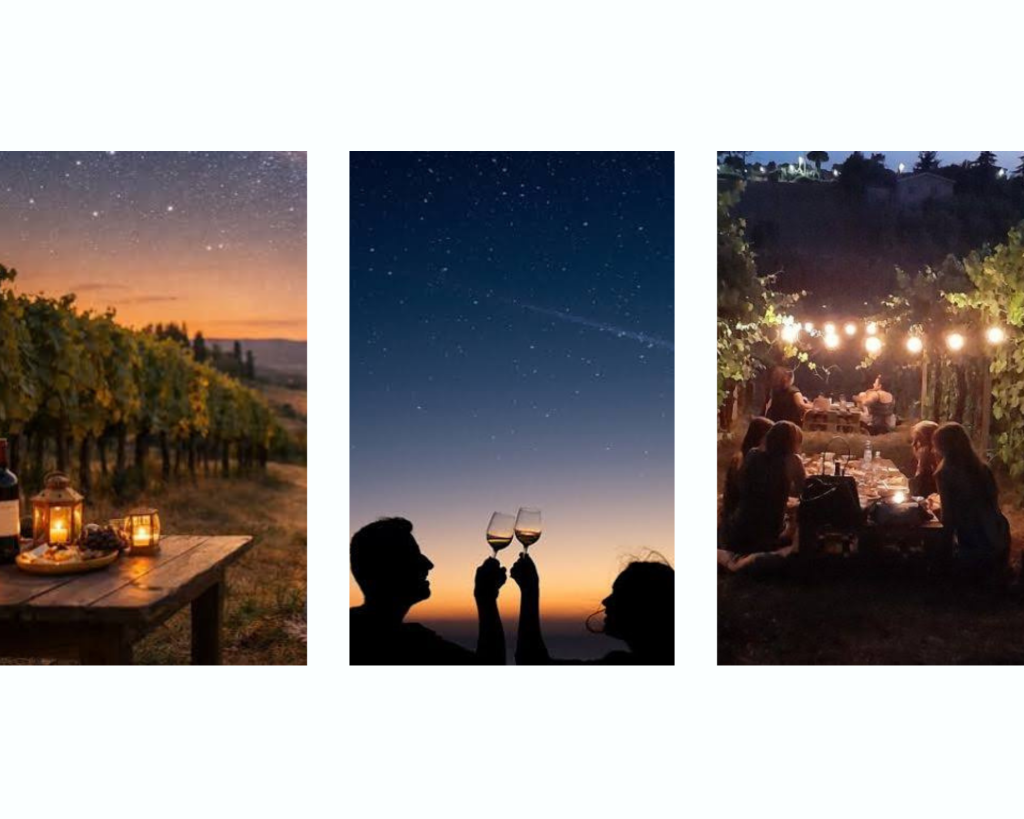
An unforgettable moment unfolded under the stars at Il Picciolo Golf Resort, where producers, international guests, Management and Jury of the Concours Mondial de Bruxelles all gathered for an evening that celebrated the unity of Etna’s wine community. Local culinary artistry met expressive volcanic wines in a setting illuminated by the night sky and framed by the silhouette of the volcano.

Vineyard and Winery Visits: The Contrade of Etna

The following two days were dedicated to immersive vineyard and winery visits across Etna’s diverse contrade. From centuries-old ungrafted vines to new high-altitude plantings, these excursions revealed the geological and cultural mosaic underpinning Etna’s viticultural identity.

Producers highlighted the challenges of working in such a dynamic environment, ranging from steep slopes to unpredictable volcanic activity, while showcasing innovations in organic farming and micro-vinification. The result was a living laboratory of sustainability, where past and future meet in every glass.

Wineries visited: Benanti, Terra Costantino, Verderame, Terrazze dell’Etna, Bugia Nen, and Murgo.

Etna’s Role as a Global Model

Salvatore Barbagallo, Councillor for Agriculture of the Sicilian Region, described Etna as “a natural laboratory of sustainability and biodiversity.” This year’s event demonstrated how Etna’s producers are redefining quality through ecological awareness and territorial integrity. The initiative, partially supported by the Sicilian Regional Department of Agriculture, illustrated the power of collaboration in promoting regional excellence on an international scale.

Consorzio Director Maurizio Lunetta concluded: “We are recording significant numbers that confirm the international stature of the denomination. The goal for the future is to grow with an integrated vision that goes beyond winemaking, involving hospitality, gastronomy, and typical products.”

Looking Forward To 2026

Looking ahead to Etna Days 2026, the event is poised to further strengthen Etna’s international reputation. The region’s story of resilience, beauty, and innovation continues to unfold, rooted in one of the world’s most remarkable volcanic terroirs.

Assouline Releases Wine & Travel United States of America – A Strategic Lens on American Wine Tourism and Cultural Branding

I’m thrilled to receive a copy of Assouline’s Wine & Travel United States of America – fresh off the press!

With a quick overview, this latest publication from Assouline offers a timely exploration of the American wine industry through the dual lenses of culture and tourism. Authored by Enrico Bernardo, World’s Best Sommelier (2004), the book reveals how America’s wine regions are shaping both consumer tastes and the nation’s global identity for premium wine tourism, presenting these regions not only as destinations but also as cultural expressions of land, climate, and community.

Bernardo takes readers from California’s Santa Barbara, where Rhône varietals thrive in the Pacific breeze, to Oregon’s Willamette Valley, globally recognized for its refined Pinot Noir. Along the way, he highlights the distinct terroirs of Washington’s Walla Walla Valley, the pioneering sustainability of Sonoma and Mendocino, and the charm of New York’s Finger Lakes. Each chapter underscores how geography, climate, and human vision intersect to create wines that reflect a nation’s spirit of innovation and tradition.

Beyond viticulture, Wine & Travel: USA celebrates the art of hospitality and the culinary traditions that define American wine culture. From Michelin-starred dining in Napa to the approachable tasting rooms of emerging regions, Bernardo further illustrates how wine tourism is a key driver of regional economies and as a catalyst for cross-sector growth in gastronomy, hospitality, and cultural heritage.

A celebrated figure in gastronomy, Bernardo was named Best Sommelier in the World in 2004. His career includes helming Michelin-starred restaurants, global consulting, and authoring seminal works such as The Impossible Collection of Wine and The Impossible Collection of Champagne. With Wine & Travel: USA, he offers both oenophiles and travelers an immersive journey across vineyards, valleys, and coastlines, positioning American wine as a cultural treasure on the world stage.

For wine tourism professionals, the publication reinforces the importance of storytelling, hospitality innovation, and sustainability in strengthening regional identity. It provides not only inspiration but also strategic insight into how American wine destinations can continue to expand market share and cultural resonance on the global stage.

I’m looking forward to digging in and reading this thoughtful study of how American wine regions are redefining global wine tourism!

Great Wine Capitals 2026 Best of Wine Tourism Regional Awards Announces Napa Valley Winners

The regional Napa Valley delegation for the Great Wine Capitals, which includes the County of Napa, Napa Valley Vintners, and Visit Napa Valley, has announced the winners of the 2026 Best of Wine Tourism Regional Awards.

The annual Great Wine Capitals Best of Wine Tourism Awards celebrate innovation and excellence in wine tourism across the world’s leading wine regions. Napa Valley is among 11 global regions recognized internationally by the Great Wine Capitals Network for delivering exceptional wine tourism experiences.

Tourism and hospitality businesses in Napa Valley were invited to self-nominate in one of seven categories during August. Submissions were reviewed and winners selected by a judging panel that included representatives from the County of Napa, Napa Valley Vintners, and Visit Napa Valley.

The Great Wine Capitals 2026 Best of Wine Tourism Regional Award winners, by category, are:

  • Accommodation –  The George
  • Architecture & Landscapes – Cuvaison Winery
  • Art & Culture – Boisset Collection 
  • Innovative Wine Tourism Experiences – Sterling Vineyards 
  • Sustainable Wine Tourism Practices – CHANDON 
  • Culinary Experiences – Clif Family Winery 
  • Wine Tourism Services – Festival Napa Valley 

Last year’s (2025) Napa Valley Regional Award winners included: Dr. Wilkinson’s Backyard Resort & Mineral Springs (Accommodation), Signorello Estate (Architecture & Landscapes),  Rail Arts District (RAD) Napa (Art & Culture), Olabisi Winery (Vine Trail Adventures)  (Innovative Wine Tourism Experiences), Pine Ridge Vineyards (Sustainable Wine Tourism Practices), Oxbow Public Market (Culinary Experiences), Napa Valley Wine Train (Wine Tourism Services). Napa Valley Wine Train went on to receive global recognition as the 2025 Global Winner in the  Wine Tourism Services category.

In addition to being recognized in front of an audience of industry peers, the 2026 regional award winners are now in consideration for the Global Best of Wine Tourism Awards. Global winners will be announced at the Great Wine Capitals Annual General Meeting held in Bordeaux, France, in November 2025.

For further information, visit: https://www.visitnapavalley.com/blog/post/2026-best-of-wine-tourism-award-winners/

European Wine Tourism Index 2025: Ranking Europe’s Leading Wine Destinations

Wine tourism represents one of the fastest-growing segments of global cultural and experiential travel. According to a recent survey by TUI Musement, more than 91% of respondents expressed interest in wine-related travel, with the highest engagement among travellers aged 18 to 44. Responding to this demand, and coinciding with Europe’s harvest season, TUI Musement has introduced the inaugural “European Wine Tourism Index 2025,” the first data-driven ranking of Europe’s most attractive destinations for wine tourism.

Unlike perception-based surveys, the Index employs quantitative data and official registries to assess both viticultural heritage and tourism potential. By combining traditional measures of production with indicators of cultural recognition and international prestige, the Index provides a comparative framework for understanding the evolving dynamics of Europe’s wine tourism map.

Methodology

The Index evaluates European Union member states (with a minimum vineyard area of 500 hectares) across five weighted categories:

Vineyard surface area (20%)

Vineyard land dedicated to PDO and PGI wines (30%)

Number of registered PDO/PGI wines (20%)

Total wine production volume (10%)

International awards received (20%)

Data sources include Eurostat, the International Organisation of Vine and Wine (OIV), official EU registries, and the Decanter World Wine Awards 2025. Scores were calculated using a weighted average, providing an objective reflection of both wine heritage and global recognition.

The Results – Europe’s Top 10 Wine-Producing Countries

  1. France (Score: 85.2/100)

France secures first place with unparalleled prestige, the highest number of international awards, and a vast network of PDO regions.

Key regions: Bordeaux, Burgundy, Champagne

Highlights: Bordeaux’s château tours, Burgundy’s 1,000+ climats (vineyard plots) inscribed by UNESCO, Champagne’s historic underground cellars.

Experiences: Private vintage tastings, vineyard drives through Bordeaux in classic cars, cellar tours beneath Épernay’s Avenue de Champagne.

  1. Italy

Italy ranks second as Europe’s largest wine producer and the continent’s leader in PDO/PGI registrations.

Key regions: Tuscany, Piedmont, Veneto

Highlights: Tuscany’s Chianti and Brunello di Montalcino; Piedmont’s UNESCO-listed Langhe-Roero vineyards; Veneto’s iconic Prosecco hills.

Experiences: Chianti tasting with artisanal oils and balsamic vinegar, Prosecco tours in Veneto, vineyard walks in Monferrato.

  1. Spain

Spain, home to the largest vineyard area in Europe (909,367 hectares), ranks third, with 97% dedicated to PDO/PGI wines.

Key regions: La Rioja, Ribera del Duero, Rías Baixas, Jerez

Highlights: Ribera del Duero’s bold reds, volcanic viticulture in Lanzarote’s La Geria, and cava production in Penedès.

Experiences: La Rioja winery tours, sherry tasting in Jerez, vineyard hikes across volcanic landscapes.

  1. Portugal

Portugal earns fourth place through its internationally awarded wines and unique terroirs.

Key regions: Douro Valley, Alentejo, Vinho Verde

Highlights: UNESCO-listed Douro terraces, Alentejo’s bold red wines, crisp whites of Vinho Verde.

Experiences: River cruises with quinta tastings, traditional Algarve wine trails, and immersive tours of fortified Port cellars.

  1. Greece

Greece combines millennia-old heritage with an extraordinary diversity of indigenous grape varieties.

Key regions: Macedonia, Peloponnese, Santorini

Highlights: Assyrtiko from Santorini’s volcanic soils, Agiorgitiko from Nemea, and Xinómavro from northern Macedonia.

Experiences: Sunset tastings in Santorini, Peloponnesian winery tours, Crete’s wine-and-food pairings.

  1. Germany

Germany places sixth, globally celebrated for its Rieslings and scenic river-valley vineyards.

Key regions: Mosel, Rheingau, Pfalz

Highlights: Steep Mosel slopes, Rheingau’s historic Spätlese birthplace, Palatinate’s iconic Bad Dürkheim wine barrel.

Experiences: Vineyard cycling tours, river cruises with Riesling tastings, heritage wine festivals.

  1. Romania

Romania ranks seventh, drawing on deep winemaking traditions dating to antiquity.

Key regions: Transylvania, Muntenia (Dealu Mare), Dobrogea

Highlights: Fetească varietals of Transylvania, powerful reds from Dealu Mare (“Romania’s Tuscany”), and sweet wines from Dobrogea.

Experiences: Castle-linked vineyard visits, Black Sea coastal tastings, immersive food-and-wine tours from Bucharest.

  1. Hungary

Hungary, in eighth place, is synonymous with sweet wines of global renown and increasingly recognized reds.

Key regions: Tokaj, Eger, Villány

Highlights: Tokaji Aszú (UNESCO World Heritage), Eger’s “Bull’s Blood” (Bikavér), Villány’s full-bodied reds.

Experiences: Cellar visits in Tokaj, historic vineyard tours, and urban wine tastings in Budapest.

  1. Austria

Austria’s 46,000 hectares of PDO vineyards demonstrate exceptional quality control.

Key regions: Wachau Valley, Burgenland, Vienna

Highlights: Wachau’s UNESCO terraced landscapes, Grüner Veltliner and Riesling, and Vienna as Europe’s only capital city with significant vineyards.

Experiences: Danube wine cruises, half-day vineyard tours from Vienna, Burgenland’s botrytized dessert wines.

  1. Bulgaria

Bulgaria completes the top 10 with a wine history dating to ancient Thrace.

Key regions: Thracian Valley, Struma Valley, Danube Plain

Highlights: Mavrud-based reds, Mediterranean-influenced wines of Struma, and fresh Danubian whites.

Experiences: Vineyard tours of Nessebar, tastings in the Thracian Valley, and Black Sea wine routes.

The inaugural European Wine Tourism Index 2025 reaffirms Europe’s enduring role as the global centre of wine tourism. While traditional powers such as France, Italy, and Spain remain dominant, the emergence of destinations like Romania, Hungary, Austria, and Bulgaria signals an expanding and diversifying wine tourism map.

This Index provides both travellers and industry stakeholders with an authoritative framework for understanding Europe’s viticultural landscape, linking heritage with tourism potential, and mapping future opportunities for sustainable growth.

Rediscovering Sulcis, Sardinia – From Vineyard to Sea along the Cammino Minerario di Santa Barbara and through the Lands of Carignano

In the far southwest of Sardinia, the second-largest island in the Mediterranean, travellers can now embark on the Cammino Minerario di Santa Barbara (CMSB), a 500-kilometre trail divided into 30 stages. Just 70 kilometres from Cagliari, the regional capital with its international airport, the route links the main towns of the Sulcis region, including Iglesias, Carbonia, Sant’Antioco, and Sant’Anna Arresi.

Walkers, often referred to as “pilgrims,” retrace the paths once taken by miners, shepherds, fishermen, and farmers. Alongside ancient mines and vineyards, the trail also reveals some of Sardinia’s most striking beaches, where long sandy stretches meet crystal-clear waters. Blending history, spirituality, and nature, the Cammino Minerario di Santa Barbara offers insight into Sulcis, one of the island’s most authentic and multifaceted territories.

An Early Test Walk

In September, with a small group of colleagues, we had the privilege of experiencing this trail almost as a preview. What struck us most was the remarkable balance of diversity and coherence. Tourism projects often promise variety but seldom deliver it with such authenticity. Along the Cammino Minerario di Santa Barbara, everything felt naturally connected, from the changing landscapes and historic villages to the local food, ancient mines, and distinctive wines. Each element contributed to a unified, layered sense of place that was both genuine and moving.

What stood out most was the passion of the people behind the project. From museum guides to vineyard workers, from cooperative leaders to volunteers, everyone we met shared a profound connection to their land. Their knowledge, warmth, and pride gave depth to each encounter, transforming the journey into not just an exploration but a human and emotional experience.

From Vineyards to the Sea

The journey began among vineyards overlooking the coast, with an introduction to Carignano del Sulcis and its role in shaping the region’s identity. Tastings and open-air meals revealed the deep bond between wine and territory. Later, quiet paths across Sant’Antioco unfolded into gentle slopes and seascapes, before evenings spent by the harbour with traditional food and local wines.

The next day brought us inland, across rolling hills and historic villages, along trails framed by vineyards and Mediterranean scrub. Lunch featured the symbolic “Pilgrim’s Menu,” tying tradition to hospitality. By evening, the focus shifted to the sea once again at the historic tonnara (tuna fishery) of Portoscuso, founded in the late 1500s. Tuna has long shaped local culture, and here it was paired with Carignano wines—from fresh rosé to complex reds—showcasing the grape’s depth and versatility.

Into the Mines

The journey culminated at the Great Mine of Serbariu, once a hub of coal extraction. Even today, with clean air, normal light, and sound effects muted, stepping inside was a powerful experience. It was easy to imagine the miners’ reality: dust, darkness, deafening noise, and at times tunnels scarcely half a meter high. This moment underscored that Sulcis’s beauty is inseparable from its history of hardship.

The Wine Connection

Carignano, the flagship grape of Sulcis, is demanding in the vineyard. Naturally vigorous and highly productive, it requires careful management to reduce yields. Its slight bitterness, a potential flaw elsewhere, here becomes a signature—integrated, elegant, and defining.

Unique conditions make it possible: sandy soils that allow ungrafted vines, old bush-trained vineyards yielding naturally low harvests, a Mediterranean climate tempered by steady mistral winds, and a late ripening cycle that traditionally stretches into mid-October. These factors create dense, characterful wines that remain contemporary in style.

Carignano del Sulcis, recognized as a DOC since 1977, comes in a range of styles: dry reds, riservas, and passito versions. Rosé is also noteworthy—often deeply colored thanks to the grape’s natural intensity, with marked personality and a savoury edge that makes it highly gastronomic, pairing beautifully with both land and sea dishes.

The Food Connection

Food in Sulcis is equally central to its identity. Despite being an island, meat holds a place of honour: maialetto (suckling pig), in its many variations, is a festive staple. Cheese is just as significant, particularly Sardinia’s distinctive pecorino, known for its intensity, and fresh ricotta, used in both savoury and sweet dishes.

Handmade pasta, often filled, anchors family cooking, while along the coast, tuna and fish define local tradition. Mussels, too, are a point of pride, frequently featured as a specialty of Sulcis. The cuisine also preserves its humbler roots in dishes like fried bread, a clever way to avoid waste. This blend of land and sea, of richness and simplicity, gives Sulcis a gastronomic identity as layered as its landscape—always authentic, always true to tradition.

A Complete Journey

The Cammino Minerario di Santa Barbara is far more than a hike. It’s wine tastings by the sea, Carignano vineyards shaped by the mistral, ungrafted bush vines, archaeological sites, tuna fisheries, nuraghi, medieval churches, and, above all, the proud voices of the people who live here. It’s a journey through hardship and beauty, history and revival—an experience that lingers long after the last step and the final sip.

Filippo Magnani