January 2026 Reset: Top Wine Spas to Start the Year in Balance (Part I)

January is the quiet inhale after the excess of the holiday season. Vineyards lie dormant [depending on the hemisphere] travel slows, and intention replaces indulgence. It’s the moment when wine travellers stop chasing novelty and start seeking meaning, and this is where wine spas come into their own.

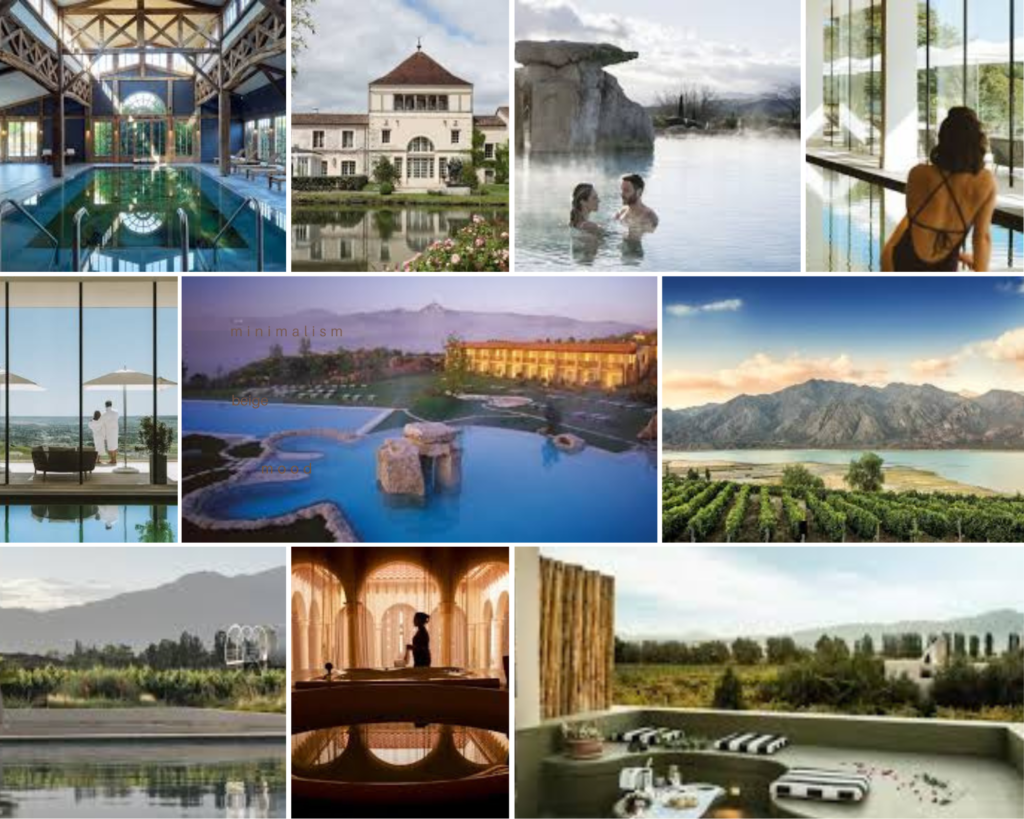
Wine spas sit at the intersection of wellness and terroir. Drawing on vinotherapy, treatments that use grape skins, seeds, vine extracts, and mineral‑rich waters, they offer an experience that is restorative rather than performative. These destinations don’t simply pamper; they recalibrate.

Part One of this two‑part series explores five of the world’s most iconic wine spas, each offering a January escape that blends vineyard culture, spa science, and place‑driven calm.

  1. Les Sources de Caudalie – Bordeaux, France

Why Les Sources de Caudalie leads the category

Often cited as the birthplace of modern vinotherapy, Les Sources de Caudalie is woven into the vineyards of Château Smith Haut Lafitte. Treatments are grounded in rigorous research into grape polyphenols and antioxidants, delivering results without theatrics.

Why winter matters here

Winter in Bordeaux is reflective and restrained. With fewer visitors, tastings become conversations, and spa rituals feel deeply personal.

Recommended January–April
3‑night itinerary

A three‑day stay at Les Sources de Caudalie is designed around gentle immersion. Day one begins with arrival among the vines, followed by a vinotherapy bath and grape‑seed body wrap to unwind after travel. Day two balances wellness and wine culture: a morning facial using grape extracts, a private château tasting in the afternoon, and an elegant dinner paired with Bordeaux crus. Day three is deliberately unhurried, with a final spa ritual, a walk through the winter vineyards, and a relaxed lunch before departure – restored rather than rushed.

Website: https://www.sources-caudalie.com

  1. ADLER Thermae Spa & Relax Resort – Tuscany, Italy

Why it’s exceptional

Set in the Val d’Orcia, ADLER Thermae merges ancient thermal bathing traditions with vineyard‑inspired wellness. The landscape includes rolling hills, stone villages, and winter light – quite magical.

Why go early in the year

Steam rises from outdoor thermal pools as frost settles over the vineyards, creating one of Tuscany’s most cinematic winter moments.

Recommended February–April
3‑night itinerary

At ADLER Thermae, three days unfold at a Tuscan pace. Day one centres on the thermal pools and a grape‑infused massage, best enjoyed outdoors as steam rises against the Val d’Orcia hills. Day two ventures beyond the spa with a guided Brunello di Montalcino tasting, returning for vinotherapy facials and yoga. The final day is reserved for slow rituals – thermal soaking, countryside walks, and a long, unhurried Tuscan lunch that allows body and mind to recalibrate before departure.

Website: https://www.adler-thermae.com

  1. Royal Champagne Hotel & Spa – Champagne, France

Why it belongs on this list

Royal Champagne redefines Champagne tourism through wellness. The spa is contemporary and expansive, with vineyard panoramas that reframe the region beyond celebration.

Why visit early in the year

The region slows dramatically after the holidays, offering intimate cellar visits and uninterrupted spa time.

Recommended January–April
3‑night itinerary

A three‑day escape at Royal Champagne blends restraint with indulgence. Day one begins with the thermal spa circuit and a sunset aperitif, followed by dinner overlooking grand cru vineyards. Day two pairs a private Champagne house visit with a bespoke spa treatment, ending with an elegant dégustation dinner that reframes Champagne as contemplative rather than celebratory. Day three offers a final swim, a leisurely breakfast with vineyard views, and a late checkout—proof that winter in Champagne is as much about calm as sparkle.

Website: https://www.royal-champagne.com

  1. Entre Cielos Wine Hotel & Spa – Mendoza, Argentina

Why Entre Cielos Wine Hotel & Spa stands out

Entre Cielos blends modern design with traditional vinotherapy against the dramatic backdrop of the Andes. Treatments highlight Malbec grape extracts and regional ingredients.

Why this season is ideal

It’s midsummer in the Southern Hemisphere. Vineyards are vibrant, and wellness is paired with energy rather than hibernation.

Recommended January–April
3‑night itinerary

Three days at Entre Cielos capture Mendoza’s energy and elegance. Arrival day includes a grape‑seed scrub and a Malbec‑inspired wine bath to ease into the rhythm of the Andes. Day two explores high‑altitude wineries, followed by a traditional hammam ritual that blends heat, water, and aromatherapy. The final day slows the pace with a vineyard‑view breakfast, light spa treatments, and time to absorb the mountain landscape before departure.

Website: https://www.entrecielos.com

  1. Awasi Mendoza — Argentina

Why Awasi Mendoza is a classic

A Relais & Châteaux property where spa treatments are discreet, personalized, and inseparable from the surrounding vineyards.

Why the early‑year months shine

Warm evenings, private plunge pools, and alfresco dining elevate the sensory experience.

Recommended January–April
3‑night itinerary

A three‑day stay at Cavas Wine Lodge is intimate and deeply personal. Day one begins with an arrival massage and private wine tasting as the Andes glow at dusk. Day two is devoted to vineyard exploration and spa immersion, alternating between Malbec‑focused treatments and long, leisurely meals. The final morning is intentionally quiet – breakfast overlooking the vines, a final soak, and a departure that feels unhurried and complete.

Website: https://www.cavas-wine-lodge.com

These first five wine spas share a seductive commonality: they treat wine not as ornament, but as a tactile, transformative material. The winter months, with their instinct for pared‑back beauty, only heighten their allure. Each destination leans into a kind of quiet luxury – treatments infused with craft, spaces washed in intentional light, and an atmosphere where refinement feels less performed than lived‑in and luminous.

Part Two continues the journey, shifting to Portugal, Spain, Burgundy, and California, where wine spas offer a different expression of wellness shaped by history, architecture, and landscape. Stay tuned!

France Reigns Supreme at the 2025 Decanter Awards, Redefining the Benchmark for World-Class Wine

The results of the 2025 Decanter World Wine Awards, announced last week, reaffirmed France’s preeminent position in the global wine hierarchy. In this year’s competition, France secured an extraordinary 3,200 medals, a remarkable 1,000 more than its closest rival, alongside 14 Best in Show accolades. Notably, the category of Champagne emerged with 27 honours.

Italy, another powerhouse of the wine world, earned 2,204 medals, including six Best in Show distinctions, marking an improvement of 31 top-tier honours compared to its performance in 2024. Meanwhile, Spain amassed 2,025 medals and five Best in Show wins, with its Rioja region gaining special attention. Garnering three Platinum medals and 21 Gold medals, Rioja shines as an ideal destination for wine lovers, a hidden gem for those seeking to explore the richness of Spanish winemaking beyond the bustling tourist centers of Andalusia and Catalonia.

The remainder of the top ten medal-winning nations included Australia, Portugal, South Africa, Argentina, Croatia, Canada, and Chile, a testament to the growing diversity and global reach of the wine industry.

In 2025, the Decanter World Wine Awards once again illuminate the evolving landscape of fine wine, reaffirming France as a timeless beacon of excellence and craftsmanship for wine lovers, connoisseurs and collectors.

For further details: https://tinyurl.com/4smsvh7u

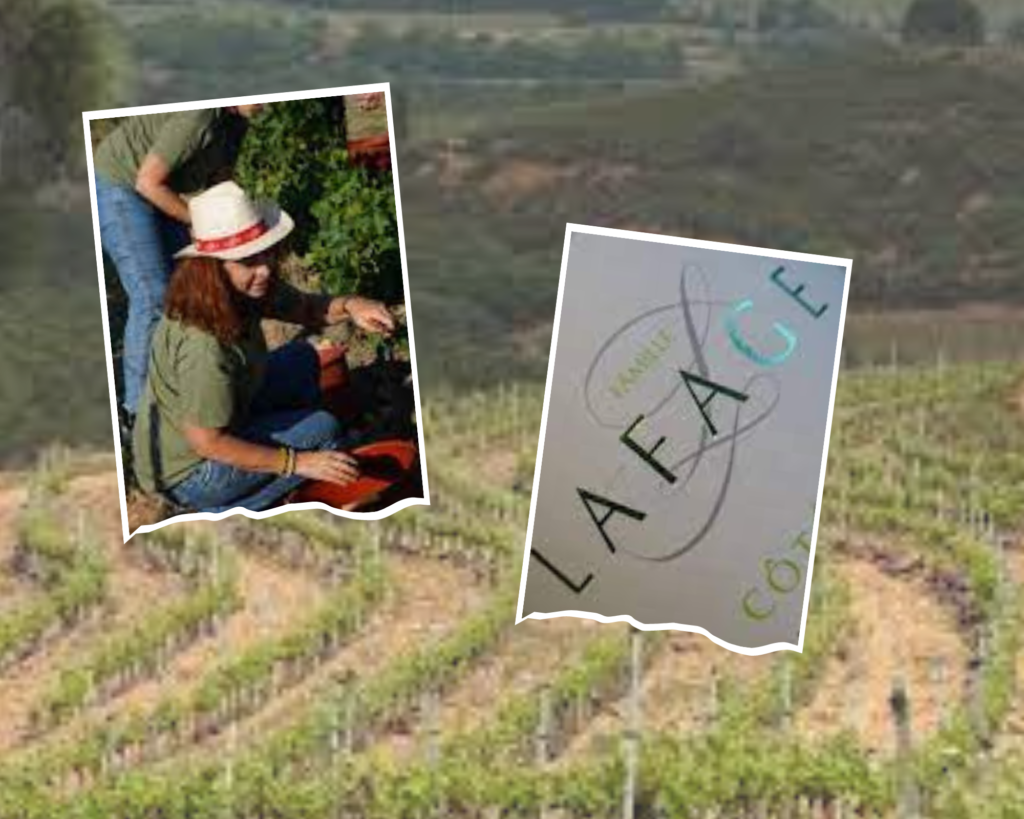
Domaine Lafage (Roussillon) first to start harvest in France

Jean-Marc Lafage, renowned winemaker from Roussillon’s Domaine Lafage, made history as the first producer to start harvesting in France this year. Lafage’s picking season commenced August 2nd in what has been a particularly dry year for the region. Despite the challenges posed by the drought, Jean-Marc remains optimistic about the quality of their harvest.

The first grapes to be harvested were Muscat à Petits Grains – these are used to create a lower-alcohol dry white blend called Miraflors. This blend also includes Macabeo and Colombard grapes, resulting in a wine with an ABV of approximately 10.2%. Lafage describes Miraflors as having a slight fizz, creating a light and refreshing style.

Regarding the growing conditions this year, Lafage notes that Roussillon experienced a severe drought. The region received only a third of its average rainfall over the past 20 years, with Domaine Lafage recording a total of just 200mm for 2023. However, Lafage states that their vineyards near the sea or high in the mountains fared relatively well.

In contrast, vineyards in areas between the coast and mountains, which traditionally produce fortified wines, faced significant challenges. Lafage anticipates losing up to 60% of the crop in these vineyards. But where regenerative viticulture techniques have been applied, such as permanent ground cover and no tilling of the soil, yields are expected to be higher.

Lafage highlights the success they have observed in vineyards practicing regenerative viticulture and utilizing biochar and cover crops. He states, “In these places, instead of losing 60% of the crop [due to desiccation], we are seeing maybe a 25-30% reduction [in yields], and we see fresh grapes and bigger berries.” The presence of a cover crop has resulted in berries that are nearly twice the size compared to other areas, weighing around 0.8-1 grams per berry compared to 0.5g elsewhere. Lafage attributes this difference to the ability of the cover crop and biochar to help the soil retain water.

In terms of quality, Lafage believes that in vineyards where the vines did not suffer excessive heat stress, they may harvest the best grapes they have ever had. Furthermore, these fully ripe berries have achieved lower sugar levels, resulting in an ABV of 12.5% to 13% yet retaining the same flavor as fruit that would typically be harvested at 14-15.5% ABV.

Lafage also notes that their vineyards in Roussillon have been fortunate to not experience mildew, unlike other parts of France such as Gascony and Bordeaux. The constant wind and arid conditions in the area have helped protect the vines.

2023 Concours Mondial de Bruxelles [Rosé Wine Session] Montpellier

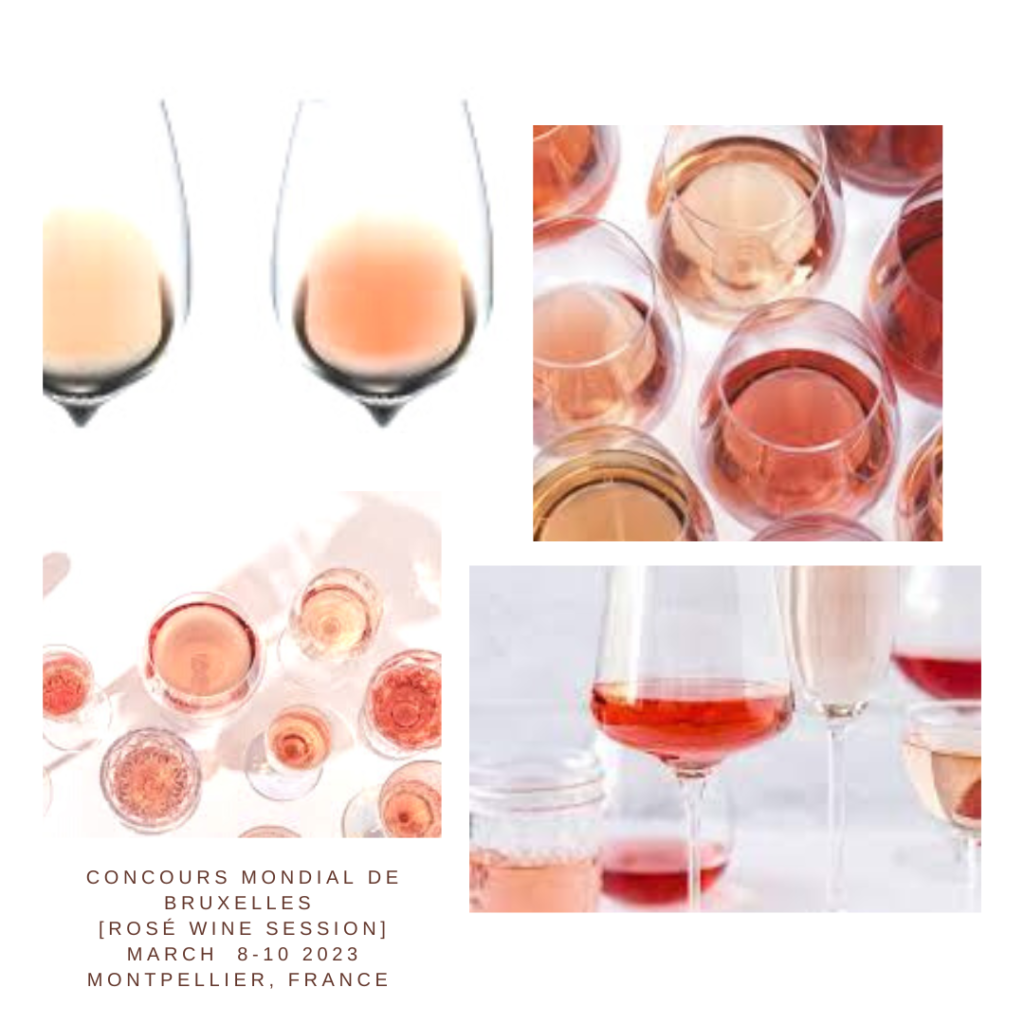
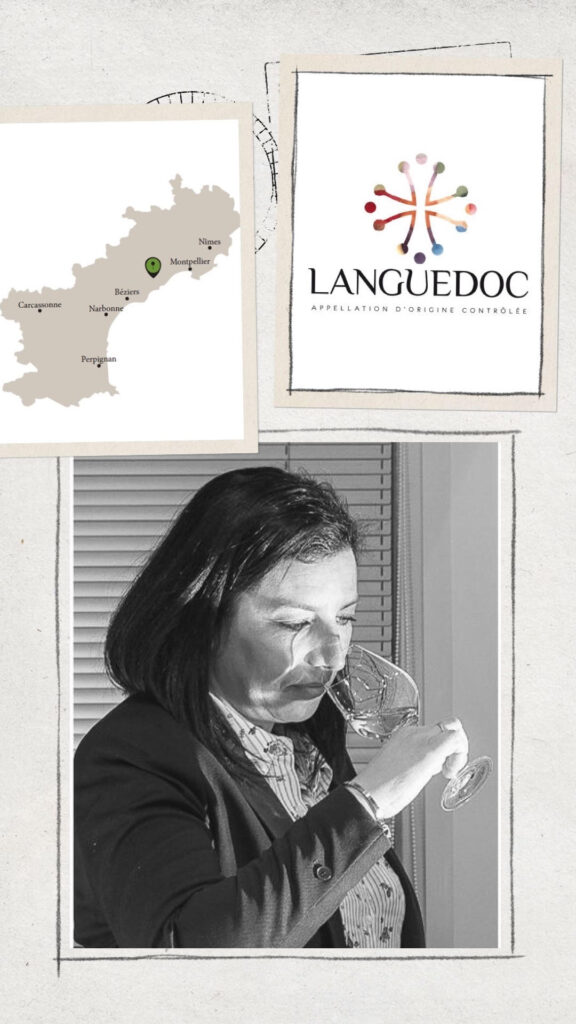
I’m thrilled to be participating in as a judge in the upcoming Concours Mondial de Bruxelles [Rosé Wine Session] in Montpellier, France!

In 2022, over 1,200 wines from 23 countries were entered in the rosé-only session designed for still, sparkling, semi-sparkling and fortified rosé wines.

I’m looking forward to this year’s entries!

Pays d’Oc is the official host of the 2023 Rosé Wine Session.

For 30 years, Pays d’Oc winegrowers have helped ensure the success of varietal wines and awareness of this Protected Geographical Indication, championing its ethics and values. Their creative mindset is expressed through 58 different grape varieties and 120,000 hectares of vineyards set between the mountains and the sea which soak in the many influences of the temperate Mediterranean climate. From the Camargue to the Pyrenees, the sun-drenched wine routes that were once trodden by the Greeks and the Romans 26 centuries ago, are now home to 20,000 Pays d’Oc winegrowers, who farm both independently and as part of co-operatives. With annual production of over 2 million hectolitres of rosé wines, IGP Pays d’Oc is France’s leading GI producer region of rosé.

#rose #rosewine #wine #winetasting #winejudging #Montpellier #travelling #traveldiaries #wineinfluencer #paysdocigp #wine #ros #winelover #winetime #winelovers #winestagram #vino #rose #instawine #wineoclock #winery #roseallday #winelife #vin #sommelier  #wines #provence #pinkwine #wein #drinkpink #wineoftheday #winejudge #wineawards #winetrade

List of Michelin-starred Restaurants in Europe Under 30 Euros

Travel restrictions are FINALLY relaxing across Europe and it’s now time to travel and spoil yourself!  Good News! You can surprisingly dine at a Michelin-starred restaurant without breaking the bank and here is their advice – shift from a dinner reservation to a lunch reservation. Most restaurants offer a menu du jour, or menu of the day at lunch, which is more affordable than the regular tasting menu at dinner.

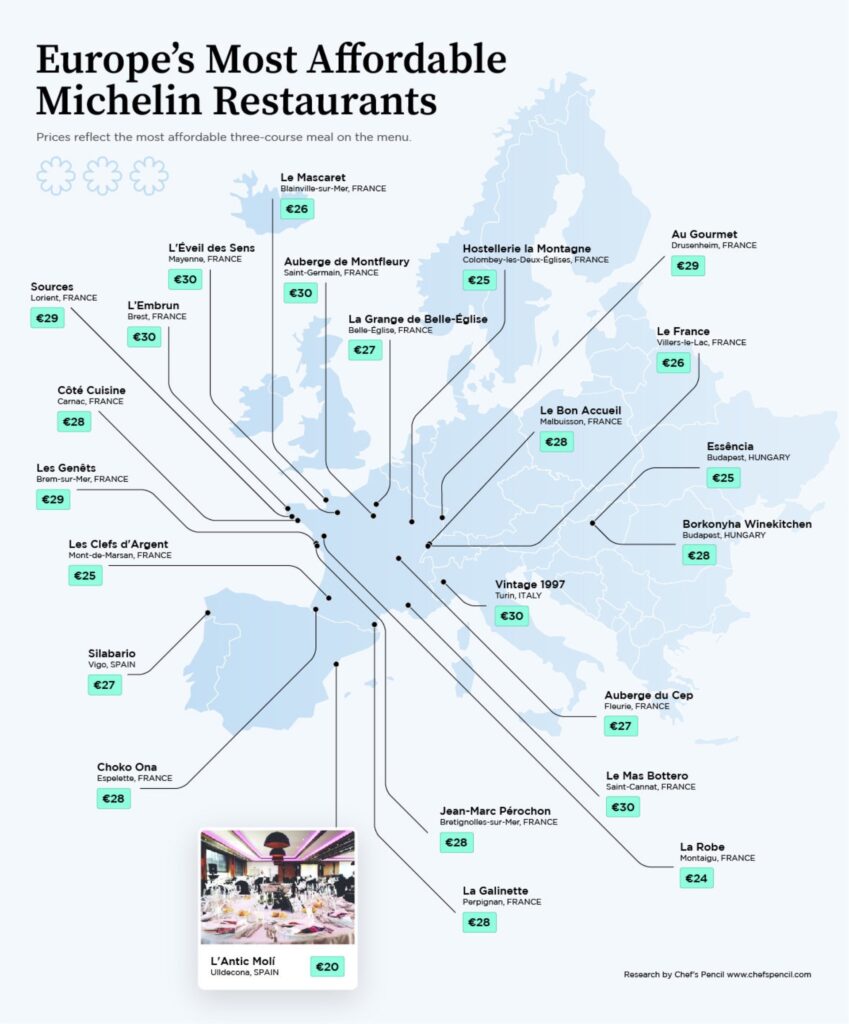
Chef’s Pencil recently featured a map of the top Michelin-starred “most affordable” restaurants in Europe (under 30 Euros) – here is their top 10 for you to try!

  1. L’Antic Molí, Ulldecona, Spain – 20 euros / person

 L’Antic Molí is one of the best restaurants in Spain and is about a two-hour drive south of Barcelona, ​​is the most affordable Michelin-starred restaurant in Europe. Here, surrounded by greenery and with a beautiful panoramic view, you’ll spend 20 /person for a lunch by chef Vicent Guimerà Sales, if you choose to have lunch in the Espai Bistro.

  1. La Robe, Montaigu, France – 24 euros / person

La Robe restaurant in Montaigu, France, is in the Pays de la Loire region. The dining room is spread over two floors. Here you can taste chef Xavier Giraudet’s lunch dishes at affordable prices.

  1. Hostellerie la Montagne, Colombey-les-Deux-Églises, France – 25 euros / person

The Hostellerie la Montagne – a Michelin-star restaurant located in Colombey-les-Deux-Églises in the Haute-Marne department of France’s Grande Est region.  This is the region where the former French president Charles de Gaulle lived (and later buried). This is why the restaurant’s dining room is called A la table du General (at the General’s table). Chef Jean-Baptiste Natali proposes a lunch ‘menu du marché’, a market menu, starting at 25 euros, consisting of an entrée, main course and dessert.

  1. Les Clefs d’Argent, Mont-de-Marsan, France – 25 euros / person

Another French restaurant, Les Clefs d’Argent in Mont-de-Marsan, is located in the southwestern part of the Hexagon. Here, chef Christophe Dupouy offers a menu that interprets the flavours of the territory in a contemporary key, with an exotic spin. A ‘très chic’ address, where you can stop and try ‘Le Menu Retour du Marché’, three dishes prepared according to the produce of the day and Christophe’s inspiration, available only for lunch from Tuesday to Friday.

  1. Essência, Budapest, Hungary – 25 euros / person

Essência can be found in Budapest, and is the restaurant led by the Portuguese-Hungarian couple Tiago and Éva Sabarigo. Guests can savour an original menu that draws on Hungarian and Portuguese cuisine, choosing a “fusion” tasting-menu that combines the two cultures. Among the most convenient options, there is no shortage of proposals for lunch starting from 25 euros / person.

  1. Hotel Restaurant Le France, Villers-le-Lac, France – 26 euros / person

The Hotel Restaurant Le France is in the heart of the Haut-Doubs. Here, chef Hugues Droz tempts you with creative dishes, capable of blending flavours, colours and great technique. All can be savoured in a warm environment, where design meets the territory, including refined details and decorative elements made with local materials.

  1. Le Mascaret, Blainville-sur-Mer, France – 26 euros / person

Le Mascaret is located in the spaces of a former convent for women in Blainville-sur-Mer, a small town in Normandy. The setting is decidedly baroque, but with a modern touch, while the dishes by chef Philippe Hardy are super-creative and well defined. With a ‘la petite table’ formula, at lunch, guests can try a very economical fine-dining experience: at 26 euros / person, the menu includes dishes revisited by the chef with a ‘French touch’, capable of combining tradition and modernity.

  1. Silabario, Vigo, Spain – 27 euros / person

The Silabario restaurant is located in Vigo, in the region of Galicia, in the north-west of Spain. Here, right under an imposing glass dome that houses the headquarters of the Real Club Celta de Vigo football team, chef Alberto González Prelcic prepares a delicious array of dishes with fresh ingredients from the local market at a very affordable price. The menu, at 27 euros / person, is available from Monday – Thursday for lunch and dinner, while only for lunch on Friday.

  1. Auberge du Cep, Fleurie, France – 27 euros / person

Auberge du Cep is located on a famous Burgundy wine route, in the Beaujolais region. The restaurant is led by chef Aurélien Merot, who stands out for iconic dishes with a very French style, mainly focused on jus and sauces. There are several tasting menus to combine with the remarkable selection of regional wines. Try the ‘menu du marché Grille-Midi’ for 27 euros, served every day for lunch, except Saturdays and public holidays (one starter, one main course and one dessert).

  1. La Grange de Belle-Église, Belle-Église, France – 27 euros / person

The Michelin-starred restaurant La Grange de Belle-Église, located in Belle-Église, in northern France, expresses the quintessence of French gastronomic attitude according to Chef’s Pencil. Directed by chef Marc Duval, who offers dishes prepared with high-quality ingredients and a wide selection of Bordeaux wines and champagnes. The menu du marché is served at midday, during the week (except holidays), and offers fresh seasonal produce.


Sources:  Michelin/Chef’s Pencil

#michelin #michelinstar #chef #instachef #wine #winelovers #foodandwine #finedining #gourmet #funsunday #Sunday #travelling #europe #traveldiaries #champagne #burgundy #bordeau #frenchwine #frenchfood #foodie #restaurant #michelinrestaurant #spanishfood #winesofspain #hungarianfood #winesofhungary