FINE 2026: The International Wine Tourism Fair Strengthening Global Collaboration in Valladolid, Spain

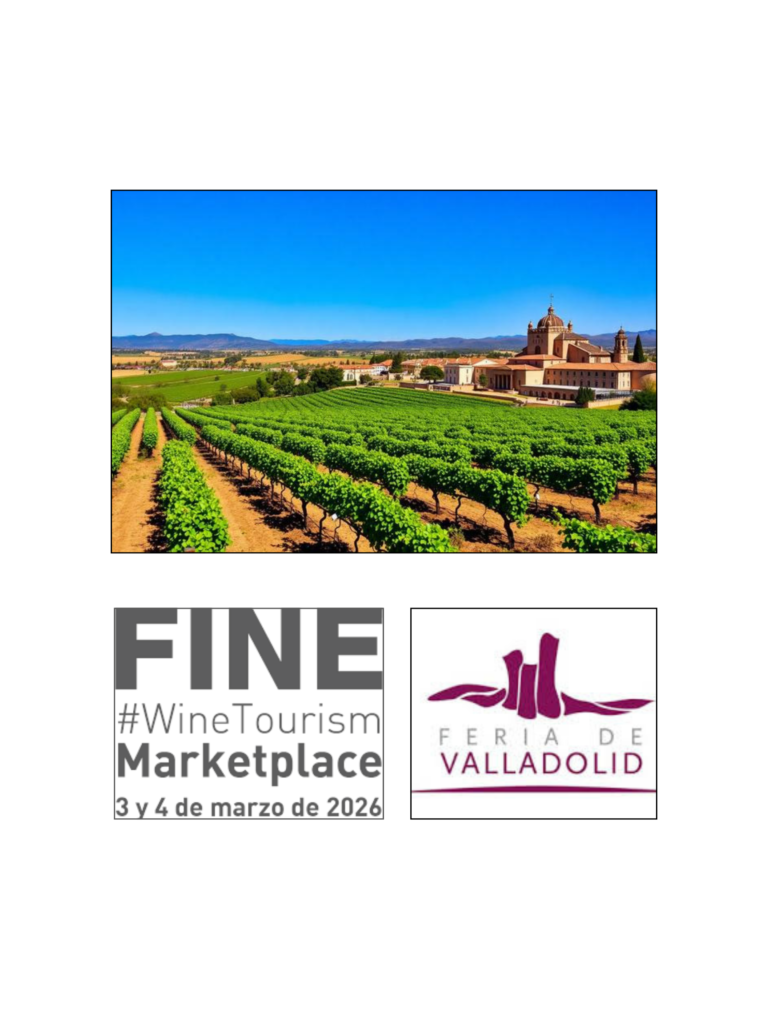
FINE, the International Wine Tourism Fair, will hold its seventh edition March 3-4 in Valladolid, Spain, reaffirming its position as a leading international business platform for wine tourism professionals. The event will convene specialized stakeholders from Europe, Asia, and the Americas, including wineries, hotels, wine routes, tour operators, and destination management organisations, all focused on advancing innovation and collaboration within the wine tourism sector.

Presented during FITUR, FINE was highlighted as a strategic initiative underpinned by strong institutional and industry partnerships. Alberto Alonso, Managing Director of Feria de Valladolid, emphasized the collective commitment of public bodies, private enterprises, and professional organisations to elevating wine tourism on the global stage. Key partners include Turespaña, the Regional Government of Castile and León, Valladolid City Council, the Spanish Wine Federation, the Confederation of Travel Agencies, and prominent wineries such as Abadía Retuerta, Protos, Dehesa de los Canónigos, Ferrer Wines, and Bodegas Alvear.

According to Alonso, FINE functions as a high-impact international marketplace that strengthens Spain’s competitive position in global wine tourism. The consistent success of its six previous editions in Valladolid, alongside its recent Italian debut in Riva del Garda, underscores the robustness and scalability of a model that was among the first to focus exclusively on wine tourism as a professional sector.

One of the notable developments in the 2026 edition is the integration of olive oil tourism, a growing experiential segment that complements wine tourism by intersecting with gastronomy, cultural heritage, landscape, and sustainability. This diversification reflects broader trends toward integrated agri-food tourism experiences.

The supply-side offering at FINE represents the forefront of contemporary wine tourism, featuring destinations and producers from Italy, Portugal, Slovenia, and Spain. New additions include the Ribeira Sacra and Campo de Cariñena wine routes, as well as wineries such as Masaveu, Palacio de Canedo, Pago de los Capellanes, and Pago Altolandón (Cuenca). These join established regions including Catalonia, the Valencian Community, the Basque Country, the Canary Islands, Madrid, Navarre, La Rioja, and Castile and León.

On the demand side, confirmed participation includes tour operators and specialized agencies from Canada, the United States, Mexico, Northern Europe, Brazil, Thailand, Italy, the United Kingdom, Bulgaria, Poland, and Turkey. More than 50 buyers will attend FINE’s contracting marketplace for the first time, with over 2,200 scheduled business meetings expected to take place.

FINE also reflects the diversity of contemporary wine tourism demand, spanning business and incentive travel, leisure tourism, and high-end luxury programmes. This alignment between varied supply profiles and differentiated demand segments reinforces the fair’s role as a catalyst for international market development.

The presentation of FINE 2026 at FITUR was held at both the Turespaña stand and the Castilla y León stand, featuring contributions from Natalia Briales, Head of Cultural Tourism and Content Marketing at Turespaña; Enrique Valero, Managing Director of Abadía Retuerta; and Juan Manuel Guimeráns, Managing Director of Valladolid Tourism.

Overall participation in the official buyer programme is expected to include over 140 wineries, wine routes, and hotels, alongside 100 + tour operators. FINE also remains open to additional travel agencies seeking to integrate wine culture and experiential tourism into their travel offerings.

For further details: www.fine-expo.com

Report: AI Revolutionizes Food and Wine Tourism

AI is fundamentally reshaping how travellers discover, plan, and experience food and wine tourism. This transformation is particularly pronounced among younger generations, as evidenced by findings from the Italian Food and Wine Tourism Report 2025.

This report, published by the Italian Association of Food and Wine Tourism (AITE) and curated by Professor Roberta Garibaldi, highlights AI’s growing role as a core decision-support tool for travellers seeking inspiration, personalization, and efficiency in trip planning. For many younger tourists, AI is no longer perceived as innovative or experimental, but rather as an integral and routine part of travel preparation.

Generational Shifts in AI Adoption

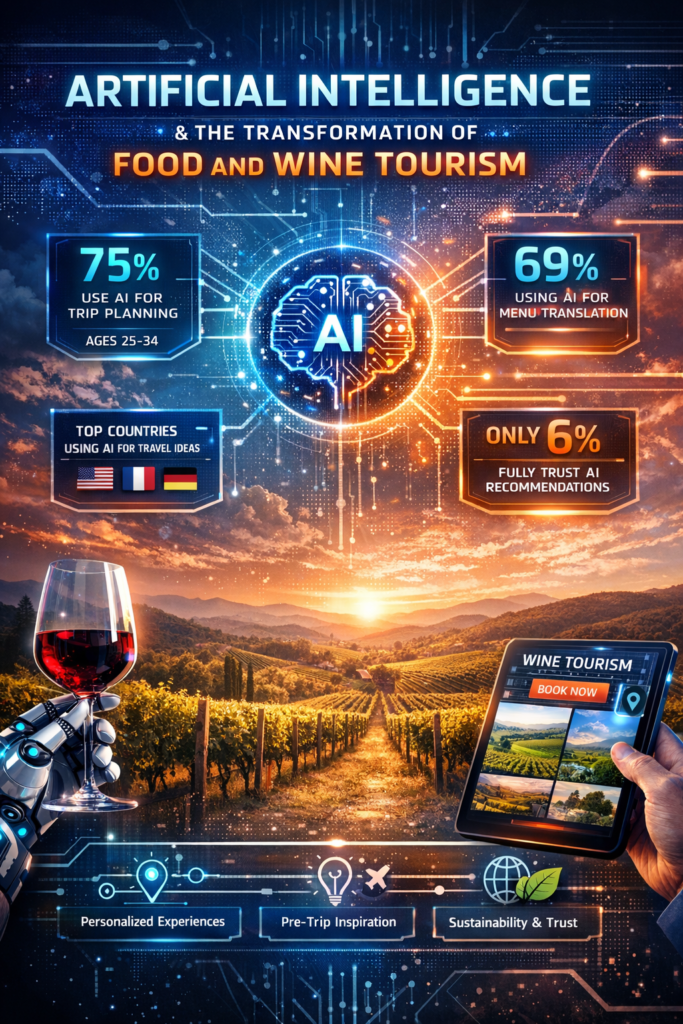
The report reveals a significant generational divide in the use of AI technologies. Seventy-five percent of travellers aged 25–34 report using AI tools to generate ideas for food and wine travel experiences, signaling a decisive shift in how destinations and experiences are discovered. Among this cohort, AI is viewed less as a novelty and more as a natural extension of digital research behaviour.

Primary Applications of AI in Travel Planning

Menu and content translation emerges as the most widespread application of AI, used by 69% of respondents overall and rising to 77% among travellers aged 25–34. This reflects the linguistic complexity of navigating regional cuisines, particularly in destinations such as Italy, where local food culture is deeply rooted in dialect and tradition.

Beyond translation, AI serves multiple planning functions:

60% of travellers use AI to generate inspiration and ideas; and

58% rely on it to search for destinations and accommodation.

These figures are notably higher among younger travellers, who integrate AI more seamlessly into their decision-making processes.

International Variations in AI Usage

AI adoption in food and wine tourism varies significantly across markets. The United States leads in the use of AI for food and wine inspiration, with 21% of travellers reporting active use, followed by France (18%) and Germany (16%). Adoption is comparatively lower in the United Kingdom, Austria, and Switzerland, where usage averages around 13%.

Trust levels follow a similar pattern. American travellers exhibit the highest confidence in AI-driven destination recommendations at 15%, compared with just 10% in Austria and Switzerland. Across all markets, however, AI functions primarily as a source of preliminary inspiration rather than a final authority.

Traditional sources remain dominant, with recommendations from friends and family commanding trust levels between 38% and 50%.

Changing Perceptions of Risk and Rising Expectations

The report notes a marked improvement in attitudes toward AI compared to previous years. Perceived risk is declining, particularly among younger travellers. 29% of individuals aged 18–24 believe the risks of AI outweigh its benefits, compared with 49% among those aged 35–44, suggesting that familiarity and repeated use foster confidence.

Travellers articulate clear expectations for AI-based services:

Ease of use (60%);

Strong data privacy protection (55% overall; 71% among 18–24-year-olds);
and

Accuracy and reliability of information (49%).

Looking ahead, respondents express strong interest in advanced AI functionalities, particularly automatic menu translation (46%) and personalized itinerary creation (36%). Younger and more experienced travellers also value detailed recommendations for food, wine, and beer pairings. Sustainability is an increasingly important factor, with approximately one-third of participants seeking low-impact routes and environmentally responsible experiences.

The Persistent Trust Gap

Despite rising usage, complete trust in AI remains limited. Only 6% of respondents report full confidence in algorithmic recommendations, though trust is higher among high-income and frequent travelers. Awareness of AI’s limitations, such as potential inaccuracies, opaque processes, and algorithmic bias, leads many users to cross-reference AI-generated suggestions with traditional sources, including personal networks and expert reviews.

Future Directions and Strategic Implications

The report identifies three key trajectories shaping the future of AI in food and wine tourism:

Growing demand for seamless and highly personalized experiences;

Increased emphasis on pre-trip inspiration rather than on-site assistance; and

The need to build trust through relevance, authenticity, and demonstrable value.

As AI becomes more deeply integrated into reservation systems and digital platforms, intelligent agents are expected to support customized, on-site experiences. For destinations and tourism operators, success will depend on providing high-quality, transparent data, particularly related to sustainability, local authenticity, and cultural integrity, which will ultimately influence how AI ranks, recommends, and promotes experiences.

As digital technologies continue to evolve, the future of food and wine tourism will be shaped by a dynamic interplay between advanced AI tools and trusted human expertise, redefining how travellers engage with culinary and wine landscapes worldwide.

Enroute to the Vinho Verde Region [Portugal]

Heading northwest to the Vinho Verde region today. This regions spans from the Atlantic coast to the mountainous interior and iis shaped by a cool, wet climate and granitic soils that give rise to wines with distinct freshness and character.
 
Geography and Sub-Regions
Vinho Verde lies within the broader Minho region and borders the Douro Valley and Trás-os-Montes to the East, and the Dão & Lafões region to the South. The region is segmented into nine sub-regions, each contributing its own microclimatic influence and grape-growing identity:


·       Monção and Melgaço
·       Lima
·       Basto
·       Cávado
·       Ave
·       Amarante
·       Baião
·       Sousa
·       Paiva

From coastal vineyards to inland hills, these areas showcase incredible diversity in soil, elevation, and style.

Wine Styles: From Classic to Cutting-Edge
Vinho Verde is traditionally celebrated for its crisp, low-alcohol white wines, often lightly effervescent and youthful in spirit. These wines, especially those made from Alvarinho, Loureiro, and Arinto are the perfect companions for fresh seafood.
Yet today’s Vinho Verde is far from one-dimensional. Winemakers are pushing boundaries, crafting orange wines, pet-nat sparklers, and oak-aged whites that rival more established categories. This evolution reflects the region’s balance of deep-rooted heritage and dynamic innovation.

What’s in a Name?
“Vinho Verde” translates to “green wine,” but the term doesn’t refer to the color, instead, it captures the region’s essence: youthful, vibrant, and fresh. It’s a style that’s alive with acidity and minerality, echoing the region’s verdant landscape and Atlantic breezes.

Champagne Telmont Debuts the World’s First Ultra-Lightweight Standard Champagne Bottle

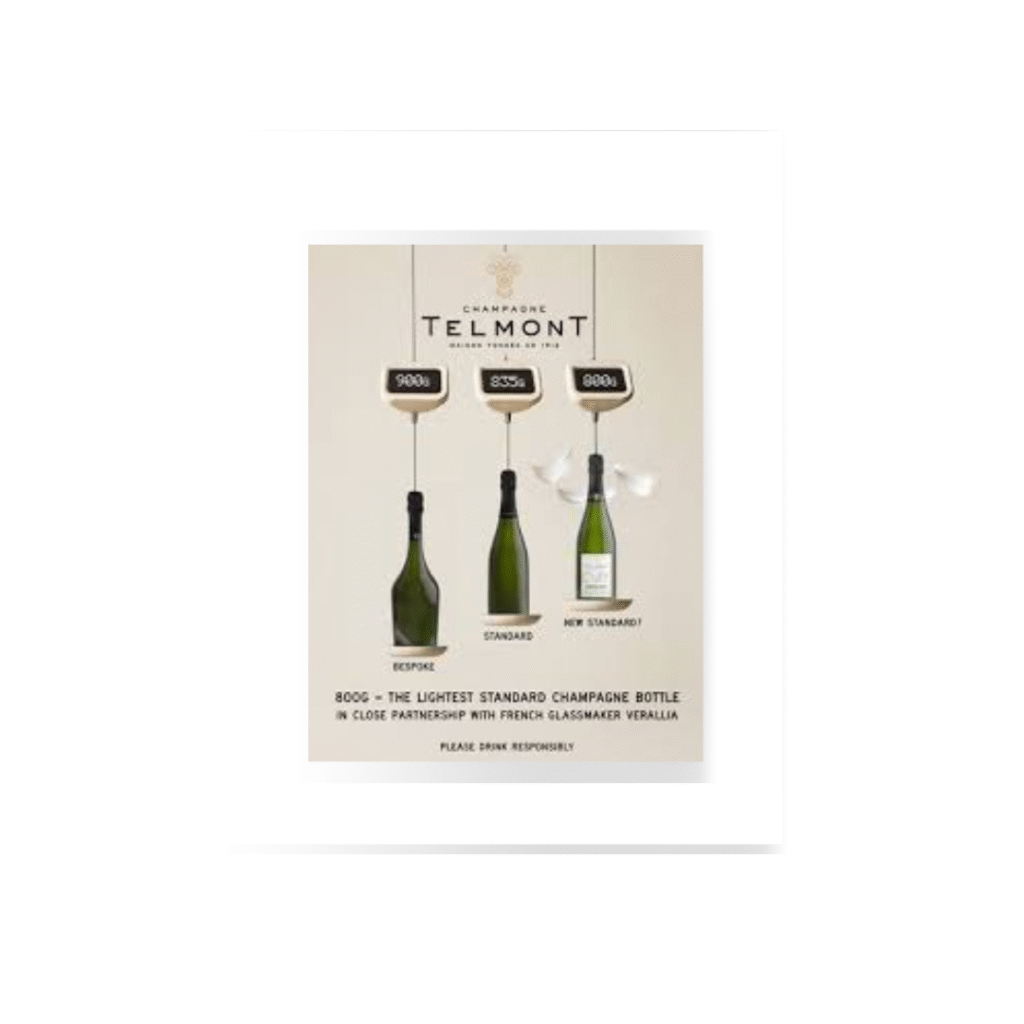
This Earth Day, Champagne Telmont introduced the world’s first ultra-lightweight standard champagne bottle to the U.S. market. Weighing 800 grams (1.76 pounds), this bottle’s debut with Champagne Telmont’s Réserve Brut marks a major milestone in sustainable winemaking, reducing carbon emissions by 4% per bottle and challenging long-held industry conventions.

Bottle manufacturing accounts for nearly 30% of Champagne’s carbon footprint. For over two decades, the standard bottle weight remained unchanged at 835 grams, with lighter alternatives dismissed as unviable due to the pressure requirements of champagne-making. But Telmont, driven by its In the Name of Mother Nature mission, challenged industry norms. After years of rigorous research and testing, the Maison vetted an eco-conscious bottle without compromising strength or elegance.

Developed in partnership with French glassmaker Verallia, Telmont co-developed a significantly lighter bottle while maintaining Champagne’s essential pressure resistance and refined aesthetic. This innovation requires no modifications to production processes or existing manufacturing equipment, ensuring seamless adoption across the industry.

“Creativity and innovation must go hand in hand with responsibility. By adopting this ultralightweight bottle, we aim to redefine industry standards and contribute to a more sustainable future for Champagne,” says Ludovic du Plessis, President of Champagne Telmont. “We aim with this new bottle to set a new standard for Champagne, in the name of Mother Nature.”

Telmont’s innovation could eliminate 8,000 tons of CO2 emissions annually if adopted industry-wide. This innovation is not subject to any exclusivity, ensuring that it benefits as many people as possible. There are no barriers to its immediate and widespread adoption across the entire Champagne region as a new standard for the appellation.

Telmont began producing the 800g bottles in 2022 with an initial run of 3,000 bottles. Following the required three-year aging process, these bottles are now arriving in the U.S. market. In 2023, production scaled to 30,000 bottles, followed by 220,000 bottles in 2024 and from 2025 on 100% of Telmont bottles will be produced at this new, lighter weight.

Champagne Telmont’s Réserve Brut will be rolling out in the 800-gram bottle through select in-person retailers and on Champagne Telmont’s website (HERE) for an SRP of $76.

Miller Family Wine Company (California) Unveils AI-Powered Sommelier Technology

The Miller Family Wine Company recently introduced AI-powered sommelier technology on its website. This advancement underscores the company’s digital vision and solidifies its role as a pioneer in the application of artificial intelligence within the wine industry.

MFWC’s AI Sommelier represents a transformative development, fundamentally altering how consumers browse and purchase wine. Utilizing state-of-the-art autonomous AI-powered agents, the AI Sommelier provides fast, personalized recommendations tailored to individual palates. It delivers detailed tasting notes, comprehensive accolades, and expert reviews directly to users. Available 24/7, this innovative tool offers an unparalleled shopping experience, enabling wine enthusiasts to explore and acquire wines with unprecedented ease and confidence.

“We are thrilled to announce the launch of our AI-powered sommelier—the fastest, most intuitive way to learn and shop for wines,” shares Nicholas Miller, Chief Sales and Marketing Officer at MFWC. “Using advanced technology, the AI Sommelier takes the complexity out of choosing the perfect wine, providing detailed comparisons, reviews, tasting notes, and even pairing suggestions so everyone can make informed decisions effortlessly—anytime, anywhere. It’s primed to set a new standard for digital wine retail, and we couldn’t be more excited to share this innovative technology with consumers.”

MFWC’s AI Sommelier is available online at www.millerfamilywinecompany.com, accessible via the small icon in the bottom right corner.