Enroute to the Vinho Verde Region [Portugal]

Heading northwest to the Vinho Verde region today. This regions spans from the Atlantic coast to the mountainous interior and iis shaped by a cool, wet climate and granitic soils that give rise to wines with distinct freshness and character.
 
Geography and Sub-Regions
Vinho Verde lies within the broader Minho region and borders the Douro Valley and Trás-os-Montes to the East, and the Dão & Lafões region to the South. The region is segmented into nine sub-regions, each contributing its own microclimatic influence and grape-growing identity:


·       Monção and Melgaço
·       Lima
·       Basto
·       Cávado
·       Ave
·       Amarante
·       Baião
·       Sousa
·       Paiva

From coastal vineyards to inland hills, these areas showcase incredible diversity in soil, elevation, and style.

Wine Styles: From Classic to Cutting-Edge
Vinho Verde is traditionally celebrated for its crisp, low-alcohol white wines, often lightly effervescent and youthful in spirit. These wines, especially those made from Alvarinho, Loureiro, and Arinto are the perfect companions for fresh seafood.
Yet today’s Vinho Verde is far from one-dimensional. Winemakers are pushing boundaries, crafting orange wines, pet-nat sparklers, and oak-aged whites that rival more established categories. This evolution reflects the region’s balance of deep-rooted heritage and dynamic innovation.

What’s in a Name?
“Vinho Verde” translates to “green wine,” but the term doesn’t refer to the color, instead, it captures the region’s essence: youthful, vibrant, and fresh. It’s a style that’s alive with acidity and minerality, echoing the region’s verdant landscape and Atlantic breezes.

Dievole Wine Resort: A Benchmark in Tuscan Wine Tourism Excellence

During my recent visit to Dievole Wine Resort, I conducted an in-depth exploration of the estate’s integrated wine tourism program, encompassing guided vineyard tours, curated gastronomic experiences, and a structured tasting of the estate’s wine portfolio. Here are my findings.

The Dievole Wine Resort exemplifies an exceptional model of integrated wine tourism, where viticulture, gastronomy, and heritage converge in the heart of Tuscany’s Chianti Classico region. Encompassing over 600 hectares of vineyards, olive groves, woods, and gardens, the estate is not merely a destination, but a deeply immersive cultural experience rooted in centuries of winemaking tradition.

At the core of Dievole’s enotourism strategy is its commitment to educating and engaging visitors through meticulously curated experiences. The Dievole Grand Tour offers a comprehensive exploration of the estate’s unique terroir and its state-of-the-art winemaking facilities, including the visually striking circular Fidelio vineyard, cellar tours, and tutored tastings of flagship wines paired with regional specialties. For the oenologically curious, the Novecento Vertical Tasting delivers an analytical lens through which to examine vintage variation and the aging trajectory of Dievole’s iconic Chianti Classico Riserva Novecento, a wine steeped in historical significance and viticultural precision.

Complementing these in-depth offerings is the Classic Wine Tour, which provides a balanced introduction to Dievole’s core wines and acclaimed extra virgin olive oils. This dual focus on wine and oil underscores the estate’s broader philosophy of sustainable and diversified agriculture. These tastings are frequently followed by meals at the Novecento Restaurant, where seasonal Tuscan cuisine is prepared with elegant simplicity and paired with Dievole’s wines in a refined, rustic setting.

A Distinctive Hospitality Offering

Accommodation at Dievole is housed within beautifully restored 18th-century stone buildings. The suites, featuring traditional Tuscan textiles, exposed wooden beams, and terracotta floors, are designed to merge rustic authenticity with modern luxury. Each suite opens to expansive views of the vineyard and surrounding olive groves, reinforcing the immersive nature of the stay.

Mornings begin with a farm-to-table breakfast, showcasing honey harvested on-site, artisanal cheeses, and freshly baked pastries, a tranquil prelude to a day of tastings, exploration, or relaxation by the pool. Evenings are reserved for gastronomic indulgence, with menu highlights such as hand-rolled pici pasta with wild boar ragù and the classic bistecca alla fiorentina.

Winemaking Excellence: Novecento Riserva 2019

Among the estate’s standout wines, the Novecento Chianti Classico Riserva 2019 emerges as a timeless representation of Sangiovese expression. First released in 1990 to commemorate Dievole’s millennium, its history traces back to a lease document dated May 1090; Novecento continues to honour its legacy with each vintage. The 2019 edition, marking its 30th harvest, offers an intricate portrait of the estate’s terroir: balsamic notes, licorice, black cherry, and violet dominate the aromatic profile, supported by firm structure and age-worthy elegance (10–15 years).

Vinified in large, tulip-shaped concrete vats and matured for 24 months in untoasted French oak, the wine balances tradition with innovation. A small percentage of Canaiolo and Colorino complements the Sangiovese core, creating layered complexity and refined restraint. With a limited production of approximately 30,000 bottles, the 2019 vintage exemplifies Dievole’s enduring pursuit of excellence.

Recommended Wines:

  • Novecento Chianti Classico Riserva, 2019
  • Vigna Sessina Chianti Classico Gran Selezione, 2020
  • Catignano Chianti Classico, 2021
  • Casanova Chianti Classico, 2021
  • Chianti Classico Petrignano, 2021
  • Chianti Classico, 2022

Tasting Highlights:
Novecento Riserva 2019

This Chianti Classico Riserva opens with a vibrant bouquet of black cherry, violet, and balsamic, with subtle tobacco notes. On the palate, it shows refined structure with ripe red currant and black cherry layered over hints of leather, anise, with some herbal notes. The oak is well-integrated without overpowering the fruit. With firm yet elegant tannins and a long, mineral-driven finish, this wine offers both immediate appeal and aging potential. A poised and expressive Riserva that captures the essence of Chianti Classico with clarity and finesse.

Score: 94/100
Liz Palmer

Aging potential: 10–15 years

Dievole Wine Resort transcends the conventional winery visit by offering a deeply holistic encounter with Tuscan culture. It is a compelling model of how wine estates can integrate storytelling, sustainability, and sensory engagement into a unified, enriching visitor experience. I found through our curated tastings, vineyard walks, gastronomic immersion, and luxurious Tuscan-style accommodations that Dievole stands as a benchmark for premium wine tourism in the Tuscany region.

Sicilia En Primeur Returns for Its 21st Year: Showcasing the Best of Sicilian Wine

Once again, Sicilia en Primeur returns this year, an esteemed event organized by Assovini Sicilia that annually draws journalists from around the globe to the island. From May 6 to 10, a delegation of 100 journalists representing Italy, various European countries (including France, Poland, Sweden, Germany, and Norway), as well as non-EU nations (such as Canada, the United States, Japan, China, South Korea, Israel, Brazil, and the United Kingdom), will journey through Sicily to explore and document the island’s rich food, wine, and cultural heritage.

It is no coincidence that the claim of the event, now in its 21st edition, is “The Culture of Wine in Sicily: A Thousand-year Story that Looks to the Future”, a slogan that sums up the message that Assovini wants to launch this year.

“Wine, explains Mariangela Cambria, President of Assovini Sicilia, besides being an agricultural or commercial product, is an essential element of universal culture that spans centuries and civilizations. The culture of wine today also translates into a culture of travel. It is a journey that begins in and sets off from the vineyard, from working the land; it goes through an annual cycle and arrives in the glass, in the bottle, and on tables all over the world. Sicilia En Primeur will tell journalists about part of this journey”.

“I’d like to thank the municipal administration of Modica for their hospitality and for having seized this opportunity,” Cambria emphasizes. “Sicilia en Primeur will, in fact, be a showcase for this splendid baroque town that journalists will have the opportunity to get to know, visit and talk about in their articles.”

The event kicks off on May 9th at 9 am with a technical tasting at the Castello dei Conti di Modica along with four talks on current topics, including the tools by which wine can be communicated to new generations, an in-depth look at the new State labels to protect Made in Italy, neuromarketing and consumer psychology, as well as a talk on the numbers of Assovini Sicilia.

At 5:30 p.m., there will also be a conference at the Teatro Garibaldi in Modica about the culture of wine understood as informed and conscious drinking, as promotion of the territory through wine tourism, as protection of the environment through increasingly sustainable good practices. Among the speakers, the Master of Wine, Andrea Lonardi, will talk about the “S Factor: The Uniqueness of the Sicilian Wine Continent”, followed by speeches by Dario Stefàno, president of the Wine and Oil Tourism Centre (Lumsa University), and by Antonello Maruotti, professor of Statistics (Lumsa University) on “The South innovating through events, e-commerce and new hospitality models for wine tourism”. Dr Sara Farnetti, Ph.D in Pathophysiology of Metabolism and Nutrition, will shift the spotlight to “Wine Culture: For Informed and Conscious Consumption.” Finally, Alessio Planeta, President of the SOStain Sicilia Foundation, will speak about “The Sustainable Future of Sicilian Wine.” Luciano Ferraro, vice-director of Corriere della Sera, will chair the conference.

This day will end with the gala dinner organized in collaboration with La Sicilia di Ulisse. This association brings together Sicilian excellence in the hospitality, gastronomy and viticulture sectors. The menu will be in charge of chefs Accursio Craparo of Radici, Vincenzo Candiano of Locanda Don Serafino (1 Michelin star), Giuseppe Causarano and Antonio Colombo of Votavota (1 Michelin star) and Giuseppe Torrisi of Cortile Santo Spirito (1 Michelin star).

“This year, Sicily has been named the 2025 European Gastronomic Region,” says Cambria. “To underline the successful partnership between food and wine at Sicilia en Primeur, the chefs of Sicilia di Ulisse will share their culinary art at the final gala dinner devoted to the producers.”

The event will conclude on Saturday, 10 May, again at the Castello dei Conti, with wine tasting from the 57 producers who are members of Assovini Sicilia and who will present their labels to journalists.

“I would like to thank the Istituto Commercio Estero and our sponsors, without whom this great event would not be possible; an event which has been shining a spotlight on Sicily for 26 years, attracting the attention of the national and international food-and-wine press,” concludes Mariangela Cambria. “Sicilia en Primeur is an eagerly awaited event that in recent years has contributed significantly to consolidating the image of a Sicilian wine-growing continent dedicated to excellence.”

Liz Palmer’s Exclusive Interview with Jamie Williams of Nederburg Wines, SA + Wine Tasting Notes

Jamie Williams’s career in winemaking began a decade ago with an internship in the laboratory and cellar at Die Bergkelder, the home of Fleur du Cap Wines in Stellenbosch. This opportunity followed her graduation with a Bachelor of Science in Molecular Biology and Biotechnology from Stellenbosch University. Her passion for viticulture and oenology deepened in 2016 during a harvest season in Napa, California, where she gained valuable international experience. Williams further honed her skills through multiple harvests across the Stellenbosch District while also working in wine tasting rooms and sales to broaden her industry knowledge. In 2018, her dedication and expertise led to her appointment as assistant winemaker at Nederburg Wines , marking a significant milestone in her professional journey.  Jamie is now Winemaker of White and Rose wines at Nederburg Wines.

Liz Palmer: Which influential women in the wine industry have inspired you throughout your journey?

Jamie Williams: I am very blessed to have worked with mostly women winemakers for the past 10 years! Andrea Freeborough who is the Head of winemaking for Heineken Beverages and Elmarie Botes who was the winemaker at Nederburg Wines when I started at Nederburg as an assistant, and both of whom I still work very closely with, has molded me into the winemaker I am today. Shaina Harding, winemaker at Hunnicutt Wines where I worked at in Napa Valley has shown me how tough women can be when working physically in the cellar and nothing is ever too heavy or difficult to do as a woman in the cellar, working with mostly men.

Liz Palmer: Could you share a particularly memorable experience or achievement in your illustrious career?

Jamie Williams: My most recent achievement winning Gold at the Drinks Business Global Sauvignon blanc Masters for the Nederburg Winemaster’s Sauvignon blanc 2024. Only one of 2 South African Wines to achieve Gold in that category.

Liz Palmer:  Congratulations !!

Liz Palmer: What recent technological innovations have you and your team integrated into your winemaking process?

Jamie Williams: At Nederburg, we have always tried to maintain being a leader in innovative winemaking techniques. My approach this year, however, was taking it back to the past. We played around with some skin contact old vine Chenin Blanc in Amphorae clay pots that we have imported from Italy. On the analytical side we are sending our wines for sensory analysis and benchmarking how we are faring vs our competitors and what the consumer wants. Most of our wines are also vegan and vegetarian-friendly.

Liz Palmer: How do you ensure sustainability and uphold environmental responsibility in your vineyard and winery operations?

Jamie Williams: Nederburg Wines is IPW (Integrated Production of Wines) compliant, meaning we are fully traceable with production integrity of our wines we craft. We have also earned WWF Conservation Champion status, thanks to our water and energy conservation measures. On the farm we have also planted Grenache and Carignan which are drought-resistant varieties to combat climate change. Our delicate and sophisticated Winemaster’s Grenache Carignan Rose is made from these grapes.

Liz Palmer: What are your perspectives on the No and Low Alcohol Wine Revolution, and how has your wine estate adapted to this burgeoning movement?

Jamie Williams: As a winemaker, No and Low alcohol wine is not much used in my vocabulary as there is so much, chemically and sensorially, that alcohol brings to wine and to strip that away makes the wine not as beautiful as what you initially crafted. However, being a mom to currently 2 toddler boys, it is difficult for me to consume a bottle of wine with an alcohol of 13.5% or higher as my boys keep me on my toes. After 2 glasses I am done! This is why I understand the need for lower alcohol wines for enjoyment that will last longer. At Nederburg we have experimented with low alcohol wines in the cellar, but nothing in the bottle.

Liz Palmer: How do you and your team stay abreast of the latest trends and advancements in the wine industry?

Jamie Williams: We do constant benchmark tastings to ensure that we are abreast of our competitors. I also love to attend seminars where suppliers will offer their latest technology and hearing from other winemakers what has worked for them. The South African wine industry is very tight knit!

Liz Palmer: What advice would you offer to young women aspiring to enter the wine industry?

Jamie Williams: Be prepared to face challenges in this male dominated industry. I have been blessed enough to work with mostly women which made it easier for me to delve in, but I still faced challenges. Always work hard and believe in yourself. I have been told by another winemaker whom I looked up to that I will never be a winemaker. Those words just motivated me even more to prove them wrong. Always have God at the center and a good support system at home.

Wine Tasting Notes

Nederburg Heritage Heroes “The Brew Master” 2020

This is a wine of remarkable depth and refinement. Its dark ruby hue sets the stage for a sensory journey, with aromas of ripe blueberries and luscious black cherries intertwined with nuances of tobacco leaf, dark chocolate, with hints of spice. On the palate, the wine reveals a harmonious tannin structure, offering complexity and layers that unfold elegantly with every sip. Its long, enduring finish leaves an indelible impression of sophistication.

Crafted from a masterful blend of Cabernet Sauvignon (64%), Petit Verdot (18%), Cabernet Franc (11%), Merlot (4%), and Malbec (3%), this wine is matured for 29 months in French and American oak, delivering a robust, fruit-forward character. With its powerful presence and rich fruit profile, Nederburg “The Brew Master” is a true expression of excellence.

Liz Palmer
92 Points


“Winemasters” Chardonnay Nederburg 2022

This wine is a testament to Nederburg’s dedication to crafting elegant and expressive wines. This Chardonnay showcases a vibrant and lively character, with aromas of honeyed apples and crisp citrus zest that leap from the glass. On the palate, it reveals a refreshing steely acidity, beautifully balanced by a creamy texture and subtle citrus and apricot. The wine’s texture is both clean and rounded, offering a harmonious interplay of freshness and richness.

Liz Palmer
91 Points

Liz Palmer’s Exclusive Interview with Trailblazer of Argentine Wine Dr. Laura Catena + Wine Tasting Notes

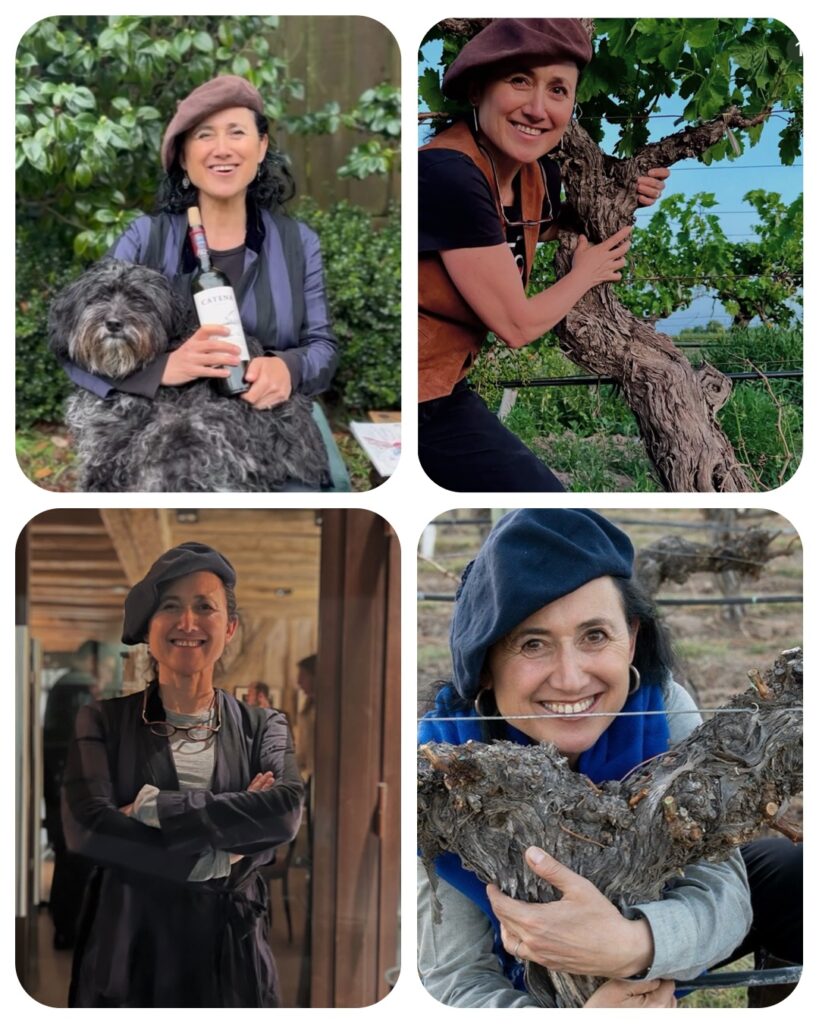
Dr. Laura Catena is widely regarded as a leading figure in the Argentine wine industry, often described as “the face of Argentine wine.” Her contributions to the field are characterized by a profound commitment to advancing knowledge in viticulture, particularly in the domains of high-altitude cultivation, soil microbiome research, and wine ageability.

As a fourth-generation winemaker, Dr. Catena’s academic accolades are as inspiring as her wine expertise. She graduated magna cum laude from Harvard University in 1988 and later achieved her medical degree from Stanford University. Joining her father, Nicolás Catena Zapata—an icon in the wine world—at their family winery in 1995, Laura’s involvement sparked a new chapter of innovation. In 1999, she founded Luca Wines, named after her eldest son, with the goal of exploring the potential of old-vine Malbec in Argentina’s Uco Valley.

Dr. Catena’s scientific approach to winemaking materialized with the establishment of the Catena Institute of Wine in 1995, where her team meticulously examined the Adrianna Vineyard. This high-altitude vineyard, identified by her father as a game-changer for wine quality, is often regarded as one of the most scientifically studied vineyards globally.

In addition to her winemaking ventures, Dr. Catena is the author of Vino Argentino: An Insider’s Guide to the Wines and Wine Country of Argentina. Remarkably, she balanced her work as a pediatric emergency doctor until 2019, when she became managing director of Catena Zapata. Today, her compassion extends beyond wine, as she volunteers her medical expertise at a clinic in San Francisco serving individuals experiencing homelessness.

Liz Palmer: Which influential women in the wine industry have inspired you throughout your journey?

Laura Catena: Jancis Robinson was the first woman in the wine industry to inspire me. Jancis is highly principled and understands the power that she has as an influential journalist to actually make the world a better place.  She has single handedly taken on the cause of lightweight bottles and has been relentless in pushing producers to lower their wine bottle weights.  It’s because of Jancis that Catena joined the SWR – Sustainable Wine Roundtable – and that today we have reduced our overall bottle weight by 41% and that our average bottle weight is 420 grams.

I am influenced daily by the women in my Argentina production and exports teams.  They are super hard working and always looking for creative solutions to problems.  I’ve worked with many of the women at Catena for over two decades and watched them raise families and have successful careers.  I feel that it’s an honor to work with them.

I was once told that it’s important to have older and younger mentors, and I find this to be excellent advice.  I like to surround myself with women of all ages, and to non-stop learn from them.

Liz Palmer: Could you share a particularly memorable experience or achievement in your illustrious career?

Laura Catena: I recently attended a wine and health symposium in Rome as a speaker.  I was invited because I am a medical doctor (I practiced Emergency Medicine in San Francisco for 25 years) and I created a web site – www.indefenseofwine.com – to share science-based information about the potential benefits and harms of alcohol in moderation.  The speakers at the conference were leading medical doctors in the field of wine and health, longevity and Mediterranean Diet which includes wine.  It was such a great honor to attend as a speaker.  I don’t think that my Italian great grandfather who emigrated from Italy to Argentina in 1898 and started our Catena family winery in Argentina in 1902 could have imagined me going back to Italy as a speaker.

Liz Palmer: What recent technological innovations have you and your team integrated into your winemaking process?

Laura Catena: We are doing a lot of work on water preservation, identifying ways to use less water by watering less in the early spring.  This requires many research trials and measurements, but it is exciting to find ways to reduce water usage by 10-30 % which is very significant because there is less ice in the Andean Glaciers due to climate change.  Another innovation is a protocol to study soil before planting.  We are planting in new regions to the north of Mendoza, in the provinces of La Rioja Argentina, Salta and Catamarca.  Every time we plant, we want to make sure to be using the right plant material in each soil type, following the best sun exposure to get the morning sun on the vines and grapes.  We are also working on preserving massale, genetically diverse cuttings of Malbec, Cabernet Sauvignon and Bonarda – this is very exciting because Argentina is the equivalent of a world heritage site for plant diversity because of our history of ungrafted planting by massale selection.

Liz Palmer: How do you ensure sustainability and uphold environmental responsibility in your vineyard and winery operations?

Laura Catena: In 2010 we created Argentina’s first Sustainability Code and worked with Bodegas de Argentina to make it available to all Argentine producers.  Today, we work with other producers to fulfill the code’s objectives, sharing information about best practices in the vineyards, water management and support of the local communities.  Our sustainability code is constantly being improved through the communal efforts of its member wineries.

Liz Palmer: What are your perspectives on the No and Low Alcohol Wine Revolution, and how has your wine estate adapted to this burgeoning movement?

Laura Catena: It is not easy for most people who love wine to drink in moderation.  This is a situation that we face as a species due to the abundance of endorphin-elevating beverages and food that surround us.  It is so easy to eat and drink too much.  I do believe that our industry needs to provide solutions for wine drinkers to moderate, and no/low beverages are a good option.  The beer industry has produced some excellent no alcohol alternatives.  The Catena Institute has worked on no/low wines for the last four years and we are currently launching three kinds of beverages under the brand Domaine EdeM (Domaine Elena de Mendoza) which includes a rose petal-infused dealcoholized sparkling rosé called ROSAE, two botanical infused must and verjus no alcohol sparkling beverages and two 7% alcohol sparkling Chardonnays: Uco Stones and Uco Mineral.

Liz Palmer: How do you and your team stay abreast of the latest trends and advancements in the wine industry?

Laura Catena: The Catena Institute which I founded in 1995 is in constant collaboration with institutions all over the world (UC Davis, University of Burgundy, University of Bordeaux) – with over 30 publications in peer-reviewed journals, we are the most published winery research institute in the world.  The Catena Institute just won the V d’Or Sustainability Award at Vinexposium in Wine Paris.  By collaborating with researchers all over the world, we are able to learn about the latest innovations in wine.  We also attend conferences and symposiums, such as the Conference on Lifestyle, Mediterranean Diet and Wine that I just attended in Rome or the Sustainability in Drinks – SID conference in London.  In 2024 we hosted the 15th International Terroir Congress in Mendoza, Argentina.

Liz Palmer: What advice would you offer to young women aspiring to enter the wine industry?

  • First, take WSET or another wine class.  Wine is complex from a taste and historical/geographic standpoint and it’s important to understand the complexities in wine.  Try to taste a lot of different wines, it takes about three to four years to develop a wine palate.
  • If you are more interested in the technical side find a program that provides a lot of hands-on experience.
  • Take a job doing anything wine related: work at a wine store, wine bar, winery tasting room.
  • Find a few substacks or people to follow on social media – Instagram is what most wine people use
  • Visit as many wineries as possible

“Dr. Laura Catena, A heartfelt “Thank You” for sharing your invaluable insights, exceptional expertise, and unwavering dedication. You are a shining example of dedication, vision, and resilience—a pioneer who continues to elevate Argentine wine while making meaningful contributions to her community” Liz Palmer

Tasting Notes

Catena Zapata Nicasia Vineyard 2021 and
Nicolás Catena Zapata 2021

Catena Zapata Nicasia Vineyard 2021
This remarkable high-altitude Malbec showcases a stunning deep violet hue, offering a visual prelude to its layered character. The aroma unveils an inviting blend of ripe blackberries, plums, and blueberries, delicately enhanced by herbaceous undertones and a touch of warm spice. On the palate, it displays an intricate interplay of flavours, with juicy blueberries and rich cassis complemented by whispers of vanilla and nuanced spice. The finish lingers gracefully, leaving a lasting impression of elegance and refinement.

95 Points
Liz Palmer

Nicolás Catena Zapata 2021
With its inaugural 1997 vintage, Nicolás Catena Zapata became the first luxury cuvée from Argentina to be exported around the world. The wine recreates the “Original Bordeaux Blend” of the 18th and 19th Centuries, when Malbec dominated over Merlot and was in equal standing to Cabernet Sauvignon in the Médoc.

“The label’s striking design is a manifesto, symbolising the transformative journey of Argentinian wine, and for the first time we are using a wax seal to honour the pre-phylloxera origins of our vines”

Varietal: 46% Cabernet Sauvignon, 44% Malbec, 10% Cabernet Franc

This wine displays an intense deep purple hue and immediately draws you in with its expressive character. The aromas are dominated by dark fruits—succulent blackberries, luscious cherries, and ripe plums, accented by subtle touches of vanilla, chocolate, with a hint of minerality. On the palate, it boasts incredible depth, revealing herbal and spicy notes characteristic of Bordeaux varieties, including hints of black pepper and exotic spices. The wine’s concentration is remarkable, supported by a bold tannic structure. The finish is long and persistent, offering a clear indication of the wine’s outstanding potential for long-term aging. An Argentine masterpiece!

97 Points
Liz Palmer