Holiday Indulgence: Curated Champagnes, Wines + Spirits Worth Savouring

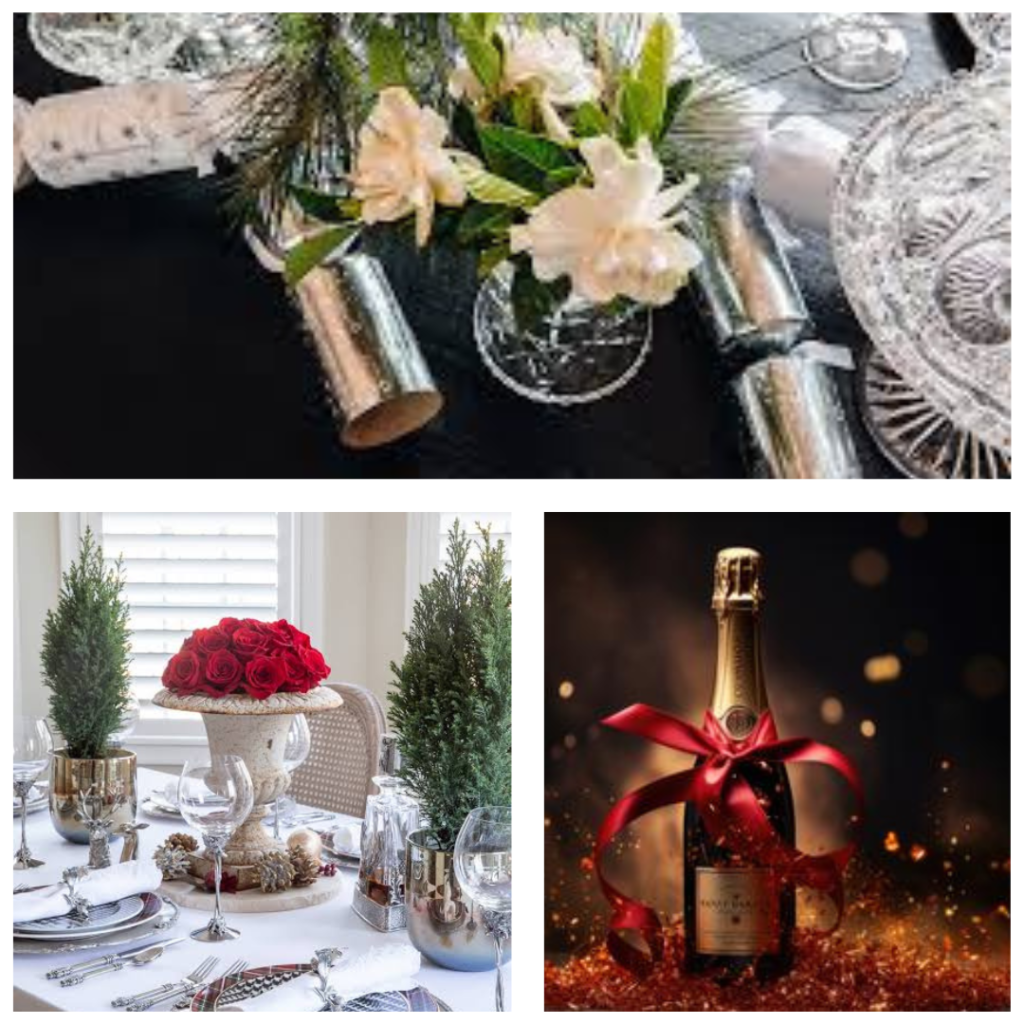
The holidays arrive not simply as a date, but as a shift in rhythm, a soft glow settling over the season, where ritual, elegance, and togetherness take centre stage. It’s the moment when the bottles we open matter just as much as the company we keep, and when craftsmanship becomes part of the celebration.

Starting this week, I’ll be launching an editorial series dedicated to the most compelling champagnes, wines, and spirits of the season. Each bottle is selected for its pedigree, its precision, and the narrative woven through its creation. Think heritage, terroir, and the subtle artistry that defines truly exceptional producers and distillers.

Each instalment will unveil standout labels, complete with tasting notes, pairing inspiration, and glimpses into the wine tourism landscapes that bring these bottles to life. These aren’t mere recommendations; they’re curated experiences, designed to transport, enchant, and elevate your holiday table.

Whether you’re leaning into intimate fireside evenings or hosting gatherings that shimmer long past midnight, this series is crafted to inspire. Follow along for weekly editions that let the season unfold in layers of flavour, culture, and holiday sophistication, making every pour feel like a moment worth savouring.

Liz Palmer

The Michelin Guide Expands Its Expertise in Recommendations and Introduces a New Distinction in the World of Wine

For 125 years, the MICHELIN Guide has celebrated places and talents that embody excellence in gastronomy and hospitality, with the MICHELIN Stars introduced in 1926 and the MICHELIN Keys launched in 2024. This expertise now naturally extends to wine, a key reference in the gastronomic experience. The MICHELIN Guide has long highlighted exceptional wine lists and sommeliers, notably through the ‘wine’ pictogram created in 2004 to distinguish outstanding food and wine pairings. In 2019, the MICHELIN Sommelier Award was introduced to honour professionals whose expertise enhances the guest experience through exemplary mastery of wine selection and service.

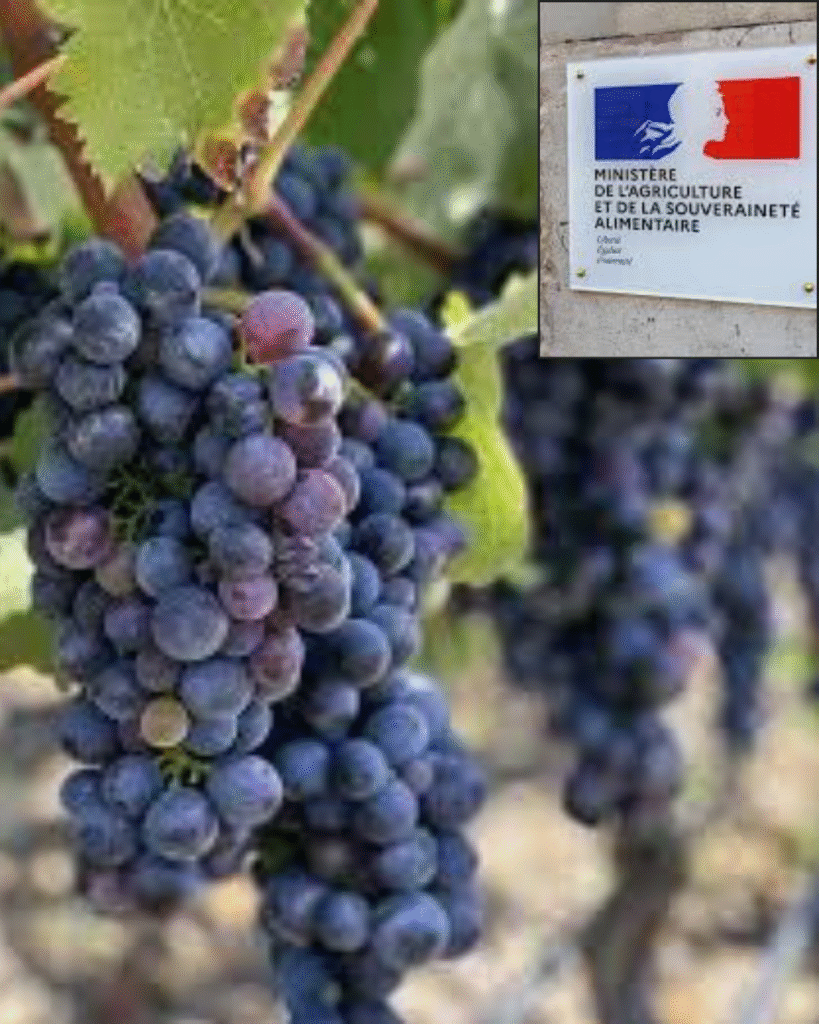
The MICHELIN Grape, MICHELIN Guide’s new distinction, will now spotlight wine estates across different regions of the world. It will assess their overall excellence based on five universal criteria applied consistently.

Gwendal Poullennec, International Director for the MICHELIN Guide, explains:

” After having oriented wine-lovers towards the finest tables in more than 70 destinations and to the world’s most elegant hotels, the MICHELIN Guide is delighted to open a new chapter with the world of wine. This new reference is designed for both the curious amateur and the most ardent expert – it rewards the men and women who are building the most demanding vineyards around the world.” 

The MICHELIN Grapes: a new reference for discovering and showcasing wine-growing talent

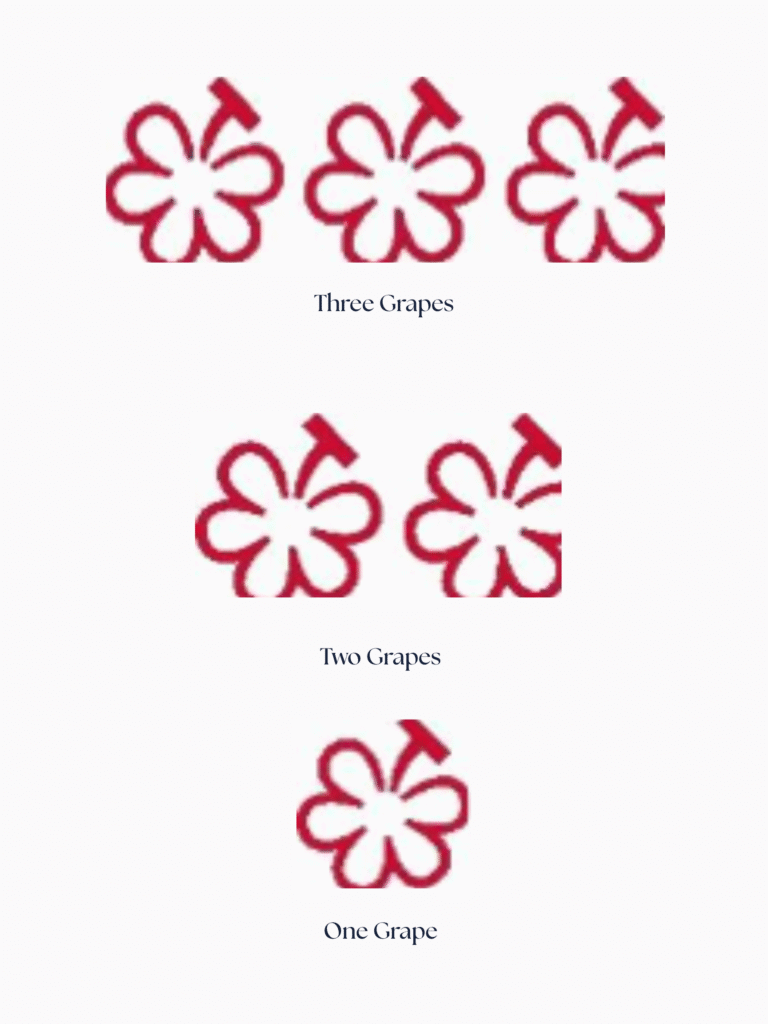
In the world of wine, the MICHELIN Guide rewards not only the vineyards but also the men and women who personify them. With this new distinction, the Guide will be using a strict and independent methodology – it will also provide wine-lovers with a trusted benchmark: Grapes 1, 2 or 3 and, additionally, a selection of recommended vineyards.

  Three Grapes

Exceptional producers. Whatever the vintage, wine lovers can turn to the estate’s creations with complete confidence.

  Two Grapes

Excellent producers who stand out as exceptional within their peer group and region for both quality and consistency.

One Grape

Very good producers who craft wines of character and style, especially in the best vintages.

Selected 

Dependable producers who have been chosen for regular review, producing well-made wines that deliver a quality experience.

Here is the methodology based on 5 criteria: 

For its new distinction, true to its fundamental values of excellence and independence, the MICHELIN Guide applies five criteria uniformly and wherever it may be.

  1. The quality of agronomy
    The assessment evaluates the vitality of the soil, the balance of the vine stocks, as well as the care provided for the vines. All essential factors that directly influence wine quality.
  2. Technical mastery
    The evaluation focuses on the technical skills in the wine-making process. Our inspectors are seeking precise and rigorous wine-making processes producing well-developed wines which reflect the terroir and the vine types, without any distracting flaws.
  3. Identity
    The Guide will highlight winemakers who craft wines that express the personality, the sense of place, and the culture behind them.
  4. Balance
    Evaluation of the harmony between acidity, tannins, oak, alcohol, and sweetness.
  5. Consistency 
    Wines will be evaluated across multiple vintages to ensure unwavering consistency in quality, even in the most challenging years. The Guide celebrates wines that reveal greater depth and excellence as time goes by.

    Expertise at the heart of the assessments 

Future selections will rely on the expertise of dedicated wine inspectors, all professionals employed by the Michelin Group. This team, which makes its recommendations collectively and with complete independence, will bring together seasoned wine specialists and newly recruited inspectors.

All team members have been selected not only based on their qualifications, but also on their ability to assess a vineyard with rigour and integrity. They are all seasoned professionals in the sector, i.e., former sommeliers, specialized critics or production experts, all bringing concrete and in-depth experience of the wine-producing world to the team.

Their assessments follow a rigorous methodology, including a panel review process and editorial supervision.

In 2026, the MICHELIN Grapes adventure will be writing its initial chapter in the heart of two mythical French wine-producing areas: Burgundy and the Bordeaux region

The MICHELIN Grapes project will start with two regions among the most emblematic in the worldwide wine-producing landscape: Burgundy and the region around Bordeaux. A compelling choice, celebrating the diversity, the historical intensity and the cultural richness of wine à la française.

Over the centuries, Bordeaux has established itself as a historic force in the world of wine. Its distinguished vineyards and their reputation go far beyond our borders.  The entire prestigious Bordeaux region is renowned throughout the world for its innovations and its traditions.

Burgundy, for its part, differentiates itself by its approach, deeply rooted in the local heritage. Its human-sized, family-owned vineyards reflect rigorous traditions and care imposed at each stage in the production process. From generation to generation, legacies have curated the local identity and forged the worldwide reputation of Burgundy.

Stay tuned in 2026 for the very first selections of the MICHELIN Grapes.

OIV Releases 2025 World Wine Production First Estimates

The International Organisation of Vine and Wine (OIV) published yesterday its annual first estimates for global wine production in 2025.

The initial forecast for 2025 is between 228 and 235 million hectolitres, with a mid-range estimate of 232 million hectolitres. That is a 3% increase on the historically low 2024 harvest, but still 7% below the 5-year average.

Italy remains the world’s largest wine producer in 2025 (47.3 Mhl), ahead of France  (35.9 Mhl) and Spain (29.4 Mhl). The USA is fourth, while Australia bounces back from the smaller 2024 harvest to regain its place as the world’s fifth producer in 2025, ahead of sixth-placed Argentina, which is the biggest producer in South America.

Despite regional contrasts, the global wine market is likely to remain broadly balanced, as limited production growth will help to stabilize stocks in a context of softening demand and ongoing trade uncertainties.

These first estimates are presented in a new report available on the OIV website (World Wine Production Outlook) and will be updated according to the last 2025 consolidated data. The final data on 2025 global wine production will be announced by the OIV in the second trimester of 2026 and published in the annual OIV report: “State of the World Vine and Wine Sector”.

About the OIV
The International Organisation of Vine and Wine (OIV) The OIV is a scientific and technical intergovernmental organization, and the world reference to the vine and wine sector. The OIV currently has 51 Member States, countries producing and consuming grapes and wine, which account for 90% of the world’s vineyard surface area, 88% of global wine production and 75% of global wine consumption. Twice a year, over 500 experts come together to assess, discuss and approve by consensus resolutions on the following:

1/ Viticulture and table grapes

2/ Oenology and methods of analysis

3/ Law and economics of the vine and wine

4/ Consumer health and safety

For a century, the OIV has been at the forefront of all global vitivinicultural matters, providing standards, guidance and information for the vine and wine sector.

Etna Days 2025: A Landmark Edition

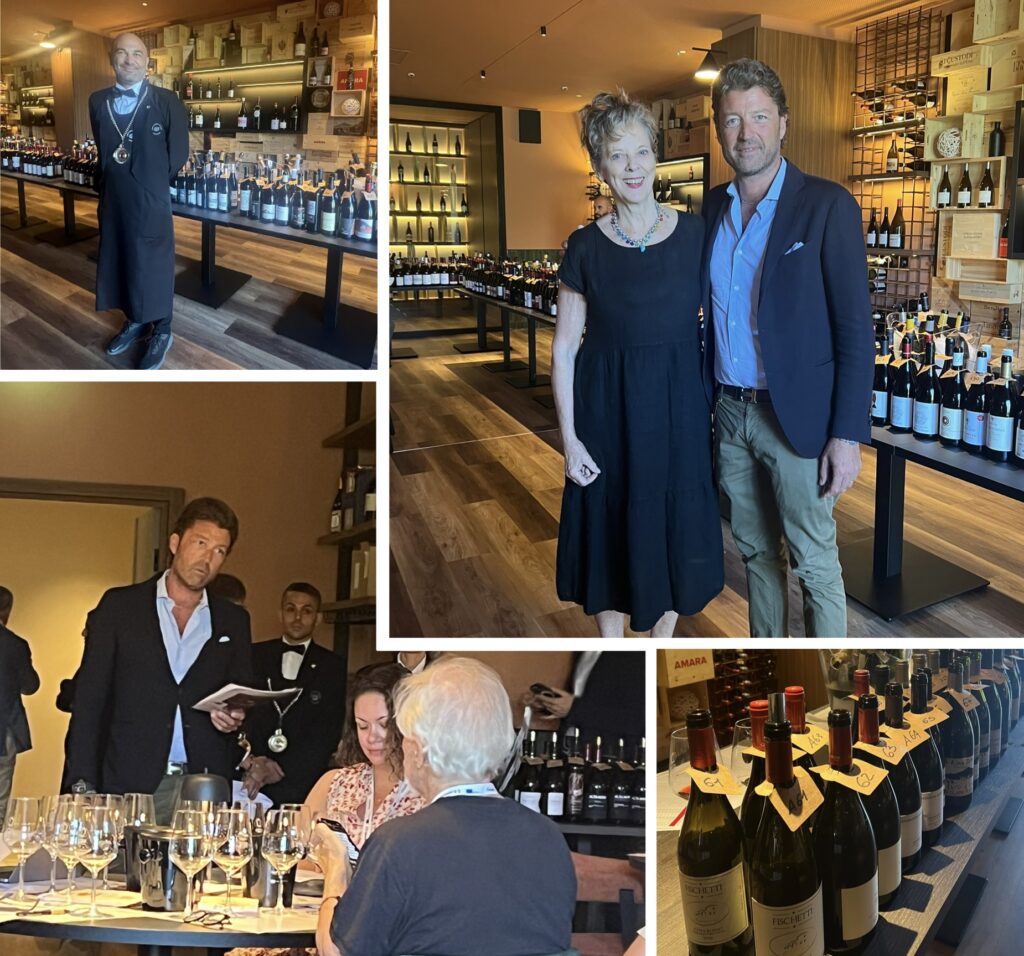
This morning, I had the privilege of attending the Etna Days 2025 Welcome Presentation and Technical Tasting where an extraordinary lineup of Etna DOC wines and producers set the tone for what promises to be a landmark edition.

“The energy and diversity of wines from Mount Etna are simply remarkable.”  Liz Palmer

Etna Days 2025 takes place from September 18 to 20 with 90 wineries presenting over 500 labels to over 70 journalists, educators, and trade professionals to celebrate one of the world’s most dynamic terroirs: a living mosaic of lava-stone terraces, ungrafted vines, extreme altitudes, and endlessly shifting microclimates.

Promoted by the Consorzio di Tutela Vini Etna DOC, the event is designed to showcase the extraordinary identity of Etna wines, the very summit of Sicily’s qualitative pyramid.

Anchored at the Picciolo Golf Resort in Castiglione di Sicilia, the program unfolds with guided tours, immersive masterclasses, and a grand walk-around tasting featuring all 500 labels. This evening’s “Gala Dinner” will unite producers, winemakers, and international jurors of the Concours Mondial de Bruxelles, a testament to the denomination’s growing global prestige.

As Francesco Cambria, President of the Consorzio, emphasizes: “Etna Days is not only about wines—it is about the cultural and identity value of a collective heritage. Each bottle tells a story that intertwines resilience, memory, and vision.”

Etna is more than a vineyard. It is a living laboratory of biodiversity and sustainability, where indigenous varieties such as Nerello Mascalese and Carricante thrive on ancient terraces carved from volcanic stone. This heroic viticulture has become emblematic of Sicily’s ability to preserve tradition while forging an avant-garde path on the world stage.

With the collaboration of the Concours Mondial de Bruxelles and the presence of over 70 international journalists and educators, Etna Days 2025 confirms the denomination’s stature as a global benchmark. Beyond wine, the ambition is holistic: to weave together hospitality, gastronomy, and cultural heritage into a sustainable model of growth for the territory.
For further details: https://consorzioetnadoc.com/en-US/home

Alto Adige Wine Summit 2025: Expanding Horizons and Strengthening Global Influence

The Consorzio Alto Adige Wines has successfully concluded the Alto Adige Wine Summit 2025, marking its most ambitious and internationally resonant edition to date. Held biennially, the summit serves as the preeminent platform for positioning Alto Adige as a dynamic contributor to the global wine dialogue, uniting international trade media, sommeliers, wine merchants, and hospitality professionals.

For the first time in its history, the summit extended its program by two additional days, reflecting its growing scope and influence. From September 4 to 8, a total of 82 delegates from thirteen countries immersed themselves in the cultural and viticultural fabric of Alto Adige. Participants engaged in exclusive behind-the-scenes experiences, in-depth tastings, and direct exchanges with local winegrowers and producers, thereby gaining a comprehensive understanding of the region’s unique terroirs and winemaking traditions.

The summit’s opening sessions introduced international wine journalists and opinion leaders to the region’s viticultural identity, while the expanded program specifically targeted sommeliers, wine merchants, and hospitality professionals. This deliberate broadening of audiences reflects Alto Adige’s strategic aim of deepening its global market presence and strengthening cross-sector partnerships.

A major highlight was the large-scale tasting hosted at NOI Techpark in Bolzano, which presented 365 wines from 100 producers. This unprecedented showcase provided delegates with a singular opportunity to appreciate the breadth, quality, and stylistic diversity of Alto Adige’s contemporary wine production.

The strong representation of U.S. media reinforced Alto Adige’s rising prominence in the American market, its most dynamic export destination.

With its expanded scope, the Alto Adige Wine Summit 2025 has further cemented its role as a global reference point for promoting wine culture, trade dialogue, and cross-cultural exchange, strengthening Alto Adige’s position within the evolving landscape of international wine.