EU Authorizes Three New Grape Varieties: Calardis Blanc, Magdeleine Noir, and Négret de la Canourgue

The French Minister of Agriculture and Food Sovereignty submitted a formal request to the European Union to update the Official Catalogue of Species and Varieties of Plants Cultivated in France. At the culmination of this process, three grape varieties, Calardis Blanc (white), Magdeleine Noir, and Négret de la Canourgue (both red) have now received official authorization.

Calardis Blanc, a hybrid derivative of Calardis Musqué and Seyve Villard 39‑639 developed by the Julius Kühn Institute (Geilweilerhof, Germany), is notable for its resistance to powdery mildew, downy mildew, and black rot. Previously approved since 2020 in Germany’s Rhineland‑Palatinate, it is now cleared for cultivation across France, where it is expected to yield wines with rich aromatic complexity, exotic fruit profiles, and pronounced acidity, traits favourable for sparkling wine production.

Magdeleine Noir, also referred to as ‘Black Magdeleine’, originated in Brittany and has been identified in the Charentes. It is genetically linked to Merlot and is described as a balanced cultivar of considerable complexity.

Négret de la Canourgue, hailing from the Tarn Valley, is characterized by vigorous growth, strong yields, late ripening, and a pale colour, qualities that render it especially suitable for lightweight rosé wine production.

This regulatory decision aligns with broader EU and national strategies to modernize and diversify viticultural production. As of late 2024, France had authorized 357 grape varieties for wine production and labelling, compared with roughly 700 in Italy, 260 in Spain, and 343 in Portugal. Meanwhile, Germany had approximately 465 permissible varieties, and Greece around 206.

The Rise of Hybrid and Resilient Varieties

Amid mounting climate-related pressures on traditional viticulture, hybrid grape varieties are gaining prominence. A study published in Nature Reviews Earth and Environment cautions that up to 70% of current winemaking regions may become unsuitable under continued average temperature increases. Hybrids like Calardis Blanc are championed for their disease resistance, reduced cultivation costs, and adaptability to extreme climate events, alongside their capacity to deliver higher yields with less intensive input demands.

EU wine, spirits to face 15% US tariff starting August 1

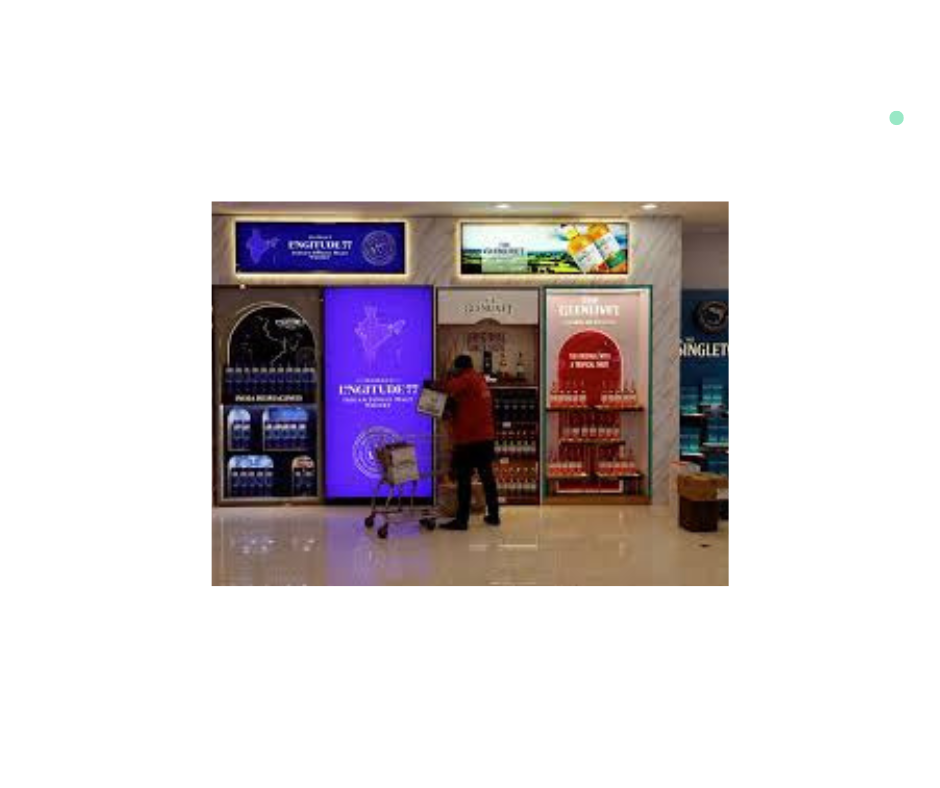
European wine and spirits will face a 15% U.S. import tariff until a different deal is agreed in talks expected to continue in the autumn, the European Commission and EU diplomats said on Thursday, dashing producers’ hopes of an immediate reprieve.

A framework trade deal between Brussels and Washington on Sunday agreed a 15% tariff for most EU imports into the United States, although some sectors were expected to be exempted.

The U.S. tariff on European wine and spirits is currently 10%. Brussels is keen to reduce that to zero or, for wine at least, to the Most Favoured Nation (MFN) rates that are set on a fixed cost per litre basis, rather than in percentage terms.

“The Commission remains determined to achieve and secure the maximum number of carve-outs, including … wine and spirits,” Commission spokesperson for trade Olof Gill said.

“It is not our expectation that wine and spirits will be included as an exemption in the first group announced by the U.S. tomorrow. And therefore that sector will be captured by the 15% ceiling,” he said.

Winemakers said the tariff, even if temporary, would hurt the sector, especially when combined with the stronger euro.

“The 15% duty on EU wines, even if applied for some months until the negotiations are closed, would cause significant economic losses not only for EU wine producers but also for U.S. businesses involved throughout the supply chain,” said Ignacio Sanchez Recarte, secretary general of European wine producers group CEEV.

“When combined with the currency shift in the dollar/euro exchange rate, the overall financial burden on the sector could reach 30%. Investments will be halted and export volumes will decline while waiting for the final agreement,” he said.

U.S. Distilled Spirits Council President and CEO Chris Swonger also urged a quick deal to bring tariffs down to zero.

“It is extremely disappointing and utterly exasperating that the U.S. and EU have not yet come to an agreement on spirits, which is an easy win for the United States that will help secure our economic vitality during this challenging time for the hospitality industry,” Swonger said.

“It is critical for our great American distilleries, farmers and hospitality workers across the country that President Trump secure a permanent return to zero-for-zero tariffs on spirits with the European Union,” he said in a statement.

The U.S. is to publish an executive order on Friday, implementing the framework trade deal that was agreed on Sunday between U.S. President Donald Trump and European Commission President Ursula von der Leyen.

Separately, the EU and the U.S. are to publish a joint statement spelling out the details of the framework deal.

A senior diplomat said that talks on wine and spirits tariffs would continue after the joint statement. “(This will take place) probably in the autumn,” the diplomat said.

Until recently, spirits had benefited from zero tariffs between the U.S. and EU following an agreement in 1997 that also included other countries such as Canada and Japan.

That lasted until 2018, when the EU response to U.S. steel and aluminum tariffs included increased duties on U.S. bourbon and other spirits. These were suspended in 2021.

U.S. MFN rates for wine are 19.8 cents per litre for sparkling and 6.3 cents per litre for most other wines, which equates to very low rates in most cases.

Source:  Reuters

AliveTaste’25 – A Celebration of Portugal’s Wine Culture and Gastronomic Excellence

I recently had the honour of attending the 9th Edition of AliveTaste’25 in Portugal, an extraordinary celebration of Portuguese wine, gastronomy, and cultural excellence. My journey across the country offered profound insights into the evolution of its wine culture, from the Atlantic-influenced Vinho Verde to the dramatic terraces of the Douro Valley, and culminated in a multisensory experience at AliveTaste’25, hosted at the iconic Palácio do Freixo in Porto.

Exploring the Vinho Verde Wine Region: Tradition Meets Innovation

My exploration began in the Vinho Verde region, a landscape defined by granitic soils, verdant valleys, and cool Atlantic breezes. The appellation spans nine sub-regions, from Monção and Melgaço in the north to Paiva in the southeast, each contributing unique microclimatic influences and terroir expressions.

Long associated with low-alcohol, lightly effervescent white wines, Vinho Verde is undergoing a dynamic renaissance. During my visit, I discovered winemakers pushing boundaries, experimenting with single-varietal expressions that highlight the region’s diverse terroirs and microclimates, including an exciting emergence of red wines.

Producers are crafting distinctive wines from Alvarinho, Loureiro, and Arinto, each showcasing freshness, minerality, and structure. The grape varietals Alvarinho and Loureiro are being further refined through innovative techniques such as oak aging, which adds greater depth, complexity, and character.

Vinho Verde is also gaining recognition as a vibrant wine tourism destination. Many wineries now offer curated experiences that go beyond tastings, inviting visitors to explore the natural beauty of the region through tours, cultural activities, and immersive leisure experiences that seamlessly blend wine, hospitality, and landscape.

Vinho Verde is certainly one of Europe’s most exciting wine destinations—and it’s only getting better” — Liz Palmer

Aveleda Wines: A Living Legacy of Portuguese Viticulture

One of the highlights of my travels in the Vinho Verde region was a visit to Aveleda, one of Portugal’s oldest and most respected wine estates. Founded in 1870 and still family-owned, Aveleda exemplifies the convergence of innovation, biodiversity, and sustainability. The estate spans over 200 hectares, and its commitment to ecological integrity is evident in its viticultural and architectural choices.

During my visit, I toured the historic gardens and cellars, participated in a technical tasting of their Alvarinho and Loureiro, and enjoyed an amazing outdoor wine tasting in the historic gardens, followed by a wine-paired lunch that reflected the region’s gastronomic richness. Aveleda’s wines are crisp, expressive, and exported to over 80 countries; they are true ambassadors of the Vinho Verde DOC.

The Douro Valley: A UNESCO World Heritage Landscape of Wine

My wine travels continue and have led me to the Douro Valley.

Home to over 33,000 grape growers and spanning nearly 250,000 hectares, the Douro Valley is one of the world’s oldest demarcated wine regions, officially established in 1756. This UNESCO World Heritage Site is renowned for its dramatic terraced vineyards that cling to steep schist slopes, some with gradients reportedly exceeding 70%. Long celebrated as the birthplace of Port wine, the Douro is now equally acclaimed for its bold, expressive still wines crafted from indigenous grape varieties such as Touriga Nacional, Touriga Franca, and Tinta Roriz. With over 200 wine estates or quintas, this region offers an exceptional wine tourism experience, blending rich viticultural heritage, striking architecture, and awe-inspiring landscapes into a destination that embodies the essence of Portugal’s wine culture.

I spent the night at Quinta de Ventozelo, one of the oldest and most expansive estates in the Douro Valley, which offers a compelling integration of heritage, hospitality, and enotourism. The estate’s architectural restoration thoughtfully preserves its 16th-century origins while adapting the structures into refined accommodations that blend comfort with historical authenticity. Nestled amidst 400 hectares of vineyards, forests, and olive groves, the property provides a unique immersion into the cultural and environmental landscape of the region.

A highlight of the estate is its panoramic infinity pool, positioned to frame the sweeping curves of the Douro River, an ideal vantage point for contemplating the viticultural terrain. Beyond its natural beauty, guests at the wine estate are encouraged to explore a network of ecological walking trails, participate in guided vineyard tours, and visit the Interpretation Centre, which offers in-depth insights into the estate’s biodiversity and sustainable practices. This holistic approach positions the property not merely as a wine resort, but as a living expression of the Douro’s enduring viticultural legacy.

I participated in a curated wine tasting that featured a selection of estate labels, from crisp whites and expressive reds to elegant Ports, each reflecting the terroir and heritage of Ventozelo. Wines and Ports that stood out: Quinta de Ventozelo Rose, 2023, Quinta de Ventozelo Malvasia Fina, 2023, Quinta de Ventozelo, 2018 Vintage Port, and Quinta de Ventozelo Colheita Port 2014.

As dusk settled over the terraced vineyards, I enjoyed an intimate dinner with other colleagues at Cantina de Ventozelo, the estate’s signature restaurant. The menu showcased locally sourced ingredients, many grown on-site, and paired seamlessly with Ventozelo’s wines. The panoramic view overlooking the Douro Valley added cinematic depth to the evening, transforming the meal into a sensory journey that felt both grounded in tradition and rich in discovery.

Visiting Douro Icons: Adega de Favaios & Quinta de São Luiz

Venturing deeper into the Douro Valley, I visited Adega de Favaios, a historic cooperative revered for its iconic Moscatel Galego Branco. Situated at elevations between 600 and 800 meters, the vineyards benefit from significant diurnal temperature shifts, ideal conditions for cultivating wines with refined floral and tropical aromatics. During my visit, I sampled a beautifully aged vintage Moscatel, a compelling expression of the region’s aging potential and steadfast commitment to quality.

Founded in 1952, Adega Cooperativa de Favaios stands as one of Portugal’s most esteemed wine institutions, uniting over 550 dedicated growers. While Moscatel de Favaios remains its signature, the cooperative also cultivates a diverse range of native grape varieties, including Touriga Nacional, Rabigato, and Gouveio. The winery seamlessly blends tradition and modernity in its state-of-the-art cellar, where innovative techniques honour long-standing practices, producing wines that are both expressive and enduring hallmarks of Portuguese wine culture.

I enjoyed a guided tour of the winery, gaining insight into the cooperative’s rich history and its meticulous winemaking process. The experience culminated in a tasting of their portfolio, including several still wines and the iconic Moscatel de Favaios; a beautifully aromatic and balanced expression of the Moscatel Galego Branco grape.

En route to Quinta de São Luiz, our drive from Adega de Favaios to Quinta de São Luiz included a breathtaking journey through the heart of the Douro Valley, winding past terraced vineyards, centuries-old quintas, and panoramic views of the Douro River. As we descended from the elevated Favaios plateau, the landscape unfolded dramatically; steep schist slopes lined with vines, charming hillside villages, and the glint of rabelos drifting along the water below.

Quinta de São Luiz, the historic birthplace of the Kopke brand, is one of the Douro Valley’s most iconic wine estates, with roots tracing back to 1638, making it the oldest Port wine house in Portugal. Located on the left bank of the Douro River between Régua and Pinhão, in the village of Tabuaço, the estate is renowned for its production of Tawny Colheita Ports, white wines, and premium Douro DOC wines. We were welcomed with a guided tour through the Romilã vineyard, insights into traditional winemaking at the Casa do Alambique, and curated tastings on the scenic São Luiz Terrace, which was relocated due to the heat to one of the tasting rooms. The estate also hosts engaging activities such as treasure hunts and mystery tours for groups, making it a versatile and immersive destination for wine enthusiasts and cultural explorers.

Hotel Tivoli Kopke Porto Gaia

I had the pleasure of dining with my group and special guest, Frederico Falcão, President of ViniPortugal, at 1638 Restaurant & Wine Bar by Chef Nacho Manzano, [third Michelin star chef]. The décor is sophisticated yet understated, blending warm wood accents, soft lighting, and expansive views over the Douro River and the city of Porto, creating a refined, timeless setting. Service was impeccable: attentive without being intrusive, with staff deeply knowledgeable about both the cuisine and the exceptional Kopke wine and Port pairings. Chef Nacho Manzano’s tasting menu was a masterclass in culinary precision, each course artfully balancing purity of flavour with innovative techniques like low-temperature cooking and steaming. Highlights included delicate seafood, seasonal vegetables, and heritage meats, all elevated by rare Kopke Ports and Douro DOC wines from Quinta de São Luiz and Quinta da Boavista. It was an extraordinary gastronomic journey, one that perfectly reflected Porto’s rich culinary and winemaking heritage in every bite.

The World of Wine (WOW): Porto’s Cultural Beacon

No trip to Porto is complete without a visit to WOW or the “World of Wine” a pioneering cultural district in Vila Nova de Gaia. I spent an afternoon exploring the museums, including The Wine Experience, Planet Cork, and The Bridge Collection. WOW also features 12 restaurants, a wine school, boutique shopping, and panoramic views over the Douro River, a dynamic nexus of culture, education, and luxury wine tourism.

During my exploration of the local wine landscape, I had the opportunity to stay at a selection of hotels that exemplified a sophisticated integration of luxury accommodations and strategic geographic positioning.

Renaissance Porto Lapa Hotel – Porto’s newest 5-star property, it combines modern sophistication with sweeping city views. An ideal base for wine professionals and tourists alike, it’s located within easy access to both urban and wine country adventures.

Pestana Douro Riverside – This elegant property is a restored perfume and soap factory known as the Floral Factory. Dinner at Aroma, its signature restaurant, was a standout experience. The interiors blend exposed beams and iron columns with a soft, modern palette, an aesthetic that tells the story of industrial heritage reimagined.

Tivoli Kopke Porto Hotel – Strategically located near the Vila Nova de Gaia wine cellars, this hotel offers direct access to key wine tourism sites. Its stylish interiors evoke understated luxury, ideal for oenophiles. A dinner at 1638 Restaurant & Wine Bar by Nacho Manzano was a culinary masterpiece, featuring haute cuisine paired with Kopke’s award-winning Ports and still wines.

AliveTaste’25: Portugal’s Pinnacle Event for Wine and Gastronomy

In the heart of Portugal’s storied wine country, where centuries-old traditions meet contemporary elegance, this year’s AliveTaste’25 was nothing short of a sensory revelation.

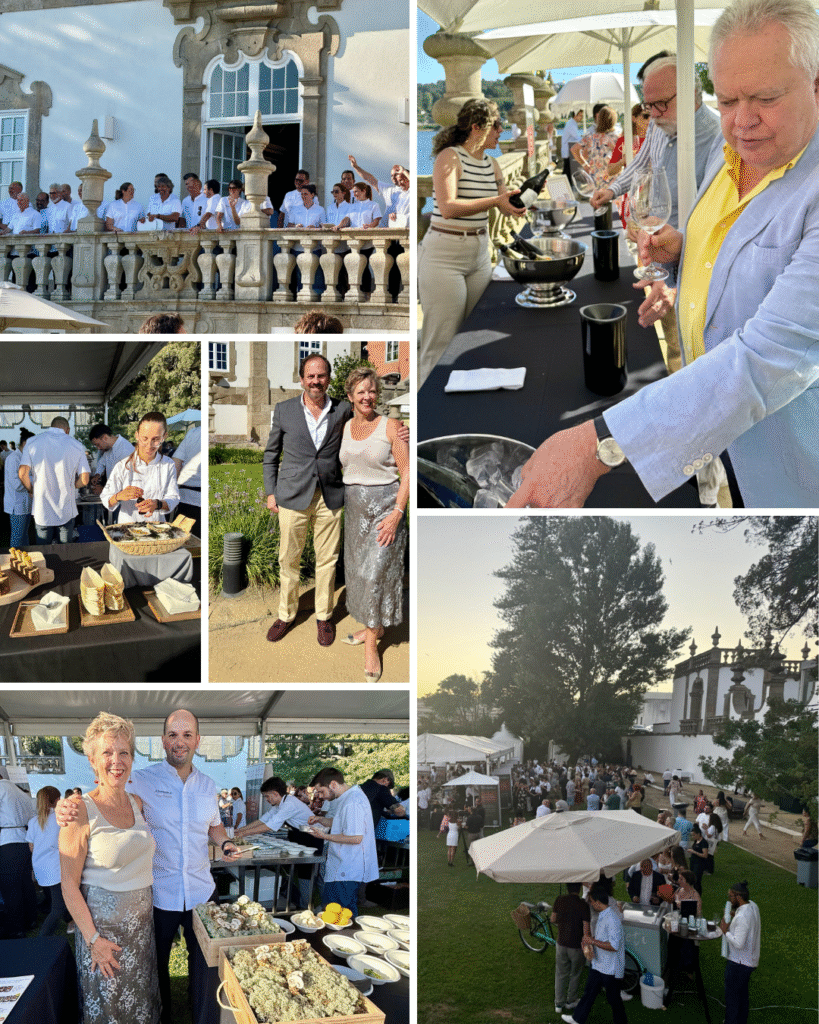
Held at the magnificent Portuguese Baroque Pestana Palácio do Freixo, Douro, the event unfolded as a harmonious symphony of taste, culture, and refined hospitality. It brought together 26 chefs and 20 wine producers, featuring culinary creations from the chefs paired with wines from the participating producers.

The event was attended by an eclectic mix of luminaries: international wine critics, Michelin-starred chefs, top sommeliers, and luxury travel insiders. From Canada to Paris to São Paulo to South Korea, the guest list read like a passport through the world’s wine capitals. Both Portuguese wines and gastronomy took center stage, joined by leading producers from across the country, bringing the global wine world together in one extraordinary setting.

AliveTaste’25 is more than a celebration of fine wine; it is a tribute to the terroir, the people, and the compelling stories that are shaping Portugal’s growing influence in gastronomy and luxury wine tourism. In 2025, the event once again raised the bar, elevating the experience to new heights.

“AliveTaste’25 was nothing short of a sensory revelation” – Liz Palmer

For further details, visit: https://alivetaste.com

Rethinking the Tasting Room Experience: Does Waiving Fees Drive More Visitors?

I’ve come across some compelling insights from the SVB 2025 DtC Wine Report that shed light on evolving strategies in the tasting room experience.

According to the report, wineries were asked under what circumstances they would waive tasting fees. Predictably, scenarios such as making a purchase or joining a wine club were frequently cited, widely viewed as justified within broader sales tactics.

Interestingly, the report also explored whether lowering or waiving tasting fees could increase visitation. While this strategy is still in the early stages of evaluation, 35% of respondents noted an increase in visitation after lowering fees. However, 29% saw no improvement, and 32% said it was too soon to determine the outcome.

This data signals a shift in how wineries are rethinking visitor engagement and revenue models, especially as competition intensifies in the DtC space.

Source: SVB 2025 DtC Wine Report

The Twelve Pievi: How Tuscany’s Historic Wine Region Is Redefining Excellence After Three Decades

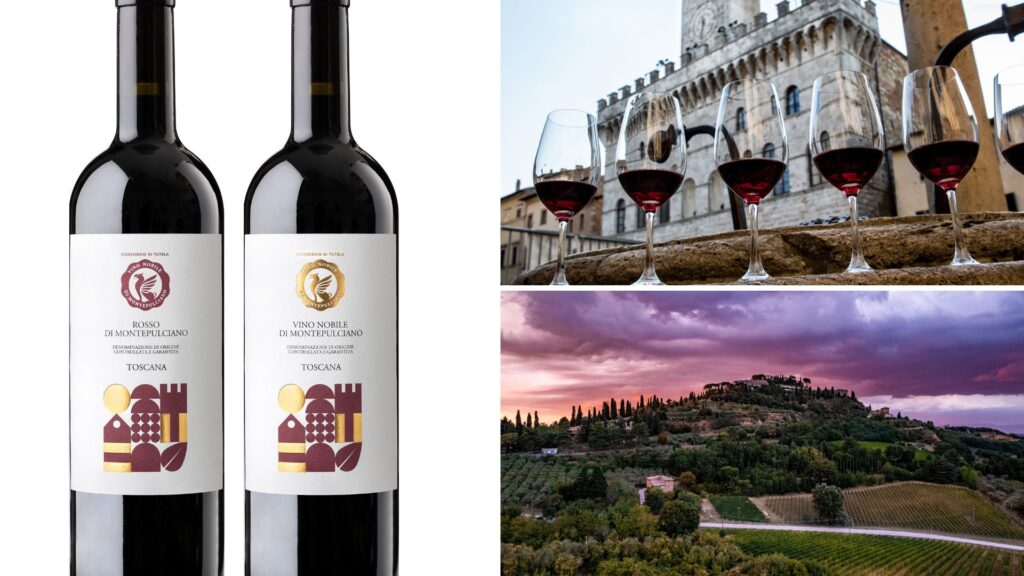
In the heart of Tuscany, where time moves at its own leisurely pace, the historic town of Montepulciano celebrates a remarkable milestone in 2025. While thirty-one years may seem minor against the backdrop of a town preserved since the 16th century, the evolution of Vino Nobile di Montepulciano during this period tells a story of extraordinary growth and transformation. Since establishing the Anteprima event in 1994 to showcase market-ready vintages, the Consortium has seen production volumes and membership nearly double. The 31st edition of the Preview returns to honor its rich heritage while embracing the future, continuing the legacy of an appellation with winemaking traditions dating back to Etruscan times.

The Renaissance of Traditional Terroir
The custodians of Montepulciano’s viticultural heritage have achieved a masterful balance between innovation and tradition, preserving the essence of their craft while adapting to modern challenges. Their meticulous stewardship extends beyond the vineyards to the entire ecosystem—landscapes, architecture, and cultural practices are carefully maintained as living tributes to ancestral accomplishments.

The 2025 market debut of the prestigious Pieve classification marks the culmination of years of dedicated research and development. Following the Consortium’s approval in 2023 and the Italian National Wine Committee’s final endorsement on October 10, 2024, these exceptional wines have reached shelves with the publication of regulations in the February 5, 2025 Official Journal. The 2021 vintage—the first to carry the distinguished Pieve designation—exemplifies the region’s commitment to geographical authenticity and production excellence.

These twelve Additional Geographic Units (UGAs) honor ancient parish divisions that date back to the Roman and Lombard eras, creating a direct connection between contemporary winemaking and historical territorial organization. Only wines produced with at least 85% Sangiovese grapes grown and bottled by the same estate within a specific Pieve boundary may bear this prestigious label. Quality control remains paramount, with the Consortium establishing an internal commission of technical experts to ensure compliance with rigorous specifications before certification.

Industry professionals surveyed by Nomisma project retail prices for these premium offerings to range between 40-70 euros, with exceptional bottles commanding 70-100+ euros. The market acknowledges the unique value proposition, with respondents emphasizing Montepulciano’s “strong identity and tradition,” “superior quality,” and the “prestige of the brand” as key differentiators. Wine enthusiasts now can explore these distinctive terroirs through comparison tastings, enhanced by the Consortium’s innovative ’12 Pievi’ web series documenting the unique characteristics of each historical parish zone.

Montepulciano’s forward-looking approach extends beyond geographical classification to embrace sustainability initiatives. As the first Italian denomination to receive Equalitas certification in May 2022, the region upholds strict environmental standards by measuring carbon and water footprints while promoting socio-economic equity. A sophisticated network of 50 meteorological stations provides critical data for ongoing climate adaptation strategies.

Where History and Viticulture Converge
Nestled on limestone hills that divide the Val di Chiana from Val d’Orcia, Montepulciano stands as a living testament to centuries of artistic, architectural, and agricultural achievement. Visitors wandering its cobblestone streets encounter Etruscan relics, Renaissance palazzos, ornate religious sanctuaries, and thriving artisanal traditions. The magnificent Piazza Grande, with its 17th-century Duomo, serves as the gravitational center, while the San Biagio sanctuary forms a stunning gateway to the iconic cypress-lined valleys that define the quintessential Tuscan landscape.

The Consortium has enhanced the visitor experience through the introduction of the “Pilgrimage to Montepulciano’s Pievi,” an immersive journey combining walking tours of historic parish territories with evening tastings of their distinctive wines. This multisensory experience invites travelers to engage deeply with the region’s terroir—physically traversing the landscape while savoring its enological expressions.

The economic significance of Vino Nobile di Montepulciano is profound, with the industry valued at approximately one billion euros in combined assets, revenue, and production capacity. Average annual production value reaches 65 million euros, forming the cornerstone of a local economy in which 70% of activity is directly related to viticulture. Of the 16,500 hectares of municipal territory, vineyards occupy 2,000 hectares—including 1,200 hectares dedicated to Vino Nobile DOCG and 390 hectares to Rosso di Montepulciano DOC. The industry supports roughly 1,000 permanent jobs alongside seasonal positions spread across 90 bottling operations and 250 grape producers.

The 2024 market performance highlights continued growth, with 6.7 million bottles of Vino Nobile and 2.3 million bottles of Rosso reaching consumers. Export markets account for 65.5% of production, with Germany (37%) and the United States (28%) leading international demand. Particularly noteworthy is the increasing preference for organic certification, representing 44.7% of domestic sales and exceeding 50% of international transactions.

For wine lovers seeking authentic experiences, Montepulciano offers an unrivaled destination where history, culture, and exceptional winemaking converge. Whether exploring medieval alleys, participating in guided tastings, hiking through vine-covered hills, or embarking on parish pilgrimages, visitors are immersed in traditions that honor the past and embrace the future. The Pieve classification represents more than a marketing distinction; it is a profound reconnection with historical identity—a perfect expression of a region that continues to evolve while remaining true to its timeless character.

A Timeless Sanctuary for Wine Lovers
Situated gracefully on gently undulating limestone slopes that form a natural boundary between Val di Chiana and Val d’Orcia, Montepulciano is a living testament to Tuscany’s rich oenological heritage. This captivating medieval settlement occupies a privileged position among Italy’s most celebrated wine regions, embodying the essence of cultural identity. From ancient Etruscan cultivation methods to modern winemaking innovations, Montepulciano’s terroir has seen the evolution of viticulture over millennia, solidifying its status among Tuscany’s revered wine sanctuaries.

More than just a production zone, Montepulciano serves as an immersive open-air museum chronicling the region’s enduring connection to viticulture. The town attracts discerning enophiles and cultural travelers from around the globe, each seeking the harmonious blend of historical significance and vinous excellence that defines this remarkable destination.
The charming historic center reveals layers of architectural and artistic achievement, including prehistoric Etruscan artifacts, magnificent Renaissance palazzos, consecrated sanctuaries adorned by master painters, classical performance venues, and thriving workshops that preserve traditional craftsmanship. Every cobblestone and archway contribute to Montepulciano’s unique charm, inviting visitors to lose themselves in its timeless allure. Here, amidst this splendid tapestry of historical and aesthetic treasures, wine serves as the ultimate ambassador—a masterful interpreter of Tuscany’s magnificent landscape. Through each glass of this noble elixir, visitors embark on a sensory journey that bridges past and present, terroir and tradition, celebrating Montepulciano’s enduring legacy as a sanctuary for those who value the profound relationship between place, culture, and exceptional winemaking.

Filippo Magnani